
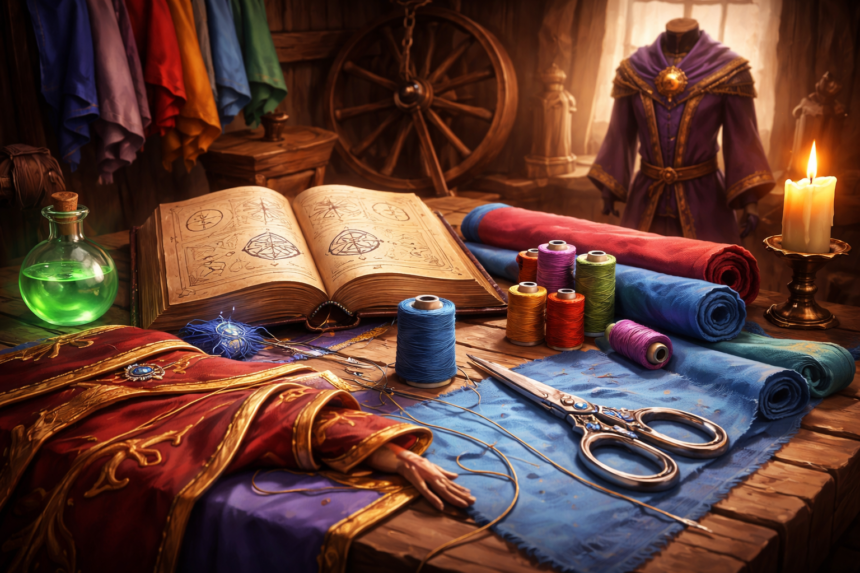
If you want a profession that feels useful from the early game all the way into max-level crafting, WoW Classic Tailoring Guide routes are hard to ignore. Tailoring stands out in WoW Classic because it does not rely on a gathering profession the way Blacksmithing or Leatherworking do, and it can be leveled entirely through cloth drops, vendor threads, dyes, and a few key recipes. Blizzard’s own WoW Classic primer notes that Tailoring is one of the primary professions players can choose, and Classic players can only learn two primary professions at once.
- Why Tailoring Is Worth Leveling in WoW Classic
- Tailoring Skill Ranks and When to Train
- Estimated Materials for a Smooth 1 to 300 Path
- WoW Classic Tailoring Guide 1 to 300
- Best Places to Farm Cloth While Leveling Tailoring
- The Smartest Way to Save Gold
- Best Tailoring Uses After 300
- Common Mistakes Players Make
- FAQ About WoW Classic Tailoring
- Conclusion
What makes Tailoring especially appealing is flexibility. Mages, Warlocks, and Priests get obvious value from cloth gear, but even players leveling an alt for bags, gold-making, or later crafting cooldowns can get plenty out of it. A smart WoW Classic Tailoring Guide path is not just about reaching 300 fast. It is about knowing when to train, what to craft, where to farm cloth efficiently, and which patterns are actually worth your gold and time.
A lot of players make the same mistake when leveling Tailoring in Classic. They focus only on the cheapest craft per point, then get stuck because they skipped trainer upgrades, ignored recipe availability, or burned gold on the wrong cloth at the wrong time. The better approach is to follow a clean path from 1 to 300 while also understanding why each crafting step works. That is what this article does.
Why Tailoring Is Worth Leveling in WoW Classic
Tailoring is one of the easiest crafting professions to start because you can craft almost anywhere. Unlike some other professions, Tailoring does not require an anvil, forge, or another station. Once you have cloth and vendor materials, you can turn them into bolts, gear, and bags on the spot. That convenience alone makes Tailoring friendly for leveling characters and alts.
It also pairs naturally with Enchanting. Icy Veins highlights that both professions avoid dependence on gathered world materials in the usual sense, and crafted Tailoring items can be disenchanted instead of vendored. In practical terms, that means your leveling path can feed a second profession instead of creating a pile of low-value items in your bags.
For many players, though, the real attraction is endgame utility. Tailoring in Classic is tied to important caster pieces, resistance gear, specialty patterns, Mooncloth crafting, and later high-value items such as Runecloth Bags and notable caster sets. Even if you only care about efficiency, a well-planned WoW Classic Tailoring Guide route gives you more than skill points. It gives you options.
Tailoring Skill Ranks and When to Train
Before you worry about materials, you need to understand the rank breakpoints. In WoW Classic, Tailoring progresses through Apprentice, Journeyman, Expert, and Artisan. The main breakpoints are straightforward:
| Rank | Skill Range | Character Requirement |
|---|---|---|
| Apprentice | 1 to 75 | Level 1 |
| Journeyman | 75 to 150 | Level 10 and 50 skill |
| Expert | 150 to 225 | Level 20 and 125 skill |
| Artisan | 225 to 300 | Level 35 and 200 skill |
These thresholds are supported by the Icy Veins Classic Tailoring breakdown, and Blizzard forum discussions from Classic players also confirm the character-level requirements that commonly trip people up when trying to train past earlier caps.
One practical tip matters here. Do not wait too long to train the next rank once you hit the required skill. If you sit at 75, 150, or 225 without upgrading, every extra cloth drop feels wasted because you are crafting into a ceiling.
Estimated Materials for a Smooth 1 to 300 Path
A standard one-sitting route from Icy Veins calls for roughly these materials:
- 160 Linen Cloth
- 75 Coarse Thread
- 180 Wool Cloth
- 80 Fine Thread
- 5 Gray Dye
- 760 Silk Cloth
- 60 Red Dye
- 30 Blue Dye
- 500 Mageweave Cloth
- 125 Silken Thread
- 900 Runecloth
- 60 Heavy Silken Thread
- 70 Rugged Leather
- 40 Rune Thread
Those numbers are best treated as a planning baseline, not a strict law. Yellow recipes can sometimes take more attempts than expected, and Auction House prices can make one craft smarter than another on your server. Still, if you want a dependable WoW Classic Tailoring Guide route, this is the right foundation.
WoW Classic Tailoring Guide 1 to 300
1 to 50
Start with Bolt of Linen Cloth all the way to 50. This is clean, efficient, and easy to prep in advance if you have enough Linen Cloth. According to Icy Veins, reaching 50 this way takes 80 Bolts of Linen Cloth made from 160 Linen Cloth.
This stage is simple, but it sets the tone for the whole profession. Always turn raw cloth into bolts first when that is the most direct path. It keeps your bag space cleaner and makes the next steps easier to track.
50 to 125
This part of the WoW Classic Tailoring Guide is where the profession starts to feel more like actual crafting.
Follow this route:
- 50 to 70: Linen Bag
- 70 to 75: Reinforced Linen Cape
- Train Journeyman
- 75 to 105: Bolt of Woolen Cloth
- 105 to 110: Gray Woolen Shirt
- 110 to 125: Double-stitched Woolen Shoulders
The nice thing about this stretch is that Linen Bags can still be genuinely useful while leveling. Even on a fresh character, extra inventory space matters. If your server economy is active, some of these early bags can sell instead of being vendored, which softens the cost of leveling.
125 to 200
This is where cloth demand ramps up sharply, especially because Silk Cloth usage becomes heavy. The Icy Veins route recommends:
- 125 to 145: Bolt of Silk Cloth
- 145 to 160: Azure Silk Hood
- 160 to 170: Silk Headband
- 170 to 175: Formal White Shirt
- 175 to 185: Bolt of Mageweave
- 185 to 200: Crimson Silk Vest
This stage feels expensive if you are buying everything on the Auction House, especially Silk Cloth. If you are leveling a character naturally, farming Scarlet Monastery during the right level range can cut a lot of cost. Icy Veins specifically lists Scarlet Monastery as a strong Silk Cloth source.
Once you hit 200, go train Artisan Tailoring before you continue. Icy Veins lists faction-specific Artisan trainers in Theramore for Alliance and Tarren Mill for Horde.
200 to 300
The final stretch is the most expensive, but it is also where Tailoring starts feeling like a max-level profession instead of a side activity.
The recommended path is:
- 200 to 215: Crimson Silk Pantaloons
- 215 to 220: Black Mageweave Leggings
- 220 to 230: Black Mageweave Gloves
- 230 to 250: Black Mageweave Headband
- 250 to 260: Bolt of Runecloth
- 260 to 275: Runecloth Belt
- 275 to 280: Runecloth Bag
- 280 to 300: Runecloth Gloves
There is one important catch here. The Runecloth Bag and Runecloth Gloves patterns are limited-vendor items sold by Qia in Everlook, Winterspring, and they can be unavailable if another player bought them first. Icy Veins notes the vendor respawn timing issue, so if you want a smoother run, check the Auction House before making the trip.
Best Places to Farm Cloth While Leveling Tailoring
Buying everything can be fast, but it is rarely cheap. Farming some of your own cloth gives this WoW Classic Tailoring Guide more balance and usually feels better on lower-budget characters.
Here is the general farming flow from the Icy Veins Classic cloth table:
| Cloth | Typical Level Range | Strong Farming Spots |
|---|---|---|
| Linen Cloth | 1 to 15 | Elwynn, Teldrassil, early humanoid camps |
| Wool Cloth | 15 to 30 | Redridge, Stonetalon, Ashenvale |
| Silk Cloth | 35 to 40 | Scarlet Monastery, Razorfen Kraul, Desolace |
| Mageweave Cloth | 45 to 50 | Zul’Farrak, Tanaris |
| Runecloth | 50 to 60 | Scholomance, Stratholme, BRD, LBRS, Plaguelands |
| Felcloth | 55 to 60 | Dire Maul, Felwood, Azshara, Blasted Lands |
In real gameplay, Scarlet Monastery is often the turning point. If you run it heavily while leveling, your Silk Cloth bottleneck becomes much less painful. Later, Zul’Farrak helps with Mageweave, and max-level dungeon circuits make Runecloth far more manageable.
The Smartest Way to Save Gold
A lot of Tailoring costs come from bad timing, not just material prices. Here are the practical habits that save the most gold:
- Buy thread and dyes from vendors, not the Auction House, unless you are in a genuine rush.
- Farm Silk and Runecloth when your character level naturally overlaps efficient zones or dungeons.
- Sell bags when demand is strong, especially on fresh realms or active servers.
- Pair Tailoring with Enchanting if you want crafted items to become dust and essences instead of vendor trash.
- Do not overcraft green recipes once they stop being efficient.
That last point matters more than it sounds. Many players stay on a familiar recipe too long because the ingredients are already in their bags. That comfort often costs more than switching earlier to the proper next recipe.
Best Tailoring Uses After 300
Hitting 300 is not the end of the story. It is where the profession starts showing its long-term value.
Icy Veins highlights several notable crafted pieces and pattern sources, including class-relevant caster gear like Robe of the Archmage, Robe of the Void, Truefaith Vestments, Bloodvine pieces for caster DPS, and multiple resistance-focused items tied to raids and faction reputations. Mooncloth is another major reason many players keep Tailoring on a character, since it is crafted from Felcloth at a Moonwell rather than looted directly.
That is why a strong WoW Classic Tailoring Guide is not just a leveling document. It is also part of your class gearing plan, especially for cloth casters and support-oriented alts.
Common Mistakes Players Make
One mistake is ignoring trainer progression and then wondering why skill-ups stop. Blizzard forum posts from the Classic era show this confusion clearly, especially around Expert training requirements and trainer locations.
Another mistake is underestimating Silk Cloth demand. The jump between early Wool crafts and the heavier Silk stage is sharp, so many players hit a wall if they have not saved enough cloth.
The third big mistake is assuming every crafted item should be sold. Some should. Some should be disenchanted. Some should simply be made for efficient skill points and moved on from. The right answer depends on your second profession and your server economy.
FAQ About WoW Classic Tailoring
Is Tailoring good in WoW Classic?
Yes. Tailoring is convenient to level, useful for cloth-wearing classes, and tied to important bags, caster gear, Mooncloth, and specialty patterns. It also pairs well with Enchanting because crafted items can be disenchanted.
What is the fastest way to level Tailoring from 1 to 300?
The fastest way is the one-sitting route built around Linen, Wool, Silk, Mageweave, and Runecloth transitions, with trainer upgrades at the proper skill and character-level breakpoints. The Icy Veins path used in this article is one of the clearest route maps for Classic-era progression.
Do I need a gathering profession with Tailoring?
No. Tailoring mainly relies on cloth dropped by humanoid enemies plus vendor materials. That is one of the reasons it is considered beginner-friendly compared with professions tied directly to ore, leather, or herbs.
Can Tailoring make gold in WoW Classic?
Yes, especially through bags, cooldown-based materials like Mooncloth, and demand-driven crafted items. Results vary by realm economy, but Tailoring has several practical gold paths if you watch market timing and recipe demand.
Conclusion
The best WoW Classic Tailoring Guide is the one that respects both speed and usefulness. If you follow a clean 1 to 300 path, train each rank on time, farm cloth at the right level ranges, and avoid wasting materials on dead-end crafts, Tailoring becomes one of the smoothest professions in Classic. It is easy to start, strong for caster-focused characters, and still relevant after 300 because of bags, cooldowns, reputation recipes, and endgame cloth gear.
Even years after launch, professions remain part of what makes the original World of Warcraft loop satisfying. Tailoring fits that classic design well because it rewards planning without feeling overly complicated. If your goal is a practical, efficient profession with long-term value, this WoW Classic Tailoring Guide path is one of the safest choices you can make.