



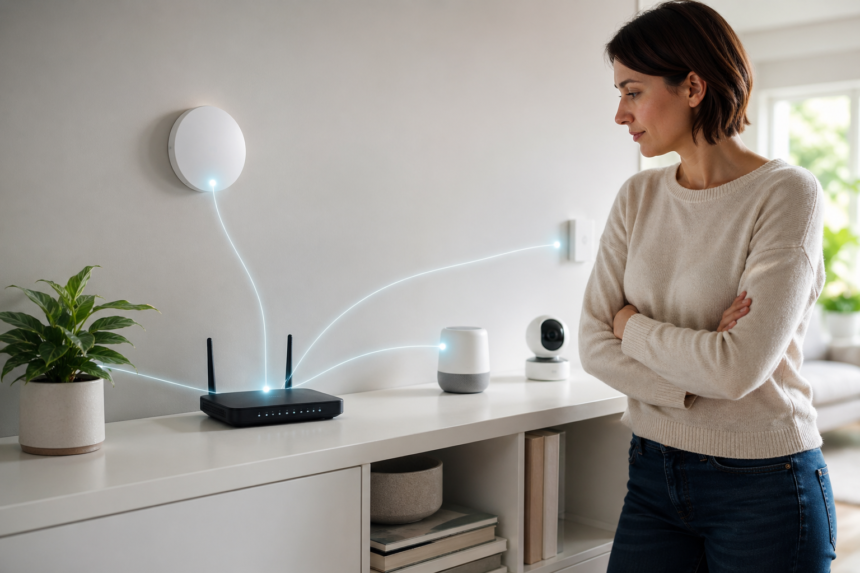
If you have spotted 10.0.13 in your router panel, Wi Fi settings, device logs, or local network details, you are not looking at something strange or dangerous by default. In most cases, 10.0.13 is simply a private IP address being used inside a local network. That means it helps devices talk to each other within your home, office, school, or business network, rather than on the public internet. Once you understand what 10.0.13 actually does, it becomes much easier to tell whether it is normal, temporary, or a sign that you need to check your network setup.
- What 10.0.13 Actually Means
- Why Routers and Devices Use 10.0.13
- Why 10.0.13 Appears on Your Router
- Why 10.0.13 Appears on Your Device
- Is 10.0.13 a Public IP or a Real Internet Address?
- 10.0.13 vs 192.168.1.1 vs 172.16.x.x
- When 10.0.13 Is Completely Normal
- When 10.0.13 Might Point to a Network Issue
- How to Check What 10.0.13 Belongs To
- A Real World Scenario
- Security Questions Around 10.0.13
- Simple Troubleshooting Tips If 10.0.13 Is Causing Confusion
- The Bottom Line on 10.0.13
A lot of people see 10.0.13 and assume it is a website, a hacker address, or a router error code. It usually is none of those things. More often, 10.0.13 belongs to a local addressing scheme created by a router, firewall, access point, VPN, or corporate network administrator. It appears because your network needs a way to assign identities to devices that stay inside the private network.
That is the short answer. The fuller answer is more useful, because the reason 10.0.13 appears depends on where you are seeing it, what kind of network you are on, and how your router is configured.
What 10.0.13 Actually Means
10.0.13 is best understood as a shorthand way people refer to an address inside the wider 10.0.0.0/8 private IP range. Under RFC 1918, the entire 10.x.x.x block is reserved for private networking, which means it is meant for internal use and is not globally routable on the public internet. ARIN and IANA also list 10.0.0.0/8 as private use address space.
In simple terms, when 10.0.13 shows up, it usually means your device is participating in a local network that uses the 10.x address family instead of the more familiar 192.168.x.x pattern.
That surprises many users because they are used to seeing addresses like 192.168.0.1 or 192.168.1.1 on home routers. But there is nothing unusual about 10.0.13 itself. It is still part of private IPv4 addressing. It is just a different private range.
Why Routers and Devices Use 10.0.13
Routers need to assign addresses so devices can communicate with the gateway, printer, smart TV, NAS, camera, laptop, and phone on the same local network. That is the practical reason 10.0.13 appears.
A router or DHCP server may assign 10.0.13 for several common reasons:
- The router is configured to use the 10.x.x.x private range
- The network is larger or more segmented than a basic home setup
- A business IT team prefers the 10.x range for easier internal planning
- A VPN creates an internal tunnel using a 10.x address block
- A secondary router or mesh node uses a 10.x subnet behind the main network
- A firewall or managed switch has been set up with custom private addressing
In all of those situations, 10.0.13 is functioning as a local identity, not a public internet location.
Why 10.0.13 Appears on Your Router
When 10.0.13 appears in your router dashboard, it is often tied to one of three things. It may be the router’s own local address, a connected client address, or a subnet reference in the network settings.
Here is a quick breakdown:
| Where you see 10.0.13 | What it usually means |
|---|---|
| Router LAN settings | Part of the private IP range used inside the network |
| DHCP client list | A device has been assigned an address related to 10.0.13 |
| Static route or subnet config | The router is managing traffic for a 10.x subnet |
| VPN settings | A tunnel or internal route uses the 10.x address range |
| Access logs | A local device communicated through the router |
If you run a simple home network, seeing 10.0.13 can still be normal. Some internet providers, business gateways, and mesh Wi Fi systems use the 10.x family by default instead of 192.168.x.x.
Why 10.0.13 Appears on Your Device
If 10.0.13 appears on a phone, laptop, smart TV, printer, or gaming console, it usually means that device received a private local IP from the router or another DHCP server on the network.
That does not mean the device is visible to the entire internet. Private IP space exists precisely so local devices can communicate internally while the router uses network address translation, often called NAT, to handle internet traffic through a public facing address. NAT is widely used to let many internal devices share one external public IP.
So if your device shows 10.0.13, that usually points to normal local networking behavior.
Common places you may see 10.0.13 on a device
- Wi Fi connection details
- Network diagnostics screen
- Device admin panel
- Printer network status page
- Smart home app
- VPN connection log
- Enterprise security software dashboard
In many cases, people only notice 10.0.13 because they are troubleshooting slow internet, connection drops, app discovery issues, or printer setup problems. The address itself is usually not the problem. It is just part of the network map.
Is 10.0.13 a Public IP or a Real Internet Address?
No. 10.0.13 belongs to private address space, not to a public internet range. According to IANA’s IPv4 special purpose registry, 10.0.0.0/8 is marked as private use and not globally reachable.
That matters because it clears up a common misunderstanding. You cannot type 10.0.13 into a browser from anywhere in the world and expect to reach a public website. If you can access something at 10.0.13 on your network, that is happening because your device is already inside the local environment or connected through a VPN.
This is also why 10.0.13 may work at the office but not from a coffee shop, or work when connected to your VPN but fail when you disconnect.
10.0.13 vs 192.168.1.1 vs 172.16.x.x
These address ranges all belong to private IPv4 space. RFC 1918 reserves three major ranges for internal networking:
- 10.0.0.0 to 10.255.255.255
- 172.16.0.0 to 172.31.255.255
- 192.168.0.0 to 192.168.255.255
So the real difference is not that 10.0.13 is more legitimate or less legitimate. The difference is how the network was designed.
Here is a simple comparison:
| Private range | Common use |
|---|---|
| 10.x.x.x | Larger organizations, managed networks, VPNs, custom router setups |
| 172.16.x.x to 172.31.x.x | Business networks, segmented internal systems |
| 192.168.x.x | Home routers, small office setups, consumer networking gear |
That means 10.0.13 can show up in a home network, but it is especially common in environments where someone deliberately chose the 10.x structure.
When 10.0.13 Is Completely Normal
Most of the time, 10.0.13 is normal if any of the following are true:
- Your router uses a 10.x subnet by design
- Your internet provider installed business class equipment
- Your office uses managed networking
- You are connected to a VPN
- Your mesh Wi Fi system creates separate internal segments
- You have smart devices, cameras, printers, or VoIP systems on the network
In other words, 10.0.13 often appears because the network is doing exactly what it was meant to do.
When 10.0.13 Might Point to a Network Issue
While 10.0.13 itself is not inherently a problem, its appearance can be a clue during troubleshooting. Context matters.
You may need to investigate if:
- You suddenly see 10.0.13 after changing routers
- Devices cannot find each other on the network
- Your VPN conflicts with your local subnet
- Two routers are creating double NAT
- You cannot reach a device panel even though 10.0.13 appears in the device list
- Your DNS, DHCP, or subnet mask settings were changed recently
A good example is a double router setup. Let’s say your ISP modem router uses 192.168.1.x, but your own Wi Fi router behind it uses 10.0.13 and related addresses. That can be fine, but it can also create confusion for port forwarding, gaming, remote access, or smart home discovery.
Another example is a VPN overlap. If your work VPN uses 10.0.13 or nearby internal addresses and your home network also uses a 10.x structure, traffic may not route where you expect. That can make shared folders, internal web apps, or printers seem broken even when both systems are technically online.
How to Check What 10.0.13 Belongs To
If you want to figure out why 10.0.13 appears on your router, device, or local network, start with a few simple checks.
1. Look at your router’s LAN settings
Open your router admin panel and check:
- LAN IP address
- DHCP range
- Subnet mask
- Connected devices list
If the router is configured in the 10.x range, 10.0.13 may simply be part of that design.
2. Check the device list
Routers often show the device name, MAC address, and assigned IP. If 10.0.13 is tied to a printer, phone, or laptop, the mystery is solved quickly.
3. Compare gateway and subnet information
If your device has an address related to 10.0.13, look at the default gateway and subnet mask too. That tells you whether it belongs to the same local segment or a routed network.
4. Test whether it is local only
Try pinging 10.0.13 only when connected to the same network or VPN. If it works locally but not externally, that strongly suggests a private internal host.
5. Review VPN settings
Many business VPNs push routes for private subnets. If 10.0.13 appears only after you connect to a VPN, it may belong to a remote internal network rather than your home router.
A Real World Scenario
Imagine a small office with one firewall, two wireless access points, several staff laptops, a network printer, and a VoIP phone system. The IT admin chooses the 10.x address range because it offers a lot of room for future devices and segmented departments.
The printer might land on 10.0.13.45. A phone system might sit on 10.0.13.60. An admin panel could be reachable through a nearby internal address. If a staff member checks their network details and sees 10.0.13, they may think something is wrong because it does not look like their old home router setup. In reality, it is just a more customized internal network.
That is why 10.0.13 often looks unfamiliar but still turns out to be perfectly normal.
Security Questions Around 10.0.13
People sometimes worry that 10.0.13 means a hidden attacker or unauthorized connection. The address alone does not prove that.
What matters more is this:
- Do you recognize the device name?
- Does the MAC address match a known device vendor?
- Did the address appear after a legitimate network change?
- Is the device communicating in expected ways?
- Are your router credentials and firmware up to date?
Private IP addresses are not automatically safe, but 10.0.13 is not suspicious just because it exists. A better security habit is to audit unknown devices, rename trusted devices, use strong router passwords, enable WPA2 or WPA3, and keep firmware updated.
Simple Troubleshooting Tips If 10.0.13 Is Causing Confusion
If 10.0.13 keeps showing up and you are not sure whether it matters, these steps usually help:
- Restart the router and affected device
- Renew the device IP lease
- Check for duplicate routers on the network
- Confirm the DHCP server is only running on one main gateway
- Review VPN and firewall rules
- Verify subnet mask consistency across devices
- Update router firmware
- Label known devices in the router dashboard
These actions solve many cases where 10.0.13 is not wrong, but the network around it is misconfigured.
The Bottom Line on 10.0.13
In most situations, 10.0.13 appears on your router, device, or local network because it is part of a private internal IP addressing system. It is not a public website, not a random internet destination, and not automatically a security problem. It usually means your router, VPN, or network administrator assigned an address from the 10.x private range so devices could communicate inside the network.
If you are troubleshooting, focus less on the fact that 10.0.13 exists and more on what role it is playing. Check whether it belongs to a trusted device, whether your router uses the 10.x range, and whether there are routing, VPN, or double NAT issues involved. Once you view 10.0.13 as part of normal local networking, it becomes much easier to diagnose what is actually happening.
Private addressing has been a core part of modern networking for years, especially in homes, offices, and VPN environments. If you want more background on how private IP addresses work inside internal systems, that concept adds useful context to why 10.0.13 keeps appearing in everyday network settings.