



If your audience lives on WeChat, your ticketing experience needs to live there too. That is the simple reason WeChat Mini Program Event Tickets have become so attractive for brands, organizers, venues, and tourism operators trying to increase conversions without forcing people through a long checkout flow. Inside WeChat, users can discover an event, open a mini program, pay with WeChat Pay, receive a digital ticket, and show a QR code at the door, all without leaving the app. Tencent’s latest disclosures show just how large that ecosystem is, with Weixin and WeChat reaching more than 1.4 billion monthly active users and Weixin Mini Programs facilitating over RMB 8 trillion in GMV in 2024.
- Why WeChat Mini Program Event Tickets Work So Well
- The Real Business Case Behind WeChat Mini Program Event Tickets
- How Brands Sell More Event Access With WeChat Mini Program Event Tickets
- What a High-Converting Ticketing Flow Usually Looks Like
- Features Brands Should Prioritize
- Where WeChat Mini Program Event Tickets Fit Best
- A Practical Example of How a Brand Can Increase Sales
- Common Mistakes That Hurt Ticket Sales
- How to Make WeChat Mini Program Event Tickets More Effective
- Are WeChat Mini Program Event Tickets Better Than Traditional Ticketing Pages?
- The Long-Term Value for Brands
- FAQs
That scale matters because ticket sales are rarely only about the event itself. They are about timing, convenience, trust, reminders, and the number of taps between discovery and purchase. WeChat Mini Program Event Tickets help brands reduce friction at every stage. A user can scan a QR code from a poster, open a shared link in a group chat, tap through from an Official Account, or move from content to checkout in one familiar environment. Tencent Cloud’s mini program documentation describes mini programs as services that are easily accessed and distributed within an application, which is exactly why they work so well for event access.
For brands selling concerts, exhibitions, pop ups, conferences, museum entries, sports events, workshops, and gated community activations, the biggest advantage is not just digital ticketing. It is the ability to connect marketing, payments, attendance, and follow-up engagement in one place. That is what turns WeChat Mini Program Event Tickets from a simple booking tool into a revenue engine.
Why WeChat Mini Program Event Tickets Work So Well
Traditional ticketing often breaks the customer journey into disconnected steps. A user sees a promotion on social media, lands on a slow browser page, creates a new account, adds payment details, waits for a confirmation email, then searches for that email again on event day. Every extra step loses potential buyers.
WeChat Mini Program Event Tickets remove much of that friction because the journey happens inside an app people already use daily. Tencent’s corporate materials show that Weixin Pay exceeded 1 billion average daily commercial payment transactions, and mini programs convert user interactions into transactions at scale. That combination of reach and payment familiarity is a major reason ticketing performs well in the ecosystem.
In practical terms, users usually move through a very simple flow. They discover the event through a QR code, shared content, an Official Account, or search. The event page opens instantly in the mini program, ticket options appear, payment is completed through WeChat Pay, and the ticket is stored digitally, often as a QR code for check in. This pattern is consistent with how mini program ticketing works in real-world travel and event use cases.
That simplicity changes buyer behavior. People are far more likely to complete a purchase when the path feels native, familiar, and immediate.
The Real Business Case Behind WeChat Mini Program Event Tickets
Brands do not invest in a channel just because it looks modern. They invest because it improves measurable outcomes. WeChat Mini Program Event Tickets can affect several metrics at once.
First, they can improve conversion rates by reducing checkout friction. Users do not need to install a separate app or jump to an unfamiliar site. Tencent Cloud’s documentation explicitly notes that mini programs are easy to access and distribute within an app, and WeChat Pay integration documentation shows how payment can be initiated directly from the mini program flow.
Second, they can shorten the distance between marketing and purchase. On WeChat, discovery and action happen close together. A user can move from content in an Official Account, a group share, or a QR-based offline promotion straight into purchase. That is especially valuable for limited-capacity events, flash sales, local promotions, and invite-only experiences where timing matters.
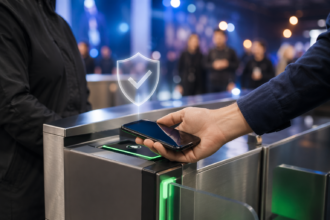
Third, WeChat Mini Program Event Tickets make entry operations cleaner. Digital tickets stored inside WeChat are often presented as a QR code or confirmation page and scanned at the venue. For busy events, that reduces paper handling and gives staff a more controlled check-in process.
Fourth, the system can support re-engagement. Tencent Cloud’s message subscription documentation states that mini program developers can send subscription messages to create a closed-loop service and push business updates to users. For event brands, that can mean reminders before the event, schedule updates, venue instructions, or post-event upsells.
How Brands Sell More Event Access With WeChat Mini Program Event Tickets
The biggest mistake brands make is treating ticketing like a back-office tool. The best-performing teams treat it as part of the campaign itself. WeChat Mini Program Event Tickets sell more access when they are woven into discovery, trust, urgency, and post-purchase retention.
1. They shorten the gap between interest and checkout
A poster with a QR code, a KOL mention, a venue article, or an Official Account post can lead directly to the ticket purchase path. That matters because attention is fragile. If users must move to a browser, wait for pages to load, and start typing forms, many will drop off. When the mini program opens instantly and payment happens through WeChat Pay, momentum stays intact.
2. They build trust through familiar infrastructure
People are more likely to pay when the environment feels secure and recognizable. WeChat Pay supports mini program payment flows, QR payments, and in-app payments, giving merchants multiple trusted ways to complete transactions. Payment familiarity is not a small detail. In China’s mobile-first environment, it is one of the strongest conversion drivers.
3. They make offline promotion measurable
Offline marketing often looks hard to track, but WeChat Mini Program Event Tickets change that. A unique QR code can be tied to a mall display, partner venue, sponsor stand, campus poster, or brand ambassador campaign. That lets organizers see which placements actually drive scans and purchases. It turns the ticket page into a measurable performance asset rather than just an order form. The WeChat mini program promotion ecosystem supports scanning, sharing, and jump-based entry points, which is exactly why attribution can be structured around source-specific links and codes.
4. They support urgency without feeling clumsy
Event sales are often won by timing. Limited seats, early bird deadlines, pre-sale windows, and VIP tiers need fast communication. Because mini programs can use subscription messaging and integrated payment flow, brands can combine urgency with convenience. A reminder can lead directly back into the purchase path rather than sending users to a generic website.
5. They improve the on-site experience
A poor entry experience can damage brand perception even when marketing is strong. WeChat Mini Program Event Tickets are useful because they do not stop at payment. The same user journey carries into admission. Digital tickets stored in WeChat, often shown as QR codes, help reduce confusion at the venue and support faster check-in.
What a High-Converting Ticketing Flow Usually Looks Like
A successful WeChat Mini Program Event Tickets setup usually follows a sequence that feels obvious to the user.
The first touchpoint is attention. A user sees a poster, social post, chat share, Official Account article, or partner promotion. The second touchpoint is entry. They scan a QR code or tap a deep link that opens the mini program directly. The third touchpoint is decision. They land on a page with date, time, venue, seat or ticket tier, pricing, and a clear call to action. The fourth touchpoint is payment through WeChat Pay. The fifth touchpoint is confirmation and ticket storage, often in the form of a QR code. The sixth touchpoint is reminder messaging and day-of-event access.
That flow sounds simple because it should be simple. Complexity is where conversions go to die.
Features Brands Should Prioritize
Not every mini program ticketing experience is built equally. The strongest WeChat Mini Program Event Tickets implementations usually focus on a few features that directly affect purchase behavior.
| Feature | Why it matters |
|---|---|
| Fast-loading event page | Reduces early abandonment and improves mobile usability |
| Clear ticket tiers | Helps users compare options quickly |
| WeChat Pay integration | Makes checkout feel native and familiar |
| QR code ticket delivery | Simplifies entry and verification |
| Subscription reminders | Helps reduce no-shows and forgotten bookings |
| Share-friendly design | Encourages word-of-mouth in groups and chats |
| Source tracking | Helps measure which channels drive sales |
These are not nice extras. They are the building blocks of a revenue-focused ticketing journey. Tencent Cloud’s documentation supports the importance of integrated payment and subscription messaging, while real-world event ticketing examples show how QR-based storage and scanning are commonly used in practice.
Where WeChat Mini Program Event Tickets Fit Best
Some brands benefit from this model more than others. WeChat Mini Program Event Tickets are especially effective when the target audience is already active on WeChat or when the event relies on mobile-first discovery.
That includes entertainment brands selling concert access, festivals, screenings, and fan experiences. It includes museums and attractions that use timed entry or capped daily attendance. It includes conferences and trade shows that need registration, check-in, and sponsor visibility. It also includes lifestyle brands running store openings, community workshops, member nights, and product launch events.
Travel-related experiences are another strong fit. In China, attractions, performances, and visitor activities increasingly use digital booking with capacity controls, making mini program-based ticketing a natural solution.
A Practical Example of How a Brand Can Increase Sales
Imagine a beauty brand launching a seasonal pop-up in Shanghai. A standard approach might involve a landing page, an external ticketing partner, email confirmations, and a separate event reminder system. It works, but it asks the user to do too much.
Now imagine the same campaign built around WeChat Mini Program Event Tickets. The brand posts teaser content through its Official Account. Influencers share a QR code and mini program card in group chats. Store posters carry location-specific codes. Users tap in, book a time slot with WeChat Pay, receive a QR ticket, and later get a reminder message before the event. At the venue, staff scan the QR code, and the brand can attribute bookings by source. The whole process feels faster, cleaner, and more aligned with how people already behave on mobile in China. That kind of structure does not just improve sales. It improves confidence.
Common Mistakes That Hurt Ticket Sales
Brands can still underperform with WeChat Mini Program Event Tickets if the experience is badly planned.
One common mistake is treating the ticket page like a brochure. Users need clarity more than decoration. They should immediately see what the event is, where it is, when it happens, what each ticket includes, and why they should act now.
Another mistake is weak payment flow design. If users hit confusing prompts, missing merchant setup, or ambiguous confirmation steps, conversions fall quickly. Tencent Cloud’s payment integration process shows that order placement, payment initiation, and callback confirmation all need to be set up carefully for a smooth experience.
A third mistake is forgetting retention. Selling the ticket is only the first part. Brands that use reminders, updates, and post-event follow-up usually get more long-term value out of the same audience. Tencent’s message subscription framework exists for that exact reason.
A final mistake is ignoring security and compliance. Mini programs handle user data and payments, so sloppy implementation creates risk. Academic research has identified real security issues in the mini program ecosystem when secrets are mishandled or data isolation is weak, which is why production-grade development and backend controls matter.
How to Make WeChat Mini Program Event Tickets More Effective
The smartest brands do not just copy a generic ticket page. They adapt the experience to user behavior.
Keep the first screen simple. Lead with the value of the event, not internal brand language. Show the next available date or most relevant session first. Make ticket types easy to compare. Reduce typing wherever possible.
Use QR codes intentionally. Put different codes on venue posters, partner channels, KOL posts, and offline displays so you can identify where conversions come from. Because mini programs can be opened by scanning, sharing, and other jump paths, source-level campaign design is a real strategic advantage.
Use reminders wisely. A reminder the day before, a check-in instruction the morning of the event, and a post-event thank-you with a next-step offer can all improve lifetime value when used carefully. Tencent Cloud explicitly frames subscription messages as part of a closed-loop service model.
Design for shareability. People often make event decisions socially. If the event page is clear and easy to forward in chats or groups, WeChat Mini Program Event Tickets can benefit from organic distribution as well as paid promotion.
Are WeChat Mini Program Event Tickets Better Than Traditional Ticketing Pages?
For audiences that already spend significant time on WeChat, the answer is often yes. That does not mean websites are irrelevant. It means the most efficient purchase journey should match real user behavior.
A standard mobile website still has value for search discovery, broader SEO, and non-WeChat audiences. But for conversion inside the Chinese digital ecosystem, WeChat Mini Program Event Tickets often have an edge because they combine discovery, social sharing, trusted payment, and digital entry in one familiar environment. Tencent’s user and payment scale reinforces why that ecosystem matters commercially.
The Long-Term Value for Brands
The real opportunity is not one transaction. It is the audience relationship that follows. A person who books through a mini program is easier to bring back for a second event, a VIP drop, a seasonal campaign, or a membership push when the experience is built properly.
That is why WeChat Mini Program Event Tickets are becoming more important for brands that think beyond one-night sales. They offer a path from awareness to purchase to attendance to retention inside the same ecosystem. In mobile commerce, that kind of continuity is powerful.
In the end, brands sell more event access when they remove friction, respect the user’s habits, and make buying feel immediate. WeChat Mini Program Event Tickets work because they do exactly that. They connect content, convenience, payment, and admission in a format that feels natural to the audience. For brands operating in or marketing to China, that is not just efficient ticketing. It is smarter demand capture built around real customer behavior.
As mobile commerce keeps evolving, the strongest event brands will be the ones that treat ticketing as part of the experience, not an afterthought. That shift matters because the future of event sales is less about sending people elsewhere and more about meeting them where they already are, inside the broader digital ecosystem they trust and use every day.
If the goal is to boost attendance, reduce drop-off, and build a smoother path from promotion to entry, WeChat Mini Program Event Tickets are one of the clearest tools available right now.
FAQs
What are WeChat Mini Program Event Tickets?
WeChat Mini Program Event Tickets are digital tickets sold and stored through a mini program inside WeChat. Users can open the event page, pay with WeChat Pay, receive confirmation, and often use a QR code for entry.
Why do brands use WeChat Mini Program Event Tickets?
Brands use them because they reduce checkout friction, keep users inside WeChat, support native payment, and simplify on-site check-in. They also make it easier to connect promotion, purchase, and follow-up messaging.
Can WeChat Mini Program Event Tickets help increase conversions?
Yes. They can improve conversions by shortening the path between discovery and payment, especially when users are already active on WeChat and comfortable with WeChat Pay.
Are WeChat Mini Program Event Tickets useful for offline events?
Yes. They are especially useful for offline events because digital tickets can be stored in WeChat and scanned at entry points, which helps reduce friction at the venue.
Do WeChat Mini Program Event Tickets support reminders?
They can. Tencent Cloud’s subscription message tools allow mini programs to push updates and service messages, which can be used for reminders and event communication.