

Preserving physical photos has become a priority for both individuals and organizations. From family archives to professional image libraries, the need to digitize photos quickly and accurately is growing. Traditional flatbed scanners can get the job done, but they’re often slow and impractical for large collections. That’s where a modern picture scanner with feeder changes the process entirely.
Instead of scanning one photo at a time, these devices are built to handle batches efficiently while maintaining image quality. This balance of speed and precision reflects the broader approach taken by companies like PFU America, where performance-driven design supports real-world workflows.
Automatic Feeding That Handles Large Photo Batches
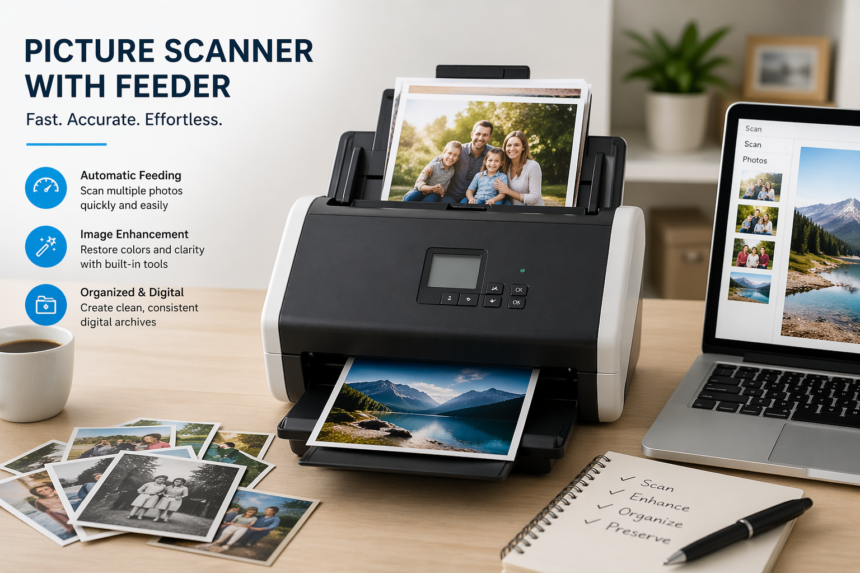
One of the biggest advantages of a picture scanner with a feeder is its ability to process multiple photos in a single session. For anyone working with hundreds or even thousands of images, this feature saves a significant amount of time.
Automatic feeding systems are designed to gently handle photos of different sizes and finishes without causing damage. Whether you’re scanning glossy prints, matte photos, or older, delicate images, the feeder ensures consistent movement through the device. This reduces the need for constant supervision and allows users to focus on organizing and managing their digital files.
Efficiency is especially important in environments where photo digitization is part of a larger workflow. For example, marketing teams, archivists, and small businesses often need to integrate photo capture into broader document management systems. Using a reliable scanner helps streamline this process, ensuring that both images and documents can be digitized with minimal disruption.
Another key benefit is consistency. When photos are fed automatically, each one is aligned and captured under the same conditions. This results in a uniform digital archive, which is easier to sort, edit, and share.
Image Cleanup Tools That Restore Color and Clarity
Speed alone isn’t enough when it comes to photo scanning. Image quality is just as important, especially when dealing with older or damaged prints. Modern scanners include built-in image processing tools that enhance each scan in real time.
These tools can correct common issues like faded colors, dust spots, and minor scratches. Automatic color restoration brings life back to older photos, while sharpening features improve clarity without making images look unnatural. The result is a digital version that often looks better than the original print.
This level of enhancement is particularly valuable for long-term preservation. Digital archives are only as useful as the quality of the images they contain. By improving each scan during capture, users can avoid time-consuming manual editing later.
For organizations that handle both photos and standard documents, pairing photo-focused devices with a dedicated paper scanner can create a more complete digitization strategy. This approach ensures that every type of material is captured using the right tool for the job.
A Smarter Approach to Photo Digitization
The shift toward automated photo scanning reflects a larger trend in workplace technology: reducing manual effort while improving output quality. By combining batch processing, intelligent feeding, and real-time image enhancement, modern scanners make it easier to preserve and manage visual content.
For individuals, this means turning boxes of old photos into organized digital collections. For businesses, it means faster access to visual assets and improved workflow efficiency. In both cases, the right tools make a noticeable difference.
A picture scanner with a feeder isn’t just about convenience. It’s about creating a reliable, scalable way to capture and preserve images without sacrificing quality. As digital archives continue to grow in importance, solutions like these help ensure that valuable photos are protected, accessible, and ready for the future.