


If you have ever woken up with a sore red bump on your eyelid, your first thought was probably simple: Are Styes Contagious? I hear this question often because a stye looks uncomfortable, sometimes swollen, and honestly a little alarming. The good news is that a stye itself is not usually considered contagious in the way a cold or pink eye can be. Still, the bacteria involved can transfer through dirty hands, shared towels, makeup, or poor eyelid hygiene, which is why careful eye care matters. The American Academy of Ophthalmology states that styes are not contagious, but they are local infections or inflammation of the eyelid’s oil glands.
- What Is a Stye?
- Are Styes Contagious?
- What Causes Styes?
- Are Styes Contagious Through Towels, Makeup, or Pillows?
- Symptoms of a Stye
- Stye vs. Pink Eye: What Is the Difference?
- How Long Does a Stye Last?
- How to Treat a Stye Safely at Home
- Are Styes Contagious If They Drain?
- How to Stay Safe and Prevent Styes
- Who Is More Likely to Get Styes?
- When Should You See a Doctor?
- Common Myths About Styes
- A Real-World Example
- FAQs About Styes
- Conclusion
A stye can make your eyelid feel tender, heavy, itchy, or painful when you blink. It may appear near the lash line or deeper inside the eyelid. Most cases are minor and clear with simple home care, but knowing what caused it and when to get help can save you from repeat infections and unnecessary worry.
What Is a Stye?
A stye, also called a hordeolum, is a painful bump that forms on or inside the eyelid. It usually develops when an oil gland or hair follicle near the eyelashes becomes blocked and irritated. Bacteria, often naturally present on the skin, can then build up and trigger swelling.
There are two common types:
| Type of stye | Where it appears | What it usually feels like |
|---|---|---|
| External stye | On the outer eyelid, often near the lash line | Tender red bump, sometimes with a small yellow spot |
| Internal stye | Inside the eyelid | Deeper soreness, swelling, and pressure |
In simple terms, a stye is like a tiny infected pimple on the eyelid. But unlike a pimple on the skin, it sits close to the eye, so squeezing it or rubbing it can create bigger problems.
Are Styes Contagious?
The direct answer is: Are Styes Contagious in the usual sense? No, not usually. You do not “catch” a stye simply by looking at someone who has one or sitting near them.
However, the bacteria linked with a stye can spread in small amounts. Cleveland Clinic notes that a hordeolum generally is not contagious, but small amounts of bacteria may spread, which is why washing hands before and after touching the face is important.
That is the part many people misunderstand. The stye itself is not something that jumps from person to person, but bacteria from the affected area can move onto fingers, towels, pillowcases, makeup tools, or contact lenses. If those items touch another eye, irritation or infection can happen.
So the practical answer is this:
A stye is usually not highly contagious, but poor hygiene can spread bacteria and raise the risk of another eyelid infection.
What Causes Styes?
Most styes begin with a blocked oil gland or infected eyelash follicle. The eyelids have small glands that help keep the eyes lubricated. When one of these glands gets clogged with oil, dead skin, debris, or bacteria, swelling can follow.
Common causes include:
- Touching your eyes with unwashed hands
- Sleeping with eye makeup on
- Using old mascara, eyeliner, or eyeshadow
- Sharing towels or makeup
- Wearing contact lenses without proper hand hygiene
- Having blepharitis, which is eyelid inflammation
- Having oily skin or blocked glands
- Rubbing the eyes often because of allergies or irritation
Mayo Clinic describes a stye as a red, painful lump near the edge of the eyelid that may look like a boil or pimple, often caused by infection of oil glands in the eyelid.
In my experience, many repeat styes come down to small habits. Someone may wash their face well but never clean their eyelid margins. Another person may replace skincare products often but keep the same mascara for too long. Sometimes the cause is not dramatic. It is just a mix of oil, bacteria, and repeated touching.
Are Styes Contagious Through Towels, Makeup, or Pillows?
This is where the answer becomes more practical. Are Styes Contagious through shared items? The stye itself is not passed like a virus, but bacteria can move through shared personal items.
You should avoid sharing:
- Face towels
- Pillowcases
- Eye makeup
- Makeup brushes
- Contact lens cases
- Eye drops used directly near the eye
A towel can pick up bacteria after touching the affected eyelid. Makeup is an even bigger concern because mascara and eyeliner touch the lash line directly. If you use eye makeup while you have a stye, bacteria may contaminate the product and increase the chance of another stye later.
I always tell readers to treat eye products like toothbrushes. They are personal, close-contact items. Sharing them is never worth the risk.
Symptoms of a Stye
A stye usually makes itself known quickly. One day your eyelid feels a little sore, and the next day there may be visible swelling.
Common symptoms include:
- Red bump on the eyelid
- Tenderness or pain
- Swollen eyelid
- Watery eye
- Crusting around the eyelashes
- Sensitivity when blinking
- Feeling like something is in the eye
- Mild itching or irritation
- A small pus-filled spot near the lash line
A stye usually affects one eye, but it can happen on both eyelids if there is ongoing eyelid inflammation or poor hygiene. If the whole eye is red, watery, and sticky, that may be something else, such as conjunctivitis, and it is worth getting checked.
Stye vs. Pink Eye: What Is the Difference?
Many people ask about styes because they worry about pink eye. They are not the same.
| Feature | Stye | Pink eye |
|---|---|---|
| Main sign | Painful eyelid bump | Red or irritated white of the eye |
| Location | Eyelid or lash line | Surface of the eye |
| Contagious risk | Usually low | Often higher, depending on cause |
| Discharge | Mild crusting possible | Watery or sticky discharge common |
| Pain | Local eyelid tenderness | Burning, gritty, or itchy eye |
Pink eye can spread more easily, especially if it is viral or bacterial. A stye is more localized. That said, both conditions require clean hands, no towel sharing, and careful eye hygiene.
How Long Does a Stye Last?
Most styes improve within a few days and may clear within about a week with proper care. Some take longer, especially if the gland remains blocked.
Mayo Clinic recommends warm compresses for 5 to 10 minutes several times a day and notes that most styes are harmless and usually do not affect clear vision. It also advises contacting a healthcare professional if the stye does not start improving after 48 hours or if swelling spreads beyond the eyelid.
If your stye keeps returning in the same spot, do not ignore it. Recurrent eyelid bumps may be linked to chronic blepharitis, skin conditions, or a blocked gland that needs professional evaluation.
How to Treat a Stye Safely at Home
The safest home treatment is warmth, patience, and cleanliness. The goal is to soften the blocked oil, encourage natural drainage, and reduce discomfort without forcing anything.
Use a Warm Compress
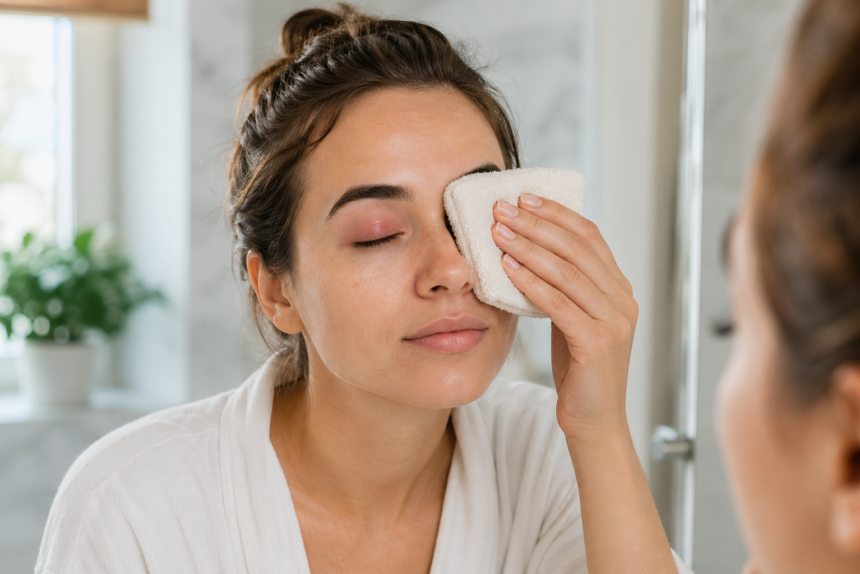
Place a clean warm washcloth over your closed eyelid for 10 to 15 minutes. Do this three to four times a day.
The cloth should be warm, not hot. Rewarm it as needed. After the compress, you can gently massage the eyelid with clean fingers, but do not press hard.
The American Academy of Ophthalmology recommends warm compresses for styes and chalazia, usually 10 to 15 minutes at a time, several times a day.
Keep the Eyelid Clean
Use clean water or a gentle eyelid cleanser. Some people use diluted baby shampoo, but it must be mild and kept out of the eye. Wipe gently along the lash line with a clean cotton pad.
Do not scrub. The eyelid skin is thin, and rough cleaning can make swelling worse.
Avoid Makeup Until It Heals
Eye makeup can irritate the stye and trap bacteria. It can also contaminate the product, which may lead to another stye after the first one heals.
Cleveland Clinic advises avoiding makeup while a stye heals and throwing away eye makeup used during the infection to reduce repeat problems.
Do Not Pop It
This is the mistake I worry about most. A stye may look like something you can squeeze, but the eyelid is not the place for that. Popping it can push infection deeper, worsen swelling, or damage delicate tissue.
Let it drain naturally if it is going to drain. If it needs medical drainage, an eye doctor can do that safely.
Are Styes Contagious If They Drain?
Are Styes Contagious once pus or fluid comes out? The drainage may contain bacteria, so this is when hygiene becomes especially important.
If the stye drains:
- Wash your hands right away
- Clean the eyelid gently
- Use a fresh towel
- Do not reuse the same compress without washing it
- Wash pillowcases and face towels
- Avoid touching the other eye
The drainage does not mean you are dangerous to others, but it does mean bacteria can move onto surfaces. Treat it with the same common sense you would use for any small skin infection.
How to Stay Safe and Prevent Styes
Prevention is mostly about keeping bacteria and oil buildup under control. You do not need an extreme routine. You need consistent habits.
Here is what helps:
- Wash hands before touching your eyes
- Remove makeup before bed
- Replace mascara every few months
- Do not share eye cosmetics
- Clean contact lenses properly
- Wash pillowcases regularly
- Avoid rubbing itchy eyes
- Manage allergies that make you rub your eyes
- Use warm compresses early if you feel a tender eyelid bump starting
The CDC explains that germs can spread when people touch their eyes, nose, or mouth with unwashed hands, which is one reason handwashing is a simple but powerful prevention habit.
For contact lens users, hand hygiene is not optional. Wash and dry your hands before handling lenses. Never rinse lenses with tap water. Replace the lens case as recommended and avoid sleeping in contacts unless your eye care professional specifically says it is safe.
Who Is More Likely to Get Styes?
Anyone can get a stye, but some people are more prone to them.
You may have a higher risk if you:
- Have blepharitis
- Have rosacea or oily skin
- Wear contact lenses
- Use eye makeup often
- Have allergies that cause eye rubbing
- Have had styes before
- Do not remove makeup fully
- Work in dusty or oily environments
People with recurring styes often think they are doing something “wrong.” That is not always fair. Some eyelids naturally produce thicker oil. Some skin conditions make gland blockage more likely. The goal is not blame. The goal is learning what your eyelids need.
When Should You See a Doctor?
Most styes can be handled at home, but there are clear times when medical care is the safer choice.
See a healthcare professional if:
- The stye does not improve after 48 hours
- Swelling spreads to the cheek or entire eyelid
- Your vision changes
- Pain becomes severe
- The eye itself becomes very red
- You have fever or worsening facial swelling
- Styes keep coming back
- You have diabetes or a weakened immune system
- The bump becomes hard and painless for weeks
An eye doctor may prescribe antibiotic ointment, recommend lid hygiene treatment, or drain the stye if needed. According to NCBI’s StatPearls review, typical treatment includes warm compresses and eyelid hygiene, while persistent cases may need antibiotic therapy or, rarely, surgical management.
Common Myths About Styes
Myth 1: A stye means you are dirty
Not true. Styes can happen even to people with good hygiene. Skin bacteria, oil glands, makeup, allergies, and eyelid inflammation can all play a role.
Myth 2: You should squeeze a stye to make it heal faster
No. Squeezing can worsen infection and increase swelling. Warm compresses are safer and more effective.
Myth 3: All eye bumps are styes
Not always. A chalazion, cyst, allergy swelling, or other eyelid condition can look similar. If a bump lasts for weeks or keeps returning, get it checked.
Myth 4: Styes always need antibiotics
Most do not. Many improve with warm compresses and eyelid care. Antibiotics are usually reserved for more persistent or spreading infection.
A Real-World Example
Imagine someone who works long hours, wears mascara daily, and often rubs tired eyes at night. One morning, she notices a sore bump on her upper eyelid. She searches Are Styes Contagious because she shares towels with her child and worries about passing it on.
In that situation, the stye itself is not likely to spread like a contagious illness. But she should still stop sharing towels, wash her hands before and after warm compresses, avoid makeup, and change her pillowcase. Those small steps reduce bacterial transfer and help the eyelid heal.
This is why the answer is not just yes or no. It is about risk. Styes are usually not contagious, but bacteria and poor hygiene can create problems.
FAQs About Styes
Are Styes Contagious from person to person?
Usually no. A stye is a local eyelid infection or inflammation. However, bacteria from the eyelid can spread through hands, towels, makeup, or pillowcases, so hygiene matters.
Can I go to work or school with a stye?
Yes, in most cases. You do not usually need to stay home unless your symptoms are severe or your doctor advises it. Avoid touching your eye, wash your hands, and do not share personal items.
Can I wear contact lenses with a stye?
It is better to avoid contact lenses until the stye improves. Contacts can irritate the eye and may carry bacteria if handled improperly.
Can stress cause a stye?
Stress does not directly create a stye, but it can affect sleep, hygiene routines, and immune function. When people are tired or stressed, they may rub their eyes more or skip makeup removal.
Should I throw away my mascara after a stye?
Yes, if you used it while the stye was active. Eye makeup can become contaminated and may contribute to repeat infections.
Conclusion
So, Are Styes Contagious? In most cases, no, not in the way many people fear. A stye is usually a localized eyelid problem caused by a blocked gland and bacterial buildup. You are unlikely to pass the stye itself to another person through casual contact.
Still, bacteria can move through hands, towels, makeup, pillowcases, and contact lenses. That is why the safest approach is simple: wash your hands, use warm compresses, avoid eye makeup, do not share personal items, and never squeeze the bump.
If the swelling spreads, vision changes, pain becomes intense, or the stye does not improve after a couple of days, it is smart to get medical help. Your eyes are delicate, and early care can prevent a small eyelid bump from becoming a bigger issue. For general background on this type of eyelid infection, trusted medical information can help readers understand why hygiene and gentle care matter.