



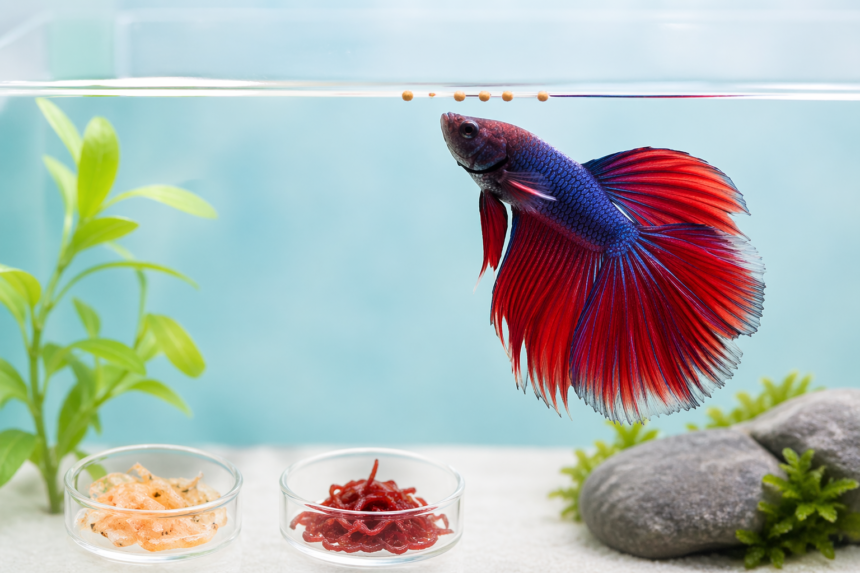
If you have a betta at home, feeding can look simple until you realize how much bad advice is out there. A lot of owners assume any tropical fish food will do, but Siamese Fish Food is really about matching your betta’s natural needs with the right texture, protein level, portion size, and feeding rhythm. Bettas are naturally insect-eaters, so they do best on a protein-forward diet rather than a generic community fish menu. Sources such as PetMD note that bettas need a high-protein diet and are commonly fed floating pellets, while treats like brine shrimp, krill, and bloodworms are best used occasionally rather than as the whole diet.
- What Is Siamese Fish Food for Bettas?
- Why Diet Quality Changes Betta Health So Much
- Best Diet Choices for Healthy Bettas
- Pellets, Flakes, Frozen, and Treats: What Actually Works Best?
- How Much Siamese Fish Food Should You Feed?
- How Often to Feed a Betta
- Foods to Avoid or Limit
- Feeding Mistakes That Hurt Bettas
- A Simple Real-World Feeding Routine
- What to Do if Your Betta Stops Eating
- Conclusion
That matters more than many people think. A betta can look eager to eat and still be underfed, overfed, or simply fed the wrong thing. The goal is not just to keep your fish alive, but to support color, energy, digestion, fin condition, and long-term health with a steady, appropriate diet. Feeding well also reduces leftover waste in the tank, which helps maintain better water quality and lowers stress. Poor water conditions, stale food, and overfeeding are all linked with appetite problems in bettas.
What Is Siamese Fish Food for Bettas?
Siamese Fish Food usually refers to food intended for the Siamese fighting fish, better known as the betta. The species most people keep is Betta splendens, a freshwater fish native to Southeast Asia and one of the world’s most popular aquarium fish. Because bettas are built for a carnivorous or strongly protein-based feeding pattern, the best diet usually starts with food made specifically for bettas rather than a broad, all-purpose tropical flake.
That is why the label on the container matters. Food marketed for goldfish or mixed tropical tanks often misses the mark for bettas, especially if it leans too heavily on filler ingredients or breaks apart too fast in the water. A betta’s body is small, its stomach is small, and its digestive system does better with concentrated, easy-to-manage portions than with messy overfeeding. PetMD specifically recommends high-protein floating pellets for bettas and notes that many fish do not do as well on flakes.
Why Diet Quality Changes Betta Health So Much
A betta may survive on mediocre food for a while, but thriving is different from surviving. When the diet is right, you usually notice better feeding response, stronger activity, fuller finnage, and more stable body condition over time. When it is wrong, the early signs are often subtle. The fish may spit food out, lose interest after a few bites, develop a swollen belly, or leave strings of waste behind that suggest digestive trouble. Appetite issues in bettas are often tied to care problems such as poor water quality, stale food, wrong temperature, or overfeeding.
This is one reason experienced owners often treat feeding as part of overall husbandry instead of a separate task. You are not just choosing food. You are shaping digestion, waste production, tank cleanliness, and daily stress levels. Bettas are tropical fish, and feeding success is tied to proper warmth as well, since cool water can slow digestion and reduce appetite. Sources aimed at betta care commonly place the ideal range around the upper seventies to low eighties Fahrenheit.
Best Diet Choices for Healthy Bettas
The best foundation for Siamese Fish Food is a high-quality betta pellet. This is usually the safest and most practical daily option because it is portionable, consistent, and made to float where bettas naturally like to feed. It also allows you to keep meals small and observe exactly how much your fish has eaten. PetMD recommends high-protein floating pellets for betta fish in captivity.
Frozen foods can be a strong second option when used as part of a balanced routine. Bettas often respond very well to frozen brine shrimp, bloodworms, or similar protein-rich treats, especially if they have become picky with dry food. PetMD’s betta care information notes that frozen foods should be thawed before feeding, which is a simple but important step because it improves safety and presentation.
Freeze-dried foods are convenient, but they are better treated like occasional extras than a full-time staple. They can be useful for variety, yet they are not always the gentlest option for digestion if overused. More broadly, PetMD notes that freeze-dried foods are often preferred over live foods because they reduce disease transmission risk compared with live feeder items.
Live foods can trigger a very natural feeding response, but they come with more risk and more effort. Unless you trust the source and know how to handle them correctly, they are not the easiest everyday option for a home setup. For most owners, a quality pellet as the base and occasional frozen or freeze-dried treats is a more dependable routine. That kind of feeding plan usually gives you the balance of convenience, nutrition, and safety that a pet betta needs.
Pellets, Flakes, Frozen, and Treats: What Actually Works Best?
Pellets tend to win for one simple reason: they are easier to control. A pellet diet made for bettas usually holds together better in water, lets you count portions, and is less likely to cloud the tank if fed correctly. This matters because bettas are enthusiastic eaters, and once food starts breaking apart, it becomes much harder to judge intake accurately. PetMD states that high-protein floating pellets are recommended for bettas and also notes that flakes are often not the best choice.
Flakes are not automatically useless, but they are usually less ideal. Some bettas ignore them, some struggle to take in enough, and some owners end up dropping too much into the tank because flakes feel light and imprecise. That can create two problems at the same time: poor nutrition and excess waste in the water. For a fish this small, consistency matters, so most owners do better with a food they can count, not just sprinkle.
Frozen foods are excellent for variety when used carefully. They can help stimulate appetite and bring some variety to the diet, especially for fish that seem bored with one formula. The key is moderation. Treat foods can support enrichment, but they should not replace a balanced staple. PetMD lists brine shrimp, krill, and bloodworms as occasional treats for bettas rather than daily main meals.
How Much Siamese Fish Food Should You Feed?
This is the question that causes the most trouble, because bettas often act hungry even when they have already eaten enough. A fish that rushes to the front glass is not always asking for another full meal. In many cases, it has simply learned that your presence means food. The better approach is to feed a measured amount and watch the fish finish it cleanly.
The practical rule many keepers follow is small meals once or twice a day, with the total amount adjusted to pellet size, fish size, and activity level. The Spruce Pets notes that portions should be small, often guided by what the fish can consume in a few minutes, and that food left too long is a sign of overfeeding. It also emphasizes that feeding in smaller portions helps mimic more natural foraging behavior.
If your betta has a rounded belly after every meal, leaves food behind, or becomes sluggish after eating, you are probably giving too much. On the other hand, if the fish is thin behind the head, loses condition, or finishes tiny portions instantly and remains active, you may need to slightly increase the amount. The key is to adjust gradually rather than swinging from too little to too much. Appetite and digestion are influenced by water temperature as well, so always consider tank conditions before blaming the food alone.
How Often to Feed a Betta
Most healthy adult bettas do well with regular small meals. The exact rhythm can vary, but consistency helps. A schedule of one to two measured feedings a day is common in home aquariums, while some keepers split the same daily amount into smaller servings. The Spruce Pets notes that feeding at least twice daily and in small portions can work well for bettas, especially when temperature and digestion are appropriate.
The bigger point is that bettas are not fish you should dump food into once and forget. They do better when meals are intentional and observed. Watching them eat tells you a lot. A sudden refusal, spitting, or a slow response may be your first sign that something is wrong with food quality, stress level, water temperature, or health status. Pet care sources on betta appetite specifically identify poor water, old food, overfeeding, and low temperature as common reasons for feeding problems.
Foods to Avoid or Limit
One of the easiest mistakes is relying too heavily on flakes just because they are cheap and easy to find. As already noted, flakes are often not the best fit for bettas, especially as a sole diet. Another common mistake is using treats like bloodworms as the main meal every day. They may be accepted eagerly, but enthusiasm is not the same thing as dietary balance. Occasional treats are fine. A complete daily formula is still the better base.
It is also worth being careful with live foods from uncertain sources. PetMD’s general fish care advice points out that freeze-dried food is preferred over live food when disease transmission is a concern. That does not mean live foods can never be used, but it does mean they deserve more caution than many beginner owners realize.
Old food is another hidden problem. Dry food does not stay nutritionally fresh forever once opened. A betta that suddenly seems uninterested may not be fussy at all. The food may simply have gone stale. The Spruce Pets notes that old or poor-quality food can contribute to appetite issues and recommends replacing opened food regularly.
Feeding Mistakes That Hurt Bettas
Overfeeding is probably the biggest issue in home betta care. Because these fish are small and food portions are tiny, it is easy to accidentally double or triple what they actually need. The trouble is not only weight gain. Overfeeding can lead to bloating, constipation-like symptoms, more waste in the tank, and poorer water quality overall. Sources discussing betta digestive trouble warn that excessive feeding can have serious consequences and should be corrected quickly.
Another mistake is changing foods too often without a reason. Bettas can enjoy variety, but constant switching makes it harder to identify what works and what causes refusal or digestive upset. A better plan is to keep one solid staple and rotate small extras around it. That way, if a problem appears, you can trace it more easily. This also helps avoid the common beginner habit of buying several foods and using all of them too freely.
Feeding without watching the fish is also a mistake. Bettas are interactive animals, and feeding time is one of the best moments to notice changes in posture, swim strength, appetite, or body shape. A fish that eats less, takes longer to strike, or ignores food entirely may be telling you something important before any obvious illness appears.
A Simple Real-World Feeding Routine
For most pet owners, the most practical routine is uncomplicated. Use a quality betta pellet as the main food. Feed a small measured portion once in the morning and once later in the day, or use one controlled feeding if that suits your fish and schedule better. Once or twice a week, swap a regular meal for a small amount of thawed frozen food or another suitable treat. This kind of rotation reflects what major pet care sources recommend: a pellet-based staple with occasional protein-rich extras, not a treat-heavy menu.
If you have a young betta, the size of the food matters just as much as the ingredient profile. PetMD notes that baby bettas should be fed a smaller pellet or finely crushed flake food. That point is easy to overlook, especially when owners buy one container and use it for every life stage. Tiny mouths need tiny pieces.
What to Do if Your Betta Stops Eating
Start with the basics before assuming disease. Check the food’s age, look at the water temperature, and think honestly about whether you may have overfed recently. The Spruce Pets identifies stale food, poor water, incorrect temperature, and overfeeding among the most common reasons a betta loses appetite.
If the fish is still alert and otherwise normal, simplifying the feeding routine usually helps. Offer a small amount of fresh staple food instead of trying multiple products back to back. Remove uneaten food quickly. Keep the water warm and stable. If the refusal continues or the fish shows swelling, weakness, or other physical changes, it is time to treat the problem as a health issue and not just a feeding preference. Betta appetite changes are often one of the earliest visible signs that something in the environment or care routine needs attention.
Conclusion
Getting Siamese Fish Food right is less about buying the fanciest container and more about understanding what bettas actually need. A quality high-protein pellet should usually be the base, with occasional frozen or freeze-dried treats used for variety rather than as the full diet. Small portions, fresh food, warm clean water, and steady observation will do more for your betta than chasing trendy feeding hacks. Those basics are what support healthier digestion, stronger energy, and better long-term condition.
If you want a healthy, active fish with a good appetite and stable body condition, keep feeding simple and deliberate. Bettas may be small, but their dietary needs are specific. Learning a little about the Siamese fighting fish and then applying that knowledge in a calm daily routine can make a real difference in how your fish looks and behaves over time.