


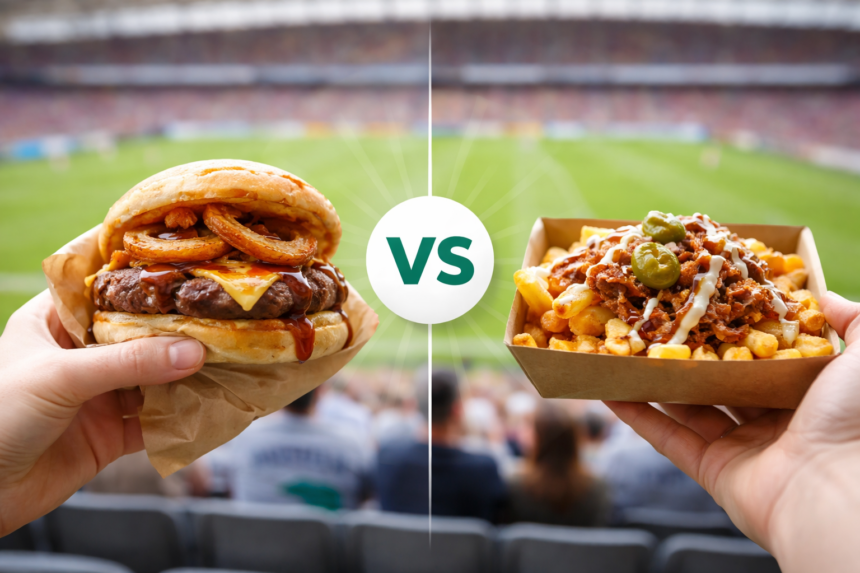
If you enjoy football culture, weirdly addictive browser games, and the endless debate over whether a stadium snack looks amazing or absolutely tragic, Scrandle is the kind of game that can steal a few minutes of your day very quickly. At its core, Scrandle is a simple daily web game where you compare two pieces of stadium food and guess which one received the higher score. The official site describes it as a daily food comparison game featuring football scran from around the world, judged through social media ratings, which is exactly why it feels both silly and strangely competitive.
- What Is Scrandle?
- Why Scrandle Has Become So Addictive
- How Scrandle Works in Practice
- What Makes a Good Scrandle Player?
- Scrandle and the Appeal of Football Food Culture
- Why Scrandle Feels Different From Other Daily Games
- Tips to Improve Your Scrandle Streak
- Is Scrandle Just a Joke, or Is There More to It?
- Common Questions Readers Have About Scrandle
- Final Thoughts on Scrandle
- Conclusion
What makes Scrandle stand out is that it turns a familiar football side story into the main event. Most fans talk about lineups, rivalries, transfer rumors, and results. Scrandle takes the matchday food experience, something supporters constantly joke about online, and turns it into a format that is quick to play, easy to understand, and surprisingly hard to master.
That idea works because stadium food is not a tiny side note in sports culture. Fan experience research from Deloitte shows concessions remain one of the weakest satisfaction points in stadium visits, even though they are central to the overall event experience. In other words, people care about stadium food more than clubs sometimes realize, and Scrandle taps directly into that obsession.
What Is Scrandle?
Scrandle is an online guessing game built around football stadium food. You are shown two dishes, usually the kind of meals, snacks, burgers, pies, chips, wraps, or chaotic plates you might find at football grounds. Your job is to pick which one earned the better rating.
That is the entire loop, and that simplicity is part of the appeal. The game does not bury you under tutorials, sign ups, or menus. You visit the site, look at two photos, trust your instincts, and click.
The official description says the food is “adjudicated by social” response, which is why Scrandle feels less like a cooking quiz and more like a test of crowd psychology. You are not necessarily choosing the best dish by taste, price, or nutrition. You are choosing the one you think people rated more highly.
Why Scrandle Has Become So Addictive
There are a lot of daily browser games online, but very few of them feel as culturally specific as Scrandle. It lives at the intersection of football fandom, food photos, online humor, and quick decision making.
The first reason Scrandle works is speed. A round takes seconds. You do not need a deep ruleset, a leaderboard strategy, or a chunk of free time. That frictionless design echoes the daily game model that helped Wordle spread so widely. TechCrunch’s interview with Wordle creator Josh Wardle highlighted how once a day gameplay, web based simplicity, and low friction access helped build viral appeal. Its benefits from the same kind of immediate accessibility.
The second reason is the emotional swing. One image looks decent, the other looks suspicious, and you still get it wrong. Or a terrible looking plate somehow scores far higher than the neat one beside it. That tension creates the urge to keep going and learn how the crowd thinks.
The third reason is football culture itself. Stadium food has personality. ESPN’s reporting on unique soccer stadium food shows how local vendors, club identity, and regional cuisine all shape what fans eat on matchday.
How Scrandle Works in Practice
When you open Scrandle, you are presented with two food images. Each comes from football matchday food culture, often the kind of meals fans photograph, rate, roast, or celebrate online.
You choose the one you believe scored higher. After your pick, the game reveals the result and shows whether your instinct matched the public rating. Then you move to the next round and try to keep your streak going.
That streak mechanic matters. A single choice is fun, but a growing run of correct answers makes Scrandle feel personal. Suddenly you are no longer casually clicking. You are defending a record.
Because the game is based on relative ratings, visual clues become everything. Is the food well presented? Does it look too greasy? Is it familiar enough to appeal broadly? Does the portion size feel generous? Is the image lighting helping one option more than the other? All of those small details can affect how people respond.
What Makes a Good Scrandle Player?
A good Scrandle player is not always the biggest foodie, and not always the biggest football fan. The best players usually understand how online audiences react.
You start to notice patterns after a while. Clean presentation often performs well. Overloaded novelty food can go either way. Familiar comfort food tends to get stronger support than awkward experiments. Lighting matters more than it should. Plates that look simple but satisfying often beat out meals that look ambitious but messy.
This is why Scrandle feels like a social prediction game disguised as a food game. Winning is less about gourmet standards and more about reading public taste.
It also helps to remember the reputation of stadium food. Older YouGov research found that many sports attendees expected venue food to be overpriced, unhealthy, and limited in choice, with football stadiums performing especially poorly in those perceptions. That context matters because Scrandle lives in a space where fans already arrive with strong opinions and low expectations.
Scrandle and the Appeal of Football Food Culture
Football has always had its rituals, and food is one of them. For some supporters, the matchday meal is almost as memorable as the scoreline. It can be a pie before kickoff, chips at halftime, or a local specialty that says something about the club and its community.
That is why Scrandle feels larger than a joke site. It captures a real part of supporter culture. ESPN’s feature on stadium food highlighted how clubs and vendors use food to reflect local identity, from Caribbean dishes at Luton Town to other stadium options shaped by place and fan community. ) Scrandle works because those photos are not random meals. They are snapshots of football life.
There is also a democratic quality to Scrandle. Elite football conversations often revolve around money, tactics, and star players. Stadium food brings things back to the ordinary supporter. It is messy, funny, affordable for some, overpriced for others, and endlessly debatable.
That makes Scrandle feel grounded. It is football culture from the concourse, not the boardroom.
Why Scrandle Feels Different From Other Daily Games
Most daily games test memory, vocabulary, geography, or trivia. Scrandle tests instinct. It asks a more social question: what do people think looks better?
That makes every round a mini study in internet taste. Some players approach Scrandle as comedy. Others treat it like pattern recognition. Either way, the game avoids the problem many daily games face after the first few rounds, which is predictability.
Food is too subjective for that. A shiny burger may lose to a rough looking pie if the crowd values authenticity, portion size, or nostalgia. A polished snack may lose because it seems overpriced. A messy tray may win because it looks honest and satisfying.
The unpredictability keeps Scrandle fresh.
Tips to Improve Your Scrandle Streak
If you want to get better at Scrandle, the first thing to do is stop thinking like a chef and start thinking like a crowd.
Look for presentation, but do not overrate polish. Stadium food that looks real, filling, and satisfying often performs well because fans respond to value and comfort.
Pay attention to portion size. People frequently reward meals that feel generous. A modest but hearty plate can beat something more stylish.
Consider familiarity. A simple burger, loaded fries, or a good pie may have wider appeal than a dish that looks unusual. Broad appeal matters when ratings come from public reaction.
Also think about the photo itself. Good lighting, sharper detail, and a better angle can lift a score even if the actual meal is not superior. On social platforms, image quality always influences judgment.
Most importantly, do not overcomplicate every pick. Scrandle is often won by trusting the food that feels more immediately appealing.
Is Scrandle Just a Joke, or Is There More to It?
At first glance, Scrandle looks like a niche internet joke for football fans. In one sense, it is. That is part of its charm. It does not pretend to be more serious than it is.
But there is also a clever idea behind it. Scrandle turns community judgment into play. It uses the language of daily gaming, streaks, guesses, reveal moments, and applies it to a shared social ritual. That formula is smart because it builds repeat visits without requiring a massive time commitment.
It also works because football fans already love ranking things. Kits, chants, goals, away days, managers, stadiums, and now food. Scrandle simply gives that instinct a clean format.
In a crowded internet filled with apps that demand constant attention, a lightweight browser game like Scrandle feels refreshing. It gives you one simple task, lets you laugh at the results, and sends you back to your day.
Common Questions Readers Have About Scrandle
One of the most common questions is whether Scrandle is free to play. As a web based daily game, it is accessible directly through the browser, and the official site presents it as a simple online experience without the clutter of a traditional gaming platform.
Another question is whether Scrandle is only for football fans. Not really. Football knowledge helps you appreciate the context, but the core mechanic is visual judgment. Anyone who enjoys food games, quick web games, or internet culture can get into it.
People also ask whether Scrandle is about cooking quality. Not exactly. It is more about comparative public reaction. You are predicting which item scored better, not declaring an objective culinary winner.
That difference is the whole fun of Scrandle. The best looking dish to you may not be the one the crowd preferred.
Final Thoughts on Scrandle
Scrandle succeeds because it takes a very specific slice of football culture and makes it instantly playable. It is funny, fast, social, and just unpredictable enough to keep you coming back. More importantly, it understands something many games miss: people love having opinions, and they especially love having opinions about food.
Whether you are a football obsessive, a casual browser game player, or someone who simply enjoys seeing what stadiums serve around the world, Scrandle offers a genuinely entertaining daily ritual. It is easy to start, hard to master, and oddly satisfying when your read of the crowd turns out to be right.
There is also something charming about how Scrandle celebrates the scruffy side of the sport. Football is not only about tactics boards and transfer fees. It is also about the queue before kickoff, the hot food tray in cold weather, and the small traditions that shape fan memory. That wider culture is a big part of what makes the game click.
In the end, Scrandle is more than a food guessing game. It is a snapshot of supporter humor, matchday identity, and the very online habit of ranking everything. If you like football, food, or the broader culture of the beautiful game, Scrandle is an easy recommendation because it turns a small obsession into a fun daily challenge.
Conclusion
Scrandle has found a smart niche by combining stadium food, football culture, and the daily guessing format into one clean browser experience. It is simple enough for first time players, but layered enough to reward people who pay attention to presentation, fan psychology, and matchday culture. That balance is why Scrandle keeps building interest among readers looking for quick entertainment online.
If you want a game that feels light, funny, and connected to real football fandom, Scrandle is worth playing. It captures the strange joy of judging stadium meals, arguing with public taste, and chasing one more correct pick before your streak breaks.