



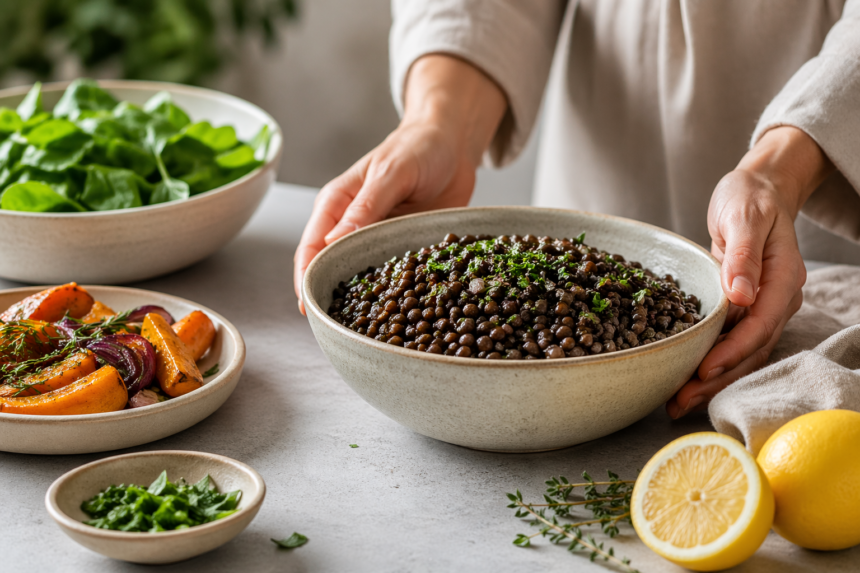
Black Puy lentils are one of those pantry staples that quietly do a lot of work. They are hearty without feeling heavy, nutritious without being boring, and versatile enough to fit into weeknight dinners, meal prep, salads, soups, and grain bowls. If you have ever wanted an ingredient that feels both practical and a little elevated, Black Puy lentils deserve a spot in your kitchen.
- What Is Black Puy?
- Black Puy Nutrition at a Glance
- Why Black Puy Lentils Fit So Well Into Healthy Eating
- What Black Puy Tastes Like
- How to Cook Black Puy Properly
- Everyday Uses for Black Puy
- Black Puy vs Other Lentils
- Common Mistakes to Avoid
- Real-World Ways to Make Black Puy More Appealing
- Are Black Puy Lentils Good for Weight Management?
- Storage and Leftovers
- Conclusion
What makes Black Puy especially appealing is the balance they bring. Lentils in general are well known for their fiber, plant protein, folate, and iron, and cooked lentils provide about 18 grams of protein and 16 grams of fiber per cup in standard nutrition references. Harvard’s Nutrition Source also notes that lentils are naturally low in saturated fat and sodium while being rich in fiber and folate, which helps explain why they are so often recommended in healthy eating patterns.
But Black Puy is not just about nutrition. It is also about texture and flavor. These lentils tend to hold their shape better than softer varieties, which makes them useful in dishes where you want definition instead of mush. That slightly peppery, earthy taste is the reason so many cooks reach for them when they want a lentil that feels a bit more refined on the plate.
What Is Black Puy?
Black Puy usually refers to dark lentils in the Puy style, meaning small lentils with a firm texture and a deep, earthy flavor profile. Traditional Puy lentils are associated with French green lentils, but in many kitchens and food discussions, people use Black Puy to describe a similar small lentil that cooks up firm and works beautifully in savory dishes. Lentils themselves are an ancient legume that have been eaten across many regions of the world for centuries.
The appeal of Black Puy is simple. They are less likely to fall apart during cooking than red lentils, and they feel more structured than many brown lentils. That makes Black Puy ideal when the final dish depends on texture. Think warm lentil salads, roasted vegetable bowls, side dishes with herbs, or a pot of lentils simmered with onion, garlic, and olive oil.
If you have only used red lentils before, Black Puy will feel different right away. Red lentils break down quickly and are excellent in soups, curries, and dals. Black Puy, by contrast, stay more intact. They are the lentils you use when you want a dish to look composed rather than blended.
Black Puy Nutrition at a Glance
One of the biggest reasons Black Puy is worth keeping around is its nutrient density. Exact values vary a little by variety and cooking method, but one cup of cooked lentils is commonly listed at around 230 calories, 18 grams of protein, 40 grams of carbohydrates, and about 16 grams of fiber. Lentils are also a major source of folate, and some standard nutrition summaries place a cooked cup at roughly 90 percent of the daily value for folate and 37 percent of the daily value for iron.
Here is a simple overview based on common cooked lentil nutrition data:
| Nutrient per cooked cup | Approximate amount |
|---|---|
| Calories | 230 |
| Protein | 18 g |
| Fiber | 16 g |
| Carbohydrates | 40 g |
| Fat | 1 g |
| Folate | 90% DV |
| Iron | 37% DV |
These numbers matter because they show why Black Puy can be so useful in everyday eating. A food that brings protein, fiber, minerals, and long-lasting fullness in one serving can make meal planning much easier.
Why Black Puy Lentils Fit So Well Into Healthy Eating
Black Puy works because it supports the kind of meals that leave you satisfied for hours. The combination of protein and fiber is the key here. Fiber helps with fullness and digestive health, and Mayo Clinic notes that soluble fiber can help lower cholesterol and blood sugar. Lentils are not a magic food, but they fit extremely well into a balanced diet built around whole foods.
Harvard also highlights lentils as a source of resistant starch and prebiotics, which adds to their appeal for people who care about digestion and overall diet quality. That does not mean every bowl of Black Puy changes your life overnight. It means that when you choose foods like this regularly, you make healthy eating easier and more sustainable.
Another practical benefit is cost. Lentils are often one of the most budget-friendly ways to add plant protein to meals. They store well, cook relatively quickly compared with many other legumes, and stretch beautifully across multiple servings. That makes Black Puy especially useful for families, students, meal preppers, and anyone trying to eat well without overspending.
What Black Puy Tastes Like
Flavor is where Black Puy starts to win people over. These lentils usually have a deeper, earthier taste than basic brown lentils, with a subtle peppery note that makes them feel more distinctive. They are not overpowering, which is part of their charm. They absorb flavor well, but they still keep their own identity in the dish.
That makes Black Puy ideal with ingredients like garlic, shallots, carrots, celery, rosemary, thyme, cumin, smoked paprika, lemon, Dijon mustard, parsley, and olive oil. They also work nicely with roasted squash, mushrooms, beets, spinach, goat cheese, feta, eggs, grilled chicken, seared salmon or siamese fish.
In other words, Black Puy is not a one-note ingredient. It can lean rustic, fresh, comforting, or elegant depending on what you pair it with.
How to Cook Black Puy Properly
Cooking Black Puy is straightforward, but a few small details make a big difference.
Basic cooking method
Start by rinsing the lentils well and checking for any small bits of debris. Then place them in a pot with water or stock. A common approach is about 3 cups of liquid for every 1 cup of lentils. Bring the pot to a boil, reduce to a gentle simmer, and cook until tender but still holding shape.
Cooking time depends on the specific lentil and how old it is, but lentils in general can cook in roughly 10 to 40 minutes depending on type. Small firm lentils often land somewhere in the middle of that range.
Tips that improve the final result
- Salt later if you want maximum control over texture.
- Add aromatics like bay leaf, onion, celery, or garlic while simmering.
- Avoid over-stirring, which can cause the lentils to break down.
- Drain promptly once tender if extra liquid remains.
- Toss warm Black Puy with olive oil and acid after cooking to brighten flavor.
Do Black Puy lentils need soaking?
Usually, no. Lentils generally do not require soaking the way some larger dried beans do. That is part of their convenience and one reason Black Puy is so useful on busy days.
Everyday Uses for Black Puy
The best thing about Black Puy is how easily it slides into normal life. You do not need a special occasion or a complicated recipe.
1. Warm lentil salads
This is one of the best uses for Black Puy because the texture stays intact. Toss cooked lentils with roasted carrots, arugula, red onion, parsley, lemon juice, and olive oil. Add feta if you want a salty finish.
2. Meal prep bowls
Black Puy works beautifully in lunch bowls with brown rice, quinoa, roasted vegetables, avocado, and a tahini or mustard vinaigrette. Because the lentils stay firm, they hold up well in the fridge.
3. Soups with more texture
If you want a lentil soup that still has bite, Black Puy is a great choice. It gives the soup body without dissolving completely into the broth.
4. Side dish instead of rice
A pot of Black Puy cooked with onion and herbs can be served under roasted chicken, grilled fish, or sautéed vegetables. It feels more flavorful than plain rice while still being simple.
5. Vegetarian mains
Black Puy can anchor a plant-forward dinner when paired with mushrooms, tomatoes, greens, and a good finishing oil. Add a soft-boiled egg or yogurt sauce and the meal feels complete.
Black Puy vs Other Lentils
Not all lentils behave the same, and this matters in the kitchen.
Black Puy vs red lentils
Red lentils cook fast and become soft quickly. They are best for soups, stews, and curries where a creamy texture is welcome. Black Puy is better when you want the lentils to stay whole.
Black Puy vs brown lentils
Brown lentils are flexible and common, but they can become softer and less distinct. Black Puy often tastes more earthy and looks more elegant on the plate.
Black Puy vs beluga lentils
Beluga lentils are also dark, small, and firm. They can be quite similar in use, though some cooks find beluga lentils slightly richer and more caviar-like in appearance. If you cannot find Black Puy, beluga lentils are often a practical substitute.
Common Mistakes to Avoid
Even a simple ingredient like Black Puy can disappoint if you treat it carelessly.
The first mistake is overcooking. Once Black Puy goes too far, that signature firm texture disappears. The second mistake is under-seasoning. Lentils need salt, acid, herbs, or aromatics to taste fully alive.
A third mistake is making them too wet for the intended dish. If you are using Black Puy in a salad or bowl, drain well and let the steam escape. Otherwise the dressing gets diluted and everything tastes flat.
The fourth mistake is expecting them to act like every other lentil. Black Puy shines because it keeps shape and adds texture. Build the dish around that strength.
Real-World Ways to Make Black Puy More Appealing
If you are cooking for people who think lentils are dull, Black Puy is often the best place to change their mind.
Roast vegetables until they get caramelized edges. Add fresh herbs at the end, not the beginning. Use acid generously, whether that is lemon juice, red wine vinegar, or a mustard vinaigrette. Finish with olive oil for richness and balance.
Texture matters too. Pair Black Puy with crunchy cucumbers, toasted walnuts, crisp shallots, or pumpkin seeds. That contrast turns a healthy ingredient into a genuinely satisfying meal.
This is also where Black Puy earns its place in modern home cooking. It is not just “good for you.” It is useful, adaptable, and surprisingly enjoyable when seasoned well.
Are Black Puy Lentils Good for Weight Management?
They can be a smart option because foods rich in protein and fiber tend to be more filling. That matters if you are trying to build meals that satisfy you without relying on heavily processed options. Fiber-rich foods are repeatedly highlighted in nutrition guidance because they help support fullness and better overall diet quality.
That said, Black Puy works best as part of a complete eating pattern. Pair it with vegetables, healthy fats, and reasonable portions of other whole foods. That creates meals that feel balanced rather than restrictive.
Storage and Leftovers
Cooked Black Puy keeps well in the refrigerator, which makes it perfect for batch cooking. Store it in an airtight container and use it over the next few days in soups, salads, and bowls.
You can also freeze cooked Black Puy in portioned containers. That gives you a ready-made base for fast dinners later in the week. For busy households, that kind of flexibility matters just as much as nutrition.
Conclusion
Black Puy is one of the easiest ways to make everyday meals more nourishing, more flavorful, and more practical. It delivers the plant protein, fiber, folate, and iron that make lentils so respected in nutrition research, while also bringing a firm texture and earthy flavor that works in far more dishes than people expect.
What really makes Black Puy stand out is that it fits real life. It cooks without much fuss, stores well, adapts to simple or elevated meals, and gives you a solid foundation for healthy eating without sacrificing taste. If you want one ingredient that can handle soups, salads, bowls, and hearty sides with equal confidence, Black Puy is a smart staple to keep on hand.
In the broader world of lentil cultivation, few pantry ingredients feel this efficient and this satisfying at the same time. Black Puy gives you substance, flavor, and flexibility, which is exactly what most home cooks need from an everyday staple.