



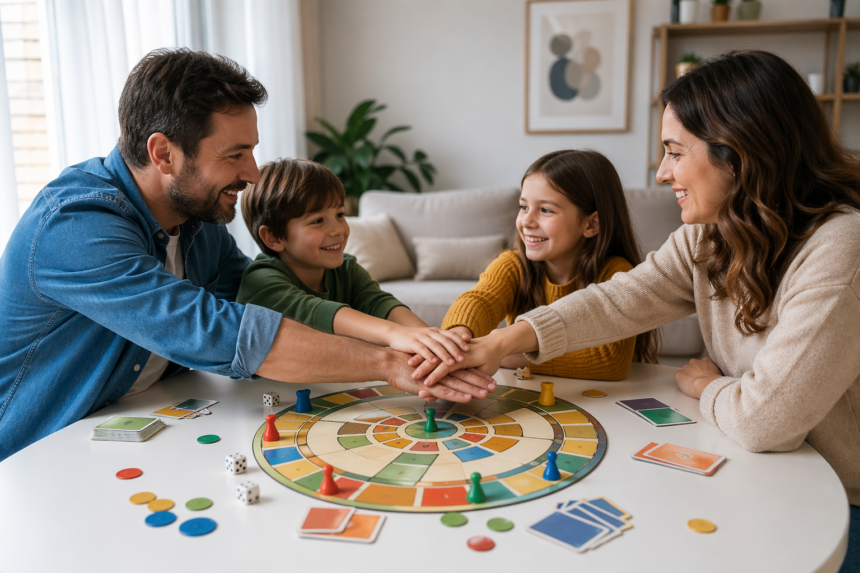
Family game night sounds simple, but anyone who has tried to get kids, teens, and adults excited about the same activity knows it is not always easy. The Best Board Games for Families are the ones that make everyone feel included, keep turns moving, and create the kind of laughter people remember long after the box goes back on the shelf. That is why picking the right title matters more than most families think.
- What Makes the Best Board Games for Families Worth Playing?
- Why Family Board Games Still Matter in a Screen-Filled World
- The Main Types of Best Board Games for Families
- How to Choose the Right Game for Your Family
- Best Board Games for Families by Age Group
- Common Mistakes Families Make When Buying Board Games
- How to Make Family Game Night More Fun Every Time
- A Real-World Way to Build a Family Board Game Shelf
- Conclusion
- FAQ
The good news is that the Best Board Games for Families are easier to find now than ever. Interest in games and puzzles has stayed strong in the broader toy market, and play itself continues to be linked with social, emotional, and cognitive benefits for children and families. The American Academy of Pediatrics has long emphasized that play supports healthy development and family bonds, while recent reviews on board games also point to gains in communication, interaction, and thinking skills.
If you are trying to build a game shelf that actually gets used, this article will help you do it. Instead of throwing random titles into a list, we will look at what makes the Best Board Games for Families work, which kinds of games fit different age groups, and how to choose options that make game night feel fun rather than forced.
What Makes the Best Board Games for Families Worth Playing?
Not every popular game belongs on a family table. Some are too long, some are too competitive, and some leave younger players bored after ten minutes. The Best Board Games for Families usually share a few important traits.
First, they are easy to teach. A family game should not require a long rules lecture before the fun starts. If players can understand the basic goal within a few minutes, they are much more likely to stay engaged.
Second, the Best Board Games for Families give every player something meaningful to do. Long downtime is one of the biggest reasons family game night falls flat. When people wait too long between turns, attention drifts, and the room starts to split into side conversations or phone scrolling.
Third, great family games balance luck and skill. Too much strategy can frustrate younger players. Too much luck can make older players feel like their choices do not matter. The sweet spot is a game where children can stay competitive, but adults still feel rewarded for smart decisions.
Finally, replay value matters. The Best Board Games for Families should feel a little different each time you open the box. New challenges, changing player choices, or quick rounds help keep a game fresh.
Why Family Board Games Still Matter in a Screen-Filled World
A lot of parents are not just shopping for entertainment. They are looking for something that brings people into the same room and keeps them there. That is one reason the Best Board Games for Families remain so valuable.
Board games create face-to-face interaction in a way passive entertainment does not. Players listen, negotiate, react, celebrate, and sometimes lose gracefully. Those moments may sound small, but they teach patience, communication, and emotional control in real time. The American Academy of Pediatrics notes that play helps develop social and emotional ties, while research reviews have found board games can support interpersonal interaction and understanding.
They also create rituals. Families that play together regularly often build traditions around certain titles. Maybe one game comes out every Friday night. Maybe another is reserved for holidays, birthdays, or rainy afternoons. Over time, the game becomes more than a product. It becomes part of family memory.
That matters because the Best Board Games for Families are not only about winning. They are about shared attention. In many households, that is the hardest thing to get and the most meaningful thing to keep.
The Main Types of Best Board Games for Families
When people search for the Best Board Games for Families, they often imagine one perfect universal answer. In reality, the best choice depends on your family’s style. Some groups love to laugh. Others want strategy. Some need quick games because younger children lose focus fast.
Here are the main categories that tend to work well.
Party games for big laughs
These are great for mixed ages and larger groups. They usually rely on guessing, drawing, acting, matching, or quick thinking. The best part is that they are approachable. Even guests can jump in without feeling lost.
Party-style picks are often among the Best Board Games for Families because they reduce pressure. Nobody needs to think ten turns ahead. The energy stays light, and the fun starts quickly.
Cooperative games for teamwork
In cooperative games, players work together against the game rather than against one another. This style can be perfect for families with very different ages or with children who get upset by intense competition.
The Best Board Games for Families in this category help kids practice teamwork, planning, and communication without the sting of one person being singled out as the loser. That can make game night feel more supportive and less stressful.
Strategy games that stay accessible
Some families want more depth. They enjoy choices, tactics, and small moments of planning, but they still need a game that is welcoming enough for teens or older children.
Accessible strategy titles often become some of the Best Board Games for Families because they give adults a satisfying challenge while remaining simple enough for the whole table to learn.
Word and trivia games for older kids and adults
These are excellent for families who love conversation, general knowledge, or language-based fun. They work especially well when children are old enough to read well and think quickly under a little pressure.
Not every household will put these at the top of their list, but for the right group, they are absolutely among the Best Board Games for Families.
How to Choose the Right Game for Your Family
A game can be highly rated and still be wrong for your home. That is why smart selection matters more than hype.
Start with age range, but do not stop there. Publisher age labels are helpful, but they do not always reflect your child’s patience, reading level, or personality. A seven-year-old who loves puzzles may enjoy a game rated eight and up, while another child may get restless with anything that lasts more than fifteen minutes.
Next, think about player count. Some of the Best Board Games for Families shine with four players but feel flat with two. Others are perfect for a small household but become messy in a larger group. Buy for the number of people who will actually play most often.
Then consider tone. Ask yourself what usually makes your family laugh, argue, or lose interest. If sibling rivalry is intense, cooperative choices may work better than head-to-head games. If your family loves storytelling and noise, a quiet strategy title may not get much use.
It also helps to think about session length.
| Family Need | Best Fit |
|---|---|
| Young kids with short attention spans | Quick rounds and simple rules |
| Mixed ages | Luck-skill balance and visual gameplay |
| Competitive family | Light strategy with fair catch-up mechanics |
| Sensitive players | Cooperative or team-based games |
| Busy weeknights | 15 to 30 minute play time |
| Holidays and gatherings | Party games with flexible player counts |
This is where the Best Board Games for Families separate themselves from the rest. They fit real family life, not just ideal conditions.
Best Board Games for Families by Age Group
Age matters because what feels exciting to a five-year-old can feel repetitive to a teenager, and what feels brilliant to an adult can feel impossible to a younger child.
Families with young children
For younger kids, the Best Board Games for Families are usually visual, tactile, and easy to repeat. Clear colors, simple actions, and short turns keep everyone engaged. Matching games, memory games, and simple race or collection games often work well.
At this stage, the goal is not deep strategy. It is building comfort with taking turns, following rules, and enjoying shared play.
Families with elementary-age kids
This is the golden age for family board games. Children in this range can usually handle more structure, more reading, and more strategy, but they still enjoy playful themes and quick results.
The Best Board Games for Families for this group often include set collection, simple engine building, clue solving, or cooperative challenges. This is when game night can become a real household habit.
Families with teens
Teenagers usually want games that respect their intelligence and do not feel childish. Humor still matters, but so does meaningful choice.
For this group, the Best Board Games for Families often lean into deduction, strategy, negotiation, or fast-paced party mechanics. Teens tend to enjoy games that let them be clever, competitive, or unexpectedly funny.
Multi-generational families
When grandparents, parents, and kids all play together, simplicity becomes more important again. The Best Board Games for Families in this setting are easy to see, easy to teach, and not too long. Familiar themes help, and complicated scoring usually hurts.
A game that works across generations may not be the deepest title on your shelf, but it will often be the most played.
Common Mistakes Families Make When Buying Board Games
One of the biggest mistakes is buying games based only on popularity. A bestseller can still miss the mark if it does not fit your family’s age mix, patience level, or style of fun.
Another mistake is choosing games that take too long to set up. Parents often imagine cozy weekend sessions, but most family game nights happen on ordinary evenings. The Best Board Games for Families are often the ones that get to the fun fast.
Some families also underestimate the value of replayability. A flashy game may feel exciting once, but if every round feels the same, it will not survive long on the shelf.
Finally, many people ignore emotional fit. If one child hates direct conflict, a highly aggressive game may create tension instead of joy. If another child loves being silly, a serious strategy game may never land. The Best Board Games for Families match personalities as much as mechanics.
How to Make Family Game Night More Fun Every Time
Even the Best Board Games for Families can fall flat if the atmosphere feels forced. A few small habits can make a huge difference.
Keep the start time realistic. A game night that begins too late, when younger kids are tired or adults are distracted, will struggle no matter what game you choose.
Rotate who picks the game. When everyone gets a chance to choose, buy-in improves. People enjoy the experience more when they feel included before the first turn begins.
Teach as you play when possible. Long explanations drain energy. Many of the Best Board Games for Families are better introduced through the first round rather than a full rule presentation.
It also helps to normalize losing. Families have more fun when the mood stays playful. Celebrate clever moves, funny moments, and surprising comebacks instead of focusing only on who won.
One practical approach is to build a simple game night mix:
- one quick warm-up game
- one main game
- one backup option in case attention drops
That small structure keeps the evening flexible without making it feel overplanned.
A Real-World Way to Build a Family Board Game Shelf
If your collection is still small, do not try to cover every genre at once. Start with three kinds of games.
First, add one easy laugh-heavy title. This becomes your reliable crowd-pleaser.
Second, choose one cooperative option. This helps on nights when competition feels like a bad idea.
Third, pick one slightly deeper strategy game that older kids and adults can grow into. Over time, this balance gives you a practical lineup of the Best Board Games for Families rather than a random pile of boxes bought on impulse.
This approach works because it mirrors real life. Some nights your family wants noise and laughter. Other nights you want teamwork. Sometimes you want a little challenge. The best shelf is not the biggest shelf. It is the one that actually gets opened.
Conclusion
The Best Board Games for Families do more than fill an hour. They turn ordinary evenings into shared experiences, help different age groups meet in the middle, and create a kind of connection that feels increasingly rare. When a game is easy to teach, fun to replay, and genuinely engaging for more than one age group, it earns its place at the table.
That is the real secret behind the Best Board Games for Families. They are not necessarily the most expensive, the newest, or the most complicated. They are the ones your family asks to play again. In the end, family game night is not really about cardboard, tokens, or score tracks. It is about laughter, attention, and the simple joy of being together around tabletop gaming.
If you choose with your family’s habits, ages, and personalities in mind, you will end up with Best Board Games for Families that make game night more fun in a way that actually lasts.
FAQ
What are the best board games for families with different ages?
The Best Board Games for Families with mixed ages usually have simple rules, short turns, and a balance of luck and skill. Cooperative games and light party games are often the safest picks.
How many board games does a family really need?
Most families can build a strong rotation with just three to five great choices. A small, well-used collection is better than a large shelf of games nobody reaches for.
Are board games good for child development?
Play has been linked with social, emotional, and cognitive development, and research reviews suggest board games can support communication, interaction, and thinking skills when used appropriately.
How long should family game night last?
For many households, 30 to 90 minutes works well. The sweet spot depends on the ages of the players, the day of the week, and how complex the game is.
Should families choose cooperative or competitive games?
Both can work. Competitive games are great for families who enjoy playful rivalry. Cooperative games are often better when age gaps are wide or when some players are sensitive to losing.