



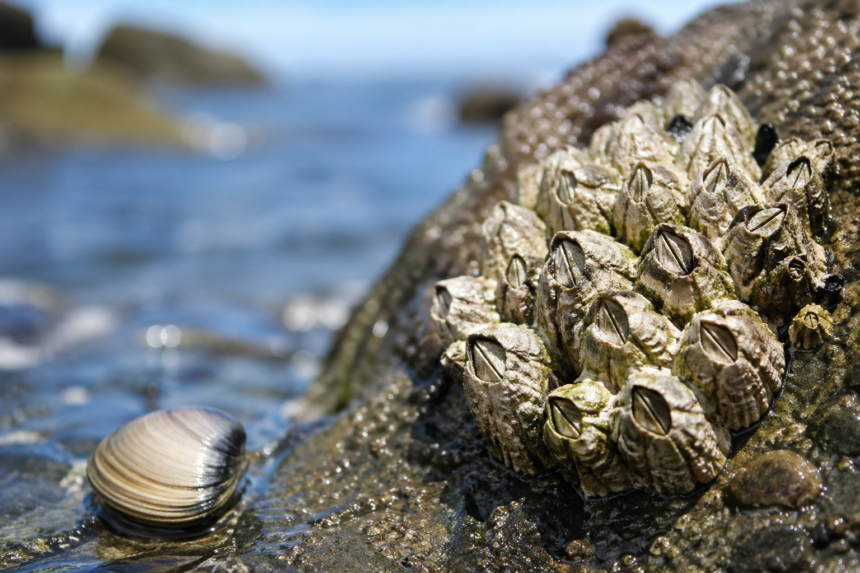
A Barnacle Arthropod can fool almost anyone at first glance. I have seen many people look at barnacles on rocks, boats, shells, or whale skin and assume they are tiny mollusks, almost like miniature clams glued to a surface. That mistake makes sense because barnacles have hard outer plates, live in the sea, and often sit beside mussels, limpets, and oysters.
- What Is a Barnacle Arthropod?
- Why a Barnacle Arthropod Is Not a Mollusk
- Barnacle Arthropod vs Mollusk: The Key Differences
- The Hidden Body Inside a Barnacle Arthropod
- The Life Cycle of a Barnacle Arthropod
- Why Barnacles Attach to Rocks, Boats, and Animals
- Barnacle Arthropod Anatomy Made Simple
- How a Barnacle Arthropod Eats
- Why Barnacles Look Like Shellfish
- Common Types of Barnacles
- Are Barnacles Harmful?
- Barnacle Arthropod in the Ecosystem
- Real-World Example: Barnacles on Ships
- Common Myths About Barnacles
- How to Identify a Barnacle Arthropod
- Why the Barnacle Arthropod Classification Matters
- Frequently Asked Questions About Barnacle Arthropod
- Conclusion
But biologically, a barnacle is not a mollusk at all. A Barnacle Arthropod is a highly modified marine crustacean, which means it is more closely related to crabs, lobsters, and shrimp than to clams or snails. NOAA describes barnacles as crustaceans related to crabs, lobsters, and shrimps, while Britannica identifies barnacles as marine crustaceans of the subclass Cirripedia.
That one fact changes the whole way we understand this strange little sea animal.
What Is a Barnacle Arthropod?
A Barnacle Arthropod is a marine invertebrate that belongs to the arthropod group and the crustacean lineage. Arthropods are animals with segmented bodies, jointed appendages, and an external skeleton. Crustaceans are a major group within arthropods and include familiar animals such as crabs, shrimp, lobsters, krill, and copepods.
Barnacles look unusual because adult barnacles are mostly fixed in place. Unlike a crab that walks or a shrimp that swims, most barnacles attach permanently to hard surfaces. You may find them on:
- Coastal rocks
- Ship hulls
- Wooden pilings
- Buoys
- Sea turtles
- Whales
- Shells of other animals
- Floating debris
This fixed lifestyle is one reason people misidentify barnacles. They do not move around like most crustaceans. They sit in one spot, protected by hard plates, filtering food from moving seawater.
In simple terms, a Barnacle Arthropod is a crustacean that gave up walking for permanent attachment.
Why a Barnacle Arthropod Is Not a Mollusk
The confusion usually starts with the shell. Mollusks such as clams, oysters, and mussels also have hard shells. Barnacles have hard outer plates too, so the visual similarity is strong.
But shells do not decide an animal’s true classification.
A turtle has a shell, but it is not a mollusk. A sea urchin has a hard outer covering, but it is not a mollusk either. In biology, scientists classify animals by deeper traits such as body plan, development, anatomy, appendages, and evolutionary relationships.
A Barnacle Arthropod is not a mollusk because it has arthropod features, especially during its life cycle. Barnacles begin life as swimming larvae. One larval stage is called a nauplius, which is a classic crustacean larval form. Britannica notes that barnacle nauplii molt several times before becoming cyprid larvae, which later attach to solid surfaces and transform into adults.
Mollusks do not develop this way. Their anatomy and early development are different.
Barnacle Arthropod vs Mollusk: The Key Differences
Here is a simple comparison that helps clear up the confusion.
| Feature | Barnacle Arthropod | Mollusk |
|---|---|---|
| Main group | Arthropoda | Mollusca |
| Closer relatives | Crabs, lobsters, shrimp | Clams, snails, octopuses |
| Body covering | Calcareous plates around crustacean body | Shell made by mantle in many species |
| Appendages | Jointed appendages, including cirri | Usually no jointed limbs |
| Larval stage | Nauplius and cyprid stages | Trochophore or veliger in many species |
| Feeding style | Uses feathery cirri to filter food | Varies by group, filter feeding, grazing, predation |
| Adult movement | Usually fixed in place | Many move, some are fixed |
The biggest clue is not the shell. It is the hidden body inside.
Inside the plates, a Barnacle Arthropod has a body plan linked to crustaceans. Its feeding structures are modified limbs. Those feathery parts that sweep through water are not gills or tentacles in the mollusk sense. They are cirri, specialized appendages.
The Hidden Body Inside a Barnacle Arthropod
If you have only seen dry barnacles stuck to a rock, you may imagine them as lifeless shell bumps. But living barnacles are active in their own quiet way.
When submerged, many barnacles open the top of their shell plates and extend feathery appendages into the water. These appendages sweep back and forth, catching tiny food particles. A 2024 study in the Journal of Experimental Biology describes barnacle feeding as relying on a cirral net or fan made of specialized thoracic appendages that capture particles as water flows past.
That feeding action is one of the most fascinating parts of barnacle biology.
A Barnacle Arthropod is basically lying on its back inside its protective plates, kicking food toward its mouth with modified legs. That sounds strange, but it is a brilliant adaptation for life in wave-swept coastal zones.
Instead of chasing food, the barnacle lets water bring food to it.
The Life Cycle of a Barnacle Arthropod
The life of a Barnacle Arthropod does not begin as a fixed shell-covered animal. It begins as a tiny swimming larva.
This life cycle is one of the strongest reasons barnacles are classified as crustaceans.
1. Nauplius Larva
The nauplius is the first larval stage. It is free-swimming and looks nothing like the adult barnacle. It has simple body features and uses appendages to move through the water.
This stage allows barnacles to spread. If every barnacle stayed exactly where its parent lived, crowded colonies would quickly run out of space. The swimming larva gives the species a chance to settle in new locations.
2. Cyprid Larva
After several molts, the nauplius becomes a cyprid larva. This stage is not mainly about feeding. It is about finding the right place to live.
The cyprid explores surfaces and tests whether a rock, shell, ship hull, or animal body is suitable. Once it finds a good surface, it attaches head-first.
This is a major turning point in the life of a Barnacle Arthropod.
3. Attached Juvenile
After attachment, the barnacle changes shape dramatically. It begins building protective plates and turns into a juvenile barnacle.
At this stage, it no longer looks like the swimming larva. It starts living the fixed lifestyle that most people associate with barnacles.
4. Adult Barnacle
The adult becomes a filter feeder. It opens its plates when covered by water and extends cirri to collect plankton and organic particles.
This transformation from swimming larva to fixed adult is one of nature’s most impressive examples of adaptation.
Why Barnacles Attach to Rocks, Boats, and Animals
A Barnacle Arthropod needs a firm surface because most adult barnacles cannot simply swim away once grown. Attachment is survival.
Good attachment sites provide:
- Access to moving seawater
- Regular food flow
- Oxygen
- Protection from being buried in sediment
- A chance to reproduce near other barnacles
This is why barnacles are common in intertidal zones. Waves bring food and oxygen, while the hard surface gives them a stable home.
From a human point of view, barnacles can be a problem. On boats and ships, they contribute to biofouling. Biofouling increases drag, which can reduce fuel efficiency and require cleaning or antifouling maintenance.
From an ecological point of view, however, barnacles are part of a busy coastal community. They provide texture and shelter for small organisms, compete for space, and become food for predators such as certain snails, sea stars, fish, and shorebirds.
Barnacle Arthropod Anatomy Made Simple
The anatomy of a Barnacle Arthropod is easier to understand when you stop expecting it to look like a clam.
A typical barnacle has:
- Hard outer plates for protection
- An opening at the top
- A soft crustacean body inside
- Feathery cirri for feeding
- Cement glands for attachment
- Reproductive organs
- Reduced body segmentation in adults
The shell-like plates are made mainly of calcium carbonate, but they are not the same as a clam shell. The barnacle’s plates form a protective housing around a crustacean body.
This is why appearances can be misleading. A barnacle may look like a tiny shellfish from the outside, but the animal inside tells a different story.
How a Barnacle Arthropod Eats
A Barnacle Arthropod feeds by suspension feeding, often called filter feeding. When water covers the barnacle, it opens the top plates and extends its cirri.
These cirri sweep through the water and capture:
- Plankton
- Tiny algae
- Organic particles
- Small suspended food material
The food is then moved toward the mouth.
This feeding method works especially well in moving water. In calm water, there may not be enough food flow. In wave-washed areas, the barnacle can take advantage of constant water movement.
I find this adaptation especially clever because barnacles turn a limitation into a strength. They cannot chase prey, so they turn their legs into a food-catching fan.
Why Barnacles Look Like Shellfish
Barnacles resemble shellfish because they face similar environmental challenges.
Both barnacles and many mollusks need protection from:
- Drying out during low tide
- Wave impact
- Predators
- Physical scraping
- Changing salinity
- Sun exposure in shallow zones
Hard outer coverings solve many of these problems. Over time, unrelated animals can evolve similar features when they live in similar environments. This is called convergent evolution.
So a Barnacle Arthropod looks mollusk-like not because it is a mollusk, but because its lifestyle rewards similar protective designs.
Nature often repeats useful shapes.
Common Types of Barnacles
There are many barnacle forms, but most casual observers notice two main types.
Acorn Barnacles
Acorn barnacles are the cone-shaped barnacles often seen on rocks, seawalls, and boat hulls. They attach directly to the surface without a stalk.
These are the classic barnacles people see at beaches.
Gooseneck Barnacles
Gooseneck barnacles have a flexible stalk and a shell-like feeding end. They often attach to floating objects, rocks, or exposed coastal surfaces.
They look very different from acorn barnacles, but they are still barnacles and still crustaceans.
Parasitic Barnacles
Some barnacles are parasitic and look nothing like the common rock barnacle. Certain forms infect other crustaceans and have highly reduced bodies. Britannica notes that some cirripedes are internal parasites of marine invertebrates.
This variety shows how flexible barnacle evolution has been.
Are Barnacles Harmful?
A Barnacle Arthropod is not harmful in every situation. In natural ecosystems, barnacles are normal and important.
However, they can cause problems when they grow on human-made surfaces or living animals in large numbers.
On boats, barnacles can:
- Increase drag
- Slow movement
- Raise fuel use
- Damage coatings
- Require regular cleaning
On marine animals, barnacles are usually not deadly in small numbers. Whales, sea turtles, and crabs may carry barnacles as part of normal marine life. But heavy growth can sometimes create extra drag or irritation, especially if the animal is already stressed or injured.
Context matters. A barnacle on a coastal rock is part of the ecosystem. A thick layer on a ship hull is a maintenance issue.
Barnacle Arthropod in the Ecosystem
A Barnacle Arthropod may be small, but it plays several roles in marine habitats.
Barnacles help:
- Filter particles from seawater
- Create microhabitats for tiny organisms
- Provide food for predators
- Add structure to rocky shore communities
- Indicate tidal and environmental conditions
In tide pools, barnacles are part of a larger web that includes algae, mussels, limpets, crabs, snails, small fish, and sea stars.
They also compete intensely for space. On a crowded rock, space is valuable. Barnacles must settle quickly, grow securely, and survive waves, heat, predators, and neighbors pressing from every side.
That is a tough life for an animal many people barely notice.
Real-World Example: Barnacles on Ships
One of the most practical reasons to understand barnacles is marine biofouling. When a Barnacle Arthropod attaches to a ship hull, it becomes part of a rough biological layer.
That roughness matters. A smooth hull moves through water more efficiently. A hull covered in barnacles creates resistance.
For commercial vessels, resistance can mean higher fuel costs and more emissions. For small boat owners, it can mean slower speed, more cleaning, and higher maintenance expenses.
This is why antifouling coatings, hull inspections, and marina maintenance are important in boating and shipping.
Barnacles are small, but in large numbers they become an economic issue.
Common Myths About Barnacles
Barnacles attract myths because they look so strange. Here are a few common misunderstandings.
Myth 1: Barnacles Are Mollusks
This is the biggest myth. A Barnacle Arthropod is a crustacean, not a mollusk.
Myth 2: Barnacles Are Just Shells
Dry barnacles may look empty or inactive, but living barnacles are active filter feeders when underwater.
Myth 3: Barnacles Are Plants
Because they stay fixed in place, some people assume barnacles are plant-like. They are animals.
Myth 4: Barnacles Randomly Stick Anywhere
Barnacle larvae can be selective. They respond to surface texture, chemistry, and biological films before settlement.
Myth 5: All Barnacles Are the Same
There are many barnacle types, including acorn barnacles, gooseneck barnacles, burrowing barnacles, and parasitic forms.
How to Identify a Barnacle Arthropod
You can often recognize a Barnacle Arthropod by looking for a few simple signs.
Look for:
- Small hard plates forming a cone or volcano shape
- Clusters attached tightly to rocks or hard surfaces
- A small opening at the top
- Feathery appendages moving when underwater
- Rough patches on boat hulls, shells, or pilings
If the animal is attached permanently and opens at the top to sweep the water with tiny feather-like limbs, you are probably looking at a barnacle.
A mollusk such as a mussel or clam will usually have two shell halves. A snail has a coiled shell and a muscular foot. A barnacle has a plated outer wall and hidden crustacean appendages.
Why the Barnacle Arthropod Classification Matters
At first, this may sound like a small naming issue. But classification helps us understand how animals live, evolve, and interact with the world.
Knowing that a Barnacle Arthropod is a crustacean explains:
- Why it has nauplius larvae
- Why it uses modified appendages for feeding
- Why it is related to crabs and shrimp
- Why its shell-like plates are not mollusk shells
- Why its biology is so different from clams and oysters
Classification also helps students, beachgoers, boat owners, and nature writers avoid spreading the common mistake that barnacles are mollusks.
Once you know the truth, barnacles become much more interesting.
Frequently Asked Questions About Barnacle Arthropod
Is a barnacle an arthropod?
Yes. A barnacle is an arthropod and a crustacean. It belongs to the same broad animal group as crabs, shrimp, lobsters, insects, and spiders, though barnacles are marine crustaceans.
Is a barnacle a mollusk?
No. A barnacle is not a mollusk. It only looks similar to some mollusks because it has hard protective plates and often lives attached to surfaces in the ocean.
What is a barnacle most closely related to?
A barnacle is more closely related to crabs, lobsters, and shrimp than to clams, oysters, or snails.
Why do barnacles stick to things?
Barnacles attach because their adult lifestyle depends on staying fixed in a place where moving water brings food and oxygen. Their larvae search for suitable surfaces before settling.
How does a barnacle eat?
A barnacle eats by extending feathery cirri into the water. These appendages catch tiny food particles and move them toward the mouth.
Can barnacles move?
Adult barnacles usually cannot move from place to place after attachment. Their larvae can swim, but once they settle and mature, they typically remain fixed.
Conclusion
A Barnacle Arthropod is one of the best examples of why nature should not be judged by appearance alone. It looks like a small shell-covered mollusk, but its true identity is crustacean. Beneath those hard plates is an animal linked to crabs, lobsters, and shrimp, shaped by millions of years of adaptation to life on hard marine surfaces.
The most important thing to remember is simple: barnacles are not mollusks. They are arthropods with crustacean features, swimming larval stages, jointed feeding appendages, and a fixed adult lifestyle that makes them look more shellfish-like than they really are.
When I look at a barnacle now, I do not see just a rough patch on a rock or boat. I see a small survival expert. A Barnacle Arthropod turns waves into food delivery, turns stillness into strategy, and turns a hard surface into a lifelong home.
For readers who want a broader taxonomic reference, the phrase marine crustaceans connects to more background on barnacle classification and biology.