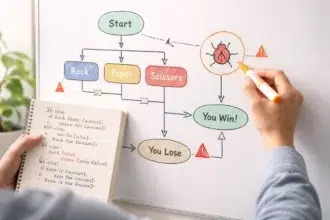




When students search for 9.7.4 Leash CodeHS Answers, they are usually not just looking for a quick shortcut. Most of the time, they are stuck, tired, or unsure why their code is not passing the checks. I have seen this happen often with beginner programming exercises: the idea looks simple, but one small logic mistake can make the whole activity feel confusing.
- What Students Usually Mean by 9.7.4 Leash CodeHS Answers
- Why CodeHS Activities Can Feel Hard Even When They Look Simple
- How to Approach 9.7.4 Leash CodeHS Answers the Right Way
- Common Mistakes in the Leash CodeHS Activity
- A Practical Debugging Method for 9.7.4 Leash CodeHS Answers
- Why Copying CodeHS Answers Can Hurt Your Progress
- Smart Practice Tips for CodeHS Leash Activity
- How Teachers May Expect You to Use 9.7.4 Leash CodeHS Answers
- Real-World Scenario: A Student Stuck on Leash
- How to Read CodeHS Test Feedback
- Important Coding Concepts That May Help
- Why Computer Science Practice Matters More Than Ever
- Best Study Habits for Students Searching 9.7.4 Leash CodeHS Answers
- What Parents Should Know About CodeHS Answer Searches
- What Makes a Good CodeHS Help Article
- FAQs About 9.7.4 Leash CodeHS Answers
- Conclusion: Use 9.7.4 Leash CodeHS Answers as a Learning Tool
That is why this article focuses on real help, not copy-paste shortcuts. If you are working on the Leash activity in CodeHS, the best approach is to understand the problem, read the instructions carefully, debug step by step, and learn why the code works. That way, you are not just finishing one assignment. You are building the kind of coding skill that helps in the next lesson too.
CodeHS itself describes its practice problems as autograded activities that run student code through test cases to check whether the solution is functionally and stylistically sound. That matters because a program may look right to you, but the platform is testing very specific behavior behind the scenes.
What Students Usually Mean by 9.7.4 Leash CodeHS Answers
When people type 9.7.4 Leash CodeHS Answers into search, the intent is usually practical. They want to know what the task is asking, why their code is failing, or what kind of logic they should use.
In many CodeHS activities, especially beginner JavaScript, Python, or Karel-style lessons, the assignment is not only about writing code. It is about learning a pattern. That pattern may involve commands, movement, loops, functions, conditionals, or object behavior depending on the course version.
So instead of treating “answers” as something to copy, I treat 9.7.4 Leash CodeHS Answers as a learning phrase. It means students need help understanding the exercise well enough to finish it honestly.
That distinction matters. Copying an answer may pass one checkpoint, but it will not help when the next task changes slightly. Understanding the logic will.
Why CodeHS Activities Can Feel Hard Even When They Look Simple
Beginner coding exercises often look short. That can be misleading.
A task like Leash may only require a few lines of code, but those lines still need the correct order, syntax, and logic. One missing parenthesis, one wrong function name, or one command placed too early can break the result.
I have noticed that students often struggle with three things:
- Reading the instruction too quickly
- Guessing instead of testing
- Changing too many lines at once
That last mistake is very common. A student writes code, gets an error, changes five things, runs it again, and now has no idea which change helped or hurt.
A better method is slower but much more effective. Change one thing. Run the code. Read the error. Then change the next thing.
That is how real debugging works.
How to Approach 9.7.4 Leash CodeHS Answers the Right Way
The smartest way to approach 9.7.4 Leash CodeHS Answers is to break the assignment into smaller parts.
Do not start by asking, “What is the final answer?” Start by asking, “What is the program supposed to do first?”
Most CodeHS exercises can be understood through this simple process:
- Read the goal of the activity.
- Identify the objects, characters, or variables involved.
- Look at what must happen in order.
- Write the first small piece of code.
- Run and test.
- Fix one issue at a time.
This approach works because coding is not really about memorizing answers. It is about turning instructions into steps a computer can follow.
If the Leash activity involves movement, commands, or object actions, think of it like giving very exact directions. A computer does not assume what you meant. It only follows what you wrote.
Common Mistakes in the Leash CodeHS Activity
Many students searching for 9.7.4 Leash CodeHS Answers are dealing with the same kinds of problems. The exact code may differ by course, but the mistakes often follow a pattern.
Here are the most common ones.
Skipping the Instructions
This sounds simple, but it is the biggest issue. CodeHS instructions often include small details that decide whether the code passes or fails.
For example, the task may require a specific order of actions. If your code does the right things but in the wrong order, the test may still fail.
Forgetting Required Commands
Sometimes students understand the goal but miss one required command. This can happen when the activity expects a character, object, or function to be used in a certain way.
A good habit is to compare your code against the assignment checklist, not against another student’s answer.
Misusing Syntax
Syntax errors are frustrating because they can make a simple idea look completely broken.
Common beginner syntax problems include:
- Missing parentheses
- Wrong capitalization
- Extra spaces in sensitive places
- Missing quotation marks
- Incorrect indentation
- Using a command before it is defined
If your code will not run at all, check syntax first before changing the logic.
Not Testing in Small Steps
If you write the whole solution at once, it becomes harder to find the mistake. I always recommend testing after every small section.
This habit saves time. It also makes you more confident because you know which part of your program already works.
A Practical Debugging Method for 9.7.4 Leash CodeHS Answers
When I help students with CodeHS exercises, I usually suggest a simple debugging routine. It works for 9.7.4 Leash CodeHS Answers and most other beginner coding tasks too.
Start with the error message. Do not ignore it. The message may look technical, but it often points directly to the line causing trouble.
Then ask these questions:
- Did I spell every command correctly?
- Did I use the correct capitalization?
- Did I place the command in the right order?
- Did I close every parenthesis or bracket?
- Did I follow the activity instructions exactly?
- Did I test one small part at a time?
If the platform gives test results, read them carefully. A failed test does not always mean everything is wrong. Sometimes it means one expected action is missing.
That is good news. It means you are close.
Why Copying CodeHS Answers Can Hurt Your Progress
I understand why students search for 9.7.4 Leash CodeHS Answers. Homework pressure is real. Deadlines are real. Confusing instructions are real too.
But copying a full answer without understanding it creates a bigger problem later. Coding lessons usually build on each other. If you skip the logic in one activity, the next assignment becomes harder.
This is especially true in programming because each topic connects to the next one. Commands lead to functions. Functions lead to conditionals. Conditionals lead to loops. Loops lead to larger programs.
CodeHS offers hundreds of curated practice problems in languages such as Java, Python, JavaScript, and C++, organized by topic and difficulty. That structure is designed to help students build skill over time, not just finish isolated tasks.
So the better goal is not “find the answer.” The better goal is “understand the answer well enough to write it myself.”
Smart Practice Tips for CodeHS Leash Activity
The Leash activity can become much easier when you use a better practice routine.
First, rewrite the instructions in your own words. This forces your brain to process the task instead of just staring at it.
Second, predict what your code should do before you run it. If the result is different from your prediction, you have found a learning moment.
Third, keep your code clean. Messy code makes debugging harder, even when the logic is mostly right.
Fourth, use comments if your course allows them. A short comment can remind you what each section is supposed to do.
For example, instead of writing random commands, think like this:
- What should happen first?
- What should happen next?
- What is the final expected result?
- What does the test checker likely want to see?
This helps you think like a programmer, not just a student trying to pass an exercise.
How Teachers May Expect You to Use 9.7.4 Leash CodeHS Answers
Teachers usually do not want students to rely on copied solutions. They want students to show effort, understand the logic, and ask better questions.
A better question than “What is the answer?” is:
“What part of my code is causing the activity to fail?”
That question shows learning. It also makes it easier for a teacher, tutor, or classmate to help you without simply giving away the solution.
If you are using 9.7.4 Leash CodeHS Answers as a search phrase, use the results as a study support tool. Look for hints, explanations, debugging ideas, and concept breakdowns.
That is the difference between academic shortcuts and actual learning support.
Real-World Scenario: A Student Stuck on Leash
Let me give a realistic example.
A student opens the Leash activity and reads the instructions quickly. They think they understand it, so they start typing commands. The code runs, but the result does not match the expected output.
They search for 9.7.4 Leash CodeHS Answers because they feel stuck.
Instead of copying a solution, they go back and do three things. They read the instructions again. They compare each command to the expected action. Then they run the code after changing only one line.
Suddenly, they notice the issue. The command order was wrong.
That is a small fix, but it teaches a major coding lesson: in programming, correct steps in the wrong order can still create the wrong result.
That lesson will help in future assignments far more than a copied answer would.
How to Read CodeHS Test Feedback
CodeHS test feedback can feel intimidating, but it is one of the most useful parts of the platform.
If a test fails, ask what the test expected. Did your code produce the wrong result? Did it stop too early? Did it miss a required action? Did it use the wrong structure?
Do not treat test failure as a personal failure. Treat it as information.
Good programmers fail tests all the time. The difference is that they use the failure to improve the program.
When working through 9.7.4 Leash CodeHS Answers, test feedback should guide your next move. If your code partly works, protect the part that works and focus only on the broken section.
Important Coding Concepts That May Help
Depending on your CodeHS course version, the Leash activity may connect to basic programming ideas. These ideas are worth reviewing because they appear again and again.
Sequencing
Sequencing means putting commands in the correct order. Computers follow instructions exactly as written, from top to bottom.
If your sequence is wrong, your output may be wrong even if every command is valid.
Functions
A function is a reusable block of code. If the activity asks you to define or call a function, make sure you understand the difference.
Defining a function tells the computer what the function does. Calling the function tells the computer to actually run it.
Conditionals
A conditional tells the program to make a decision. It usually follows an “if this happens, do that” structure.
If the Leash activity includes decision-making logic, check whether your condition is true at the right time.
Loops
A loop repeats code. Loops are useful, but they can also cause problems if they repeat too many times or not enough times.
If your program gets stuck or does not finish, a loop may be the issue.
Why Computer Science Practice Matters More Than Ever
Programming is no longer only for future software engineers. Students now use coding skills in business, science, design, data, robotics, gaming, and everyday problem-solving.
The National Center for Education Statistics is the main federal agency responsible for collecting and reporting data on U.S. education, including trends that help schools and policymakers understand student learning needs.
Code.org’s 2025 State of AI and Computer Science Education report also shows how computer science and AI education continue to be tracked at the state level, including standards, policies, and access for high school students.
That is one reason activities like Leash matter. They may feel small, but they teach habits that students use in bigger programming problems later.
Best Study Habits for Students Searching 9.7.4 Leash CodeHS Answers
If you are searching 9.7.4 Leash CodeHS Answers, try turning that search into a study session.
Here is a simple method that works:
| Study Step | What to Do | Why It Helps |
|---|---|---|
| Read | Go through the instructions slowly | Prevents missing key details |
| Predict | Say what the code should do | Builds logic before typing |
| Code | Write one small section | Reduces confusion |
| Test | Run the program | Shows what works |
| Debug | Fix one issue at a time | Makes errors easier to find |
| Reflect | Explain the solution in your own words | Strengthens memory |
This method may take a little longer at first, but it saves time in the long run. More importantly, it helps you become independent.
What Parents Should Know About CodeHS Answer Searches
Parents may see searches like 9.7.4 Leash CodeHS Answers and assume the student is trying to cheat. Sometimes that may be true, but often the student is simply frustrated.
Programming can be difficult because the feedback is immediate and unforgiving. A single small mistake can stop everything.
The best support is not to shame the student. Instead, ask what part is confusing. Ask them to explain the goal of the activity. If they cannot explain the goal, they probably need to reread the instructions before writing more code.
That small conversation can turn stress into learning.
What Makes a Good CodeHS Help Article
A good article about 9.7.4 Leash CodeHS Answers should not simply dump code. It should help students understand the assignment, avoid common mistakes, and learn the logic behind the task.
The most useful help usually includes:
- Clear explanation of the task type
- Hints without giving away everything
- Debugging steps
- Common errors
- Practice advice
- Ethical learning reminders
That is the kind of help that supports students without weakening their learning.
FAQs About 9.7.4 Leash CodeHS Answers
What is 9.7.4 Leash in CodeHS?
9.7.4 Leash is likely a specific CodeHS activity number and title within a programming course. The exact task may vary depending on the course, teacher settings, or language version, but students usually search for it when they need help completing or debugging the activity.
Can I use 9.7.4 Leash CodeHS Answers to finish my homework?
You can use help resources to understand the activity, but copying answers without learning the logic is not a good idea. It may help once, but it makes later coding assignments harder.
Why is my CodeHS Leash activity not passing?
Your activity may fail because of incorrect command order, syntax errors, missing steps, wrong function usage, or a result that does not match the test cases. Start by reading the error message and checking one line at a time.
What should I do if I am completely stuck?
Reread the instructions, explain the task in your own words, test small code sections, and ask your teacher or classmate a specific question. Instead of saying, “I do not get it,” say, “My code fails after this step. Can you help me understand why?”
Are CodeHS answers the best way to learn coding?
No. Hints, examples, and explanations are better than copied answers. Coding improves through practice, debugging, and understanding patterns.
Conclusion: Use 9.7.4 Leash CodeHS Answers as a Learning Tool
Searching for 9.7.4 Leash CodeHS Answers is understandable when you are stuck, but the real value comes from learning the steps behind the solution. CodeHS activities are built to develop programming habits, not just produce finished homework screens.
If you slow down, read carefully, test small sections, and debug with patience, the Leash activity becomes less frustrating. You start to see coding as a process instead of a guessing game.
The best answer is not always the fastest one. The best answer is the one you understand well enough to recreate, explain, and use again in a new problem. That is how real progress happens in computer science, and that is how a small activity like Leash can help build lasting skill.