



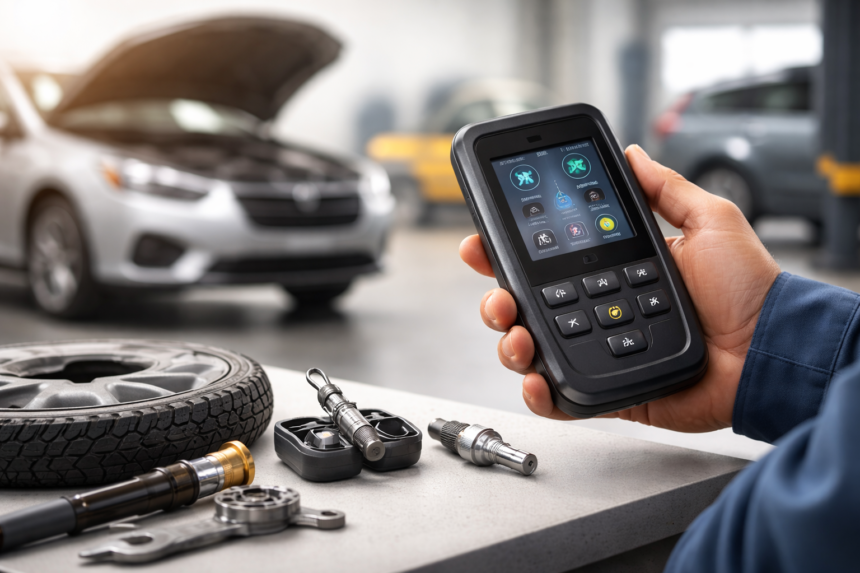
If you are shopping for a TPMS Scan Tool, you are probably trying to solve one very practical problem. You want to read tire sensor data, clear warning lights, handle relearns, and avoid wasting time guessing what is wrong with the system. That is exactly why the right tool matters. A good TPMS Scan Tool can save money, cut diagnostic time, and make sensor work much easier for both everyday drivers and working technicians.
- What a TPMS Scan Tool Actually Does
- Why TPMS Tools Matter More Than People Think
- The Most Important TPMS Scan Tool Features to Look For
- A Quick Comparison of What Buyers Usually Need
- Features That Matter Less Than Marketing Suggests
- Common Buying Mistakes to Avoid
- How to Choose the Right TPMS Scan Tool for Your Situation
- Real World Scenario: Why the Better Tool Usually Wins
- Does a TPMS Scan Tool Save Money?
- Questions Buyers Often Ask
- Final Thoughts on Buying the Right TPMS Scan Tool
- Conclusion
Tire pressure monitoring systems are not just a convenience feature. They are tied to safety, tire life, and vehicle efficiency. The U.S. National Highway Traffic Safety Administration explains that low tire pressure can affect handling and increase the risk of tire failure, while federal TPMS rules were created to warn drivers when tire pressure falls to a dangerous level. The EPA and FuelEconomy.gov also note that underinflated tires can reduce fuel economy and increase tire wear.
That is why buying the right tool is more than a gadget decision. It is a shop efficiency decision, a maintenance decision, and in many cases a safety decision too.
What a TPMS Scan Tool Actually Does
A TPMS Scan Tool is designed to communicate with tire pressure monitoring sensors and, in many cases, the vehicle’s onboard systems. Depending on the model, it can activate sensors, read sensor IDs, check battery status, view pressure and temperature data, perform relearn procedures, and sometimes program replacement sensors.
This is where many buyers get confused. Not every TPMS tool does the same job. Some tools are basic activation readers. Others are full-service diagnostic devices that can read trouble codes, communicate with the OBD-II port, and help complete relearns after tire rotation or sensor replacement.
So before you buy, it helps to think less about brand hype and more about your actual use case.
Why TPMS Tools Matter More Than People Think
A TPMS warning light can come on for several reasons. The tire may actually be low. A sensor battery may be weak. A relearn may be needed after rotation. In colder weather, pressure can dip enough overnight to trigger the warning light, then return closer to normal after driving. NHTSA specifically notes that this kind of temporary illumination can happen on cold mornings.
Without the right scan tool, you may end up replacing a healthy sensor, ignoring a real pressure issue, or sending a car back without properly completing the reset. That creates repeat visits, wasted labor, and frustrated customers.
A proper tool helps you answer the key questions quickly:
- Is the sensor transmitting?
- What is the sensor ID?
- What pressure is being reported?
- Is the battery still healthy?
- Does the vehicle need a manual relearn or an OBD-based relearn?
- Is the replacement sensor compatible?
Those answers are what separate a clean repair from trial and error.
The Most Important TPMS Scan Tool Features to Look For
Sensor Activation and Fast Reading
This is the first must-have feature. A useful TPMS Scan Tool should be able to wake up and read the sensor quickly. You want the tool to display sensor ID, pressure, temperature, and battery condition if supported.
A slow or inconsistent activation function turns even simple jobs into a hassle. If the tool struggles to wake sensors in real shop conditions, it will not feel reliable when you actually need it.
Relearn Function Support
Relearn capability is one of the biggest reasons people buy these tools. After rotating tires, replacing sensors, or changing wheel sets, many vehicles need the system to relearn which sensor belongs to which wheel position.
There are different relearn methods:
- Stationary relearn
- Automatic relearn through driving
- OBD relearn
- Manufacturer-specific relearn sequences
A better tool supports as many relearn types as possible and clearly tells you which method the vehicle requires. This alone can save a lot of time.
Wide Vehicle Coverage
Vehicle coverage is where many budget tools disappoint. Some are fine for a limited set of makes, but fall apart when you work on newer vehicles, import brands, or mixed fleets.
Before buying, check whether the tool supports:
- Domestic vehicles
- Asian brands
- European brands
- Newer model years
- Both direct and system-related TPMS service workflows
TPMS systems vary by manufacturer. NHTSA’s materials also distinguish between direct and indirect TPMS designs, which is important because service procedures are not always the same.
OBD-II Integration
If you only want basic sensor checks, you may not need OBD support. But if you want to complete more advanced relearns, especially on vehicles that require writing sensor IDs through the diagnostic port, OBD capability becomes extremely valuable.
This is especially important for tire shops, independent garages, and anyone who wants to avoid sending a customer elsewhere just to finish the job.
Sensor Programming Capability
Some TPMS tools can program universal replacement sensors. That means you can create or clone a sensor ID and prepare a replacement sensor for installation.
This feature matters if you regularly replace damaged or dead sensors. It is less important for the average driver who only wants to diagnose an occasional warning light, but for a shop it can be a major advantage.
Clear On Screen Instructions
One overlooked feature is software guidance. Good TPMS service tools do not just read data. They guide you through the process. That includes wheel order, relearn steps, OBD connection prompts, and vehicle-specific notes.
When the screen is clear and the workflow makes sense, jobs move faster and mistakes drop. That matters more than flashy design or marketing language.
Software Updates
Vehicle systems change all the time. A tool that cannot be updated will become less useful as newer models enter the market.
Look for a TPMS Scan Tool that offers regular software updates and has a strong support ecosystem. Even a solid tool can become frustrating if coverage stops improving.
Rugged Build Quality
TPMS work happens in real conditions. Shops are busy. Tools get dropped. Cables bend. Weather can be rough around tire work areas.
A quality tool should feel durable, have responsive buttons or touchscreen controls, and come with a cable and trigger system that can survive regular use.
A Quick Comparison of What Buyers Usually Need
| Buyer Type | Best Tool Focus |
|---|---|
| Everyday car owner | Simple sensor reading, light diagnostics, easy relearn help |
| DIY enthusiast | Broader vehicle coverage, OBD support, troubleshooting functions |
| Tire shop | Fast activation, wide compatibility, relearn speed, durable build |
| Repair garage | OBD relearn, sensor programming, regular updates, detailed workflow |
| Fleet service | Multi-vehicle support, repeat reliability, sensor management features |
This is why the “best” tool is never universal. The best one is the one that fits the jobs you actually do.
Features That Matter Less Than Marketing Suggests
Some buyers get pulled in by long feature lists that sound impressive but do not improve daily use. A tool can have an attractive interface and still be weak where it counts.
A few things to keep in perspective:
- Fancy design does not replace accurate sensor reading
- Huge menus are not useful if vehicle coverage is weak
- A low price is not a bargain if the tool cannot finish relearns
- A popular name alone does not mean better support
The real test is whether the tool helps you complete common TPMS jobs correctly and without delay.
Common Buying Mistakes to Avoid
One of the biggest mistakes is buying a tool based only on price. Cheap tools often handle the first few jobs well enough, but once you hit a less common vehicle or need OBD relearn support, their limits show up fast.
Another mistake is assuming all TPMS tools are diagnostic tools. Some are only sensor activators. They may wake the sensor and display basic data, but they will not help much with deeper system tasks.
A third mistake is ignoring update costs. A lower upfront price can turn expensive if yearly updates are required just to maintain useful coverage.
How to Choose the Right TPMS Scan Tool for Your Situation
For the everyday driver
If you are just maintaining one or two vehicles, focus on ease of use. You probably do not need advanced programming. What you do need is reliable activation, simple sensor data, and enough guidance to understand whether the issue is low pressure, a dead sensor, or a relearn requirement.
For the DIY car owner
A DIY user should think one step ahead. Tire work often leads to brake work, seasonal wheel swaps, and occasional sensor replacement. In that case, broader vehicle coverage and at least some OBD functionality are worth paying for.
For shops and technicians
For professional use, speed and compatibility are everything. You want a tool that activates quickly, covers a large range of vehicles, handles relearns cleanly, and receives regular software updates. Sensor programming is also valuable because it gives you more flexibility when replacing parts.
Real World Scenario: Why the Better Tool Usually Wins
Imagine a customer comes in after a seasonal tire swap. The TPMS warning light is on. A basic reader tells you only that one sensor is not responding. Now you still need to figure out whether the sensor battery is dead, whether the vehicle needs a relearn, or whether the replacement wheel set contains an incompatible sensor.
A more capable TPMS Scan Tool can activate each sensor, read IDs, compare signal status, guide the relearn sequence, and in some cases connect through OBD to complete the setup. That turns a vague problem into a clear process.
In a busy shop, that time difference matters. Over weeks and months, it matters even more.
Does a TPMS Scan Tool Save Money?
In many cases, yes. It can save money by reducing unnecessary sensor replacement, avoiding repeat labor, and helping you finish jobs correctly the first time.
There is also a broader maintenance angle. Proper tire inflation helps protect tire life and fuel economy. FuelEconomy.gov states that fixing underinflation can improve gas mileage, while EPA materials also note that underinflation increases tire wear and emissions impacts.
That means a good TPMS workflow is not only about warning lights. It supports better ongoing vehicle care.
Questions Buyers Often Ask
Can a TPMS Scan Tool work on every car?
No. Coverage depends on the tool’s software and supported model years. Always check compatibility before buying.
Do I need OBD-II support?
Not always. But if you want broader relearn capability, especially on vehicles that require sensor IDs to be written through the diagnostic port, OBD support is very useful.
Is sensor programming necessary?
Only if you expect to replace sensors regularly or want to use programmable universal sensors. For occasional personal use, it may not be essential.
Can a TPMS tool fix low tire pressure?
No. It does not replace inflation or tire repair. It helps you diagnose the issue, confirm sensor data, and complete service procedures.
What is the difference between direct and indirect TPMS?
Direct systems use sensors in the wheels to measure pressure. Indirect systems estimate pressure-related changes using wheel speed data through the ABS system. NHTSA materials describe both system types in the context of TPMS standards.
Final Thoughts on Buying the Right TPMS Scan Tool
The best TPMS Scan Tool is not the one with the longest feature sheet. It is the one that fits your vehicles, supports the relearn methods you actually need, reads sensors reliably, and stays useful through updates. For a casual car owner, that may mean a simple, dependable unit. For a shop, it usually means stepping up to stronger coverage, OBD functions, and sensor programming support.
If you treat TPMS work as a real part of vehicle safety and maintenance, the buying decision becomes much easier. Focus on reliable sensor activation, clear relearn support, wide compatibility, and software that keeps up with modern vehicles. That is what turns a tool purchase into a smart long-term investment.
In the end, even something as simple as checking tire pressure monitoring data the right way can prevent wasted time, unnecessary parts replacement, and customer frustration. A thoughtful tool choice pays off every time the warning light comes on.
Conclusion
Choosing the right TPMS Scan Tool comes down to practical value. You want a tool that reads sensors accurately, supports your vehicle range, handles relearns without confusion, and makes diagnostics faster instead of harder. Whether you are a driver, DIYer, or technician, the right choice helps you maintain safer tires, better efficiency, and smoother repair work.