


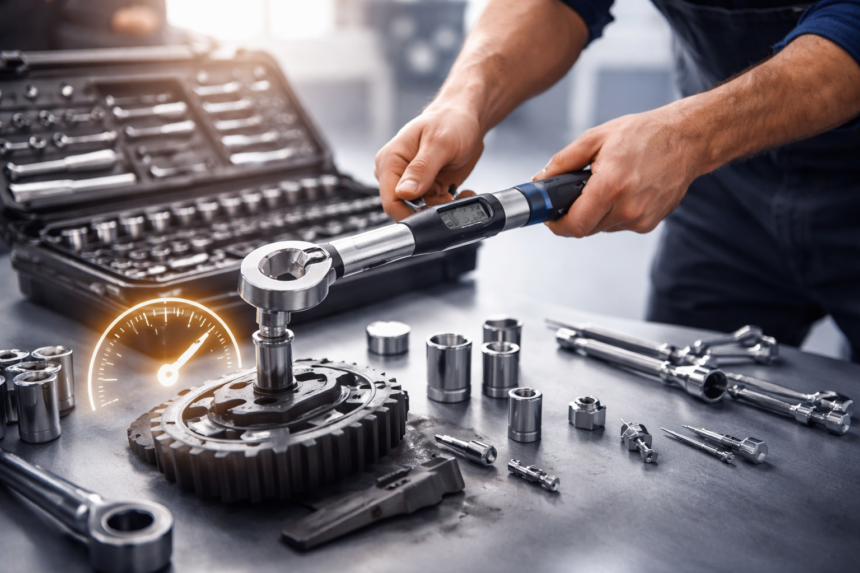
A Torque Wrench is one of those tools that seems optional until you ruin a bolt, warp a part, or end up chasing a leak that should never have happened in the first place. For a DIY mechanic, it is not just a nice extra in the toolbox. It is the tool that helps you tighten fasteners with control instead of guesswork.
- What a Torque Wrench Actually Does
- Why DIY Mechanics Need a Torque Wrench
- The Most Common Torque Wrench Uses in DIY Work
- Types of Torque Wrench and When Each One Makes Sense
- How to Choose the Right Torque Wrench for DIY Jobs
- How to Use a Torque Wrench Correctly
- Common Torque Wrench Mistakes That Cause Problems
- Real World Jobs Where a Torque Wrench Saves You Money
- Accuracy, Calibration, and What DIY Users Should Know
- Practical Torque Wrench Tips Every DIY Mechanic Can Use
- Final Thoughts on Why This Tool Earns Its Place
- Conclusion
- FAQs
That matters more than most people realize. Modern cars, motorcycles, bicycles, and even home equipment often rely on precise fastener tension. Tighten too little and parts can loosen over time. Tighten too much and you can strip threads, crush gaskets, distort components, or weaken the fastener itself. Standards bodies such as ASME publish performance requirements for hand torque tools because controlled tightening is critical in real mechanical work, not just in professional shops.
If you work on your own vehicle, install wheels, service brakes, swap spark plugs, adjust engine parts, or assemble components that have a manufacturer torque spec, a Torque Wrench helps you do the job with confidence. It turns “tight enough” into a measurable result.
What a Torque Wrench Actually Does
A Torque Wrench applies a specific amount of rotational force to a fastener such as a bolt or nut. In simple terms, it lets you tighten something to the manufacturer’s specification instead of relying on feel alone. That is important because fastener tightness is closely related to clamp load, which is what keeps parts joined securely. NASA documents on threaded fasteners emphasize that correct torque is essential to proper preload and reliability.
You will usually see torque values listed in foot pounds, inch pounds, or newton meters. A wheel lug nut may call for a value in foot pounds, while smaller fasteners on bikes or engine covers often use inch pounds or newton meters.
The key thing to understand is this: a Torque Wrench is for controlled final tightening. It is not a breaker bar, and it is not meant to be your first tool for loosening stubborn hardware. Snap on’s torque wrench maintenance guidance specifically says not to use a torque wrench as the primary means of tightening or loosening fasteners.
Why DIY Mechanics Need a Torque Wrench
Many DIYers assume experience can replace a Torque Wrench, especially on familiar jobs. Sometimes you can get away with that. Sometimes you cannot.
Think about wheel lug nuts. Uneven or excessive tightening can create real problems. The same goes for oil drain plugs, spark plugs, valve cover bolts, brake caliper hardware, and aluminum engine components. These are not the places where “good and tight” is a reliable method.
A Torque Wrench is especially useful because DIY mechanics often work across different materials and part sizes. Steel bolts going into cast iron behave differently from small fasteners threading into aluminum. The margin for error gets smaller as parts get lighter, thinner, and more engineered.
Here are the biggest reasons it belongs in a home garage:
- It prevents stripped threads on soft metals like aluminum
- It helps avoid under tightening on safety critical parts
- It improves consistency when several fasteners must be tightened evenly
- It reduces the chance of warped covers, flanges, or wheels
- It makes your work closer to factory spec
That last point matters. If a service manual gives you a torque value, the manufacturer is telling you that the exact clamping force matters for performance, durability, or safety.
The Most Common Torque Wrench Uses in DIY Work
Not every bolt needs a Torque Wrench, but many important ones do. Knowing where to use it is what separates careful work from risky guessing.
Wheel lug nuts
This is probably the best known Torque Wrench job. Lug nuts need even and accurate tightening so the wheel seats correctly. Over tightening can stress studs and make roadside removal miserable. Under tightening can let the wheel work loose.
A DIY mechanic should always torque lug nuts in the correct sequence, usually a star pattern. That helps the wheel seat evenly.
Spark plugs
Spark plugs are a classic example of where hand feel can be misleading. Too loose and you risk poor sealing or movement. Too tight and you may damage threads in the cylinder head, especially on aluminum engines.
A Torque Wrench helps you install plugs accurately, especially if the service manual gives a precise spec for dry or lightly lubricated threads.
Oil drain plugs
Many people over tighten drain plugs because they are trying to prevent leaks. Ironically, that can create stripped threads, cracked pans, or damaged washers. A Torque Wrench lets you seal the plug correctly without overdoing it.
Brake components
Brake caliper bracket bolts, caliper slide pins, and other brake hardware often have specific torque values. Because braking is a safety system, guessing is a bad habit here. A Torque Wrench helps ensure the hardware is tightened as intended.
Engine covers and valve covers
Valve covers, timing covers, oil pans, and similar parts are often secured with multiple small bolts. Tighten them too much and you can warp the cover, crush the gasket, or strip the threads. These jobs benefit from a small range Torque Wrench and a careful tightening sequence.
Suspension and steering parts
Tie rod ends, ball joints, strut hardware, sway bar links, and suspension mounts frequently require exact torque. Some fasteners also use torque plus angle procedures, in which case the Torque Wrench handles the initial value and another step completes the tightening.
Bicycle and motorcycle fasteners
On bikes and motorcycles, over tightening small fasteners can get expensive fast. Carbon parts, lightweight clamps, and aluminum housings all benefit from a properly sized Torque Wrench, often in inch pounds or low newton meter ranges.
Types of Torque Wrench and When Each One Makes Sense
Not every Torque Wrench feels the same in use. The right type depends on your budget, the jobs you do, and how much precision you need.
| Type | Best For | Main Advantage | Main Limitation |
|---|---|---|---|
| Beam | Beginners, occasional use | Simple, affordable, no spring to unwind | Harder to read in tight spaces |
| Click | General DIY automotive work | Fast, familiar, easy to use | Can be misused if not set and stored properly |
| Digital | Frequent users, angle torque jobs | Easy reading, alerts, extra functions | More expensive, battery dependent |
| Split beam | Repetitive shop style work | Fast setting, often can store without reset concerns | Higher price |
A beam style Torque Wrench is simple and durable. It shows you the torque on a scale as you pull. Click type models are the most common in home garages because they feel intuitive. When you reach the set torque, you feel and hear a click. Digital models add beeps, displays, and sometimes torque angle features.
ASME standards cover performance and safety requirements for these manually operated torque instruments because different types still need to deliver controlled, repeatable results.
How to Choose the Right Torque Wrench for DIY Jobs
A Torque Wrench only works well if it fits the job range. One big mistake beginners make is buying a single wrench and trying to use it for everything.
The smarter approach is to match the wrench to the fastener sizes you most often in your home garages mechanical works.
For many DIY car owners, these ranges are practical:
- 1/4 inch drive for low torque fasteners, interior work, small engine parts, bicycles, and motorcycles
- 3/8 inch drive for medium duty work like spark plugs, valve covers, and many engine bay fasteners
- 1/2 inch drive for lug nuts, suspension components, and larger fasteners
Another important point is working range. NASA’s threaded fastener standard states the wrench chosen should place the target torque between 20 percent and 80 percent of the tool’s full scale. In plain English, accuracy is usually best when you are not trying to use the extreme bottom or top end of the wrench.
So if your wheel lug nuts are around 100 ft lb, a 40 to 250 ft lb wrench may be reasonable. A giant wrench meant for 300 ft lb jobs is not ideal for that task.
How to Use a Torque Wrench Correctly
Using a Torque Wrench is simple, but there are a few habits that make a big difference in accuracy.
Start by finding the exact torque specification from a service manual or trusted manufacturer documentation. Do not guess, and do not rely on random forum posts when working on safety critical parts.
Then follow this process:
- Thread the fastener by hand first to avoid cross threading.
- Snug the fastener with a standard ratchet if needed, unless the procedure calls for direct final tightening only.
- Set the Torque Wrench to the correct value.
- Hold the wrench at the grip area intended by the manufacturer.
- Pull smoothly and steadily.
- Stop as soon as the wrench clicks, signals, or reaches the reading.
- For multiple fasteners, use the proper sequence and tighten in stages if required.
This smooth pull matters. Snap on’s maintenance and use guidance advises applying torque slowly and methodically and avoiding jerking movements. It also advises holding the wrench in the correct area because torque wrenches are length specific tools.
That means the way you pull affects the result. Fast, abrupt force can throw off your feel and encourage overtightening.
Common Torque Wrench Mistakes That Cause Problems
A Torque Wrench is precise, but only when the user respects what it is designed to do. A lot of DIY mistakes come from using the right tool in the wrong way.
Using it to loosen stuck fasteners
This is one of the most common mistakes. A torque wrench is not a breaker bar. Doing that can damage the mechanism and affect calibration. Snap on explicitly warns against using it as the primary means of loosening fasteners.
Clicking past the target
On a click type Torque Wrench, one click means stop. If you keep pulling after the click, you are no longer tightening to spec. You are overtightening.
Ignoring torque sequence
Some parts, such as valve covers or wheel lugs, need a pattern. Even perfect torque values can create issues if the sequence is wrong.
Using the wrong size wrench
Trying to torque tiny bolts with a large 1/2 inch wrench is not smart. The tool may not be accurate enough in that low range, and the fastener may be easy to damage.
Not checking the units
ft lb, in lb, and N m are not interchangeable. Mixing them up can lead to serious over tightening or under tightening.
Poor storage habits
Adjustable micrometer style torque wrenches often need thoughtful storage. Norbar notes that for extended storage, users should wind the wrench down to the minimum scale setting, not to zero. More recent Norbar guidance also clarifies that tools should not be adjusted below the minimum scale marking because that can affect calibration.
That detail trips up a lot of DIYers. “Back to zero” is not always correct.
Real World Jobs Where a Torque Wrench Saves You Money
A Torque Wrench is not just about being technically correct. It can keep cheap jobs from turning into expensive ones.
Imagine replacing spark plugs on an aluminum cylinder head. Without a Torque Wrench, it is easy to overtighten one plug and damage the threads. What started as a simple tune up can turn into a thread repair job.
Or think about a valve cover gasket. Many leaks happen not because the gasket was bad, but because someone over tightened the bolts and distorted the cover. The same logic applies to oil drain plugs. People often crank them down to stop leaks, only to create damaged threads in the pan.
Then there are wheel lug nuts. Over tightened lug nuts may not fail immediately, but they can stretch studs, make roadside tire changes miserable, and create uneven wheel clamping. A Torque Wrench avoids all of that with one simple habit.
Accuracy, Calibration, and What DIY Users Should Know
Every Torque Wrench user eventually hears about calibration, and sometimes it gets overhyped in ways that confuse beginners.
Calibration does matter. NIST calibration resources exist because measurement quality and traceability matter for precision tools. Manufacturers and standards bodies also specify accuracy expectations for torque instruments.
At the same time, your technique matters a lot too. TEKTON points out that torque wrench accuracy is only as good as your ability to use the tool correctly. Many user errors come from bad pulling technique, poor setup, or misuse rather than an instantly “bad” wrench.
For most home users, a quality Torque Wrench that is treated properly will serve well. You should think about recalibration sooner if:
- The wrench has been dropped
- It has been used incorrectly as a breaker bar
- It has been overloaded
- You rely on it for critical work often
- Results seem inconsistent
Some modern tools ship with calibration certificates and published accuracy ratings such as ±3% or ±4%, depending on design and standard.
Practical Torque Wrench Tips Every DIY Mechanic Can Use
A Torque Wrench becomes much more valuable when you build good habits around it.
Keep the fastener threads clean unless the procedure specifically calls for lubricant or threadlocker. Torque values can change with lubrication because friction changes the relationship between applied torque and clamp load. NASA fastener references discuss torque in relation to preload and friction, which is why manufacturer specs matter so much.
Use the exact spec source for your vehicle or equipment whenever possible. A generic chart can help you understand ranges, but it should not replace the factory value for critical parts.
Avoid adapters and crowfoot attachments unless you understand how they affect the effective length of the tool. Some extension setups require a corrected setting, while standard socket extensions generally do not. Wikipedia’s technical overview of torque wrench use reflects this distinction in a simple, accessible way.
Use a separate ratchet for run down and removal work. Save the Torque Wrench for the final measured step.
Final Thoughts on Why This Tool Earns Its Place
A Torque Wrench is one of the clearest signs that a DIY mechanic takes the work seriously. It helps protect threads, gaskets, wheels, covers, and safety critical hardware. More importantly, it builds consistency into your work, and consistency is what prevents small mistakes from turning into expensive repairs.
You do not need to use a Torque Wrench on every fastener in every project. But when the service manual gives a torque spec, when the material is soft, when the part is safety related, or when several fasteners must clamp evenly, this tool earns its keep very quickly.
Good mechanical work is not about using more force. It is about using the right amount of force in the right place. That is the whole point of controlled applied torque.
Conclusion
For any home garage setup, a Torque Wrench is one of the smartest tools you can buy. It gives DIY mechanics a reliable way to tighten fasteners accurately, protect sensitive parts, and follow manufacturer specs with confidence. Once you start using a Torque Wrench on wheel lug nuts, spark plugs, drain plugs, brake hardware, and engine covers, it becomes very hard to go back to guesswork.
FAQs
Do I really need a Torque Wrench for DIY repairs?
Yes, especially for wheels, brakes, spark plugs, drain plugs, suspension hardware, and any fastener with a published torque value. It is one of the easiest ways to avoid stripped threads and uneven tightening.
Can I use a Torque Wrench to loosen bolts?
It is not recommended. Use a ratchet or breaker bar for loosening. A Torque Wrench is meant for measured tightening.
Should I set my Torque Wrench back to zero after use?
For many adjustable micrometer wrenches, it is better to return the tool to its minimum marked setting for storage, not below that mark. Follow the manufacturer’s instructions for your specific model.
What is the best Torque Wrench type for beginners?
A click type Torque Wrench is usually the easiest for beginners doing general automotive work. A beam type is also a solid budget choice if you do not mind reading the scale carefully.
How often should a Torque Wrench be calibrated?
It depends on use, storage, and whether it has been dropped or overloaded. Occasional DIY users may not need calibration as often as professional shops, but any tool that has been abused or seems inconsistent should be checked.