



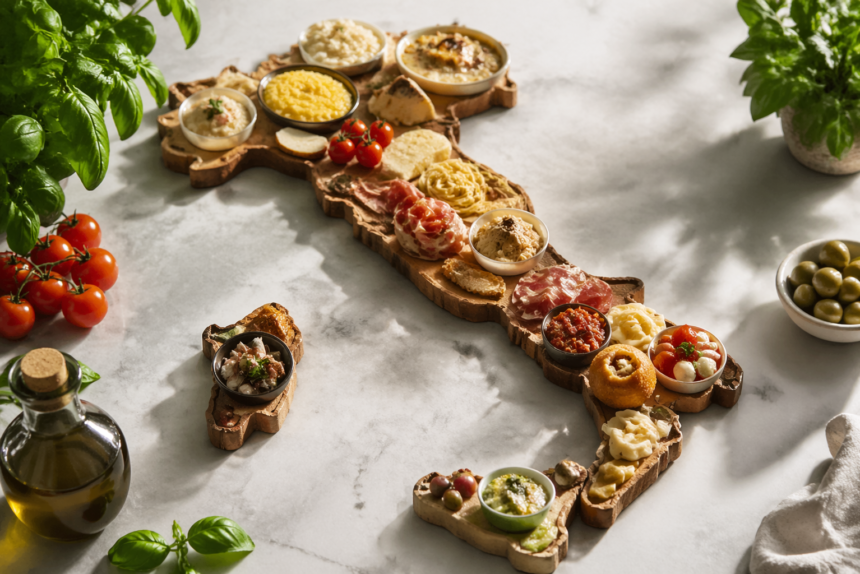
Say “Italian food” and most people instantly think of pizza, pasta, lasagna, and gelato. That is not wrong, but it is incomplete. The deeper truth is that However Italian Cuisine Is Best Identified by Individual Regions because Italy’s food culture was shaped locally first, nationally later. From Alpine butter and polenta in the north to olive oil, tomatoes, durum wheat, and seafood in the south, regional identity is what gives Italian cooking its real character. Italy is officially divided into 20 regions, and each one carries its own landscapes, agricultural patterns, traditions, and signature dishes that influence what ends up on the table.
- Why However Italian Cuisine Is Best Identified by Individual Regions
- Italy’s Regions Shape Ingredients Before They Shape Recipes
- Northern Italy Feels Different on the Plate
- Central Italy Proves Simplicity Can Be a Culinary Signature
- Southern Italy and the Islands Bring Intensity, Color, and Contrast
- Regional Cuisine Is Also a Story of Protected Identity
- What Tourists Often Get Wrong About Italian Food
- Regional Food Reflects History as Much as Taste
- How to Read an Italian Menu Like Someone Who Actually Understands Italy
- Common Questions Readers Ask About Italian Regional Cuisine
- Real World Takeaway for Food Lovers and Travelers
- Conclusion
If you really want to understand Italian cuisine, you have to stop seeing it as one single style. Italian cooking is better understood as a collection of regional cuisines tied to geography, climate, local economies, and family tradition. Italy’s official tourism platform even describes it as a “gastronomic mosaic,” noting that every region, city, and even family has its own interpretation of recipes. That is why the statement However Italian Cuisine Is Best Identified by Individual Regions is not just a catchy phrase. It is the most accurate way to describe how Italian food actually works.
Why However Italian Cuisine Is Best Identified by Individual Regions
Italian cuisine developed over centuries through separate local histories rather than through one centralized national food system. Long before Italy became a unified state in the nineteenth century, different parts of the peninsula had different rulers, trade links, climates, and agricultural resources. Those differences still show up in the food today.
Northern regions developed dishes influenced by mountain life, colder weather, cattle farming, rice cultivation, and contact with Central Europe. Central Italy became known for olive oil, legumes, bread, roasted meats, and practical countryside cooking. Southern Italy and the islands built a cuisine around Mediterranean ingredients, strong flavors, wheat, tomatoes, seafood, and centuries of cultural exchange. Italy’s official tourism site explicitly frames Italian cuisine as regional diversity shaped by unique landscapes, long cultural history, and biodiversity.
That regional link is also reflected in Europe’s geographical indication system. The European Commission states that PDO and PGI protections exist specifically because a product’s qualities, reputation, or characteristics are linked to a defined place of origin. In other words, place matters. That principle sits at the heart of Italian food culture.
Italy’s Regions Shape Ingredients Before They Shape Recipes
One of the easiest ways to understand regional Italian food is to start with ingredients. Recipes do not appear out of nowhere. They grow from what local people could farm, raise, fish, store, preserve, and afford.
In the north, richer dairy traditions helped create a cooking style that often relies on butter, cream, rice, polenta, mountain cheeses, and slow cooked comfort foods. In central Italy, recipes often feel stripped back and ingredient led, with bread, olive oil, beans, pecorino, and roasted meats playing major roles. In the south and on the islands, tomatoes, olives, citrus, seafood, eggplant, chili, and durum wheat dominate many classic dishes. Italia.it describes this contrast clearly through examples such as canederli and fondue in the north, carbonara and ribollita in the center, and orecchiette, arancini, and culurgiones in the south and islands.
Here is a simple overview:
| Italian area | Common ingredients | Typical style |
|---|---|---|
| North | Butter, rice, polenta, mountain cheese, beef | Richer, hearty, slow cooked |
| Center | Olive oil, legumes, pecorino, bread, pork | Rustic, balanced, ingredient focused |
| South and Islands | Tomatoes, seafood, citrus, durum wheat, olives | Bright, bold, sun driven, Mediterranean |
This is exactly why However Italian Cuisine Is Best Identified by Individual Regions makes sense. Regional ingredients create regional habits, and regional habits create regional dishes.
Northern Italy Feels Different on the Plate
Northern Italian food can surprise people who only know the international restaurant version of Italy. In several northern regions, rice and polenta matter as much as pasta, and butter can matter more than olive oil.
Lombardy is known for risotto traditions, including risotto alla Milanese. Veneto has salt cod preparations and rice based dishes. Trentino Alto Adige and Aosta Valley carry unmistakable mountain influences, with dumplings, hearty soups, game, and cheese based comfort food. Italia.it specifically highlights canederli, fondue, risotto alla Milanese, and creamed salt cod as markers of northern regional identity.
This tells you something important. Italian cuisine is not just a list of famous dishes. It is a map of environments. In colder areas, food tends to be denser, more preserving friendly, and more tied to livestock and mountain agriculture. That is regional logic, not random variation.
Central Italy Proves Simplicity Can Be a Culinary Signature
Central Italy is where many people encounter the most iconic examples of “simple but serious” cooking. Tuscany, Umbria, Marche, and Lazio are often associated with dishes that look modest on the surface but rely heavily on timing, ingredient quality, and local tradition.
Italia.it describes central Italian cuisine as centered on simplicity and careful raw ingredient selection, naming Tuscan bread, extra virgin olive oil, legumes, seasonal vegetables, and homemade pasta as core elements. It also points to pappa al pomodoro, ribollita, porchetta, and carbonara as dishes deeply connected to local life and family tradition.
Tuscany is a good example of a regional identity built on restraint rather than excess. The official Tuscany page highlights cured meats, red wines, egg pasta, and local specialties such as bottarga di Orbetello. That is very different from what you would find in Naples or Palermo.
Lazio offers another case. The official page for Lazio points to products like guanciale and pecorino in dishes such as amatriciana and gricia, while also noting coastal fish dishes and strong pastoral traditions in the mountains. So even within one region, local geography creates multiple food subcultures.
Southern Italy and the Islands Bring Intensity, Color, and Contrast
If northern Italian cuisine often feels warm and weighty, southern cuisine often feels sunny, bold, and immediate. Campania, Puglia, Calabria, Basilicata, Sicily, and Sardinia show how powerful local agriculture and maritime culture can be.
Italia.it places Neapolitan pizza, Apulian orecchiette with broccoli rabe, Sicilian arancini, Sardinian culurgiones, Abruzzese arrosticini, Basilicata’s peperoni cruschi, and regional sweets from Calabria among the many expressions of southern and island identity. It also emphasizes that these foods reflect centuries of cultural exchange, agricultural abundance, and Mediterranean influence.
That matters because people often talk about “Italian food” as though it is internally uniform. It is not. Southern cooking uses many ingredients that became globally associated with Italy, but even there, the details remain intensely local. A Sicilian dish is not the same as a Neapolitan one. A Puglian table does not look like a Sardinian one. The similarities are real, but the distinctions are what make the cuisine memorable.
In the south and on the islands, tomatoes, seafood, citrus, and handmade pasta bring a fresh and vibrant character, with Arti Delicious flavors that help regional Italian cuisine stand out across the world
Regional Cuisine Is Also a Story of Protected Identity
Food in Italy is not only about flavor. It is also about heritage, place, and legal protection. The European Commission explains that PDO products have the strongest link to their place of origin, with every part of production, processing, and preparation taking place in the specific region. PGI also ties a product’s reputation or characteristic to a geographic area.
This is a major reason why regional identity remains so strong in Italy. When a cheese, cured meat, olive oil, wine, or agricultural product is tied to a specific territory, the region becomes part of the product’s meaning. The place is not background information. The place is part of the product itself.
That is another reason However Italian Cuisine Is Best Identified by Individual Regions is such a strong framing. In Italy, place is not just where food comes from. Place helps define what the food is.
What Tourists Often Get Wrong About Italian Food
Many travelers arrive in Italy expecting a single national menu. They look for the “best Italian pasta,” the “real Italian pizza,” or the “typical Italian dinner.” The problem is that authenticity in Italy is usually regional before it is national.
A better approach is to ask different questions:
- What does this region grow well?
- What fats does this region rely on most?
- Which dish is local here, not just famous everywhere?
- What do families make at home in this area?
- Which ingredients are seasonal right now?
That mindset changes everything. It turns travel from generic food hunting into regional discovery.
For example, ordering a heavy cream based northern style dish in southern coastal Italy may make less sense than choosing a seafood pasta built around local catch and olive oil. Likewise, expecting Naples to represent all Italian pizza traditions ignores major local variation across the country. The same applies to pasta shapes, breads, cheeses, cured meats, and desserts.
Regional Food Reflects History as Much as Taste
Italian cuisine also preserves layers of political and cultural history. Different regions were influenced by Greeks, Romans, Arabs, Normans, Austrians, Spaniards, French rulers, and local republics or duchies across different eras. Those contacts affected trade, ingredients, preservation methods, and even table habits.
You can see that history in Sicily’s sweet and savory contrasts, in the Alpine influences of the far north, and in the strong peasant traditions of central and southern inland areas. Official Italian tourism materials repeatedly describe cuisine as a living heritage made from ancient knowledge, regional traditions, and local identity, not merely a collection of recipes.
This is why the food feels so rooted. A regional dish often survives because it fit a place economically, geographically, and culturally for generations.
How to Read an Italian Menu Like Someone Who Actually Understands Italy
If you want to eat more intelligently in Italy, stop scanning menus only for dishes you already know. Instead, look for clues that reveal local identity.
Start with the ingredients. Is the menu highlighting pecorino, guanciale, buffalo mozzarella, wild boar, bottarga, anchovies, or mountain cheese? Those clues often point to place.
Next, notice the pasta shape. Italy’s regions are deeply attached to specific shapes and formats. Even when two dishes look similar, the local pasta can tell you where the recipe belongs.
Then pay attention to fats and techniques. Butter versus olive oil, slow braising versus quick tomato sauces, seafood broths versus meat ragù all say something about the region.
Finally, ask a local question instead of a tourist question. Ask, “What is most typical here?” That one sentence can lead you to the food that actually matters.
Common Questions Readers Ask About Italian Regional Cuisine
Is Italian food really that different from region to region?
Yes, very often it is. Ingredients, fats, starches, cooking methods, and signature dishes can change dramatically across the country. Official Italian tourism sources explicitly describe Italian cuisine as a set of regional traditions shaped by geography, biodiversity, and history.
Why do some parts of Italy use butter while others use olive oil?
Because climate, agriculture, and livestock patterns differ. Northern regions historically had stronger dairy traditions, while much of central and southern Italy built cuisine around olive cultivation and Mediterranean crops.
Is there such a thing as one national Italian cuisine?
Yes and no. There are national icons and shared culinary values, but the strongest and most authentic layer of Italian food identity is regional. That is why However Italian Cuisine Is Best Identified by Individual Regions remains the clearest explanation.
Why are regional products protected in Europe?
Because their qualities and reputations are tied to place. The EU’s PDO and PGI systems were created specifically to protect products whose identity depends on geographic origin.
Real World Takeaway for Food Lovers and Travelers
The smartest way to experience Italy is not to chase one “best Italian dish.” It is to understand the country as a network of regional food cultures. That shift immediately makes your choices better.
If you are planning a trip, research the region before you research the restaurant. Learn the local staples. Learn the protected products. Learn which dishes are everyday classics rather than export favorites. You will eat better, understand more, and have a much more authentic experience.
That approach also helps anyone writing, studying, or talking about food. Instead of flattening Italy into a stereotype, you begin to see the country the way Italians often live it: through local pride, local ingredients, and local memory.
Conclusion
In the end, However Italian Cuisine Is Best Identified by Individual Regions because regional identity is the engine that drives Italian food culture. Italy may be one nation, but its cooking still speaks in many local voices. Those voices come from climate, geography, biodiversity, agricultural history, and generations of family tradition. Official Italian sources describe the cuisine as a mosaic, and that word fits perfectly.
So when someone says they love Italian food, the best follow up question is simple: which region? That is where the real conversation begins. And if you want to understand the deeper tradition behind regional cuisine, Italy rewards anyone willing to look beyond the generic label and into the local table.