

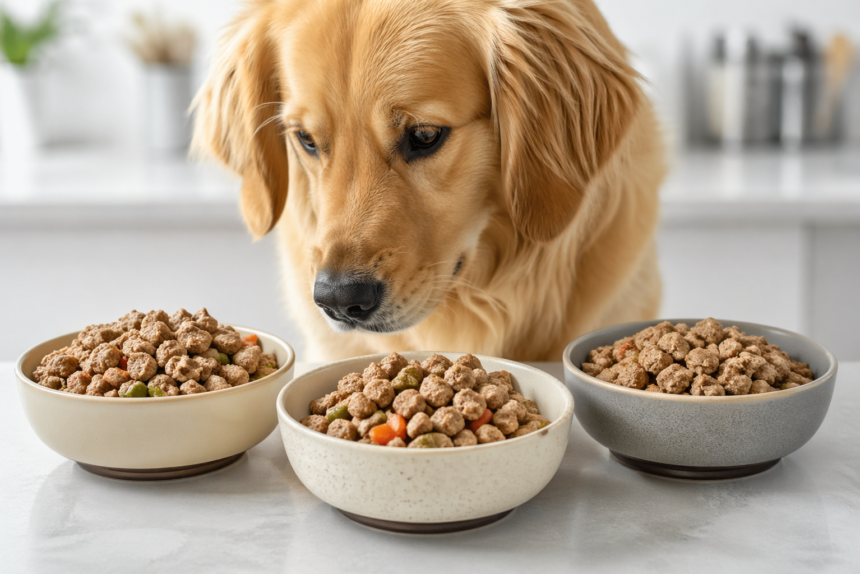
If you have been comparing premium freeze-dried meals for your dog, Dr. Marty’s Dog Food probably shows up fast. It is marketed as a freeze-dried raw formula made with multiple animal proteins, fruits, vegetables, and added vitamins and minerals, and the brand places a big emphasis on ingredient quality and convenience. On paper, that makes it appealing to pet owners who want something more upscale than standard kibble.
- What Dr. Marty’s Dog Food actually is
- Why freeze-dried dog food gets so much attention
- Dr. Marty’s Dog Food vs Stella & Chewy’s
- Dr. Marty’s Dog Food vs Primal
- Dr. Marty’s Dog Food vs Instinct
- Ingredient quality and formulation differences
- Safety, labeling, and what responsible buyers should check
- Which dogs may do well on Dr. Marty’s Dog Food
- Is Dr. Marty’s Dog Food worth the premium price?
- Final verdict on Dr. Marty’s Dog Food vs other premium freeze-dried brands
- FAQs
The harder question is whether Dr. Marty’s Dog Food actually stands out when you put it next to other premium freeze-dried brands such as Stella & Chewy’s, Primal, and Instinct. That comparison matters because many freeze-dried foods promise similar benefits like higher meat content, better palatability, and less processing than traditional dry food, while still differing quite a bit in protein profile, feeding approach, calorie density, and how they position nutritional adequacy.
The short answer is that Dr. Marty’s Dog Food looks strongest for buyers who want a premium, meat-forward, shelf-stable freeze-dried food with broad ingredient variety and easy serving. It looks less distinct when you compare it with other established freeze-dried brands that also offer complete-and-balanced formulas, more recipe variety, and in some cases clearer AAFCO nutritional language right on product pages.
What Dr. Marty’s Dog Food actually is
Dr. Marty’s Dog Food, specifically Nature’s Blend Essential Wellness, is a premium freeze-dried raw dog food. The official product page describes it as a formula made from turkey, beef, salmon, duck, organ meats, flaxseed, sweet potato, egg, peas, carrots, apples, blueberries, spinach, cranberries, pumpkin seeds, ginger, and other whole-food ingredients, along with added vitamins and minerals. The brand also states that the formula contains no artificial preservatives, additives, fillers, or synthetic ingredients, although the ingredient panel itself does include supplemental vitamins and minerals for nutritional support.
That ingredient spread is one reason people notice Dr. Marty’s Dog Food in the first place. It is not built around a single meat source. Instead, it uses a multi-protein approach with muscle meat and organ meat, plus produce and seeds. For many dog owners, that reads as premium and nutrient dense, especially compared with simpler formulas that lean heavily on one main protein.
The guaranteed analysis listed on the official product page includes 36% crude protein, 27% crude fat, 4% crude fiber, and 6% moisture, with calorie content listed at 4,990 kcal/kg and 256 kcal per cup. Those numbers place Dr. Marty’s Dog Food firmly in the high-protein, high-calorie end of the dry-food spectrum, which is common for freeze-dried products.
Why freeze-dried dog food gets so much attention
Freeze-dried dog food sits in an interesting middle ground. It aims to give owners some of the appeal of raw-style feeding while still being shelf stable and easier to portion than frozen raw products. Commercial raw diets are commonly sold frozen or freeze-dried, and that format is part of what has made them more accessible to mainstream pet owners.
There is also a convenience factor. A premium freeze-dried food can feel like an upgrade without requiring freezer space, daily thawing, or the mess that sometimes comes with frozen patties or tubs. That is part of the appeal of Dr. Marty’s Dog Food and also part of why brands like Stella & Chewy’s, Primal, and Instinct compete so directly in the same premium category.
Still, premium branding alone is not enough. WSAVA notes that pet owners should look past marketing words such as “premium” or “holistic” and pay attention to more meaningful factors like nutritional adequacy, manufacturer expertise, quality control, and transparency. That matters a lot when comparing Dr. Marty’s Dog Food with other premium freeze-dried brands, because many of them sound impressive at first glance.
Dr. Marty’s Dog Food vs Stella & Chewy’s
Stella & Chewy’s is one of the most recognizable names in freeze-dried raw pet food, and it gives shoppers a strong comparison point. Its freeze-dried dinner patties are marketed as complete and balanced meals, and the company highlights both nutrient density and brand scale. One product page states the brand is trusted by over 2.5 million pet parents every year, though that is a marketing claim rather than a nutritional benchmark.
On the numbers, Stella & Chewy’s chicken dinner patties list 48% crude protein, 28% crude fat, 5% crude fiber, 5% moisture, and 4,420 kcal/kg. Compared with Dr. Marty’s Dog Food at 36% protein, 27% fat, and 4,990 kcal/kg, Stella & Chewy’s specific chicken recipe appears leaner in calories per kilogram while showing a higher protein percentage on the label. That does not automatically make one better than the other, but it does show that Dr. Marty’s Dog Food is not unusually protein heavy within this category.
Where Dr. Marty’s Dog Food may appeal more is in its broad ingredient mix and branding around all-in-one wellness. Where Stella & Chewy’s often wins is brand breadth and clearer category depth. Stella & Chewy’s offers multiple freeze-dried dinner recipes and formats, which can help owners who want to rotate proteins or find a more specific fit for a picky dog.
In practical terms, if your dog does best on very protein-forward foods and you want wider recipe selection, Stella & Chewy’s may have the edge. If you like the idea of one flagship formula with multiple meats and produce in the same bag, Dr. Marty’s Dog Food can feel simpler and more straightforward.
Dr. Marty’s Dog Food vs Primal
Primal is another serious competitor in the premium freeze-dried category. Its freeze-dried nuggets are marketed as shelf-stable raw food that can be served as a complete meal or used as a topper, depending on the product and feeding style. Primal also emphasizes whole-food nutrition and digestibility.
A notable point in Primal’s positioning is that some recipes highlight the absence of synthetic vitamins and minerals. Its beef freeze-dried nuggets page lists 42% crude protein, 32% crude fat, 5% crude fiber, and 8% moisture, plus added live microorganisms. That is a different style from Dr. Marty’s Dog Food, which includes added vitamins and minerals and uses a broader mixed-protein ingredient deck.
For some owners, Primal’s appeal is philosophical. It is often marketed in a way that feels closer to minimally altered raw-style feeding. Dr. Marty’s Dog Food, by contrast, reads more like a premium wellness formula designed for convenience-minded buyers who still want a raw-inspired product without thinking too hard about separate toppers, hydration routines, or complicated rotation plans.
That distinction matters. If you want a formula that feels polished, easy, and broad-spectrum, Dr. Marty’s Dog Food has that advantage. If you want something that leans harder into the raw-food identity and includes probiotics on certain recipes, Primal may feel more aligned with your priorities.
Dr. Marty’s Dog Food vs Instinct
Instinct competes well in this space because it offers freeze-dried raw meals with very explicit nutritional labeling. Its beef recipe is listed as complete and balanced for maintenance under AAFCO Dog Food Nutrient Profiles, with 36% crude protein, 29% crude fat, 5% crude fiber, 6% moisture, and 4,534 kcal/kg. Its chicken recipe lists 35% crude protein, 33% crude fat, and 4,698 kcal/kg, while its pollock recipe lists 39% crude protein and 4,814 kcal/kg.
That makes Instinct a strong comparison because the macronutrient profile is very close to Dr. Marty’s Dog Food in some recipes. In fact, the beef Instinct freeze-dried meal matches Dr. Marty’s Dog Food on crude protein percentage while landing slightly higher on fat and lower on calories per kilogram.
Instinct may appeal more to shoppers who want product pages that quickly spell out complete-and-balanced status and maintenance alignment. Dr. Marty’s Dog Food still positions itself as premium freeze-dried raw nutrition, but competing pages from Instinct can feel a little easier to compare at a glance if you are shopping by label math first and branding second.
Ingredient quality and formulation differences
When pet owners compare premium foods, they often spend most of their time scanning ingredient lists. That is understandable, but it can also be misleading. WSAVA notes that labels contain useful information, yet marketing language and ingredient presentation do not tell the whole story of food quality. The organization specifically warns that terms like “premium” may have little practical meaning on their own.
That said, ingredients still matter. Dr. Marty’s Dog Food stands out for combining several animal proteins with organ meats and produce in one formula. This gives it a nutrient-dense, whole-food image that many shoppers find compelling. You can see turkey, beef, salmon, duck, beef liver, turkey liver, turkey heart, flaxseed, sweet potato, egg, peas, carrots, apples, blueberries, spinach, cranberries, pumpkin seeds, ginger, and salt on the official list.
Other premium freeze-dried brands also use strong ingredient decks, but they often lean into different strengths. Stella & Chewy’s tends to emphasize high meat inclusion and recipe variety. Primal leans into raw-food philosophy and, for some recipes, no synthetic vitamins or minerals. Instinct tends to make its complete-and-balanced positioning very explicit and keeps comparisons easy for owners who want to scan guaranteed analysis and feeding purpose quickly.
So, does Dr. Marty’s Dog Food have better ingredients than the rest? Not in a simple, absolute sense. It has an attractive ingredient profile, but other premium freeze-dried brands also use animal-forward recipes and market themselves around whole-food nutrition. The difference usually comes down to recipe philosophy, protein variety, and how much weight you place on brand transparency versus branding style.
Safety, labeling, and what responsible buyers should check
This is the part many reviews skip, but it matters. The FDA states that pet food must be safe to eat, produced under sanitary conditions, contain no harmful substances, and be truthfully labeled. That is a useful baseline when you compare any premium food, including Dr. Marty’s Dog Food.
AAFCO also notes that raw or undercooked pet food raises concern about bacterial cross-contamination, including organisms such as salmonella, especially for households with children, older adults, or immunocompromised people. Tufts Petfoodology has also written that many pet owners underestimate human health risks associated with raw pet foods and some freeze-dried meat products.
That does not mean freeze-dried food is automatically a poor choice. It means Dr. Marty’s Dog Food should be judged the same way other raw-style freeze-dried foods are judged. Handling, storage, serving habits, and the health status of the dog and household all matter. If your dog has complex medical needs, or someone in the home is medically vulnerable, that risk conversation should happen before you commit to any freeze-dried raw product.
Which dogs may do well on Dr. Marty’s Dog Food
Dr. Marty’s Dog Food is likely most attractive for owners who want a premium freeze-dried meal without juggling multiple bags, toppers, or add-ons. Because the formula uses multiple protein sources and has relatively high calorie density, it may work especially well for active adult dogs, enthusiastic eaters, and households that want a shelf-stable food with a more premium feel than kibble.
The brand also sells a small-breed version of Nature’s Blend that it describes as the same core freeze-dried raw formula in smaller bite-sized pieces designed specifically for small dogs. That is a practical touch, because size and texture can matter almost as much as ingredients for toy breeds and small seniors.
Still, the multi-protein design of Dr. Marty’s Dog Food may not be ideal for every situation. If your dog is on a strict elimination diet, has known sensitivities to one of the included proteins, or does best on limited-ingredient food, a mixed-protein formula can actually make troubleshooting harder. In those cases, another premium brand with a more targeted single-protein recipe may be easier to work with.
Is Dr. Marty’s Dog Food worth the premium price?
That depends on what you are paying for. With Dr. Marty’s Dog Food, you are paying for freeze-dried convenience, a broad ingredient profile, strong branding, and an all-in-one premium presentation. Those are real benefits, especially for owners who want an easy way to move beyond basic kibble.
But when compared with other premium freeze-dried brands, Dr. Marty’s Dog Food is not alone in offering high protein, meat-forward formulas and shelf-stable raw-style feeding. Stella & Chewy’s, Primal, and Instinct all compete strongly in those same areas, and some buyers may find better value in a brand that offers more recipes, clearer nutritional positioning, or a formulation philosophy that better matches their dog’s needs.
The smarter way to think about value is not “Is this the fanciest food?” but “Is this the best fit for my dog, my budget, and my feeding routine?” That is where Dr. Marty’s Dog Food can be a good choice for one owner and an unnecessary splurge for another.
Final verdict on Dr. Marty’s Dog Food vs other premium freeze-dried brands
Dr. Marty’s Dog Food holds up well in the premium freeze-dried category. It offers a meat-first, multi-protein formula with organ meats, produce, and convenient shelf-stable feeding, and it clearly targets owners who want premium nutrition without the mess of frozen raw diets.
What it does not do is completely outclass the competition. Stella & Chewy’s can offer stronger recipe depth, Primal may appeal more to shoppers who prefer a raw-food-first philosophy, and Instinct often makes nutritional comparison easier for label-focused buyers. In other words, Dr. Marty’s Dog Food is a serious option, but not the only premium freeze-dried brand that deserves attention.
If you want the most balanced takeaway, it is this: Dr. Marty’s Dog Food is best for pet owners who value convenience, ingredient variety, and a polished premium formula. If your priority is rotating proteins, choosing among multiple specialized recipes, or comparing formulas based on AAFCO-style label clarity, another premium freeze-dried brand may fit better. And if you are still learning the basics of freeze drying, it helps to understand the process before deciding whether this style of food matches your dog’s routine and your comfort level at home.
FAQs
Is Dr. Marty’s Dog Food a complete meal or just a topper?
Dr. Marty’s Dog Food is marketed as a premium freeze-dried raw dog food rather than simply a topper. The official Nature’s Blend page presents it as a complete food product with guaranteed analysis and calorie content, although shoppers should still read the packaging carefully and confirm feeding directions for their dog’s life stage.
Is Dr. Marty’s Dog Food better than Stella & Chewy’s?
Not universally. Dr. Marty’s Dog Food may appeal more if you want one broad multi-protein formula with fruits and vegetables built in, while Stella & Chewy’s may be more attractive if you want higher protein on certain recipes and more product variety within the freeze-dried raw category.
Is Dr. Marty’s Dog Food better than Primal?
It depends on your priorities. Dr. Marty’s Dog Food feels more like an all-in-one premium wellness product, while Primal often appeals to shoppers who want a more raw-focused identity and, in some recipes, added live microorganisms plus no synthetic vitamins and minerals.
Should you switch to Dr. Marty’s Dog Food right away?
Any diet change should be handled carefully. Because freeze-dried foods are calorie dense and can differ a lot from standard kibble, transitions are usually smoother when done gradually and with attention to stool quality, appetite, and your dog’s individual needs. FDA and AAFCO guidance also make it clear that safety, labeling, and handling matter when raw-style foods are involved.