

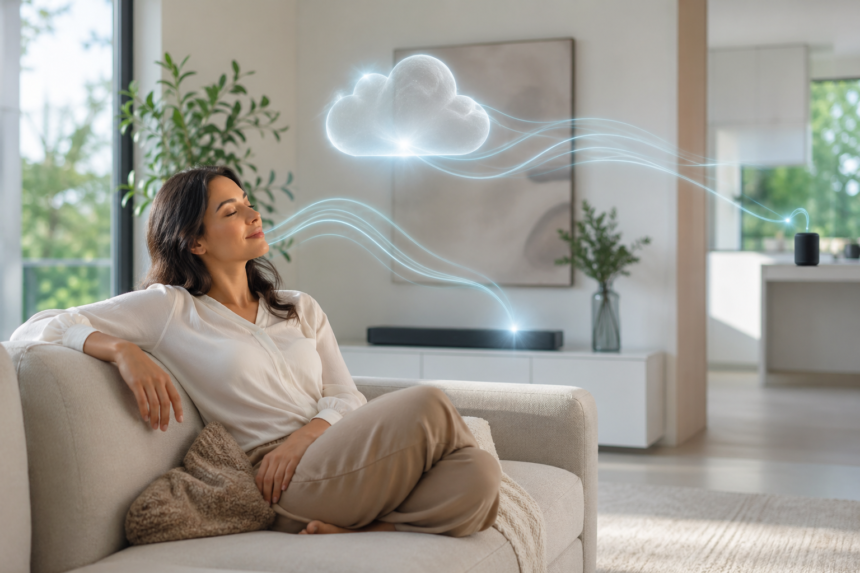
Cloud Connected Audio is quietly changing the way I think about sound at home, at work, and even on the move. A few years ago, most people judged audio gear by speaker size, Bluetooth range, or how loud it could get. Today, the bigger question is whether your audio system can connect, sync, update, stream, and respond intelligently through the cloud.
- What Is Cloud Connected Audio?
- Why Cloud Connected Audio Is Becoming Popular
- How Cloud Connected Audio Works in Daily Life
- Cloud Connected Audio vs Bluetooth Audio
- The Role of Wi-Fi in Smart Sound Systems
- Real Benefits of Cloud Connected Audio
- Where Cloud Connected Audio Is Used Today
- Why Smart Speakers Changed Consumer Expectations
- The Privacy Side of Cloud Connected Audio
- Cloud Connected Audio and Sound Quality
- What to Look for Before Buying a Cloud Connected Audio Device
- Common Mistakes People Make With Cloud Connected Audio
- A Real-World Scenario
- Is Cloud Connected Audio Worth It?
- The Future of Cloud Connected Audio
- Conclusion
- FAQs
That shift matters because audio is no longer just about pressing play. It is about convenience, personalization, voice control, multi-room listening, remote access, and smarter entertainment habits. When sound becomes connected to cloud services, it becomes more flexible than a traditional speaker sitting in the corner.
I have tested and studied enough smart audio setups to know one thing clearly: the best sound experience is not always the most expensive one. It is the one that fits smoothly into your daily routine.
What Is Cloud Connected Audio?
Cloud Connected Audio refers to audio devices and systems that use internet-based cloud services to stream, manage, sync, update, or personalize sound experiences.
In simple terms, it means your speaker, soundbar, smart display, car audio system, or home entertainment setup is not limited to local storage or short-range wireless connections. It can connect to online music platforms, voice assistants, smart home systems, podcasts, internet radio, firmware updates, and multi-device controls.
A basic Bluetooth speaker depends mainly on a nearby phone. A cloud-connected speaker can do much more. It can stream directly from the internet, continue playback even when your phone leaves the room, receive software improvements, work with voice commands, and connect with other smart devices.
That is why Cloud Connected Audio feels less like a gadget and more like a service-driven sound ecosystem.
Why Cloud Connected Audio Is Becoming Popular
The biggest reason is convenience. People want audio that works without constant setup.
Nobody wants to reconnect devices every morning, search for cables, adjust volume in three rooms separately, or restart a speaker because it forgot the last playlist. Cloud-based audio solves many of these small daily annoyances.
The smart speaker market is also growing because people are using connected audio for more than music. Market research estimates show strong growth in smart speakers, with the global market valued in the billions of dollars and projected to expand further through the next several years. Fortune Business Insights reported the global smart speaker market at USD 15.10 billion in 2025, with projected growth to USD 34.08 billion by 2034.
That growth tells us something important. People are not just buying speakers. They are buying smarter ways to control sound, information, entertainment, and connected living.
How Cloud Connected Audio Works in Daily Life
Cloud Connected Audio works by linking an audio device to internet-based services. Once connected through Wi-Fi or another network, the device communicates with cloud servers to access music libraries, voice assistants, user preferences, app controls, and software updates.
Here is a simple everyday example.
You ask a smart speaker to play relaxing music in the kitchen. The speaker sends your request through the internet, connects with a music service, finds the playlist, and starts playing. If you move to the living room, another speaker can join the same stream. If your phone battery dies, the music can keep playing because the speaker is pulling audio from the cloud, not depending only on your phone.
That small difference changes the whole listening experience.
Cloud-connected systems can support:
- Music streaming from platforms like Spotify, Apple Music, Amazon Music, or YouTube Music
- Voice assistant control
- Multi-room audio
- Remote control through mobile apps
- Automatic firmware and security updates
- Personalized recommendations
- Smart home routines
- Internet radio and podcasts
- Audio syncing across multiple devices
This is why cloud-connected sound is now common in smart homes, offices, retail spaces, gyms, cars, and hospitality environments.
Cloud Connected Audio vs Bluetooth Audio
Bluetooth audio is still useful. I use it when I want a quick connection, especially with headphones, portable speakers, or car systems. But it has limits.
Bluetooth usually depends on a nearby source device. If your phone moves too far away, the signal drops. If a call comes in, playback may pause. If another person wants to control the music, they may need to pair their own device.
Cloud Connected Audio is different because the speaker or sound system connects directly to online services.
| Feature | Bluetooth Audio | Cloud Connected Audio |
|---|---|---|
| Connection type | Short-range device pairing | Internet-based streaming |
| Phone dependency | Often required | Less dependent after setup |
| Range | Limited | Works across rooms or locations |
| Multi-room support | Limited | Stronger and smoother |
| Voice control | Basic or device-dependent | Often built in |
| Updates | Manual or limited | Cloud-based software updates |
| Best use | Quick portable listening | Smart homes and connected systems |
The point is not that one is always better than the other. The right choice depends on the situation. For simple outdoor use, Bluetooth may be enough. For a home, office, or smart entertainment setup, Cloud Connected Audio usually offers a richer experience.
The Role of Wi-Fi in Smart Sound Systems
Wi-Fi is one of the biggest reasons Cloud Connected Audio feels smoother than old wireless audio.
Wi-Fi offers better range, higher bandwidth, and stronger support for multiple connected devices. That matters when you want better quality streaming, multi-room sound, or voice control that responds quickly.
For example, if you are playing music through a Wi-Fi speaker, your phone often acts like a remote control rather than the actual audio source. The speaker streams directly from the cloud. This can improve stability and reduce battery drain on your phone.
In a multi-room setup, Wi-Fi also helps keep speakers in sync. That is important because even a tiny delay between rooms can make music feel messy or echo-like.
Real Benefits of Cloud Connected Audio
The benefits are not only technical. They show up in small daily moments.
You can walk into the kitchen and ask for the news. You can play a podcast while cooking. You can create a morning routine where soft music starts with your lights. You can control office background music from one dashboard. You can update a speaker without replacing the hardware.
Here are the benefits I see most often.
Better Convenience
Cloud-connected speakers remove friction. You do not need to plug in a cable, pair again and again, or keep your phone beside the speaker all day.
Multi-Room Listening
You can play the same song across different rooms or choose separate audio zones. This is especially useful in larger homes, studios, shops, clinics, and restaurants.
Personalization
Cloud services can remember playlists, volume habits, favorite stations, and listening patterns. Over time, your audio system starts feeling more personal.
Remote Access
Some systems allow remote control from outside the home or business. This helps when managing commercial spaces, vacation rentals, or smart home routines.
Easier Updates
Because the device is connected to cloud services, manufacturers can release software updates, bug fixes, and new features without requiring you to buy a new speaker.
Smart Home Integration
Cloud Connected Audio can work with lights, thermostats, cameras, doorbells, TVs, and other smart devices. The Connectivity Standards Alliance describes Matter as an IP-based connectivity protocol designed to help build reliable and secure IoT ecosystems, which shows how connected devices are moving toward better interoperability.
Where Cloud Connected Audio Is Used Today
Cloud Connected Audio is already part of many everyday environments, even when people do not call it by that name.
Smart Homes
This is the most familiar use. Smart speakers, wireless soundbars, voice-controlled assistants, and multi-room systems are now common in modern homes.
You might use one speaker in the bedroom for alarms, another in the kitchen for recipes and music, and a soundbar in the living room for movies. When these devices connect through the cloud, they become easier to manage together.
Cars
Modern vehicles increasingly use connected infotainment systems. Drivers can stream music, use voice commands, receive navigation prompts, and access cloud-based services from the dashboard.
Offices
Businesses use connected audio for conference rooms, announcements, background music, training, and hybrid meetings. A cloud-connected system can make updates and management easier across multiple rooms.
Retail and Hospitality
Stores, cafés, hotels, gyms, and restaurants often need controlled background music. Cloud-based audio platforms allow managers to schedule playlists, adjust volume zones, and maintain brand atmosphere without handling local files manually.
Education
Classrooms and online learning spaces use smart speakers, microphones, and cloud-based audio tools for lectures, accessibility, language learning, and announcements.
Why Smart Speakers Changed Consumer Expectations
Smart speakers made people comfortable with the idea that audio devices can listen, respond, and act.
Before smart speakers, most people expected a speaker to do one job: play sound. Now, they expect it to answer questions, control devices, set timers, read news, manage routines, and play any song on request.
That change is huge.
Mordor Intelligence estimated the smart speaker market at USD 16.59 billion in 2025 and projected growth to USD 37.6 billion by 2031, noting that generative AI features, subscription service layers, and interoperability standards are influencing consumer expectations.
This growth is not only about hardware sales. It reflects a deeper shift in behavior. People want audio systems that feel responsive, useful, and connected to the rest of their digital life.
The Privacy Side of Cloud Connected Audio
I like the convenience of connected audio, but I do not think anyone should ignore privacy.
A cloud-connected speaker may process voice commands, usage history, app activity, device location, account information, or service preferences. That does not automatically mean the device is unsafe, but it does mean buyers should understand what they are allowing.
Before using any Cloud Connected Audio device, I recommend checking:
- Whether the microphone can be muted physically
- What data the device collects
- How voice recordings are handled
- Whether the device supports two-factor authentication
- How often the manufacturer releases updates
- Whether guest access is available
- What happens if the cloud service is discontinued
That last point is important. Cloud-connected products depend on ongoing service support. If a company stops supporting a platform, some smart features may disappear.
The Verge reported that Bose planned to discontinue cloud-based features for its SoundTouch speaker line starting February 18, 2026, affecting integrated services, app control, and multi-room playback. This is a reminder that buyers should look not only at sound quality, but also at long-term software support.
Cloud Connected Audio and Sound Quality
A common question is whether Cloud Connected Audio improves sound quality.
The honest answer is: sometimes.
Cloud connection itself does not magically make a poor speaker sound premium. Speaker drivers, amplifier quality, room acoustics, audio codec support, and streaming bitrate still matter.
However, cloud-based audio can improve the overall experience by offering more stable streaming, better source quality, automatic tuning, and access to high-resolution music services where supported.
Some premium systems also use room correction. That means the speaker listens to the room environment and adjusts sound output to reduce harshness, echo, or weak bass. When done well, this can make a noticeable difference.
For most everyday listeners, the biggest improvement is not technical perfection. It is consistency. The music starts quickly, follows you across rooms, and works without constant manual fixing.
What to Look for Before Buying a Cloud Connected Audio Device
Before buying a smart speaker, soundbar, or connected audio system, I would not start with the brand name. I would start with how you plan to use it.
Ask yourself these questions:
Do You Want Music in One Room or Many Rooms?
If you only need sound in one room, a single smart speaker may be enough. If you want music throughout the house, choose a system with strong multi-room support.
Which Music Services Do You Use?
Not every device supports every platform equally. Check your preferred services before buying.
Do You Care About Voice Control?
Some people love voice assistants. Others prefer app control. Choose based on your comfort level.
Is Privacy a Priority?
Look for microphone mute buttons, clear privacy settings, and a trustworthy update history.
Will It Work With Your Smart Home?
If you already use smart lights, thermostats, cameras, or displays, make sure the audio system fits your ecosystem.
Is There Local Playback Support?
This matters more than many people realize. If the internet goes down, some devices become far less useful. A good system should offer backup options like Bluetooth, AUX, HDMI, or local network playback.
Common Mistakes People Make With Cloud Connected Audio
I have seen people spend too much money on smart audio and still feel disappointed. Usually, it happens because they focus on the wrong thing.
One common mistake is buying for loudness only. A loud speaker is not always a pleasant speaker. Clarity, balance, and room fit matter more.
Another mistake is ignoring Wi-Fi strength. If your home network is weak, even the best cloud-connected speaker can lag or disconnect.
People also forget about ecosystem lock-in. A device may work beautifully with one assistant or app but feel limited outside that ecosystem.
The safest approach is to think long-term. Choose Cloud Connected Audio that fits your home, your privacy comfort, your streaming habits, and your future upgrade plans.
A Real-World Scenario
Imagine a family home with three audio zones.
In the morning, soft music plays in the kitchen while the parents make breakfast. A child listens to an audiobook in the bedroom. Later, the living room speaker switches to a movie soundbar setup. In the evening, the whole home plays the same playlist during dinner.
Nobody is moving cables. Nobody is pairing phones. Nobody is shouting across rooms to change the song.
That is the practical value of Cloud Connected Audio. It does not just play sound. It reduces small points of friction throughout the day.
Now imagine the same idea in a small café. The owner schedules calm music in the morning, upbeat tracks in the afternoon, and lower volume near closing time. Staff can control zones without touching complicated equipment. The brand experience becomes more consistent.
That is why this technology matters beyond personal entertainment.
Is Cloud Connected Audio Worth It?
For many people, yes, but only when the features match the need.
Cloud Connected Audio is worth it if you want smarter control, direct streaming, multi-room sound, voice commands, app-based management, or smart home integration. It may not be necessary if you only need a small portable speaker for occasional use.
The best value comes when you use the connected features regularly. If you never use voice control, multi-room playback, routines, or streaming services, a traditional speaker may still be fine.
But if your daily life already includes smart devices, streaming platforms, podcasts, remote work, or digital entertainment, cloud-connected sound can feel like a natural upgrade.
The Future of Cloud Connected Audio
The future will likely be more personal, more automated, and more connected across devices.
Generative AI may make voice assistants more conversational. Smart speakers may better understand context, not just commands. Cars may sync more smoothly with home audio accounts. TVs, speakers, phones, watches, and appliances may share audio experiences more intelligently.
Interoperability will also matter. Consumers do not want every device trapped inside one brand’s app. Standards such as Matter are part of the larger effort to make smart devices work more smoothly together, especially in the broader smart home space.
Still, the future should not be only about adding more features. It should be about making sound easier, safer, and more useful. The best technology disappears into the background and lets people enjoy the moment.
Conclusion
Cloud Connected Audio is changing everyday listening because it makes sound more flexible, personal, and connected. It moves audio beyond simple playback and turns it into part of a smarter digital lifestyle.
From smart homes and offices to cars, cafés, classrooms, and entertainment spaces, connected sound is becoming a normal part of how people live and work. The real value is not just in asking a speaker to play music. It is in having audio that follows your routine, connects with your services, updates over time, and works across different spaces.
My advice is simple: choose Cloud Connected Audio based on how you actually listen. Look at compatibility, privacy, long-term support, sound quality, and backup playback options. When those pieces come together, smart sound becomes more than a convenience. It becomes a better way to enjoy audio every day.
FAQs
What does Cloud Connected Audio mean?
Cloud Connected Audio means an audio device uses internet-based cloud services to stream music, sync with apps, receive updates, support voice commands, and connect with other smart devices.
Is Cloud Connected Audio better than Bluetooth?
Cloud Connected Audio is better for multi-room listening, smart home control, and direct internet streaming. Bluetooth is still useful for quick, portable, short-range listening.
Does Cloud Connected Audio need Wi-Fi?
Most Cloud Connected Audio systems need Wi-Fi or another internet connection to access cloud services. Some devices also include Bluetooth or wired backup options.
Can Cloud Connected Audio work without the internet?
Some basic functions may work without the internet, such as Bluetooth, AUX, or local playback, depending on the device. Cloud features usually require an internet connection.
Is Cloud Connected Audio safe to use?
It can be safe when you choose trusted brands, keep software updated, use strong passwords, review privacy settings, and understand how microphone and data controls work.