


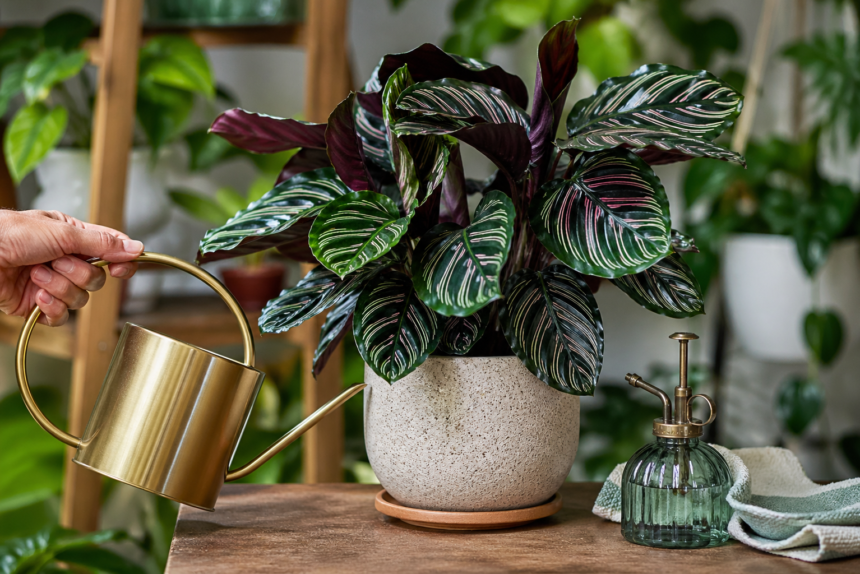
Calathea is one of those indoor plants that can make a room feel alive instantly. I have cared for many houseplants over the years, but few plants teach patience, observation, and consistency the way this one does. Its patterned leaves, soft tropical look, and daily leaf movement make it more than just decoration.
- What Makes Calathea Special?
- Best Light for Calathea Indoor Plants
- How Often Should You Water Calathea?
- The Best Water Type for Calathea
- Humidity: The Secret to Colorful, Healthy Leaves
- Ideal Temperature for Calathea
- Best Soil Mix for Calathea
- Choosing the Right Pot
- Feeding Calathea Without Overdoing It
- Common Calathea Problems and What They Mean
- Pest Problems to Watch For
- How to Clean Calathea Leaves
- Repotting Calathea the Right Way
- Propagating Calathea
- Best Calathea Varieties for Indoor Spaces
- Is Calathea Safe for Pets?
- Real-World Example: Fixing a Struggling Calathea
- Simple Weekly Calathea Care Routine
- Calathea Care Mistakes I Avoid
- Conclusion: Calathea Care Is About Balance
- FAQs About Calathea
Still, I will be honest: Calathea can be a little dramatic.
One week it looks perfect, and the next week the leaf edges may turn brown, curl, or lose their fresh color. Most of the time, the plant is not “hard” to grow. It is simply sensitive to the wrong kind of care.
In my experience, the secret is not doing more. It is doing the right things consistently. Give it gentle light, steady moisture, warm temperatures, and good humidity, and this plant can reward you with some of the most beautiful foliage you can grow indoors.
What Makes Calathea Special?
Calathea plants are loved for their bold leaf patterns. Some have zebra-like stripes, some have peacock-style markings, and others have pink, silver, purple, or deep green details. That is why they are often used as statement plants in living rooms, bedrooms, bathrooms, and home offices.
Many types sold as Calathea have also been reclassified under the genus Goeppertia, but most plant owners and garden shops still use the name Calathea because it is familiar. The Royal Horticultural Society notes that these plants are valued for their decorative foliage and prefer warm, stable indoor conditions.
Another charming feature is the way the leaves move. Many Calathea varieties lift their leaves at night and open them again during the day. This is why people often connect them with prayer plants, although true prayer plants are usually Maranta.
For indoor plant lovers, this movement makes the plant feel almost responsive. I often tell beginners that if they want a plant with personality, Calathea is a great choice.
Best Light for Calathea Indoor Plants
Calathea grows best in bright, indirect light. Think of filtered daylight, not harsh sunlight. In nature, these plants grow under taller vegetation where direct sun is softened by the canopy.
Direct afternoon sun can scorch the leaves, fade the patterns, and make the plant look tired. The RHS also warns that direct summer sunlight can scorch Calathea leaves.
A good indoor spot is near an east-facing window, a few feet away from a south-facing window, or in a bright room where sunlight does not hit the leaves directly.
Signs Your Calathea Gets Too Much Light
Your plant may be receiving too much sun if you notice:
- Faded leaf patterns
- Crispy patches
- Brown dry spots
- Leaves curling during the day
- A washed-out look instead of rich color
Signs It Needs More Light
Low light is less damaging than harsh sun, but too little light can slow growth. Your Calathea may need more brightness if:
- New leaves are smaller than usual
- Growth becomes very slow
- Leaf patterns look dull
- Soil stays wet for too long
- Stems lean strongly toward the window
My personal rule is simple: if I can comfortably read a book in that spot during the day without turning on a lamp, the light is usually acceptable.
How Often Should You Water Calathea?
Watering is where many people struggle. Calathea likes evenly moist soil, but it does not like sitting in soggy soil. That small difference matters a lot.
I usually check the top inch of soil with my finger. If it feels slightly dry, I water. If it still feels damp, I wait. This method is better than following a strict schedule because every home is different.
A plant in a warm, bright room may need water more often. A plant in a cooler, darker room may stay moist for longer. Pot size, soil type, humidity, and season all change how quickly the soil dries.
My Practical Watering Method
Here is the routine I use:
- Check the soil before watering
- Water when the top inch feels lightly dry
- Pour water slowly until it drains from the bottom
- Empty the saucer after 10 to 15 minutes
- Reduce watering slightly in winter
This keeps the roots moist but not suffocated.
Overwatering can lead to root rot and weak growth. The RHS notes that overwatering may cause poor leaf development and root rot, which is one of the most common reasons indoor Calathea plants decline.
The Best Water Type for Calathea
Calathea can be sensitive to minerals, chlorine, and salts in tap water. This is one reason people often see brown leaf tips even when watering seems correct.
If your tap water is hard, try one of these options:
- Filtered water
- Rainwater
- Distilled water
- Tap water left sitting overnight
Leaving water overnight may help some chlorine evaporate, but it will not remove all dissolved minerals. In homes with very hard water, filtered or distilled water usually gives better results.
I noticed the biggest improvement in leaf edges when I stopped using cold tap water straight from the sink. Room-temperature filtered water is gentler and causes less shock.
Humidity: The Secret to Colorful, Healthy Leaves
If there is one care factor that changes everything, it is humidity. Calathea comes from tropical environments, so dry indoor air can quickly cause crispy edges and curled leaves.
The RHS recommends keeping these plants away from draughts and direct heat sources, and it suggests stable warm conditions between 16 and 21°C.
In many homes, especially during winter or air-conditioned months, humidity can drop too low. That is when Calathea starts showing stress.
Best Ways to Increase Humidity
A humidifier is the most reliable option. Place it near the plant, but not so close that the leaves stay wet all day.
You can also try:
- Grouping houseplants together
- Placing the plant in a bright bathroom
- Using a pebble tray with water below the pot
- Keeping it away from heaters and vents
- Avoiding dry windowsills in winter
Mississippi State University Extension notes that grouping plants can help increase humidity around indoor plants.
Misting can give a short-term boost, but I do not rely on it as the main solution. It dries quickly and may encourage leaf spotting if air circulation is poor.
Ideal Temperature for Calathea
Calathea does best in warm, stable temperatures. Sudden changes are more stressful than a slightly imperfect temperature.
A comfortable indoor range is usually suitable, but avoid cold drafts, open windows in winter, heating vents, fireplaces, and air conditioners blowing directly on the plant.
If you feel cold in that spot, your Calathea probably does too.
The plant may react to temperature stress with:
- Leaf curling
- Drooping
- Brown edges
- Yellowing leaves
- Slowed growth
I like to keep Calathea in rooms where the temperature does not swing sharply between day and night.
Best Soil Mix for Calathea
The best soil for Calathea holds moisture but also drains well. Heavy compact soil is risky because it keeps the roots too wet and limits oxygen.
A good mix should feel light, airy, and slightly moisture-retentive.
Simple Calathea Soil Mix
You can use:
- 2 parts high-quality indoor potting mix
- 1 part perlite
- 1 part coco coir or fine orchid bark
This creates a balance between moisture and drainage. The potting mix feeds structure, perlite improves airflow, and coco coir or bark helps prevent compaction.
Avoid garden soil indoors. It is usually too dense, may carry pests, and can hold too much water in a container.
Choosing the Right Pot
A pot with drainage holes is non-negotiable. I know decorative pots without holes look beautiful, but they are risky for Calathea roots.
If you love a decorative planter, use it as a cover pot. Keep the plant in a plastic nursery pot with drainage, then place that inside the decorative pot. After watering, remove extra water so the roots are not sitting in a puddle.
Choose a pot only slightly larger than the root ball. A pot that is too big holds excess moisture and increases the chance of root rot.
Feeding Calathea Without Overdoing It
Calathea is not a heavy feeder. Too much fertilizer can burn the roots or cause brown tips, especially if salts build up in the soil.
During spring and summer, I feed lightly once a month with a balanced liquid houseplant fertilizer diluted to half strength. In fall and winter, I usually stop feeding because growth naturally slows.
A simple feeding rule:
| Season | Feeding Routine |
|---|---|
| Spring | Once monthly at half strength |
| Summer | Once monthly at half strength |
| Fall | Reduce or stop |
| Winter | Do not feed unless actively growing |
Flush the soil every few months by watering thoroughly and letting excess water drain out. This helps remove fertilizer salts.
Common Calathea Problems and What They Mean
Calathea communicates through its leaves. Once you learn the signs, care becomes much easier.
Brown Leaf Edges
Brown edges usually mean the air is too dry, the water quality is poor, or fertilizer salts have built up.
What to do:
- Increase humidity
- Use filtered or distilled water
- Trim only the dead edges
- Flush the soil
- Avoid overfeeding
Do not panic over one or two brown tips. Even healthy plants may get minor leaf damage indoors.
Curling Leaves
Curling leaves often mean the plant is thirsty, too cold, or exposed to direct sun. It can also happen when humidity drops.
Check the soil first. If it is dry, water thoroughly. If the soil is wet, look at temperature, light, and root health.
Yellow Leaves
Yellow leaves can mean overwatering, underwatering, natural aging, or poor drainage.
If only one older lower leaf turns yellow, it may simply be part of the plant’s normal cycle. If several leaves yellow at once, inspect the roots and soil moisture.
Drooping Leaves
Calathea leaves may move naturally during the day, so not every droop is a problem. But if the plant looks limp for long periods, check watering, temperature, and root condition.
A thirsty plant usually perks up after watering. An overwatered plant may stay limp because damaged roots cannot absorb moisture properly.
Pest Problems to Watch For
Calathea can attract spider mites, mealybugs, fungus gnats, and scale, especially when stressed.
Spider mites are common in dry air. You may notice fine webbing, pale speckling, or dusty-looking leaves.
My Pest Check Routine
Once a week, I look at:
- Leaf undersides
- New growth
- Stem joints
- Soil surface
- Any sticky residue or webbing
If I catch pests early, I wipe leaves with a damp cloth and isolate the plant. For stronger infestations, insecticidal soap or neem-based products may help when used carefully according to label instructions.
Good humidity and regular leaf cleaning can reduce pest pressure.
How to Clean Calathea Leaves
Dust blocks light and makes patterned leaves look dull. I clean Calathea leaves gently with a soft damp cloth.
Support the leaf from underneath and wipe slowly. Avoid leaf shine products because they can clog leaf surfaces and leave residue.
Cleaning also gives you a chance to inspect for pests before they spread.
Repotting Calathea the Right Way
Calathea does not need frequent repotting. I usually repot every one to two years, or when roots circle the pot and growth slows.
The best time is spring or early summer because the plant is actively growing and can recover faster.
Signs It Is Time to Repot
- Roots coming out of drainage holes
- Soil dries extremely fast
- Growth has slowed despite good care
- Water runs straight through the pot
- The plant becomes top-heavy
When repotting, move up only one pot size. Be gentle with the roots and avoid removing too much old soil unless it is compacted or unhealthy.
Propagating Calathea
Calathea is usually propagated by division, not stem cuttings. This means you separate a mature plant into sections, each with roots and leaves.
The best time to divide is during repotting.
Here is how I do it:
- Remove the plant gently from the pot
- Look for natural clumps in the root system
- Separate sections carefully by hand
- Pot each division in fresh airy soil
- Keep humidity high while it recovers
Do not divide a weak or struggling plant. Propagation is stressful, so the parent plant should be healthy first.
Best Calathea Varieties for Indoor Spaces
There are many beautiful varieties, but some are more forgiving than others.
Calathea Orbifolia
This variety has large round leaves with soft silver-green stripes. It looks elegant in minimal interiors but needs good humidity to avoid crispy edges.
Calathea Medallion
Medallion is popular because of its bold leaf pattern and deep purple undersides. It is a great choice if you want a dramatic tabletop plant.
Calathea Rattlesnake
Rattlesnake plant has long wavy leaves with dark green markings. In my experience, it is one of the more forgiving types for beginners.
Calathea Ornata
Often called pinstripe plant, this variety has thin pinkish lines across dark leaves. It is beautiful but can be sensitive to dry air.
Calathea Makoyana
Known as peacock plant, it has delicate markings that look almost painted. It does best in steady humidity and gentle light.
Is Calathea Safe for Pets?
Calathea is generally considered a pet-friendly houseplant. The ASPCA lists Calathea as non-toxic to dogs, cats, and horses.
That said, I still keep plants away from curious pets. Even non-toxic plants can cause mild stomach upset if a pet chews too much foliage. Also, damaged leaves do not grow back perfectly, so it is better for both the plant and the pet to keep some distance.
Real-World Example: Fixing a Struggling Calathea
A friend once asked me to look at her Calathea because the leaves were curling and turning brown at the edges. She thought she was underwatering, so she kept adding more water.
The real problem was the opposite. The plant was in a ceramic pot without drainage, sitting near an air-conditioning vent. The soil was wet at the bottom, the air was dry, and the roots had started to suffer.
We moved it into a pot with drainage, trimmed dead edges, switched to filtered water, and placed it near a humidifier in bright indirect light. Within a few weeks, the new leaves looked healthier.
The old damaged leaves did not fully repair, but the fresh growth told us the plant was recovering.
That is an important lesson: with Calathea, judge success by new growth, not old scars.
Simple Weekly Calathea Care Routine
If you want an easy routine, follow this:
- Check soil moisture twice a week
- Water only when the top inch feels lightly dry
- Keep the plant in bright indirect light
- Rotate the pot every week
- Wipe dusty leaves
- Check leaf undersides for pests
- Keep humidity steady
- Avoid moving the plant too often
Calathea likes routine. Once it adjusts to a good spot, leave it there unless it clearly shows stress.
Calathea Care Mistakes I Avoid
After caring for these plants for years, these are the mistakes I try not to repeat:
- Watering on a fixed calendar
- Using heavy soil
- Keeping the plant in direct sun
- Letting it sit in water
- Placing it near vents
- Overfeeding
- Repotting too often
- Ignoring humidity
- Using very cold tap water
Most Calathea problems start from inconsistency. A little attention each week is better than dramatic rescue care once a month.
Conclusion: Calathea Care Is About Balance
Calathea is not the easiest indoor plant, but it is one of the most rewarding. Once you understand its needs, the care becomes much less confusing. It wants bright indirect light, gentle watering, warm temperatures, clean leaves, airy soil, and steady humidity.
The biggest mistake is treating it like a drought-tolerant houseplant. It is a tropical foliage plant, so it asks for a softer, more consistent environment. When you provide that, the leaves stay fuller, the colors look richer, and the plant becomes a beautiful part of your home.
I also like that Calathea connects plant care with observation. You learn to notice leaf movement, soil texture, air dryness, and small changes before they become big problems. That habit makes you better with every plant you grow.
For readers who enjoy learning the plant background, Calathea belongs to the prayer plant group commonly admired for decorative foliage and natural leaf movement. With the right care, Calathea can bring lasting color, softness, and tropical beauty to indoor spaces.
FAQs About Calathea
Why are my Calathea leaves curling?
Calathea leaves usually curl because the plant is too dry, too cold, in direct sun, or exposed to low humidity. Check the soil first, then look at light and temperature.
Should I mist Calathea every day?
Misting can help briefly, but it is not enough in very dry rooms. A humidifier, pebble tray, or plant grouping is more reliable for steady humidity.
Can Calathea grow in low light?
Calathea can tolerate lower light, but it grows better in bright indirect light. Too little light may slow growth and keep the soil wet too long.
Why are Calathea leaf edges turning brown?
Brown edges are often caused by dry air, hard water, excess fertilizer, or inconsistent watering. Improve humidity and consider using filtered water.
Is Calathea good for bedrooms?
Yes, Calathea can work well in bedrooms if the room has bright indirect light, stable warmth, and enough humidity. Keep it away from heaters and cold drafts.
How often should I repot Calathea?
Most Calathea plants only need repotting every one to two years. Repot in spring when roots are crowded or the soil has become compacted.