

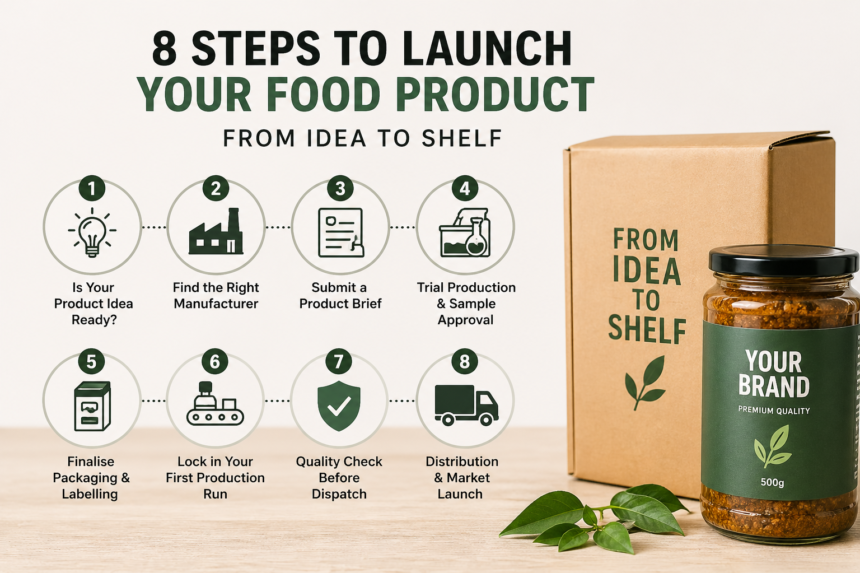
Launching a food product isn’t guesswork. It’s a process. And if you’re working with contract food manufacturing melbourne services, there’s a clear path from idea to shelf. Australia’s food market generates more than $130 billion annually. The brands winning in that market didn’t stumble in. They followed a structured launch plan, worked with the right manufacturer, and got their compliance right before they even thought about marketing.
- Step 1: Is Your Product Idea Ready?
- Step 2: Find the Right Manufacturer
- Step 3: Submit a Product Brief
- Step 4: Trial Production and Sample Approval
- Step 5: Finalise Packaging and Labelling
- Step 6: Lock in Your First Production Run
- Step 7: Quality Check Before Dispatch
- Step 8: Distribution and Market Launch
Step 1: Is Your Product Idea Ready?
Before you call a manufacturer, you need a clear product brief. That means a defined recipe or formula, a target consumer, and a rough understanding of your unit economics. What will this product cost to make? What will you sell it for? What margin do you need to stay viable?
Melbourne’s food contract manufacturing scene is competitive. Manufacturers get approached by dozens of brands every month. The ones who move fastest are the ones who walk in prepared.
Step 2: Find the Right Manufacturer
Not every manufacturer can make every product. Some specialise in supplements. Others focus on bakery, snacks, or beverages. Research facilities that have experience in your category. Check their certifications. Ask about their food safety record.
In Australia, certified manufacturers must comply with the Food Standards Code. Look for HACCP, SQF Level 2 or higher, or BRC accreditation. These are non-negotiable signals of a competent facility.
Step 3: Submit a Product Brief
Once you’ve shortlisted manufacturers, send them a product brief. This document should include your recipe, ingredient list, target batch size, packaging format, labelling requirements, and any allergen information.
A good manufacturer will come back with questions. That’s a good sign. It means they’re paying attention. Be ready to answer questions about shelf life requirements, storage conditions, and target markets.
Step 4: Trial Production and Sample Approval
The manufacturer will produce a trial batch. This is called a pilot run. It usually involves a small quantity, sometimes as few as 50 to 100 units. You review the product for taste, texture, appearance, and compliance with your spec.
Expect multiple rounds. Two to four iterations is normal. Don’t rush this stage. A product that ships with the wrong texture or an off flavour will cost you far more in returns and reputation damage than a few extra weeks in development.
Step 5: Finalise Packaging and Labelling
Australian labelling law is detailed. Food Standards Australia New Zealand (FSANZ) requires specific declarations including ingredient lists, allergen statements, country of origin, nutritional information panels, and net weight.
Your contract manufacturer may have an in-house graphic design team or can recommend a packaging supplier. Either way, get your artwork reviewed by a food regulatory consultant before you go to print.
Step 6: Lock in Your First Production Run
Once samples are approved and labelling is finalised, you book your first full production run. Confirm minimum order quantities, lead times, and dispatch arrangements in writing.
Most Melbourne-based manufacturers book production slots 4 to 8 weeks out. If you have a hard launch date, work backwards. Be honest about your timeline. Rushing production in food manufacturing leads to errors.
Step 7: Quality Check Before Dispatch
Before your product ships, the manufacturer should conduct a final quality check. This includes visual inspection, weight verification, and often microbiological testing if it’s required for your product category.
You should also run your own verification. Have the manufacturer send you a finished sample from the production run before they dispatch the full order. Check it against your approved sample.
Step 8: Distribution and Market Launch
Once your product clears quality checks, it ships to your warehouse or direct to your retail or e-commerce partner. From here, the manufacturer’s role is done. Your job is to sell it, get feedback, and plan your next run.
Most brands underestimate how quickly a successful product sells out. Plan your reorder lead time before you launch, not after you’ve sold out.