



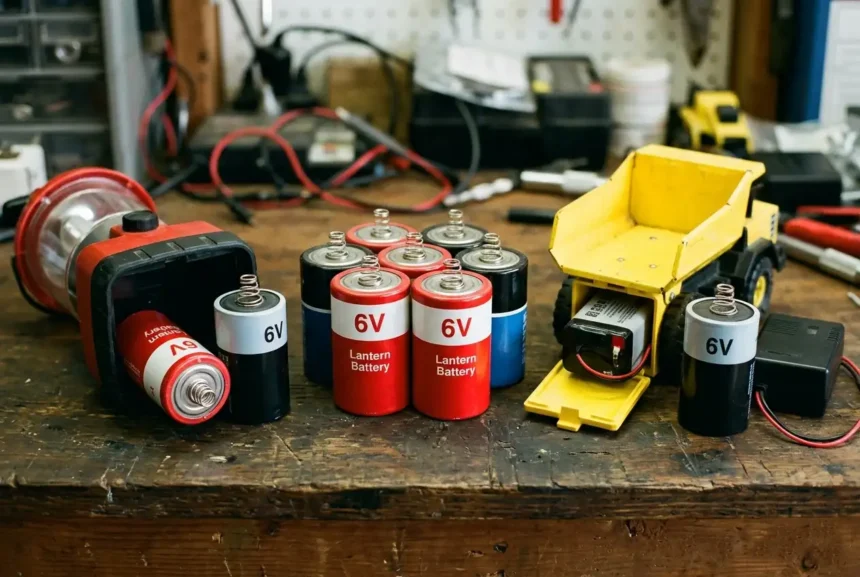
A 6V Battery still has a very practical place in everyday life, even in a market full of lithium packs and USB powered gadgets. You will find a 6V Battery in lanterns, kids’ ride on toys, emergency lights, vintage devices, camping gear, and small backup systems where simple, dependable power matters more than flashy specs. If you are shopping for one, the real challenge is not just finding a battery labeled 6V. It is choosing the right chemistry, capacity, charging method, and form factor for the way you actually plan to use it.
- What a 6V Battery Really Means
- Why 6V Batteries Are Still Popular
- Main Types of 6V Batteries
- Best 6V Battery Options for Lanterns
- Best 6V Battery Options for Toys
- Best 6V Battery Options for Backup Devices
- How to Choose the Right 6V Battery Charger
- Common Mistakes People Make
- Practical Buying Tips That Save Money
- Are Rechargeable 6V Batteries Better Than Disposable Ones?
- Final Thoughts on Choosing a 6V Battery
That is where a lot of buyers get stuck. One 6V Battery may work perfectly in a lantern but feel weak in a toy. Another may be great for backup devices but a poor fit for equipment that gets used every day. Once you understand the differences, picking the right option becomes much easier, and you are far less likely to waste money on the wrong battery or the wrong 6V Battery Charger.
What a 6V Battery Really Means
A 6V Battery is simply a battery that delivers about six volts of electrical potential. That voltage can come from different internal constructions. Some are disposable, while others are rechargeable. Some are built for slow, steady power, and others are better at handling heavier loads for short periods.
In practical use, that means two batteries with the same voltage may behave very differently. One may last longer in a lantern that runs for hours at a time, while another may perform better in a toy that needs quick bursts of power. Battery chemistry matters just as much as voltage.
Rechargeable 6 volt batteries are often based on lead acid designs, including sealed lead acid and AGM types. Lead acid batteries remain common in backup power because they are affordable and can deliver high surge currents, though they are heavier and have lower energy density than newer battery chemistries. They are still widely used in emergency systems, telecommunications backup, and portable equipment for exactly those reasons.
Why 6V Batteries Are Still Popular
A 6V Battery remains popular because it sits in a useful middle ground. It offers more power than small consumer cells but is still simple enough for many compact devices. Manufacturers also keep using 6 volt systems because they are proven, easy to service, and widely available.
For lanterns, a 6V Battery can provide stable, dependable output over long sessions. For toys, it often delivers enough power without making the system too expensive. For backup devices, it offers a familiar, low maintenance solution that works well in alarms, emergency lighting, and small power reserves.
Another reason is availability. Major battery brands still sell 6 volt formats, and even primary 6V battery products remain part of common comparison charts. Energizer’s battery comparison information lists 6V among standard consumer battery formats and notes that usable shelf life varies by chemistry.
Main Types of 6V Batteries
Choosing between different 6V Batteries starts with understanding the major categories.
Sealed Lead Acid 6V Battery
This is one of the most common rechargeable choices. A sealed lead acid 6V Battery is often used in emergency lanterns, ride on toys, alarm panels, and backup devices. It is affordable, easy to find, and compatible with many common charging systems.
Its biggest strengths are price, reliability, and decent current delivery. Its downsides are weight, slower charging, and shorter lifespan if it is repeatedly left discharged.
AGM 6V Battery
AGM stands for absorbent glass mat. This is a type of sealed lead acid battery where the electrolyte is held in a fiberglass mat. AGM designs are valued because they resist leakage better and are useful in portable equipment. They are often chosen when a sturdier, lower maintenance 6V Battery is needed.
Gel 6V Battery
Gel batteries are another sealed lead acid variation. They can perform well in deep cycle applications and may be preferred in some specialty backup setups. They are not always the first choice for high demand toys, but they can work well where smoother, controlled discharge is more important than sudden bursts of power.
Disposable 6V Battery
Some lanterns and specialty devices use a disposable 6V Battery rather than a rechargeable one. These can be useful for low use devices, emergency kits, or situations where charging is not convenient. The tradeoff is long term cost. If you use the device often, a rechargeable option is usually the smarter buy.
Best 6V Battery Options for Lanterns
Lanterns typically need consistent output and decent runtime. In many cases, the best 6V Battery for a lantern is a sealed lead acid model with enough capacity to support several hours of light without frequent charging.
If your lantern is meant for camping, emergency preparedness, or power outages, you want a battery that is dependable after sitting unused for a while. Storage habits matter here. Energizer recommends storing batteries in a cool, dry place at normal room temperature and removing batteries from devices that will not be used for extended periods.
A good lantern battery should offer:
- Stable power output
- Reasonable recharge time
- Low maintenance
- Reliable shelf performance
- Safe enclosure for transport and storage
If the lantern is used often, pairing it with the correct 6V Battery Charger is just as important as the battery itself. A poor charger can reduce lifespan faster than most people realize.
Best 6V Battery Options for Toys
Toys can be more demanding than they look. A 6V Battery in a child’s ride on car or motorized toy may face quick starts, uneven loads, and repeated recharging. That is why toy batteries need more than just the correct voltage. They need the right capacity and discharge behavior too.
For many toys, sealed lead acid 6V Batteries are the default option because they are rugged and affordable. They can handle repeated use, and replacements are widely available. Still, not every 6 volt battery is suitable for active toy use. A low quality unit may weaken quickly under frequent discharge cycles.
When shopping for toy batteries, check these details:
- Capacity in amp hours
- Terminal type and connector match
- Physical size
- Recommended charging method
- Brand reputation
- Child safe casing
Battery safety also matters. If the toy design includes small battery compartments or replaceable cells, parents should pay attention to product safety practices. The U.S. Consumer Product Safety Commission stresses the importance of secure battery compartments and safe handling, especially around children.
Best 6V Battery Options for Backup Devices
Backup devices need a 6V Battery that can sit quietly for long periods and still perform when needed. This includes emergency lights, small alarms, communications devices, and standby systems.
For this kind of use, reliability matters more than speed or compact size. A sealed lead acid or AGM 6V Battery is usually the strongest option because these designs are widely used in backup roles and are cost effective for standby power. Lead acid batteries have long been used in high availability emergency power settings and communications systems, which is one reason they remain such a practical choice for small scale backup devices.
The best backup battery should have:
| Feature | Why It Matters |
|---|---|
| Low self discharge | Helps preserve charge during storage |
| Strong standby reliability | Ensures power is there when needed |
| Safe sealed design | Reduces leak risk |
| Charger compatibility | Prevents overcharging or undercharging |
| Appropriate capacity | Supports the device long enough in an outage |
A backup battery is only as dependable as its maintenance routine. If it sits discharged for too long, performance may decline.
How to Choose the Right 6V Battery Charger
A 6V Battery Charger should never be an afterthought. The wrong charger can overcharge, undercharge, or slowly damage the battery. Rechargeable 6V Batteries, especially lead acid types, benefit from a charger matched to their chemistry and capacity.
Charging and discharging behavior is often discussed in terms of C rate, which compares the charging current to the battery’s capacity. That matters because charging too aggressively can shorten battery life, while charging too slowly may not be practical for frequent use.
When choosing a 6V Battery Charger, look for:
- Correct 6 volt output
- Compatibility with sealed lead acid, AGM, or gel if required
- Automatic shutoff or smart charging
- Overcharge protection
- Clear status indicators
- Connector compatibility with your battery terminals
If you are charging a lantern battery once every few weeks, a basic smart charger may be enough. If you are charging a toy battery every day, durability and proper current control become much more important.
Common Mistakes People Make
A lot of battery problems come from simple mistakes rather than defective products.
One common mistake is buying a 6V Battery based only on price. Cheap batteries can work at first, but lower build quality often shows up in reduced runtime, weak charging performance, or shorter overall life.
Another mistake is storing rechargeable 6V Batteries in a discharged state. Lead acid batteries are especially vulnerable here. When left undercharged for long periods, they can suffer sulfation, which reduces their ability to accept and hold a charge.
People also use the wrong charger more often than they realize. A mismatched 6V Battery Charger can slowly ruin a battery even if nothing seems wrong at first.
Practical Buying Tips That Save Money
If your device is used occasionally, do not automatically buy the largest battery available. More capacity can be helpful, but only if the size, weight, and charge time still fit your needs.
If the device is used heavily, buy from a brand with a solid reputation and replace the charger if yours is old or unreliable. The extra cost usually pays off in longer service life.
If you are buying for a toy, always compare the connector and tray size before ordering. If you are buying for a lantern, think about how often it sits unused. If you are buying for backup devices, focus on standby reliability over raw runtime claims.
A simple checklist helps:
- Match voltage exactly
- Match chemistry when replacing
- Check physical dimensions
- Confirm terminal style
- Use the correct 6V Battery Charger
- Store it properly between uses
Are Rechargeable 6V Batteries Better Than Disposable Ones?
For regular use, yes. Rechargeable 6V Batteries usually offer better long term value for lanterns, toys, and backup devices that see repeated service. They create less waste over time and are often more cost effective after enough charge cycles.
Disposable options still make sense in low use emergency kits or devices that may sit untouched for a long time. But if you use the device monthly or weekly, rechargeables are generally the better investment.
The only real caution is maintenance. A rechargeable 6V Battery needs proper charging and storage habits. Treated well, it can be dependable and economical. Neglected, it may disappoint faster than a disposable option.
Final Thoughts on Choosing a 6V Battery
The best 6V Battery is not always the most expensive one or the one with the biggest label. It is the one that fits your device, your usage pattern, and your charging setup. Lanterns usually benefit from dependable runtime and easy maintenance. Toys need a battery that handles repeated cycling and active loads. Backup devices need reliability above all else.
If you match the battery to the job, use the right 6V Battery Charger, and store it properly, a 6V Battery can still be one of the most practical power solutions around. In a world full of newer tech, these batteries remain useful because they are simple, proven, and easy to work with. That is why 6V Batteries continue to power everything from emergency lanterns to small backup systems with surprising reliability.
In the last step before buying, look closely at the battery chemistry, capacity, dimensions, and charging requirements. A little extra care here saves frustration later. For readers who want a broader background on rechargeable battery systems and charging concepts, the term battery charger is worth understanding in context.
Reputable references used for accuracy include Energizer battery care information, the U.S. Consumer Product Safety Commission, and technical background on lead acid battery behavior.