



If you have ever heard someone ask, “What Is BVD?” they are usually talking about bovine viral diarrhea, a contagious viral disease that mainly affects cattle. Despite the name, BVD is not just about diarrhea. It can damage the immune system, reduce fertility, cause abortions, weaken calves, trigger respiratory and digestive problems, and in some cases lead to lifelong infection in certain animals. That is why BVD disease remains one of the most important health and economic problems in cattle farming worldwide.
- BVD Meaning in Animals
- What Animals Does BVD Affect?
- How BVD Spreads From Animal to Animal
- Common BVD Symptoms in Cattle
- Why Persistently Infected Animals Matter So Much
- How BVD Affects Pregnant Animals and Calves
- Can BVD Be Diagnosed Easily?
- How Farmers Control and Prevent BVD Disease
- BVD Symptoms Table at a Glance
- Why BVD Has Such a Big Economic Impact
- Frequently Asked Questions About What Is BVD
- Conclusion
In simple terms, BVD meaning goes far beyond an upset stomach in cows. The disease is caused by the bovine viral diarrhea virus, often shortened to BVDV. It spreads through direct contact with infected animals, contaminated secretions, and, most importantly, through persistently infected animals, often called PI animals. These animals shed large amounts of virus for life and are one of the biggest reasons BVD keeps circulating in herds.
For farmers, breeders, and animal owners, understanding what is a BVD case really means is the first step toward protecting herd health. The effects are not always dramatic at the start. Sometimes the earliest signs look mild or are mistaken for other common problems, which is why BVD cattle symptoms are often missed until the disease has already spread.
BVD Meaning in Animals
BVD stands for bovine viral diarrhea, a viral infection of cattle caused by a pestivirus. Cattle are the main species affected, and they are the primary focus of most BVD control programs. The virus is especially concerning because it does not behave in only one way. Some animals experience a short-term infection and recover, while others become persistently infected before birth and continue spreading the virus throughout their lives.
This difference is what makes BVD disease so difficult to manage. A healthy-looking calf can sometimes be a major source of infection. That means a farm may appear fine on the surface while the virus quietly reduces performance, fertility, and calf survival in the background. In real-world herd management, that hidden damage is often what makes BVD so costly.
What Animals Does BVD Affect?
BVD is primarily a disease of cattle, including beef and dairy animals. It can affect cattle of all ages, although clinical illness is commonly seen in young cattle. The biggest impact, however, often shows up in reproduction, calf health, and herd productivity rather than in one single dramatic outbreak.
When people search for terms like BVD symptoms in cows or BVD cattle symptoms, they are usually trying to understand how the disease shows up in adult cows, calves, pregnant animals, or replacement heifers. The answer depends on the stage of infection, the animal’s immune status, and whether the virus is introduced into a pregnant cow at a critical point in gestation.
Although BVD is mainly discussed in cattle medicine, related pestiviruses can affect other ruminants. Still, when people ask what is BVD in practical farm terms, they are almost always referring to its impact on cattle operations.
How BVD Spreads From Animal to Animal
BVD spreads through contact with infected bodily secretions such as nasal discharge, saliva, feces, and other fluids. A transiently infected animal can pass the virus for a limited time, but a persistently infected animal is much more dangerous because it sheds virus continuously. These PI animals are the main engine behind long-term spread within a herd.
The most important route begins during pregnancy. If a pregnant cow is infected during a specific window of gestation, the fetus may become immunotolerant to the virus instead of clearing it. That calf can then be born persistently infected and will continue shedding the virus throughout its life. USDA and Cornell sources note that fetal infection during roughly 40 to 120 days or about 60 to 125 days of gestation is especially important for PI calf development.
This is why BVD control is not just about treating sick animals. It is about breaking the cycle of hidden transmission. A farm may vaccinate, improve hygiene, and isolate obviously ill cattle, but if PI animals remain undetected, the virus can continue to circulate.
Common BVD Symptoms in Cattle
One reason BVD is so misunderstood is that symptoms can vary widely. Some cattle show mild illness, while others develop severe disease. The most commonly reported signs include fever, lethargy, diarrhea, reduced appetite, lower milk production, reduced fertility, poor growth, and increased susceptibility to other infections because the virus suppresses immunity.
In young stock, the disease may show up as poor thrive, repeated respiratory illness, or digestive upset that seems to keep coming back. In breeding animals, the damage may be less visible at first but more serious over time, including conception problems, early embryonic loss, abortion, weak calves, and birth defects.
Some farmers also search for BVD eyes because eye abnormalities can be linked to fetal infection. Authoritative livestock sources note that BVD can cause birth defects affecting the eyes and nervous system in calves exposed before birth. So while “BVD eyes” is not a formal diagnosis by itself, it often refers to these congenital changes associated with in-utero infection.
Early Signs to Watch For
The earliest signs are often easy to brush off. A calf may look slightly dull, eat less, or lag behind others. A few animals may develop loose manure, fever, or mild nasal discharge. In some herds, the first obvious clue is not diarrhea at all but a string of fertility problems, repeat breeding, or calves that simply do not do well.
That is why experienced producers and veterinarians do not rely on one symptom alone. They look at the pattern. If a herd has unexplained reproductive loss, poor calf performance, frequent secondary infections, or a history of buying in replacement animals without testing, BVD quickly moves up the list of possible causes.
Why Persistently Infected Animals Matter So Much
If there is one thing every farm should understand about BVD disease, it is the importance of PI animals. These animals are infected before birth, do not clear the virus, and shed it constantly. They may be weak and stunted, but not always. Some appear normal enough to remain in the herd, which is exactly why they are so dangerous.
A PI heifer or cow can also produce a PI calf, which keeps the cycle going. This is where the disease becomes more than a single-animal problem and turns into a herd-level issue. In practical terms, one undetected PI animal can undermine vaccination efforts, increase disease pressure, and create ongoing losses through poor growth, illness, and reproductive failure.
How BVD Affects Pregnant Animals and Calves
Pregnancy is where BVD can do some of its worst damage. Infection during gestation may lead to abortion, weak or premature calves, birth defects, or persistent infection depending on when exposure occurs. This is one reason BVD is taken so seriously by both beef and dairy producers. The losses are not always visible in one day, but they can affect an entire calving season.
Calves born persistently infected often struggle. Some are poor performers from the start, while others appear to do fairly well for a time before health problems surface. Because they shed large amounts of virus in secretions and feces, they also expose pen mates, dams, and future calves.
This is why producers who ask what is a BVD problem on a farm are often really asking about calf health, breeding outcomes, and the future productivity of the herd. BVD is one of those diseases where prevention pays far more than trying to deal with the fallout later.
Can BVD Be Diagnosed Easily?
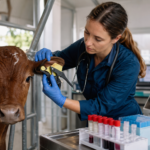
BVD can be diagnosed, but not by symptoms alone. The signs overlap with other diseases, especially respiratory and digestive illnesses. Veterinarians usually recommend laboratory testing to confirm infection and, most importantly, to identify PI animals. Cornell’s diagnostic guidance notes that PCR-based testing is commonly used for screening persistently infected cattle.
Testing becomes especially important when bringing in new animals, investigating fertility issues, or dealing with repeat disease problems in young stock. In real farm settings, skipping testing to save money often leads to much bigger losses later if a PI animal enters the herd unnoticed.
How Farmers Control and Prevent BVD Disease
A strong BVD control plan usually combines testing, biosecurity, and vaccination. No single step is enough on its own. Herds that succeed against BVD are usually the ones that work with a veterinarian, test suspect or incoming animals, remove PI animals promptly, and maintain a proper vaccination schedule.
Here are the core actions that matter most:
- Test animals with unknown BVD status, especially purchased cattle and calves from uncertain backgrounds.
- Identify and remove persistently infected animals so they cannot keep shedding virus in the herd.
- Follow a herd vaccination program designed with a veterinarian.
- Strengthen biosecurity by controlling animal movement and isolating new additions before mixing them with the herd.
- Pay close attention to breeding animals and pregnant cows because fetal infection drives the PI cycle.
A practical tip many farms learn the hard way is this: never assume a healthy-looking animal is BVD-free. The hidden nature of PI infection is what makes the disease so frustrating. Good records, routine herd testing where needed, and careful purchasing decisions can make a major difference.
BVD Symptoms Table at a Glance
| Animal group | Common effects of BVD |
|---|---|
| Calves and young cattle | Fever, diarrhea, poor growth, repeated illness, weak immunity |
| Pregnant cows | Abortion, weak calves, congenital defects, PI calf risk |
| PI animals | Constant virus shedding, poor performance, lifelong infection |
| Herd level | Lower productivity, fertility losses, higher disease pressure |
Why BVD Has Such a Big Economic Impact
BVD is not just a medical issue. It is also a production issue. A herd dealing with BVD may lose money through lower milk yield, reduced fertility, abortions, weak calves, higher treatment costs, poorer growth rates, and ongoing respiratory or digestive disease in young animals. Even when death loss is low, the hidden drag on performance can be significant.
That economic impact is one reason many regional and national cattle health programs treat BVD as a priority disease. The biggest costs often come from what producers do not immediately see: open cows, poor conception, underperforming calves, and infection pressure that never quite disappears.
Frequently Asked Questions About What Is BVD
What is BVD in simple words?
BVD is a viral disease of cattle caused by bovine viral diarrhea virus. It can affect the gut, immune system, fertility, pregnancy, and calf health.
What is a BVD animal?
Usually, people mean an animal infected with bovine viral diarrhea virus. In herd management, the most concerning animals are persistently infected cattle because they shed virus for life.
Are BVD eyes a real thing?
The phrase is commonly used by farmers and searchers to describe eye defects linked to fetal BVD infection. It is not a separate disease name, but it reflects real congenital problems reported in infected calves.
Can BVD be prevented?
Yes, but prevention requires more than one step. The best results come from testing, removing PI animals, biosecurity, and vaccination under veterinary guidance.
Conclusion
So, What Is BVD really? It is a serious viral disease of cattle that can quietly affect herd health in many ways, from diarrhea and fever to infertility, abortion, weak calves, and lifelong infection in PI animals. The reason BVD disease matters so much is that it often hides in plain sight. A farm may only notice small warning signs at first, but the long-term cost can be substantial if the virus is allowed to circulate.
The good news is that BVD can be managed and greatly reduced when producers act early. Understanding BVD meaning, recognizing BVD cattle symptoms, testing for PI animals, and working with a veterinarian on prevention can protect both animal welfare and farm profitability. For readers who want broader background on the viral disease itself, the key takeaway is simple: the sooner BVD is identified, the easier it is to stop it from damaging the herd.