



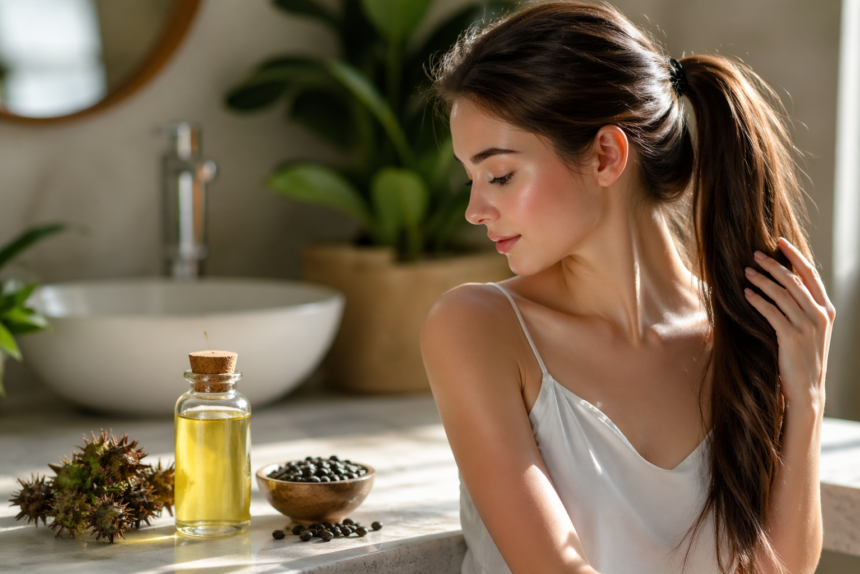
Oleo de Ricino has been part of beauty and home wellness routines for generations, and it keeps showing up in modern conversations about hair care, dry skin, brows, lashes, and scalp health. If you have been wondering whether Oleo de Ricino deserves a place in your routine, the honest answer is yes for some uses, no for others, and only with realistic expectations. The oil is rich in ricinoleic acid, a fatty acid that makes it thick, glossy, and highly occlusive, which helps explain why people reach for it when their hair feels dry or their skin needs extra softness. At the same time, strong claims about miracle hair growth, detox benefits, or all purpose healing are not backed by solid evidence.
- What Is Oleo de Ricino?
- Oleo de Ricino para Que Serve in Hair Care?
- How to Use Oleo de Ricino on Hair the Smart Way
- Can Oleo de Ricino Help Eyebrows and Eyelashes?
- Oleo de Ricino for Skin and Dry Areas
- The Difference Between Moisturizing and Treating
- Oleo de Ricino and Natural Wellness
- Common Mistakes People Make With Oleo de Ricino
- Who May Like Oleo de Ricino Most?
- A Realistic Routine That Actually Works
- Final Thoughts
- Conclusion
That balance matters. Oleo de Ricino can be useful in a routine focused on moisture retention, protecting the feel of dry ends, softening rough areas, and supporting a simple massage ritual that feels calming and restorative. But using pure oil carelessly can irritate skin, clog pores, or leave the scalp overly greasy. In other words, Oleo de Ricino works best when you treat it as a supportive care product, not a miracle cure.
What Is Oleo de Ricino?
Oleo de Ricino is castor oil, a vegetable oil made from the seeds of Ricinus communis. Its standout feature is its unusually high ricinoleic acid content, which accounts for about 90% of its fatty acid profile in many reviews and chemical references. That composition gives the oil its dense texture and strong coating ability, which is why it feels richer than lighter oils such as jojoba or argan.
You may also see people search for Oleo de Ricino para Que Serve, which simply means they want to know what it is used for. In practical daily care, Oleo de Ricino is mostly used for dry hair, brittle ends, scalp massage, rough patches on skin, and as an ingredient in some cosmetic and lip care products. It is also known medically for one very different reason. Oral castor oil has long been used as a stimulant laxative, and that remains the best established health related use. That does not mean it should be taken casually for wellness purposes, especially because side effects can be harsh.
Oleo de Ricino para Que Serve in Hair Care?
When people ask Oleo de Ricino para Que Serve for hair, they are usually hoping for one of three things. They want faster hair growth, a healthier looking scalp, or softer, shinier strands.
The best supported benefit is not dramatic regrowth. It is moisture support. Because Oleo de Ricino is thick and occlusive, it can help coat the hair shaft, reduce the feeling of dryness, and improve softness and shine when used in small amounts. Reviews on hair oils also note that ricinoleic acid containing oils can contribute to a moisturizing effect, which helps explain why many people feel their hair looks healthier after consistent use.
That said, there is no strong evidence that pure Oleo de Ricino directly grows hair faster. Cleveland Clinic states there is no evidence that applying pure castor oil to hair promotes growth, and a 2022 review focused on hair in skin of color also found weaker evidence for castor oil improving hair quality and insufficient evidence supporting it for hair growth treatment.
So why do some people swear by it? Usually because hair that is better moisturized looks fuller, smoother, and less frizzy. Breakage may also look reduced when dry strands are better protected. That visual improvement can feel like growth, even when the oil is really helping with manageability and retention rather than actively stimulating new follicles. That is still valuable. It just needs to be framed honestly.
How to Use Oleo de Ricino on Hair the Smart Way
If you want to use Oleo de Ricino on hair, keep it simple.
A small amount on the mid lengths and ends works better than saturating the whole scalp. The oil is very heavy, so too much can make the hair feel sticky, attract buildup, and become difficult to wash out. On curly, coily, or very dry hair, this richer texture may feel protective. On fine or low density hair, it can quickly feel overwhelming.
A practical routine looks like this:
- Warm 2 to 4 drops between your palms
- Press it lightly into damp or dry ends
- Use it once or twice a week rather than daily
- If applying to the scalp, massage only a thin layer and wash thoroughly afterward
- Mix it with a lighter oil if pure Oleo de Ricino feels too thick
This approach gives you the conditioning side of Oleo de Ricino without turning your routine into a greasy mess.
Can Oleo de Ricino Help Eyebrows and Eyelashes?
This is one of the most common beauty questions online. Oleo de Ricino is often used on brows and lashes because people hope it will make sparse areas look thicker. The reality is similar to scalp use. There is no solid evidence proving that pure castor oil regrows eyebrows or eyelashes in a reliable way. What it can do is coat the hairs, reduce dryness, and create a temporary fuller appearance.
Caution matters even more here. Cleveland Clinic warns that putting castor oil in the eyes can cause irritation, pain, blurred vision, and even damage. So if you use Oleo de Ricino around the brow area, keep it away from the lash line and eyes. Use a tiny amount, and never treat it like an eye remedy.
Oleo de Ricino for Skin and Dry Areas
Skin is where Oleo de Ricino makes the most practical sense, but only when you understand what it does. The oil is not a magic treatment for every skin issue. It is better thought of as a moisture sealing oil. Ricinoleic acid can help lock moisture into the skin, which is why castor oil appears in some moisturizers, cosmetics, and deodorants. The American Academy of Dermatology also notes that castor seed oil can be one of the ingredients found in products used to help heal chapped lips.
That makes Oleo de Ricino a reasonable option for rough elbows, dry cuticles, flaky patches around the body, or very dry heels when used in moderation. It can also work as the final step over a lighter moisturizer to help reduce water loss overnight.
But pure Oleo de Ricino is not ideal for everyone. Cleveland Clinic specifically warns that applying pure castor oil to the skin can cause irritation and allergic reactions such as contact dermatitis. Recent dermatology literature also identifies castor oil among ingredients that may trigger allergic reactions in some lip care and cosmetic users.
That is why a patch test matters. Apply a small amount behind the ear or on the inner arm for 24 hours before using it more widely. If the skin becomes itchy, red, swollen, or bumpy, stop using it.
The Difference Between Moisturizing and Treating
One reason Oleo de Ricino gets overhyped is that people confuse softer skin with medical treatment. If your skin feels smoother after using it, that does not automatically mean the oil healed acne, eczema, infection, dark spots, or inflammation.
Some experimental research on ricinoleic acid has looked at anti inflammatory effects, and newer clinical work has explored specific formulated products, including a castor oil cream for under eye hyperpigmentation. But these findings do not justify broad claims that plain Oleo de Ricino can treat major skin conditions at home. Formulation, concentration, and study design matter.
A good rule is this: use Oleo de Ricino for dryness and softness, not as a replacement for proven treatment when a skin condition is persistent, painful, inflamed, or spreading.
Oleo de Ricino and Natural Wellness
The phrase natural wellness can mean almost anything, which is exactly why people get misled. In everyday life, Oleo de Ricino can fit into wellness in a very modest, grounded way. It can be part of a calming scalp massage before wash day. It can soften very dry areas before bed. It can support a slower self care ritual that feels soothing.
That is real value. Ritual matters. Touch matters. Consistency matters.
Where people go too far is when they treat Oleo de Ricino as a detox tool, hormone balancer, gut fix, or whole body cure. Cleveland Clinic is blunt on this point. Claims about castor oil packs, detox benefits, or broad healing effects do not have scientific proof. The same source also stresses that there is no catchall remedy that detoxes the body.
So if you are interested in Oleo de Ricino for natural wellness, keep your expectations rooted in comfort, moisture, and routine. That is where the oil makes the most sense.
Common Mistakes People Make With Oleo de Ricino
A lot of frustration comes from using too much.
Here are the mistakes that tend to backfire:
| Mistake | What happens |
|---|---|
| Applying a heavy layer to the scalp daily | Buildup, clogged pores, greasy roots, harder wash days |
| Using it as a hair growth cure | Disappointment because evidence is weak |
| Skipping a patch test | Higher chance of irritation or allergic reaction |
| Putting it near or in the eyes | Risk of burning, irritation, blurred vision |
| Drinking it casually for wellness | Cramping, diarrhea, dehydration, medication issues |
These problems are not small. Oral castor oil can cause bloating, cramping, diarrhea, vomiting, and dehydration, and it may be risky in pregnancy because it can stimulate contractions. That is why Oleo de Ricino should not be taken internally for casual wellness experiments.
Who May Like Oleo de Ricino Most?
Oleo de Ricino tends to be most useful for people with very dry hair, textured hair that benefits from richer sealing oils, rough body areas, or a preference for simple beauty rituals. It may also appeal to those who like minimal ingredient products and do well with thicker oils.
It may be less enjoyable for people with acne prone skin, very fine hair, oily scalps, or sensitivity to fragranced or plant derived cosmetic ingredients. If you have active scalp irritation, sudden hair shedding, persistent hair loss, or inflamed skin, it is better to get the cause checked rather than trying to oil your way through it. The right diagnosis matters far more than the trending oil.
A Realistic Routine That Actually Works
If you want a balanced way to use Oleo de Ricino, this routine is practical and low risk.
For hair, use a few drops on the ends once or twice a week. If your scalp is dry, massage in a small amount before shampooing, then wash it out thoroughly.
For skin, apply a tiny amount over damp skin or over a lightweight moisturizer on dry spots only. Think elbows, knees, heels, and cuticles, not full face coverage unless you already know your skin tolerates rich oils.
For brows, use a very small amount on the brow hairs only, keeping it well away from the eyes.
That kind of routine respects what Oleo de Ricino does well without forcing it to do things it cannot prove.
Final Thoughts
Oleo de Ricino has earned its place in beauty culture because it feels rich, protective, and comforting. It can make hair look smoother, help dry ends feel softer, and seal moisture into rough skin areas. That alone makes it useful for many people. But the smartest way to use Oleo de Ricino is to see it clearly. It is a moisture focused support product, not a miracle growth serum and not a cure all wellness treatment.
If you have been searching Oleo de Ricino para Que Serve, the simplest honest answer is this: Oleo de Ricino is mainly useful for sealing in moisture, improving the feel of dry hair and skin, and supporting a simple self care ritual when used carefully. Stay realistic, patch test first, and avoid exaggerated claims. In that role, castor oil can absolutely have a place in a thoughtful beauty and natural wellness routine.
Conclusion
Oleo de Ricino continues to be popular because it offers something people genuinely want: softness, shine, and a sense of natural care. Used properly, Oleo de Ricino can support dry hair, rough skin, and simple beauty rituals without overcomplicating your routine. The key is to use Oleo de Ricino with realistic expectations, light application, and attention to skin sensitivity. When you do that, Oleo de Ricino can be a helpful part of hair, skin, and natural wellness care.