



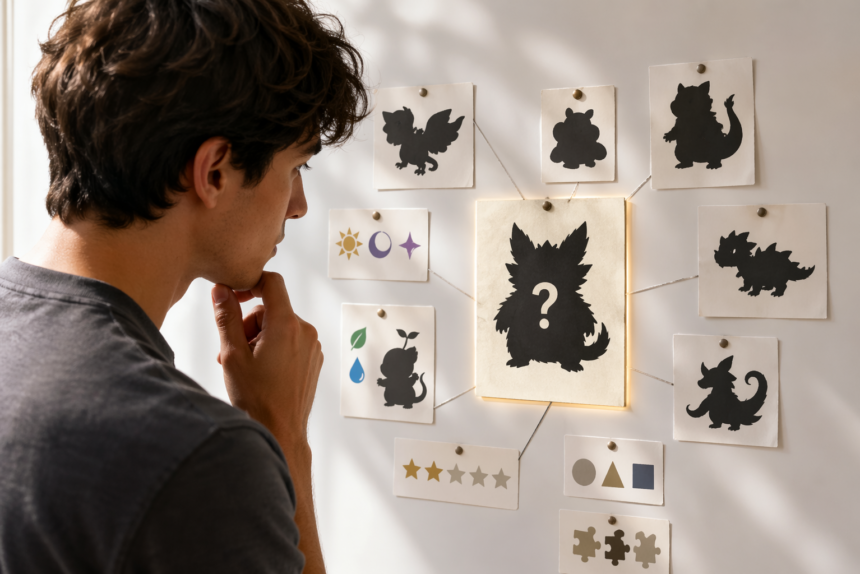
If you have spent any time around Pokémon fans lately, there is a good chance you have seen people talking about Pokedle. It is one of those simple browser games that looks easy at first, but quickly pulls you in once you start playing. The idea is straightforward: guess the mystery Pokémon using clues, visuals, and your own knowledge of the franchise. What makes it stick is the daily challenge format, the familiar Pokémon theme, and that satisfying feeling when you figure out the answer just before your last try.
- What Is Pokedle?
- Why Pokedle Became So Addictive
- How Pokedle Usually Works
- Common Pokedle Modes Players Love
- Why Pokedle Appeals to Both Casual and Hardcore Fans
- The Skills That Actually Help You Win at Pokedle
- Pokedle and the Rise of Daily Browser Games
- What Makes Pokedle Different From Other Pokémon Puzzle Games
- Practical Tips for New Pokedle Players
- Is Pokedle Good for Pokémon Knowledge?
- Why Fans Keep Coming Back Every Day
- Final Thoughts
That mix of nostalgia, competition, and routine is exactly why Pokedle keeps showing up in gaming conversations. Daily puzzle games have become a huge online habit since Wordle-style formats took off, and Pokémon is one of the biggest entertainment franchises in the world, with hundreds of millions of video games sold and more than a thousand Pokémon species to remember. That gives a game like Pokedle the perfect foundation for replay value and community appeal.
What Is Pokedle?
Pokedle is a daily Pokémon guessing game inspired by the same pick-up-and-play formula that made daily word games so popular. Instead of guessing a regular word, you try to identify a hidden Pokémon. Depending on the version you play, the game may use clues such as silhouettes, blurry card images, Pokédex-style descriptions, type information, generation hints, or comparison feedback after each guess. Several live versions of Pokedle-style games exist online, but the shared appeal is the same: one quick daily Pokémon puzzle that rewards deep franchise knowledge.
That concept sounds small, but it hits a very specific sweet spot. Pokémon fans already love identifying creatures by shape, type, region, and tiny design details. Pokedle turns that knowledge into a daily challenge. It feels competitive without being stressful, and it feels rewarding without requiring a big time commitment.
Why Pokedle Became So Addictive
The biggest reason Pokedle works is that it respects how fans already think about Pokémon. Longtime players do not just remember names. They remember generations, typings, evolutions, stats, Pokédex entries, card art, and visual silhouettes. A daily guessing game turns all of that memory into something active.
There is also a strong habit loop behind it. Daily games encourage players to come back at least once every day. The challenge resets, everyone gets the same puzzle, and there is always a fresh reason to play. That shared routine matters. It gives fans something small to talk about with friends, post on social media, or compare scores over.
Another reason is the size of the Pokémon universe itself. The official Pokédex and major fan resources cover more than a thousand Pokémon species, which means the pool is wide enough to keep puzzles interesting for a long time. Even skilled fans cannot rely only on their favorite generation forever. They have to think broadly, and that makes each win feel earned.
How Pokedle Usually Works
Different versions of Pokedle use slightly different rules, but most follow a familiar structure. You get a hidden Pokémon, enter guesses, and receive clues that help narrow things down. Some versions are text based. Others are more visual. Some focus on classic identifying traits like type, generation, and size, while others use artwork, card blur, or description-based hints.
Here is the basic flow most players can expect:
- You start with a hidden Pokémon.
- You enter a guess by name.
- The game gives clue feedback after each guess.
- You use that feedback to narrow the field.
- You keep guessing until you get it right or run out of tries.
This formula works so well because every wrong answer still teaches you something. Maybe the generation is off. Maybe the type is right but the size is wrong. Maybe the silhouette suggests a final evolution when you guessed a base form. Every clue reduces the chaos.
Common Pokedle Modes Players Love
Many Pokedle versions now go beyond one plain guessing screen. That variety is one of the reasons the game keeps players interested.
Classic Mode
Classic mode is usually the purest version of the game. You guess a Pokémon and receive clue-based feedback. This mode rewards broad franchise knowledge and works best for players who enjoy deduction.
Silhouette Mode
This one plays directly into one of Pokémon’s oldest habits: identifying creatures from their outline alone. Fans who grew up with “Who’s That Pokémon?” moments tend to love this style because it mixes nostalgia with visual recognition.
Card or Blurry Image Mode
Some versions use a blurred Pokémon card image or a partially hidden visual. This mode feels different because it relies less on stats and more on pattern recognition. Art style, color hints, and pose shapes suddenly matter.
Description Mode
A Pokédex-style sentence or clue description may be the starting point here. This version is especially fun for players who remember lore, habitats, abilities, or signature traits more than just visuals.
These mode variations are not just gimmicks. They expand the audience. A player who struggles with silhouettes might excel with descriptions. A card collector may perform better in visual modes than someone who only played the mainline games.
Why Pokedle Appeals to Both Casual and Hardcore Fans
One of the smartest things about Pokedle is that it is not only for experts. Hardcore fans enjoy showing off deep knowledge, but casual players can still have fun because the learning curve is friendly. The daily format keeps the session short, so even if someone misses the answer, they do not feel like they wasted a lot of time.
For younger fans, it is a fun challenge. For older fans, it can feel like reconnecting with years of Pokémon memories. A Generation I player might instantly spot a silhouette from the original 151. A newer fan might dominate clues related to later regions. That cross-generational appeal is a big part of why the game spreads so naturally.
It also helps that Pokémon itself has unusually broad recognition. The franchise began with 151 original species and has expanded massively over time, which gives players different entry points depending on when they joined the fandom.
The Skills That Actually Help You Win at Pokedle
A lot of people assume Pokedle is mostly luck. It is not. The strongest players usually lean on a few consistent habits.
Start With a Smart First Guess
Your first guess should reveal useful information, not just reflect a favorite Pokémon. A common creature with recognizable traits can help you test generation, type, height, or design direction quickly.
Think in Families
If the clue points toward a design style or body shape, think about evolution lines. Sometimes the answer is not the Pokémon you first notice, but another member of its family.
Use Type Logic
Type is often one of the fastest ways to narrow the list. If your guess confirms or rules out a type, stop thinking randomly and start filtering intentionally.
Pay Attention to Generation
Generation clues can save you from wasting turns. A lot of wrong guesses happen because players think they are close visually but are actually searching the wrong era.
Do Not Ignore Size and Shape
Height, silhouette, and general body structure are often more useful than people expect. Many Pokémon share themes, but only a few share the same overall proportions.
These small habits can dramatically improve results. The more deliberate your guessing becomes, the more enjoyable the game gets.
Pokedle and the Rise of Daily Browser Games
Part of Pokedle’s success comes from timing. Daily browser games fit modern internet behavior almost perfectly. People want entertainment that starts instantly, runs on mobile or desktop, and does not demand a big download or long tutorial. That lightweight format makes daily puzzle sites easy to revisit and easy to share.
Pokedle also benefits from being social without needing live multiplayer. Everyone faces the same challenge, so discussion happens naturally. One player talks about solving it in three tries. Another complains that a silhouette fooled them. Someone else posts a reaction after missing an obvious clue. That kind of casual conversation keeps the game alive between resets.
This is why niche daily games often outperform more complicated browser titles in terms of habit building. They become part of a routine. Coffee, email, social feed, daily puzzle. Pokedle fits right into that pattern.
What Makes Pokedle Different From Other Pokémon Puzzle Games
There are plenty of Pokémon fan games, trivia apps, and quiz websites out there, but Pokedle stands out because it balances speed with challenge. It does not require a long session, yet it still creates tension. You are always one clue away from solving it, or one bad guess away from failing.
It also feels more personal than a standard trivia quiz. Trivia asks whether you know a fact. Pokedle asks whether you can reason your way toward an answer. That difference matters. Deduction feels more interactive than recall alone.
Compared with broader Pokémon puzzle formats, Pokedle also benefits from flexibility. Visual players can enjoy silhouette or card modes. Lore-focused fans can enjoy description clues. Competitive players can track how efficiently they solve daily rounds. It is simple enough for newcomers and deep enough for longtime fans.
Practical Tips for New Pokedle Players
If you are just starting with Pokedle, the best thing you can do is slow down and treat each guess as information gathering.
A few beginner-friendly habits make a big difference:
- Use your first guess to test broad traits.
- Watch for repeated clue patterns.
- Think about region and generation before guessing again.
- Compare evolution lines when the silhouette feels familiar.
- Do not lock onto one answer too early.
Many players lose because they become emotionally attached to a guess. The smarter approach is to let the clues lead. If your first instinct does not match the evidence, move on quickly.
Another useful tactic is to brush up on Pokémon outside your favorite era. A lot of fans know one or two generations extremely well but become shaky elsewhere. Pokedle exposes that gap fast. The better your all-around familiarity, the more consistent your results will be.
Is Pokedle Good for Pokémon Knowledge?
Surprisingly, yes. Pokedle can sharpen Pokémon recognition skills in a way that feels fun rather than academic. Repeated exposure helps players remember lesser-known species, associate design traits with regions, and think more carefully about type and evolution patterns.
That is especially true in clue-based modes. Instead of just memorizing names from a list, you start connecting information. You notice that certain generations favored specific design styles. You remember body proportions better. You become quicker at identifying visual cues.
For fans who enjoy collecting, battling, card games, or Pokédex completion, that knowledge transfer can make the broader franchise feel even richer.
Why Fans Keep Coming Back Every Day
At its core, Pokedle succeeds because it delivers a tiny daily reward. It is fast. It is recognizable. It taps into one of gaming’s most beloved franchises. And it gives players a reason to come back tomorrow even if today did not go perfectly.
That loop matters more than flashy design. Most daily games live or die based on whether players build a habit around them. Pokedle makes that easy because every new round feels like a small chance to redeem yesterday’s mistakes or prove that your Pokémon knowledge is sharper than you thought.
It also helps that the Pokémon world is built for recognition, cataloging, and comparison. The whole idea of a Pokédex trains fans to observe and classify creatures, which makes a guessing game feel like a natural extension of the franchise rather than a random spin-off. In that sense, Pokedle feels right at home inside Pokémon culture.
Final Thoughts
Pokedle is more than a passing browser game trend. It works because it understands what Pokémon fans enjoy: recognition, memory, deduction, nostalgia, and a little bit of bragging rights. It turns all of that into a short daily challenge that feels satisfying whether you solve it instantly or struggle through every clue.
For casual players, Pokedle is a fun way to test what they remember. For longtime fans, it is a surprisingly sharp daily puzzle that rewards years of familiarity with the series. That balance is rare, and it is exactly why Pokedle keeps building attention among Pokémon players who want something quick, clever, and genuinely replayable.
In the end, the appeal of Pokedle is simple. It makes Pokémon knowledge feel active again. And when a game can do that in just a few minutes a day, it is easy to see why fans keep coming back.
If you want to understand the broader history behind the franchise that makes games like Pokedle possible, the best place to start is Pokémon franchise.