



Key Takeaways
- Community amenities significantly influence homebuyers’ decisions, often outweighing other factors.
- Amenities such as parks, fitness centers, and social spaces enhance property values and attract buyers.
- Understanding the impact of these amenities can guide both buyers and developers in making informed choices.
Introduction
Homebuyers today are no longer focusing solely on square footage or the number of bedrooms when searching for their ideal property. Instead, they are increasingly prioritizing the lifestyle that a neighborhood can offer. Community amenities are fundamental factors that influence not just the decision to buy, but also long-term satisfaction and property value appreciation. For instance, the appeal of new homes Riverview FL is closely tied to the availability of thoughtfully designed community features.
The presence of parks, fitness centers, walking trails, and vibrant social spaces can make a tremendous difference not only in attracting buyers but also in fostering a sense of belonging. As more prospective homeowners look to anchor their investment with lifestyle and convenience, amenities continue to rise in importance on every homebuyer’s checklist.
Increasingly, the home search process stretches beyond the four walls of the house and into the wider community. Amenities influence daily routines, family activities, and the broader sense of community. Whether it is playgrounds for children or fitness trails for adults, what the neighborhood offers outside the front door is often just as important as the home itself.
These trends are not only shaping buyer preferences but are prompting developers to rethink what makes a community successful in the modern market. To understand why amenities rank so highly, it is helpful to examine their growing role in real estate and how they are changing the traditional home-buying journey.
Community amenities have taken center stage as buyers increasingly look for more than just a roof over their heads. Features that promote wellness, relaxation, connection, and convenience are now regarded as essential parts of the homebuying decision. According to a recent REMAX study, 88% of prospective buyers plan to purchase a home in 2026, and a significant portion of them are seeking community-focused living. This surge in demand reflects a broader societal shift toward valuing experiences, walkability, and a strong sense of place.
New master-planned communities are designed with these needs in mind, placing amenities at the forefront of their offering. The availability of green spaces, recreational clubs, and social gathering spots can turn a simple neighborhood into a lifestyle destination. As buyers continue to favor neighborhoods with thoughtfully curated amenities, developers are responding by integrating a broader range of features from the earliest planning stages.
For more insight into how location and amenities work together to influence home values, refer to this resource on location’s impact on home value.
Types of Community Amenities That Attract Buyers
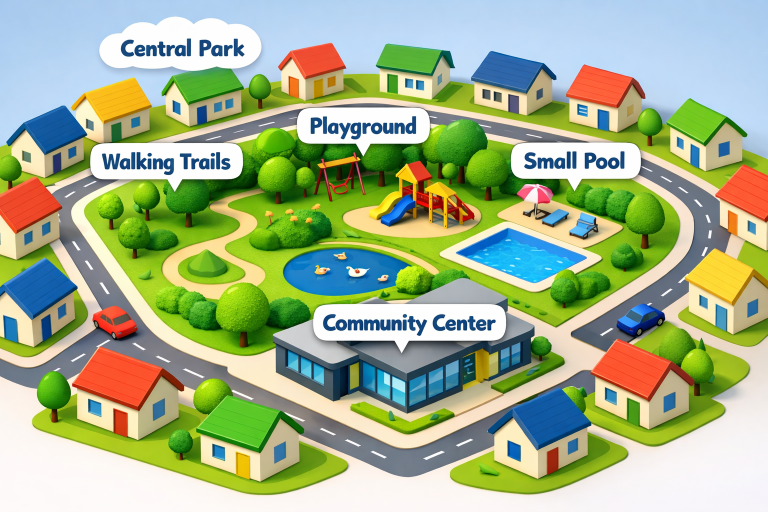
Parks and Green Spaces
Parks and green spaces remain among the most powerful draws for community living. They provide a respite from urban life, foster outdoor recreation, and create places for families and friends to gather. Expansive open areas are often linked to higher resident satisfaction and enhanced environmental quality.
Fitness Centers and Recreational Facilities
Health-conscious buyers increasingly seek out neighborhoods with on-site gyms, sports courts, and fitness studios. These amenities promote wellness habits and offer the convenience of working out close to home. Residents value access to recreational activities that fit their lifestyles without requiring additional memberships or travel.
Social Lounges and Community Centers
Spaces designed for social interaction, such as lounges and community centers, help create a strong sense of belonging. These areas can host events, meetings, and gatherings, fostering relationships between neighbors and encouraging a vibrant community spirit.
Swimming Pools
Pools are highly desirable, especially in regions with warm climates. They offer relaxation, leisure, and an active gathering place for families and friends during the summer months.
Walking and Biking Trails
Trails for walking and biking encourage outdoor activity and provide a safe, scenic option for exercise. Communities with interconnected paths often see higher levels of resident satisfaction, particularly among families and fitness enthusiasts.
Impact on Property Values
Amenities are more than lifestyle perks; they play a pivotal role in shaping home values. Real estate experts consistently highlight a positive correlation between well-designed amenities and increased property value. Homes within amenity-rich communities tend to appreciate faster than those in neighborhoods with fewer features, attracting a broader range of buyers and sustaining demand even in softer markets.
This increase in value is due not only to the physical features themselves but also to the perception of quality and convenience they deliver. Buyers are willing to pay a premium for the daily benefits and community experience that amenities provide. According to experts cited by Realtor.com, homes near desirable amenities, especially parks and open spaces, can command higher prices and shorter times on the market.
Buyer Preferences and Lifestyle Considerations
The alignment between local amenities and a buyer’s lifestyle cannot be overstated. Modern buyers, especially younger families and professionals, are placing significant emphasis on walkable neighborhoods with easy access to dining, retail, and recreational options. The desire for a well-balanced lifestyle drives demand for homes close to shopping centers, restaurants, fitness trails, and event spaces.
With the increased focus on remote work and flexible lifestyles, community features that enable relaxation, collaboration, and entertainment are seen as valuable additions rather than luxury extras. Walkability, safety, green surroundings, and social opportunities serve as decision-making criteria in the search for the perfect home.
To gain more perspective into what drives homebuyer decisions today, this research on the mindset of today’s homebuyers provides helpful context.
Developers’ Perspective: Designing Communities with Desirable Amenities
Developers are increasingly recognizing the influence of amenities on buyer interest and long-term success. From the earliest planning stages, they evaluate how best to integrate recreational, social, and wellness features while balancing initial investment with future value. Prioritizing popular amenities can set a community apart and accelerate sales, while ongoing maintenance and lifestyle programming support resident satisfaction over the long term.
The key for developers lies in understanding market trends, identifying core buyer segments, and creating a cohesive community identity. Flexibility and adaptability in planning are important to adjust amenities as demands evolve. By fostering strong, amenity-driven communities, developers can achieve high occupancy and lasting appeal.
Case Studies: Communities with Successful Amenity Integration
Across the country, leading developments are demonstrating that successful amenity integration directly correlates with increased homebuyer satisfaction and property values. For example, master-planned communities in Florida and Texas feature resort-style pools, nature preserves, walking trails, co-working spaces, and robust community events calendars. These amenities have resulted in consistently strong demand and high resale values.
Lessons learned from these communities show the value in tailoring amenity packages not just to general market appeal, but also to the unique needs and aspirations of residents. Frequent usage and resident feedback ensure that features continue to deliver long-term value.
Conclusion
The role of community amenities in homebuying decisions is undeniable. As buyers look to invest in both a home and a lifestyle, amenities emerge as essential differentiators for properties and neighborhoods alike. They impact everything from day-to-day activities to future financial value, shaping the definition of “home” for countless families.
As trends continue to evolve, developers and buyers alike must pay close attention to the quality, variety, and relevance of amenities. These features not only enhance personal well-being and community spirit but also determine the long-term attractiveness and sustainability of residential developments.