


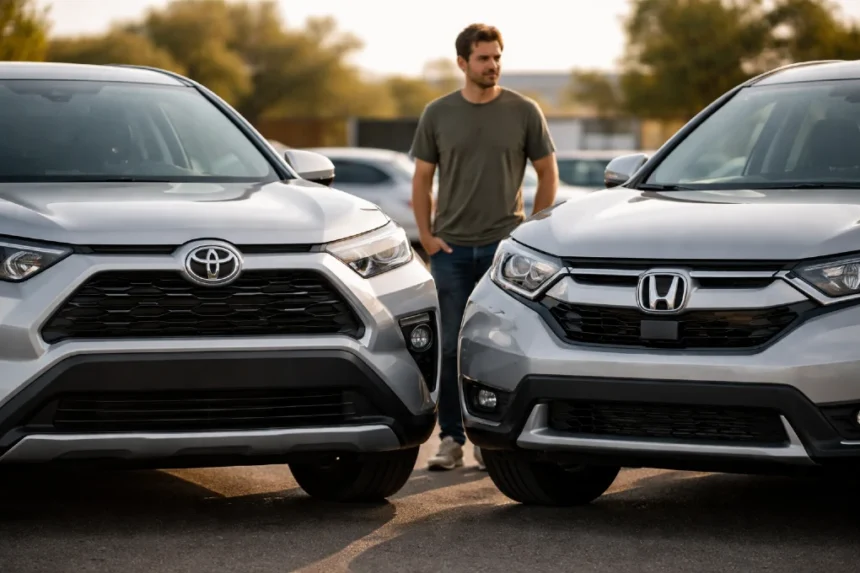
Buying a used car sounds simple until reliability becomes the deciding factor. That is where Toyota vs Honda Reliability turns into a real-world question instead of just a comparison headline. Both brands have earned strong reputations for durability, lower ownership costs, and long lifespans, but they are not identical. For used car buyers, those small differences can matter a lot when you are trying to avoid surprise repairs, stretch your budget, and keep a vehicle for years.
- Why reliability matters so much when buying used
- Toyota vs Honda Reliability at a glance
- Toyota reliability strengths for used buyers
- Honda reliability strengths for used buyers
- Toyota vs Honda Reliability by ownership cost
- Best used Toyota models for reliability
- Best used Honda models for reliability
- Toyota vs Honda Reliability for high-mileage used cars
- Which brand is better for resale value?
- Common mistakes used car buyers make in this comparison
- FAQ
- Final verdict: Which is the best choice for used car buyers?
The truth is that both Toyota and Honda are usually smart choices in the used market. Consumer Reports placed Toyota among the most reliable brands and Honda in the top five in its latest reliability rankings, while RepairPal gives both brands a 4.0 out of 5.0 reliability rating. RepairPal’s brand-level data also shows Honda with slightly lower average annual repair costs and a lower share of severe repairs, while Toyota stands out strongly in long-term durability studies from iSeeCars.
So which one is better? If your priority is pure long-haul durability and a conservative ownership experience, Toyota often has the edge. If you want a used car that blends strong reliability with a more engaging drive and slightly lower repair-cost averages, Honda makes a very strong case. The better choice depends on what kind of used car buyer you are.
Why reliability matters so much when buying used
A new car gives you a factory warranty and a clean service history. A used car does not. That means reliability is not just a nice bonus. It is the thing that protects your wallet.
When people compare Toyota vs Honda Reliability, they are usually asking a few practical questions:
- Which brand is less likely to break down?
- Which one costs less to maintain?
- Which one is safer for high-mileage buying?
- Which one holds up better after 100,000 miles?
- Which one gives the best value in the used market?
Those are exactly the right questions. According to J.D. Power’s 2025 Vehicle Dependability Study, the industry average reached 202 problems per 100 vehicles, the worst level since 2009, largely due to software-related issues in newer vehicles. That makes proven, simpler, dependable used models even more attractive for shoppers who want fewer headaches.
Toyota vs Honda Reliability at a glance
Here is the short version before we dig deeper.
| Factor | Toyota | Honda |
|---|---|---|
| RepairPal reliability rating | 4.0/5.0 | 4.0/5.0 |
| Brand rank on RepairPal | 8th of 32 | 1st of 32 |
| Average annual repair cost | $441 | $428 |
| Average repair-shop visits per year | 0.34 | 0.31 |
| Chance a repair is severe | 12% | 10% |
| Consumer Reports brand reliability position | Higher than Honda | Top five, behind Toyota |
| iSeeCars long-life strength | Excellent, especially SUVs/trucks/hybrids | Strong, especially select SUVs and sedans |
That table tells an important story. Toyota vs Honda Reliability is not a battle between a great brand and a weak one. It is a contest between two dependable brands with different strengths.
Toyota reliability strengths for used buyers
Toyota has built its reputation on consistency. The brand is known for making careful, incremental changes instead of dramatic redesigns, and Consumer Reports specifically points to that conservative approach as one reason Toyota remains near the top of its reliability rankings.
For used buyers, that matters because gradual engineering changes usually mean fewer unexpected issues. Toyota models often feel like they were designed to age quietly. They may not always be the most exciting vehicles to drive, but they tend to keep doing their job with minimal drama.
Toyota also shines in long-life studies. In iSeeCars’ 2025 longest-lasting vehicles research, Toyota dominated the list with several models posting far-above-average chances of reaching 250,000 miles. The Toyota Sequoia led at 39.1%, followed by the 4Runner at 32.9%, Highlander Hybrid at 31.0%, Tundra at 30.0%, Tacoma at 25.3%, and Avalon at 18.9%. That kind of data reinforces Toyota’s reputation for durability over the long run.
Why Toyota often wins with high-mileage shoppers
Used car buyers shopping near or above 100,000 miles usually care about predictability. Toyota appeals to that buyer because many of its most popular models have a long track record of:
- durable powertrains
- simple maintenance needs
- strong resale value
- broad mechanic familiarity
- widely available parts
The downside is obvious too. Because Toyota has such a strong reliability image, used examples often cost more. In many local markets, a clean used Corolla, Camry, RAV4, or 4Runner is priced at a premium. You are often paying extra for peace of mind.
Honda reliability strengths for used buyers
Honda deserves its reputation too. RepairPal rates Honda 4.0 out of 5.0 and ranks it first among 32 brands, with an average annual repair cost of $428, about 0.3 unscheduled repair visits per year, and a 10% probability that repairs will be severe. Those numbers are slightly better than Toyota’s brand averages on RepairPal.
For many buyers, Honda hits the sweet spot between reliability and everyday enjoyment. Hondas often feel a little livelier on the road, with sharper steering, responsive engines, and cabins that feel practical without being dull. If you want reliability but still care about how a car drives, Honda is often the brand that feels more rewarding.
Honda also shows up well in iSeeCars’ long-lasting vehicle study, with the Ridgeline at 14.7% and the Pilot at 13.1% likelihood of reaching 250,000 miles, both well above the average vehicle’s 4.8% chance. That is a strong signal that Honda can absolutely deliver long-term durability when properly maintained.
Where Honda can be especially appealing
Honda is a smart used buy for people who want:
- a practical daily driver with a bit more driving confidence
- lower average repair-cost exposure
- solid fuel economy in popular models
- strong reliability without Toyota-level used pricing in some markets
That last point is important. In many areas, a used Honda Accord or Civic can sometimes be easier to find at a slightly better price than an equivalent Toyota Camry or Corolla. Not always, but often enough to matter.
Toyota vs Honda Reliability by ownership cost
A lot of people treat reliability like a yes-or-no issue. In reality, ownership cost is part of reliability. A car that rarely breaks is great. A car that costs less when something does go wrong is also a win.
RepairPal’s current brand data shows:
- Toyota: $441 average annual repair cost, 0.34 visits per year, 12% severe repair probability
- Honda: $428 average annual repair cost, 0.31 visits per year, 10% severe repair probability
Those are close numbers, but Honda does have a slight advantage in this set of averages. That means if you are comparing Toyota vs Honda Reliability from a maintenance-cost angle alone, Honda can look a little better on paper.
Still, averages do not tell the whole story. Model choice matters more than brand choice once you narrow the search. A well-maintained Toyota Camry will almost always be a safer bet than a neglected Honda Accord, and the reverse is also true.
Best used Toyota models for reliability
Not every Toyota is equal, but these models consistently have strong reputations among used buyers:
Toyota Corolla
The Corolla is the classic low-risk used buy. It is efficient, simple to own, and generally inexpensive to keep running. If you want dependable transportation without much drama, this is one of the safest choices.
Toyota Camry
The Camry adds more comfort and space while keeping Toyota’s traditional strengths. It is especially appealing for commuters and families who want a midsize sedan that can last a very long time.
Toyota RAV4
For used SUV buyers, the RAV4 remains one of the most practical options on the market. Strong resale values can make it pricier, but it is popular for a reason.
Toyota Prius
If you want fuel savings with a proven track record, the Prius deserves serious attention. Toyota’s hybrid reputation remains strong, and Consumer Reports notes that hybrids continue to be reliable choices overall.
Toyota 4Runner and Tacoma
These are durability favorites, especially for buyers who care about ruggedness, utility, and long-term ownership. iSeeCars’ data strongly supports Toyota’s truck and SUV strength.
Best used Honda models for reliability
Honda has several used-market standouts too.
Honda Civic
The Civic has long been a favorite because it balances efficiency, reliability, and a more enjoyable driving feel than many compact rivals. It is a great fit for students, commuters, and first-time buyers.
Honda Accord
The Accord is one of the most complete used-car choices out there. It is roomy, comfortable, and generally dependable, making it an easy recommendation for buyers who want a midsize sedan.
Honda CR-V
The CR-V has been one of Honda’s strongest nameplates for years. For used SUV shoppers who want practicality without going too large, it is often one of the first vehicles to shortlist.
Honda Pilot
If you need family-sized space, the Pilot deserves attention. It also posted a strong result in iSeeCars’ longevity rankings.
Honda Ridgeline
The Ridgeline is a niche choice, but its 2025 iSeeCars ranking shows it has serious long-term staying power. For buyers who want pickup utility with a more comfortable, car-like feel, it can be an excellent used buy.
Toyota vs Honda Reliability for high-mileage used cars
This is where the comparison gets really practical. If you are shopping in the 100,000 to 180,000-mile range, you are no longer buying just a brand. You are buying the previous owner’s habits.
A reliable badge cannot save a neglected car. That means your inspection checklist matters more than the logo on the grille.
When comparing Toyota vs Honda Reliability on older used vehicles, look for:
- complete service records
- regular oil changes
- transmission service history when applicable
- cooling system maintenance
- tire wear that suggests proper alignment
- clean title status
- no signs of deferred repairs
Between the two, Toyota often gets the nod for buyers who want maximum confidence with very high mileage. Honda remains excellent, but some used shoppers feel Toyota’s more conservative engineering gives it a slight edge once odometers climb deep into six figures. Current longevity studies support that view, especially on Toyota SUVs, trucks, and hybrids.
Which brand is better for resale value?
Reliability and resale value usually travel together. Buyers trust both Toyota and Honda, so both tend to hold value well. Toyota often has the stronger resale reputation, especially for high-demand models like the Tacoma, 4Runner, RAV4, and Corolla.
That can be good and bad. Good because the vehicle may hold its value if you sell later. Bad because you may pay more upfront today.
Honda used cars can sometimes offer a better value window. You still get a highly regarded brand, but you may avoid a bit of the Toyota premium depending on the model and local supply.
Common mistakes used car buyers make in this comparison
People often oversimplify Toyota vs Honda Reliability. Here are the mistakes that cost buyers money.
1. Shopping the badge instead of the model
Some Toyota and Honda models are exceptional. Others are merely good. Research the exact year, engine, and transmission.
2. Ignoring maintenance records
A clean service history can outweigh a brand-level reputation.
3. Overpaying for the name
A Toyota with inflated pricing is not always the better deal than a well-kept Honda.
4. Forgetting total ownership cost
Insurance, tires, brakes, and fuel economy all matter. Reliability is part of value, not the whole thing.
5. Skipping a pre-purchase inspection
Even the most dependable used car can hide expensive problems. An inspection by an independent mechanic is money well spent.
FAQ
Is Toyota more reliable than Honda?
Usually by a small margin in long-term durability studies and overall brand reputation, yes. But the difference is narrow, and Honda remains one of the strongest used-car brands on the market.
Is Honda cheaper to maintain than Toyota?
Based on current RepairPal brand averages, yes, slightly. Honda shows a $428 average annual repair cost versus Toyota’s $441.
Which lasts longer, Toyota or Honda?
Toyota has the stronger showing in iSeeCars’ 2025 longest-lasting vehicle study, especially with SUVs, trucks, and hybrids. Honda still performs well, particularly with the Pilot and Ridgeline.
What is the best used car brand for first-time buyers?
Both are excellent, but first-time buyers often do well with a Toyota Corolla, Toyota Camry, Honda Civic, or Honda Accord because those models balance reliability, parts availability, and everyday usability.
Final verdict: Which is the best choice for used car buyers?
If you want the clearest one-line answer, here it is: Toyota vs Honda Reliability is extremely close, but Toyota has a slight edge for buyers who value long-term durability above everything else, while Honda is often the better fit for buyers who want reliability, lower average repair-cost exposure, and a more enjoyable driving experience.
Choose Toyota if your priorities are maximum longevity, strong resale, and a reputation for conservative engineering. Choose Honda if you want a dependable used vehicle that still feels a bit more responsive and may save you a little on average repair costs.
For most shoppers, the smartest move is not picking a brand first. It is picking the best-maintained car. A carefully serviced Honda will beat a neglected Toyota, and a carefully serviced Toyota will beat a neglected Honda. That is the real lesson behind this comparison.
In the end, both brands have earned their place at the top of the used market. If you shop carefully, check the history report, verify maintenance records, and get a pre-purchase inspection, either one can be an excellent used car purchase.