



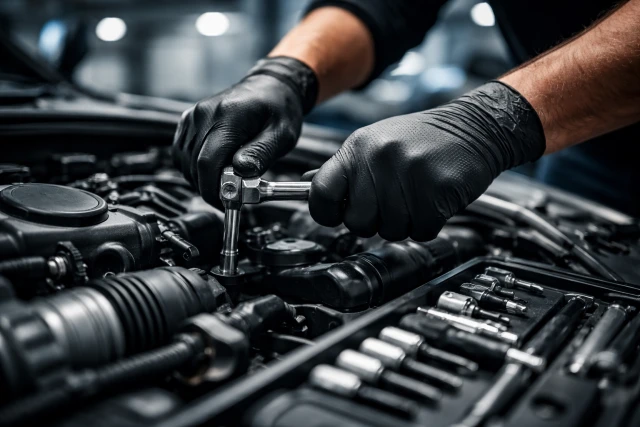
If you do any kind of auto work, even basic stuff like topping up fluids or swapping a battery, you already know the “hand tax” that comes with it. Grease under the nails. Oil that never fully washes out. Tiny cuts you do not notice until brake cleaner hits them.
- Why gloves matter more in the garage than most people think
- What makes Nitri Tech Gloves a smart match for auto work
- Where Nitri Tech Gloves save the most time (real garage scenarios)
- Nitri Tech Gloves vs latex vs vinyl (quick comparison)
- What Nitri Tech Gloves are not meant to do (the honest part)
- Choosing the right Nitri Tech Gloves for auto work
- How to wear Nitri Tech Gloves so they last longer and work better
- Cleaner hands, cleaner garage, cleaner car
- Quick checklist: when to use Nitri Tech Gloves in the garage
- FAQs
- Conclusion: small upgrade, big difference
That is exactly where Nitri Tech Gloves earn their keep. The right pair can give you better grip on slick parts, keep your hands cleaner during messy jobs, and help you work faster because you are not stopping every five minutes to wipe your fingers on a rag.
This guide breaks down how Nitri Tech Gloves fit into real garage life, which tasks they shine in, where they are not the best tool, and how to choose and use them like a pro.
Why gloves matter more in the garage than most people think
Auto work is not only “dirty.” It is also a steady stream of skin irritants and chemical exposure. Used engine oil, fuels, brake fluid, degreasers, and solvents can all end up on your hands in seconds.
Health agencies are pretty blunt about it:
- The UK Health and Safety Executive warns that frequent and prolonged contact with used engine oil can cause dermatitis and other skin disorders, including skin cancer, and recommends avoiding unnecessary contact and using protective clothing.
- CDC ATSDR notes that mechanics exposed to used mineral based crankcase oil have experienced skin rashes and other health effects.
- Research summarized in CDC stacks discusses how used gasoline engine oil can contain PAHs and creates potential dermal exposure for mechanics.
Gloves are not just about staying clean. They are about reducing repeated skin contact, especially during the messy parts of the job.
What makes Nitri Tech Gloves a smart match for auto work
Most “mechanic style” disposable gloves you see in shops are nitrile based for a reason. Nitrile materials are commonly chosen because they hold up well against oils and many automotive fluids.
OSHA’s general PPE guidance on gloves is clear: you should choose chemical protective gloves based on the specific hazards and check manufacturer information for effectiveness against the chemicals you are handling.
That last part matters. “Nitrile” does not automatically mean “safe against everything.” But for many everyday garage exposures (oils, greases, many fuels and mild chemicals), nitrile is often the practical choice, especially compared to gloves that get soggy or weaken quickly when exposed to oil.
Nitri Tech Gloves and oil resistant grip
Here is the underrated benefit: grip.
Bare hands get slippery fast with oil. Some gloves get even worse once they get coated. Good nitrile gloves tend to maintain usable grip, especially if they have a textured surface on the fingertips or palm. That texture helps when you are:
- Twisting an oil filter
- Holding a greasy drain plug
- Pulling spark plugs
- Wrestling hose clamps
- Handling oily fasteners
That grip is not just convenience. Better grip reduces the “drop and scrape” moments that lead to knuckle cuts.
Cleaner hands = less time wasted
Auto work has a rhythm. When your hands are coated in grime, you either:
- keep going and smear dirt everywhere, or
- stop repeatedly to wipe and wash
Both slow you down.
With Nitri Tech Gloves, you can usually finish a task, peel them off, and move on. For quick jobs (bulb changes, battery terminals, checking sensors, topping up fluids), the time savings add up fast.
Where Nitri Tech Gloves save the most time (real garage scenarios)
Let’s make it practical. Here are common tasks where Nitri Tech Gloves can noticeably speed things up.
1) Oil changes and filter swaps
Used oil is messy and it clings. Wearing gloves helps keep oil off your skin and keeps your tools from getting slippery. It also makes cleanup simpler, especially if you are working outdoors or in a shared space.
Also, remember the exposure side: agencies like HSE specifically advise avoiding unnecessary contact with used engine oil and using protective clothing.
2) Brake jobs (pads, rotors, calipers)
Brake dust and grime get everywhere. Gloves help keep that residue off your fingers, and they make it easier to clean up before you touch your phone, steering wheel, or door handles.
3) Fuel system work (within reason)
Fuel exposure is one of those “it happens fast” problems. Gloves are helpful for quick disconnects, fuel filter changes, and handling small fuel line drips.
Important nuance: glove performance depends on chemical type and contact time. OSHA advises checking manufacturer literature for your exact chemicals.
4) Detailing, degreasing, and interior cleaning
Degreasers, wheel cleaners, and interior chemicals can dry your skin out quickly. Gloves help, especially if you detail often.
5) Battery terminals and electrical work
Some people skip gloves for electrical work because they want feel and precision. The trick is fit. A properly sized nitrile glove can still give good dexterity for removing terminals, handling connectors, and working around tight spaces.
Nitri Tech Gloves vs latex vs vinyl (quick comparison)
Here is a simple breakdown for typical garage use.
| Material | Garage performance (typical) | Best for | Main downside |
|---|---|---|---|
| Nitrile (like Nitri Tech Gloves) | Strong against oils and many automotive fluids, good durability, good grip | Oil changes, general repairs, detailing chemicals | Not ideal for some strong solvents; performance varies by chemical |
| Latex | Flexible and comfy | Light, low chemical exposure tasks | Latex allergy risk; can degrade with oils and some chemicals |
| Vinyl | Cheap, easy | Very light tasks, low exposure | Often weaker fit and durability; less ideal for oily work |
For chemical protection, OSHA emphasizes selecting gloves based on hazards and manufacturer guidance, not just the material name.
What Nitri Tech Gloves are not meant to do (the honest part)
A good glove makes garage work easier, but it is not magic armor.
Some solvents can break through faster than people expect
Certain strong solvents can permeate or degrade glove materials quickly, depending on the glove and chemical. NIOSH and related research literature discuss glove permeation and how breakthrough time varies by glove type and chemical.
That is why serious shops rely on chemical resistance charts and match glove type and thickness to the exact chemical. For the DIY garage, the practical takeaway is:
- For quick splashes, nitrile is usually a solid baseline.
- For prolonged exposure to aggressive solvents, you may need a different glove type or a thicker, chemical rated glove.
They will not protect you from sharp edges like cut gloves do
Disposable gloves help with grime and many liquids, but sheet metal edges, rust flakes, and sharp clips can slice them. If you are doing tasks like exhaust work, body panels, or heavy suspension work, consider a proper cut resistant glove on top of your disposable glove, or a dedicated mechanic glove.
Choosing the right Nitri Tech Gloves for auto work
Not all nitrile gloves feel the same. Fit, thickness, and texture change everything.
Fit: your “speed” multiplier
If gloves are too loose, you lose dexterity. If they are too tight, they tear while you pull them on and your hands fatigue faster.
A good fit should:
- Sit snug across the palm without stretching to the point of whitening
- Allow full finger curl without pulling at the fingertips
- Feel secure at the wrist so you can remove them cleanly
Thickness: balance toughness and dexterity
As a general rule, thicker gloves offer more durability and barrier performance, but can reduce fine feel. Safety guidance commonly notes that thicker glove material generally provides greater resistance, though it can affect dexterity.
A simple way to think about it in the garage:
- Light duty tasks: thinner gloves for better feel
- Medium duty tasks: a mid thickness glove for most repairs
- Heavy duty messy jobs: thicker gloves for durability and longer wear
Texture: underrated for oily parts
If you work on oily engines or transmissions, a textured fingertip or full palm texture is a big deal. It can keep your grip stable when you are handling greasy bolts, caps, and filters.
Cuff length: small detail, big comfort
Short cuffs are fine for quick tasks. For deeper work (reaching into wheel wells, under trays, or around engine bays), a longer cuff helps reduce that annoying “fluid running down your wrist” moment.
How to wear Nitri Tech Gloves so they last longer and work better
This is where a lot of people accidentally waste gloves.
Keep a “clean hand” habit
Use one hand as your clean hand when possible. For example:
- Clean hand touches your phone, ratchet set handle, and tool drawer
- Dirty hand handles oily parts
It sounds simple, but it reduces how often you change gloves and keeps your tools cleaner.
Double glove for the messiest jobs
For long, messy tasks (like a full day of repairs), wearing two layers can help. When the outer glove gets too grimy or torn, peel it off and keep working with the clean layer underneath.
Change gloves at smart points, not constantly
Change when:
- You switch from greasy work to interior work
- You touch harsh chemicals
- You notice tears or thinning
- You are about to handle food, drink, or your face (yes, it happens)
Cleaner hands, cleaner garage, cleaner car
One overlooked benefit of Nitri Tech Gloves is how much they reduce cross contamination.
Think about where oil ends up when you do not wear gloves:
- Steering wheel
- Door handles
- Gear knob
- Keys
- Phone
- Interior plastics
Wearing gloves and removing them at the right time keeps grime where it belongs: on the job, not on everything you touch afterwards.
Quick checklist: when to use Nitri Tech Gloves in the garage
Use Nitri Tech Gloves for:
- Oil changes and fluid checks
- Brake jobs and wheel work
- Handling greasy parts and fasteners
- Cleaning, degreasing, detailing
- Quick electrical work where dexterity matters
Consider other protection for:
- Heavy sharp metal work (add cut resistant gloves)
- Prolonged strong solvent exposure (use chemical rated gloves matched to the solvent)
FAQs
Are Nitri Tech Gloves good for oil changes?
Yes, Nitri Tech Gloves are commonly used for oily tasks because nitrile gloves are often chosen for handling oils and similar automotive fluids, and they help reduce direct skin contact with used oil.
Do nitrile gloves protect against all automotive chemicals?
No. Protection depends on the specific chemical, the glove thickness, and how long the chemical contacts the glove. OSHA advises checking manufacturer literature for effectiveness against specific chemicals and conditions.
Why do my gloves rip when I put them on?
Most of the time it is sizing or dry hands. If the glove is too tight, it stretches at the fingertips and tears during donning. Try a size up, and pull the glove on by rolling it over the knuckles rather than yanking at the fingertips.
Can I reuse Nitri Tech Gloves?
Disposable gloves are generally meant for single use, especially when contaminated with oils and chemicals. For a quick job, some people keep them on for multiple steps, but once the glove is torn, heavily contaminated, or you switch to a clean task, it is time to change.
Conclusion: small upgrade, big difference
If you do auto work regularly, Nitri Tech Gloves are one of those simple upgrades that quietly improve everything. You get steadier grip on slick parts, less skin contact with grime and used oil, and fewer interruptions to wash your hands mid job. Over time, the “cleaner hands” benefit becomes a “cleaner workflow” benefit, and that is what makes garage work feel faster and more enjoyable.
Used oil exposure is not something to treat casually. Public health and safety organizations warn about skin problems from frequent contact with used engine oil and recommend avoiding unnecessary contact and using protective protection where appropriate.
So while Nitri Tech Gloves are not a substitute for smart safety habits, they are a practical daily layer of defense built for the real world.
When you choose a good fit, pick the right thickness for the job, and change gloves at the right moments, Nitri Tech Gloves help you work cleaner, safer, and quicker, without overthinking it.
For a little background on what nitrile materials are, the two-word term nitrile rubber is a useful reference.