



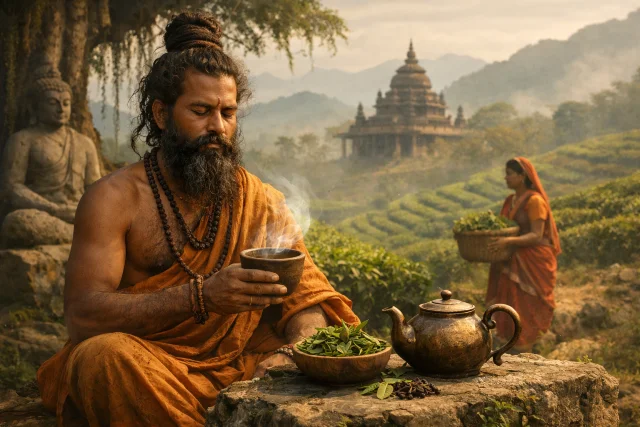
If you’ve ever held a warm cup of chai and felt the world slow down for a minute, you’ve already touched the real magic of tea in India. But when people ask, What is the Indian Legend About Tea, they usually mean something deeper than “how did tea get here?” They mean the story that explains why tea feels almost sacred, why it’s tied to staying awake, staying focused, staying connected and sometimes even staying calm.
- The most famous story: the monk who refused to sleep
- What the legend is really saying (beyond the shock factor)
- So is Bodhidharma’s tea story “Indian” or “Asian”?
- Another “Indian legend” that feels closer to the land: tea in the Northeast
- Legend vs history: a quick comparison
- Why the monk legend still feels “true” to tea drinkers
- Tea’s place in Indian life: not just a beverage, a social language
- India’s tea scale today: the legend meets a massive industry
- How the legend shows up in modern tea culture (without people realizing)
- Common questions people ask about the legend (answered naturally)
- A practical way to experience the legend while drinking tea
- Conclusion: What the legend gives us that history can’t
So, What is the Indian Legend About Tea in its most famous form? It’s a dramatic, almost cinematic tale about a monk, a vow, and a moment of human weakness that turns into a gift for the world. And interestingly, India also has other tea origin stories that are less mystical and more rooted in local tradition, especially in the Northeast where tea grew wild long before it became a global business.
In this article, we’ll explore What is the Indian Legend About Tea, what it symbolizes, how it connects with India’s real tea history, and why the legend still matters today, even if you take it as metaphor rather than literal fact.
The most famous story: the monk who refused to sleep
When most people search What is the Indian Legend About Tea, they’re usually being pointed toward the story of Bodhidharma, a monk often linked with the spread of Buddhism and meditation traditions across Asia. Different versions exist, but the core idea stays the same: he made a serious vow to meditate for years without falling asleep.
And then, like any human, he struggled.
In the best known version of What is the Indian Legend About Tea, the monk dozes off during meditation. Furious with himself, he cuts off his eyelids so he can never sleep again. Where the eyelids fall to the ground, a strange plant grows. He plucks its leaves, brews them in hot water, drinks the infusion, and finds he can stay awake and alert. That plant, the story says, is tea.
That’s the legend in one intense burst. It’s dramatic because it’s meant to be. It’s not just explaining a beverage. It’s explaining discipline, devotion, and the search for clarity.
What the legend is really saying (beyond the shock factor)
Now let’s be honest. The eyelid part is wild. But legends aren’t written to be laboratory reports. They’re written to carry meaning. When you look at What is the Indian Legend About Tea as symbolism, it starts making more sense.
Here’s what the story quietly teaches:
- Tea as wakefulness: Tea is linked with staying present and alert, not in a jittery way, but in a steady, mindful way.
- Tea as discipline: The monk’s vow reflects the human desire to master the mind, and tea becomes a companion in that effort.
- Tea as transformation: A mistake (falling asleep) becomes the doorway to something useful and lasting.
And that’s one reason What is the Indian Legend About Tea has survived for so long. It turns a simple daily habit into something meaningful.
So is Bodhidharma’s tea story “Indian” or “Asian”?
This is where things get interesting. People ask What is the Indian Legend About Tea and assume it’s a story that took place entirely within India. In many tellings, Bodhidharma is described as an Indian monk who traveled to China. That’s why the legend is often labeled “Indian,” even though tea’s earliest documented cultivation and culture is strongly associated with China.
In other words, What is the Indian Legend About Tea is “Indian” in the sense that the main character is often framed as Indian and the spiritual tradition is rooted in Indian-origin Buddhism. But the legend also belongs to a broader Asian storytelling space where ideas crossed borders constantly.
Instead of treating that as a problem, it’s actually part of tea’s charm. Tea has always traveled, picked up new meanings, and settled into new homes.
Another “Indian legend” that feels closer to the land: tea in the Northeast
While the monk story dominates searches for What is the Indian Legend About Tea, India has another powerful tea origin narrative that doesn’t rely on miracles. It’s about indigenous knowledge.
In Assam and nearby regions, tea plants grew wild. Long before commercial plantations became famous, local communities used tea leaves in everyday ways. The Singpho community in particular is frequently mentioned in discussions about pre colonial tea use, including methods of processing and brewing tea as part of their culture. Accounts describe their long standing relationship with tea, challenging the idea that tea was only “brought” to India as a British era habit.
So when someone asks What is the Indian Legend About Tea, you can truthfully say there’s more than one story:
- A spiritual legend about wakefulness and meditation
- A regional tradition about tea as an indigenous, lived practice
Both matter, and together they give a richer answer than either one alone.
Legend vs history: a quick comparison
To make it clearer, here’s a simple table that separates What is the Indian Legend About Tea from documented tea history in India.
| Topic | The legend says | History suggests |
|---|---|---|
| How tea began | Tea was discovered through a monk’s devotion and a miraculous plant | Tea plants grew naturally in parts of Northeast India, and tea culture also developed strongly in China |
| Why tea matters | Tea helps you stay awake, focused, and spiritually steady | Tea became a major agricultural product, a daily drink, and a cultural symbol |
| Where it started | A spiritual journey connected to an Indian monk | Multiple origins and pathways: indigenous use in Assam, global trade, colonial cultivation |
This is the sweet spot: What is the Indian Legend About Tea gives you meaning, while history gives you context.
Why the monk legend still feels “true” to tea drinkers
Even if you don’t believe the story literally, the experience it describes is familiar.
Tea really can support alertness. It contains caffeine, and in many teas, compounds like L theanine are associated with a calmer kind of focus. The U.S. National Center for Complementary and Integrative Health explains that tea contains polyphenols and notes how green tea is commonly used for mental alertness, among other purposes.
Harvard Health also points out that research links tea consumption with potential benefits across several health areas, while noting that evidence can vary and isn’t always definitive.
So when people revisit What is the Indian Legend About Tea, the reason it sticks is simple: it matches what many people feel after a cup.
Not magic. Just chemistry, ritual, and the way a warm drink can change your mood.
Tea’s place in Indian life: not just a beverage, a social language
If you’ve lived in India, visited, or even watched Indian films closely, you’ll notice something: tea is rarely just tea.
Tea is:
- A welcome at the door
- A peace offering after an argument
- A pause between long work hours
- A reason to stand near a stall and talk
- A comfort on rainy days
- A “one minute” that turns into twenty
That’s why the question What is the Indian Legend About Tea isn’t only about origins. It’s about identity.
Tea in India is tied to hospitality and everyday connection. The legend adds a spiritual shine to that ordinary reality, almost like saying, “This little cup matters. Pay attention.”
India’s tea scale today: the legend meets a massive industry
India doesn’t just love tea. India produces it at a staggering scale.
According to the Tea Board of India’s production tables, India’s total tea production for 2024 was about 1,303.53 million kilograms, and the 2024 25 season figure shown in the same report is about 1,315.77 million kilograms (Apr Mar).
Industry summaries also describe India as the world’s second largest tea producer, with a large share of tea consumed domestically.
So when someone asks What is the Indian Legend About Tea, you can smile and think: the legend speaks in poetry, but the reality is also huge and very real. Tea is livelihood for millions, not just a story.
How the legend shows up in modern tea culture (without people realizing)
You might not hear people retell What is the Indian Legend About Tea at a chai stall, but pieces of it show up everywhere.
1) Tea as the “study companion”
Students everywhere understand the tea logic: long nights, exam pressure, mental fatigue. The legend’s core theme of wakefulness fits perfectly.
2) Tea breaks as mini meditation
In offices, the tea break isn’t only caffeine. It’s a reset. A moment to step away, breathe, talk, laugh, and then return.
3) Chai as emotional grounding
When life is messy, the body craves predictable rituals. Making tea is repetitive and comforting: boil, simmer, pour, sip. Legends survive because they attach meaning to rituals people already love.
In a subtle way, What is the Indian Legend About Tea is still acting out daily, just without the dramatic visuals.
Common questions people ask about the legend (answered naturally)
Did the tea plant really grow from eyelids?
In the story of What is the Indian Legend About Tea, yes. In real world botany, no. Think of it as symbolic storytelling designed to explain wakefulness and devotion.
Is Bodhidharma definitely Indian?
Many traditions describe him as an Indian monk who traveled to China, but historical details vary depending on the source and the tradition being referenced. The broader point is that the legend connects Indian spirituality with tea’s role in focus and awareness.
Was tea used in India before British plantations?
There is evidence and reporting that indigenous communities in Northeast India, including the Singpho, used tea long before British commercial cultivation became dominant in the 19th century.
Why do people still share this story today?
Because What is the Indian Legend About Tea doesn’t just answer “where did tea come from?” It answers “what is tea for?” It frames tea as a companion for discipline, clarity, and everyday endurance.
A practical way to experience the legend while drinking tea
If you want to feel the legend without forcing it, try this once. Next time you make tea:
- Put your phone away for five minutes.
- Watch the water heat, listen to it, notice the smell.
- Take the first sip slowly.
- Pay attention to what changes: mood, focus, body temperature, breathing.
That’s the modern, gentle version of What is the Indian Legend About Tea. Not a monk in a cave, but you in your kitchen, practicing a tiny moment of presence.
Conclusion: What the legend gives us that history can’t
History can tell you trade routes, plantations, and production numbers. And those are important. But What is the Indian Legend About Tea gives something else: meaning.
It turns tea into a symbol of wakefulness, persistence, and inner clarity. It reminds you that a small cup can carry a big idea. And when you place that legend beside India’s very real tea heritage, from Northeast traditions to modern production, you don’t have to choose between story and fact.
You can let the legend be what it is: a human way of saying, “Stay awake to your life. Take a breath. Then take a sip.”
In the last stretch of this story, it’s worth remembering that tea is also a real plant with a real global history. Even a quick glance at the tea plant page shows how widely tea’s story spreads across cultures and centuries.