


Leggings in Pregnancy can feel like one of those small wardrobe decisions that suddenly becomes very important. As your belly grows, your hips shift, your legs may feel heavier, and clothes that once felt normal can start feeling tight in all the wrong places. I have seen many expecting moms reach for maternity leggings because they are soft, stretchy, easy to style, and practical for everyday life.
- Why Leggings in Pregnancy Are So Popular
- Are Leggings Safe During Pregnancy?
- What Makes Maternity Leggings Different?
- Best Fabrics for Leggings in Pregnancy
- How Tight Should Pregnancy Leggings Be?
- Comfortable Outfit Ideas for Expecting Moms
- Leggings in Pregnancy by Trimester
- Can You Wear Workout Leggings During Pregnancy?
- What About Compression Leggings?
- Mistakes to Avoid When Wearing Leggings in Pregnancy
- How Many Pairs of Maternity Leggings Do You Need?
- Styling Tips to Feel More Confident
- When Should You Stop Wearing Leggings During Pregnancy?
- Simple Outfit Formula for Busy Mornings
- Final Thoughts on Leggings in Pregnancy
- FAQs
But comfort is not just about wearing something stretchy. It is about choosing leggings that support your changing body without squeezing your belly, overheating your skin, or leaving deep marks around your waist, thighs, or ankles.
Pregnancy already asks a lot from your body. Your clothes should make the day easier, not harder.
Why Leggings in Pregnancy Are So Popular
Leggings in Pregnancy are popular because they work with real life. You can wear them at home, during walks, for prenatal appointments, while traveling, or when you simply want an outfit that does not take effort.
Unlike stiff jeans or fitted trousers, good maternity leggings move with your body. They stretch when you sit. They do not dig into your waist after lunch. They can also pair with oversized shirts, maternity tunics, long sweaters, cardigans, and casual dresses.
Another reason expecting moms love them is body confidence. Pregnancy can make your shape change quickly. One week your regular pants fit, and the next week they feel impossible. Maternity leggings create a smoother, softer base that helps outfits feel put together without looking forced.
The key is choosing the right kind. Not all leggings are pregnancy-friendly, even if they are stretchy.
Are Leggings Safe During Pregnancy?
Yes, leggings can be safe during pregnancy when they fit properly and do not restrict blood flow, breathing, movement, or comfort. The main issue is not leggings themselves. The issue is leggings that are too tight, too hot, or poorly designed around the belly.
The American College of Obstetricians and Gynecologists recommends avoiding overheating during pregnancy, especially while exercising, and suggests wearing loose-fitting clothing and staying hydrated during activity. That matters when choosing activewear, including leggings, because thick, non-breathable fabric can trap heat.
Mayo Clinic also notes that tight bands around the legs may make it harder for blood to flow easily, which is important because swelling in the legs and feet is common during pregnancy.
So, when I talk about Leggings in Pregnancy, I always focus on three things first:
- Soft waistband
- Breathable fabric
- No painful compression around the belly, thighs, or ankles
A little support can feel wonderful. Strong squeezing that leaves marks, causes numbness, or makes you uncomfortable is not the goal.
What Makes Maternity Leggings Different?
Regular leggings are usually designed for a flat or non-pregnant waistline. Maternity leggings are designed with extra space, stretch, or support around the bump.
There are two common styles:
Over-the-Bump Leggings
These have a soft panel that stretches over the belly. Many moms like them in the second and third trimester because they feel secure and reduce the need to keep pulling the waistband up.
Over-the-bump leggings are especially helpful if you want:
- Gentle belly coverage
- A smoother shape under long tops
- Extra warmth in cooler weather
- Less pressure under the belly
The best ones feel like a soft hug, not a tight bandage.
Under-the-Bump Leggings
These sit below the belly with a lower waistband. Some expecting moms prefer them in early pregnancy or during warmer months because they feel lighter.
Under-the-bump leggings can work well if:
- You dislike fabric over your belly
- You feel hot easily
- Your bump is still small
- You want something easy for lounging
The downside is that some under-bump waistbands can roll down or press into the lower abdomen if the fit is not right.
Best Fabrics for Leggings in Pregnancy
Fabric matters more than many people realize. A beautiful pair of leggings in pregnancy can still become annoying if the material traps sweat, turns sheer, or loses shape after a few washes.
For everyday maternity wear, I prefer leggings with a blend of cotton, modal, bamboo viscose, nylon, or polyester with elastane or spandex. Stretch fabric helps the leggings expand with your body, while softer fibers improve comfort.
Breathable clothing is especially important if you are walking, doing prenatal yoga, or living in a warm climate. NHS pregnancy exercise advice also recommends avoiding strenuous activity in hot weather and staying hydrated, which connects directly with choosing clothing that does not make you feel overheated.
Here is a simple fabric comparison:
| Fabric Type | Best For | Watch Out For |
|---|---|---|
| Cotton blend | Daily comfort, lounging, sensitive skin | May lose shape faster |
| Bamboo or modal blend | Soft feel, breathability | Can be thinner |
| Nylon-spandex | Support, workouts, smooth fit | May feel warmer |
| Polyester-spandex | Activewear, durability | Choose moisture-wicking options |
| Fleece-lined | Winter outfits | Not ideal for hot weather |
For Leggings in Pregnancy, the best fabric is the one that feels soft, stretches without turning see-through, and does not make you sweat uncomfortably.
How Tight Should Pregnancy Leggings Be?
Pregnancy leggings should feel supportive but never painful. You should be able to sit, walk, bend, and breathe comfortably.
A good fit usually means:
- No deep red marks after wearing them
- No numbness or tingling in the legs
- No tight pressure across the belly
- No waistband rolling painfully
- No fabric pulling at the crotch
- No sheerness when bending
A quick test I like is the “sit and breathe” test. Put the leggings on, sit down, take a deep breath, and notice your belly. If the waistband feels like it is cutting in, choose a larger size or a maternity-specific style.
Your body is changing, so do not get stuck on your pre-pregnancy size. During pregnancy, comfort is the size that fits today.
Comfortable Outfit Ideas for Expecting Moms
The beauty of Leggings in Pregnancy is how easy they are to style. You do not need a huge maternity wardrobe. A few smart pairings can create many looks.
1. Leggings with an Oversized Button-Up Shirt
This is one of the easiest outfits for early pregnancy and beyond. A long button-up shirt gives coverage, structure, and a relaxed shape.
Try black maternity leggings with a white oversized shirt and soft slip-on shoes. It looks clean without trying too hard.
This outfit works well for:
- Casual work-from-home days
- Coffee runs
- Doctor appointments
- Light errands
Choose a shirt that covers the hips if you want extra confidence.
2. Leggings with a Maternity Tunic
A maternity tunic is made for leggings. It gives enough length in the front and back, while the leggings keep the outfit comfortable and balanced.
For cooler days, choose a ribbed tunic with full-length leggings. For warmer days, a lightweight cotton tunic works better.
This is a strong everyday outfit because it feels soft but still looks intentional.
3. Leggings with a Long Cardigan
A long cardigan can instantly make pregnancy leggings feel more styled. It adds movement, shape, and warmth without creating pressure around the belly.
A simple outfit could be:
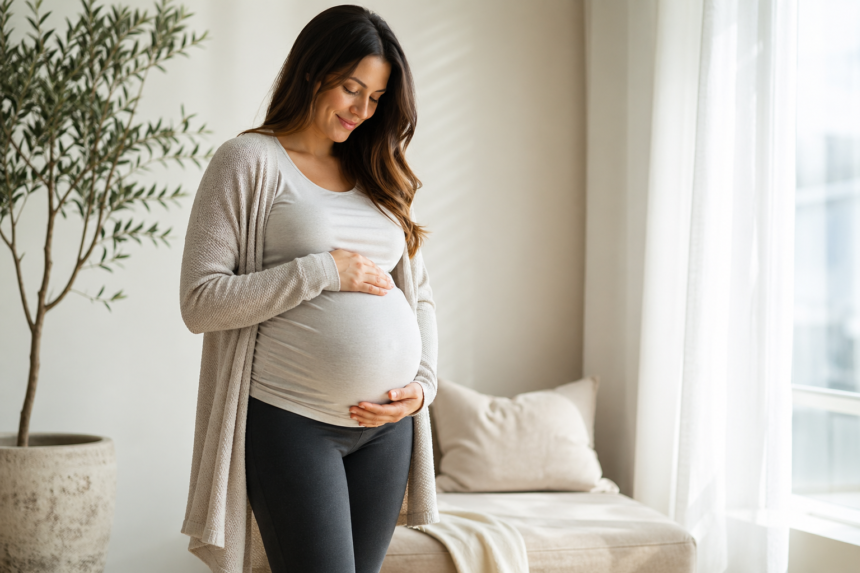
- Gray maternity leggings
- Soft tank top
- Long beige cardigan
- Comfortable sneakers
This look is perfect when your body temperature changes during the day. You can remove the cardigan if you feel warm.
4. Leggings with a Stretchy Maternity Dress
Some short maternity dresses pair beautifully with leggings. This is especially useful when a dress feels a little too short or when you want more coverage.
A soft jersey dress with black leggings can work for casual lunches, family visits, or relaxed weekend plans.
This outfit also helps you keep wearing dresses that might otherwise sit unused during pregnancy.
5. Leggings with a Hoodie or Sweatshirt
For low-energy days, this outfit is a lifesaver. Pregnancy can bring fatigue, swelling, and mood changes, and sometimes you just need clothes that feel gentle.
A maternity hoodie with soft leggings is ideal for:
- Rest days
- Travel days
- Hospital bag comfort
- Postpartum transition
Choose a hoodie that has room through the belly or side zippers if you want nursing-friendly use later.
6. Leggings with a Blazer
Yes, leggings can look polished. The trick is choosing thick, matte leggings and pairing them with a long top underneath.
A simple outfit:
- Black maternity leggings
- Long fitted maternity tank
- Oversized blazer
- Flats or loafers
This works best for casual offices, meetings, or days when you want to feel more dressed without wearing trousers.
7. Leggings with a Long Knit Sweater
This is a classic fall and winter pregnancy outfit. A long knit sweater gives softness and coverage, while leggings prevent the outfit from feeling bulky.
Look for sweaters with side slits or a relaxed hem so the fabric does not pull across the bump.
For shoes, soft ankle boots or cushioned sneakers work well.
Leggings in Pregnancy by Trimester
Your clothing needs change as pregnancy progresses. What feels perfect at 10 weeks may feel uncomfortable at 30 weeks.
First Trimester
In the first trimester, bloating can make regular waistbands feel irritating even before the bump shows. Soft, high-waisted leggings may feel better than jeans.
Many moms do not need full maternity leggings yet, but they may prefer stretchy waistbands and lighter fabrics.
Outfit idea: high-waisted soft leggings, long tee, open shirt, and sneakers.
Second Trimester
This is when many expecting moms switch to maternity leggings. The bump becomes more visible, and the body often needs better belly accommodation.
Over-the-bump leggings can feel especially useful now because they stay in place and reduce waistband pressure.
Outfit idea: over-bump leggings, maternity tunic, long cardigan, and supportive flats.
Third Trimester
By the third trimester, comfort becomes the priority. Swelling, back pressure, heat sensitivity, and fatigue can make tight clothing feel unbearable.
Mayo Clinic notes that swelling in the legs, ankles, and feet can become more noticeable in pregnancy, and supportive stockings or compression socks may be recommended in some cases.
This does not mean every pregnant person needs compression leggings. It means you should pay attention to how your legs feel and speak with a healthcare professional if swelling is painful, sudden, or severe.
Outfit idea: soft maternity leggings, oversized sweater, slip-on shoes, and a lightweight scarf.
Can You Wear Workout Leggings During Pregnancy?
You can wear workout leggings during pregnancy if they fit well, breathe properly, and do not compress the belly too strongly. Prenatal movement can be beneficial for many pregnant people, and NHS states that exercise is not dangerous for the baby for most uncomplicated pregnancies.
Still, workout leggings need a little extra attention. Activewear is often firmer than casual leggings. That support can feel nice, but it can also become too much as your bump grows.
For prenatal yoga, walking, or low-impact workouts, look for:
- Moisture-wicking fabric
- Four-way stretch
- Soft belly panel
- Flat seams
- Non-see-through material
- A waistband that does not dig in
Avoid leggings that make you feel trapped around the ribs, belly, or pelvis. If you feel dizzy, overheated, or uncomfortable, stop and cool down.
ACOG also advises pregnant women to stay hydrated and avoid high heat and humidity during exercise to reduce heat stress.
What About Compression Leggings?
Compression can be helpful in some cases, especially for leg heaviness or swelling, but it should be used carefully during pregnancy.
There is a difference between gentle support leggings and medical-grade compression garments. Support leggings are usually made for comfort and light shaping. Compression stockings or tights are designed to apply measured pressure to the legs.
Mayo Clinic says healthcare professionals may suggest supportive tights or compression stockings during the day for pregnancy-related swelling.
If you are considering strong compression leggings, especially for swelling, varicose veins, or long travel, it is best to ask your healthcare provider what level is safe for you.
A practical rule: leggings should support you, not squeeze you into discomfort.
Mistakes to Avoid When Wearing Leggings in Pregnancy
Even comfortable clothing can become uncomfortable if the fit or styling is wrong.
Here are common mistakes I would avoid:
- Wearing non-maternity leggings too long into pregnancy
- Choosing leggings that turn sheer when stretched
- Ignoring waistbands that leave deep marks
- Wearing thick leggings in hot weather
- Buying only one pair and overwearing it
- Choosing fashion leggings for exercise
- Using tight shapewear-style leggings daily without comfort breaks
The biggest mistake is assuming pain is normal. Pregnancy can be uncomfortable, but your clothing should not be adding avoidable pressure.
How Many Pairs of Maternity Leggings Do You Need?
Most expecting moms can manage with three to five good pairs.
A practical mini wardrobe might include:
- One black everyday pair
- One soft lounge pair
- One workout pair
- One warmer pair for cold days
- One dressier thick pair for outings
This gives enough variety without wasting money on items you may only wear for a few months.
If you plan to wear them postpartum, choose leggings with soft stretch rather than a very specific bump panel that may feel loose later.
Styling Tips to Feel More Confident
Pregnancy outfits should feel comfortable, but they can still look beautiful. The easiest way to style leggings is to balance fitted bottoms with longer or softer layers on top.
Try these real-world tips:
- Choose longer tops if you want more hip coverage
- Use open layers like cardigans, kimonos, or shirts
- Pick matte leggings for a more polished look
- Keep one neutral color base for easy outfits
- Add soft texture through knits, cotton, or ribbed fabrics
- Wear supportive shoes, especially in later pregnancy
A small detail like a long cardigan or structured jacket can make leggings look less like lounge clothes and more like a complete outfit.
When Should You Stop Wearing Leggings During Pregnancy?
There is no fixed week when you must stop wearing leggings. You can wear Leggings in Pregnancy as long as they feel comfortable, safe, and appropriate for your body.
Stop wearing a pair if:
- The waistband digs into your belly
- Your legs feel numb or tingly
- The fabric causes itching or overheating
- You notice painful pressure
- The leggings restrict movement
- They leave deep marks around your calves or waist
Also, contact a healthcare professional if swelling is sudden, severe, painful, or mostly on one side. Clothing can help with comfort, but it cannot replace medical advice when symptoms feel unusual.
Simple Outfit Formula for Busy Mornings
When you do not want to think too much, use this formula:
Maternity leggings plus long top plus soft layer plus comfortable shoes.
For example:
- Black leggings
- White long maternity tee
- Long gray cardigan
- Cushioned sneakers
Or:
- Navy leggings
- Striped tunic
- Denim jacket
- Slip-on flats
This formula works because it keeps the belly comfortable, gives coverage, and creates shape without tight waistbands.
Final Thoughts on Leggings in Pregnancy
Leggings in Pregnancy are more than a fashion choice. They are a practical comfort tool for a body that is changing week by week. The right pair can help you move easier, dress faster, and feel more like yourself on days when regular clothes feel impossible.
My best advice is to choose leggings that respect your body instead of fighting it. Look for softness, breathability, stretch, and gentle support. Avoid anything that digs in, overheats you, or leaves you counting the minutes until you can take it off.
Pregnancy style does not have to be complicated. A few well-fitting leggings, longer tops, soft layers, and comfortable shoes can carry you through appointments, errands, rest days, and casual outings with less stress.
As maternity clothing has changed over time, expecting moms have gained more freedom to dress for comfort, movement, and personal style rather than hiding their bodies. Even the history of maternity clothing shows how pregnancy fashion has shifted toward more practical and body-aware choices.
In the end, Leggings in Pregnancy should make life feel easier. If they help you walk, rest, stretch, travel, and get dressed with more comfort, they deserve a place in your maternity wardrobe.
FAQs
Are leggings good during pregnancy?
Yes, leggings can be good during pregnancy when they are soft, breathable, and not too tight. Maternity leggings are usually better than regular leggings because they are designed to fit a growing belly.
Can tight leggings hurt the baby?
Leggings are unlikely to hurt the baby directly, but very tight clothing can make you uncomfortable and may restrict easy movement or circulation. Choose leggings that support without squeezing.
Are over-the-bump leggings better?
Over-the-bump leggings are better for many expecting moms in the second and third trimester because they provide gentle belly coverage and stay in place. Some women still prefer under-the-bump styles, especially in warm weather.
Can I sleep in leggings while pregnant?
You can sleep in very soft, loose leggings if they do not feel tight or hot. Avoid strong compression or waistbands that dig in while sleeping.
What tops look best with maternity leggings?
Long tees, maternity tunics, oversized shirts, knit sweaters, cardigans, hoodies, and casual dresses all pair well with maternity leggings.