


If you have been researching spinning wheels, you have probably noticed how often the term Double Treadle comes up. It is not just a small design detail or a decorative feature. In practical use, a Double Treadle setup can shape how smooth the wheel feels, how balanced your body stays during long sessions, and how much control you have over rhythm, speed, and comfort.
- What a Double Treadle Design Actually Means
- Why Efficiency Improves with Double Treadle Design
- How Double Treadle Design Supports Better Balance
- The Link Between Balance and Comfort
- Why Control Often Feels Better on a Double Treadle
- Double Treadle vs Single Treadle
- Where Double Treadle Design Helps the Most
- Real Design Features That Make a Good Double Treadle Wheel
- Common Misunderstandings About Double Treadle Design
- Actionable Tips for Getting the Most from a Double Treadle Wheel
- Final Thoughts on Efficiency, Balance, and Control
For many spinners, the difference becomes obvious the moment they sit down and start treadling. A Double Treadle system spreads the footwork across both legs instead of asking one side of the body to do most of the repetitive movement. That does not automatically make it perfect for everyone, but it often makes the spinning experience feel steadier, lighter, and easier to maintain over time. Modern spinning-wheel makers and fiber educators often frame the single versus double treadle choice as a matter of ergonomics and preference rather than raw mechanical superiority.
This matters because good design is not only about whether a wheel turns. Good design is about how naturally that motion fits the human body. When a spinner can keep an even cadence, reduce awkward strain, and stay in a more centered posture, efficiency usually improves as a result. That is where the real value of Double Treadle design becomes clear.
What a Double Treadle Design Actually Means
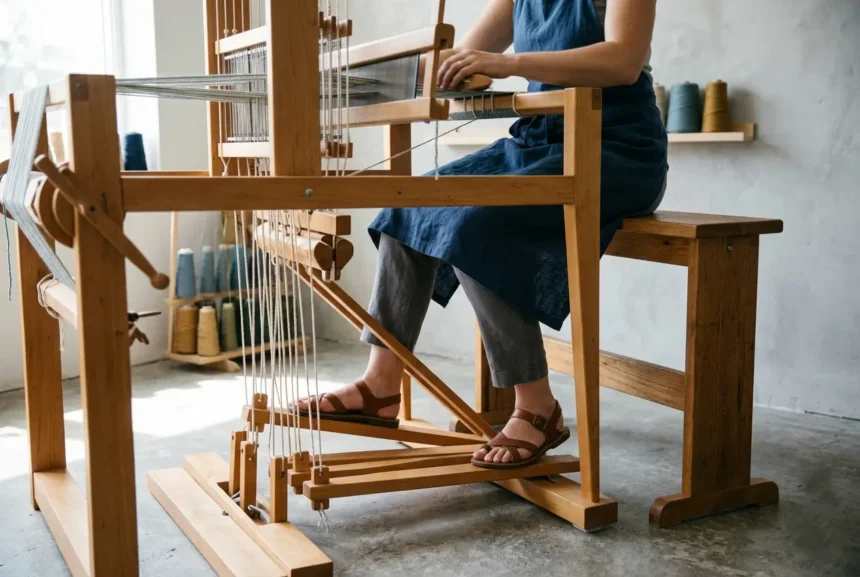
A treadle is a foot-operated lever that powers a mechanism. In spinning, the treadle helps drive the wheel so twist can be added consistently while the hands draft fiber. A Double Treadle wheel has two foot pedals, usually worked in an alternating rhythm, while a single treadle wheel relies on one pedal and typically one primary leg for the drive motion.
That may sound like a simple difference, but it affects the entire user experience. With a Double Treadle layout, the spinner usually sits more squarely in front of the wheel. The action often feels more symmetrical, and many users describe the rhythm as smoother or more natural, especially once they settle into a steady pace. Louet notes that double treadle setups can feel lighter and can be especially useful at higher ratios that demand more power.
So when people talk about Double Treadle benefits, they are usually talking about three main outcomes: better efficiency, better body balance, and better control during spinning.
Why Efficiency Improves with Double Treadle Design
Efficiency in spinning is not only about speed. It is about how easily you can maintain a stable rhythm without wasting motion or constantly correcting your pace. A well-designed Double Treadle wheel often helps with that because both feet contribute to the drive sequence.
When the motion alternates from one foot to the other, the effort can feel more evenly distributed. That can help reduce the stop-start feeling some spinners notice when learning on a single treadle wheel. It can also help keep the wheel moving through spots where momentum would otherwise drop. Some spinning-wheel resources specifically note that double treadles may make it easier to move through the wheel’s “dead spot,” which can interrupt smooth rotation on certain setups.
In real use, this often leads to practical gains such as:
- more even treadling rhythm
- fewer accidental speed changes
- less effort restarting smooth motion
- better consistency when spinning for longer periods
- steadier power delivery at faster ratios
That kind of efficiency matters most when a spinner is trying to produce consistent yarn. A wheel that feels smoother underfoot usually makes it easier to focus on drafting, twist control, and fiber handling instead of fighting the drive system.
A Simple Example of Efficiency in Practice
Imagine two spinners working with the same fiber. One is using a wheel that requires frequent correction because the treadling rhythm keeps drifting. The other is using a Double Treadle wheel that maintains a more even flow. The second spinner is often able to spend more mental energy on drafting technique and less on body compensation.
That is an important point. Efficient design reduces friction between the tool and the user. When the machine feels predictable, the user works better.
How Double Treadle Design Supports Better Balance
Balance is one of the strongest arguments in favor of Double Treadle design. With a single treadle setup, one side of the body often does most of the repetitive work. Some spinners love that and never feel any discomfort. Others find it tiring, awkward, or harder to maintain over longer sessions.
A Double Treadle arrangement gives both feet a role. That can promote a more centered seating position and a more even lower-body pattern. Several spinning resources describe double treadle wheels as more ergonomic for this reason, especially for people who prefer using both feet instead of loading one side repeatedly. General ergonomics guidance from OSHA and NIOSH also supports the broader principle that work should fit the body in ways that reduce fatigue and musculoskeletal strain.
That does not mean a Double Treadle design eliminates all physical stress. Body mechanics still matter. Seat height, wheel placement, ankle angle, and session length all play a role. But from a design standpoint, splitting motion across both legs can help many users feel more stable and less lopsided during treadling.
The Link Between Balance and Comfort
Comfort sounds subjective, but it has a strong design foundation. When your hips are square, your feet move in a coordinated rhythm, and your body does not need to compensate for uneven movement, comfort tends to improve naturally.
Thread Collective’s recent ergonomics discussion around spinning emphasizes that posture, footwork, and setup all influence comfort and strain. That aligns with the broader design logic behind Double Treadle wheels. A more balanced motion pattern often supports better endurance, especially for users who spin regularly or for long sessions.
For some spinners, this is the difference between enjoying a long evening at the wheel and feeling worn out after a short session.
Why Control Often Feels Better on a Double Treadle
Control is where many spinners become loyal to a Double Treadle setup. When the treadling rhythm feels even, it becomes easier to manage twist and speed with fewer sudden changes. That is especially important when working with fibers that respond differently to drafting tension or when aiming for more uniform yarn.
Better control often shows up in these ways:
| Area | How Double Treadle Can Help |
|---|---|
| Rhythm | Alternating feet can create a steadier cadence |
| Twist management | Smoother power can support more consistent twist insertion |
| Start-up feel | Some users find it easier to get the wheel moving smoothly |
| Longer sessions | Reduced uneven effort may help maintain consistency over time |
| Higher ratios | More balanced foot input can feel more manageable |
Louet specifically notes that the double treadle base can be beneficial at higher ratios, where more power is needed. That detail matters because it shows that Double Treadle design is not only about comfort. It can also affect how confidently a spinner handles more demanding setups.
Double Treadle vs Single Treadle
A fair article about Double Treadle should acknowledge that single treadle wheels are not inferior by default. Many experienced spinners prefer them. Some like the simpler mechanism, some enjoy the freedom of seating position, and some feel they have excellent control with one-foot treadling. Spin Off’s discussion on treadle choice argues that the preference is often more nuanced than marketing language suggests.
Still, a Double Treadle design tends to appeal strongly to people who value symmetry, smoother foot rhythm, and a more centered stance. That is why many buyers see it as a comfort and control upgrade rather than just an alternate style.
Here is a quick comparison:
- Single treadle often feels simpler and may cost less
- Double Treadle often feels more balanced and ergonomic
- Single treadle may allow more seating flexibility for some users
- Double Treadle may feel easier at higher-speed or longer-duration spinning
- Both can produce excellent yarn when matched to the right spinner
Where Double Treadle Design Helps the Most
Not every user benefits in exactly the same way, but Double Treadle design is often especially useful in a few situations.
Long Spinning Sessions
If you spin for extended periods, small ergonomic differences start to matter more. A more balanced lower-body pattern can make the session feel less tiring.
Users Sensitive to Asymmetry
Some people quickly notice when one leg is doing more work than the other. For them, Double Treadle wheels often feel more natural almost immediately.
Faster Ratios or Heavier Workloads
When more drive power is needed, balanced foot input can help maintain control and reduce the sense of pushing against the wheel.
Beginners Who Want a Smooth Rhythm
Not every beginner prefers a Double Treadle, but many find the alternating motion easier to settle into once they understand the pattern.
Real Design Features That Make a Good Double Treadle Wheel
Not every Double Treadle wheel performs equally well. Two treadles alone do not guarantee good ergonomics. Design quality still matters.
When evaluating a Double Treadle setup, look at:
- treadle spacing
- pedal travel distance
- smoothness of linkage
- wheel responsiveness
- seat-to-wheel positioning
- ease of maintaining rhythm
- stability of the frame
- how natural the ankle and knee motion feels
A poorly designed Double Treadle wheel can still feel awkward. A well-designed one usually feels intuitive within a short time.
Common Misunderstandings About Double Treadle Design
One common myth is that Double Treadle always means faster spinning. That is too simplistic. The real advantage is often smoother and more sustainable motion, not automatic speed.
Another myth is that Double Treadle is only for advanced spinners. That is also misleading. In practice, the better choice depends on body mechanics, comfort, and preference more than skill level alone. Even modern wheel sellers describe the choice as ergonomic and personal, not a strict beginner-versus-expert divide.
A third misunderstanding is that balance does not affect output. It does. When your body is more stable, your rhythm is usually more stable too, and that can influence yarn consistency.
Actionable Tips for Getting the Most from a Double Treadle Wheel
If you choose a Double Treadle wheel, a few practical habits can make the design work even better for you.
First, sit centered in front of the wheel rather than twisting from the waist. That supports the symmetrical benefit of the treadle layout.
Second, keep your feet relaxed. A Double Treadle should not feel like stomping. It should feel rhythmic and controlled.
Third, pay attention to seat height. If your knees are too high or your ankles are working at an awkward angle, even a good Double Treadle design can feel tiring.
Fourth, start slowly. Let the rhythm become natural before you try to increase speed.
Fifth, assess comfort after twenty or thirty minutes, not only after the first two minutes. Good ergonomics show up over time.
Final Thoughts on Efficiency, Balance, and Control
The reason Double Treadle design continues to attract attention is simple. It addresses real user needs. It can improve efficiency by supporting smoother power delivery. It can improve balance by distributing repetitive motion across both legs. It can improve control by helping the spinner maintain a steadier rhythm and more predictable feel.
That does not mean every spinner must choose a Double Treadle wheel. Personal preference still matters. But when the goal is a more centered, comfortable, and controlled spinning experience, Double Treadle design has clear practical strengths backed by modern spinning resources and general ergonomics principles.
In the end, the best design is the one that lets your body and your wheel work together without friction. For many users, that is exactly what a Double Treadle setup delivers. If you want a broader background on the history of the spinning wheel, it helps place modern Double Treadle designs in context.
A well-made Double Treadle wheel does not just move fiber into yarn. It supports rhythm, confidence, and a more enjoyable way to spin.