



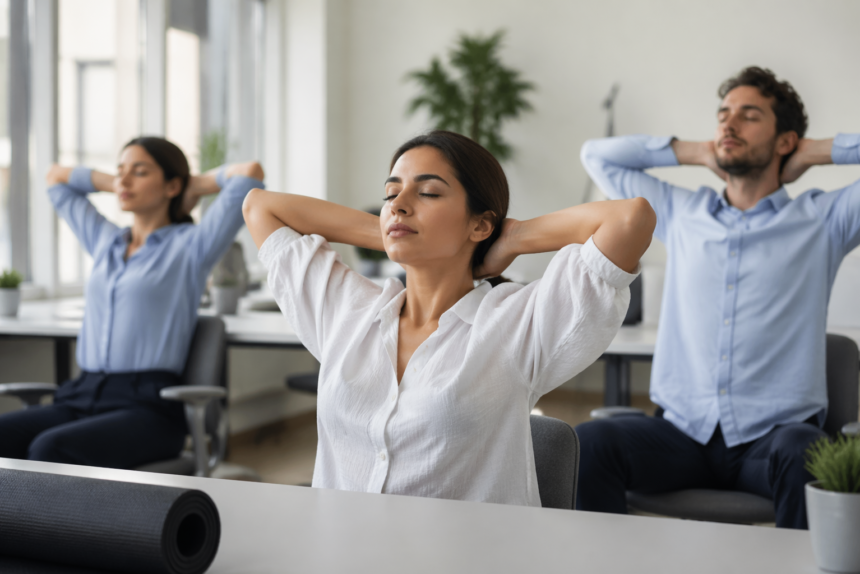
Modern work can be surprisingly demanding on the body. Long hours at a desk, constant screen time, tight deadlines, and back to back tasks often leave people feeling stiff, distracted, and mentally drained by the end of the day. That is exactly where Práctica de Yoga Estilismo Laboral becomes useful. It is not about turning the office into a studio or asking busy professionals to spend an hour in advanced poses. It is about bringing practical yoga based movement, breathing, posture awareness, and calm focus into the rhythm of a working day.
- What Práctica de Yoga Estilismo Laboral really means
- Why posture suffers during the workday
- How yoga supports better posture at work
- Práctica de Yoga Estilismo Laboral for sharper focus
- Why daily energy depends on movement, not just motivation
- A realistic workplace routine that actually works
- Simple movements that support Práctica de Yoga Estilismo Laboral
- Desk setup still matters
- Common mistakes people make
- What results can people realistically expect?
- Making it part of company culture
- Conclusion
- FAQs
At its core, Práctica de Yoga Estilismo Laboral supports three things most workers need more of: better posture, steadier concentration, and more consistent energy. Those goals matter because physical inactivity is still a major public health issue. The World Health Organization reports that 31% of adults worldwide do not meet recommended activity levels, and adults are advised to get at least 150 minutes of moderate physical activity weekly, along with strength work on two or more days.
The beauty of this approach is that it fits real life. You do not need special equipment, a dedicated studio, or a complete lifestyle reset. A few minutes of intentional movement, better sitting habits, and short breathing pauses can make the workday feel much more manageable.
What Práctica de Yoga Estilismo Laboral really means
Práctica de Yoga Estilismo Laboral can be understood as a workplace friendly yoga practice focused on functional well being. Instead of separating wellness from work, it blends simple yoga principles into professional life. That includes posture alignment, mobility, breathing control, body awareness, and short recovery breaks.
This matters because office discomfort often builds quietly. Neck tension, rounded shoulders, lower back stiffness, shallow breathing, and mental fatigue rarely show up all at once. They accumulate. According to NIOSH, workers should not have to sit or stand too long or use awkward postures, and even short breaks every hour can help reduce discomfort during computer work.
So the goal is not perfection. The goal is a work routine that feels more sustainable.
Why posture suffers during the workday
Poor posture is rarely caused by one bad chair alone. It usually comes from a combination of habits. People lean toward screens, look down at laptops, tense their shoulders while typing, and stay in one position far longer than the body likes.
OSHA’s computer workstation guidance recommends keeping the head and neck in line with the torso, the shoulders relaxed, the elbows close to the body, the lower back supported, and the feet flat on the floor. It also advises placing the top of the monitor at or slightly below eye level.
When those basics are ignored, the body compensates. The neck cranes forward. The chest tightens. The mid back becomes rigid. The lower back starts doing more work than it should. Over time, that can affect comfort, attention, and even mood.
This is where Práctica de Yoga Estilismo Laboral becomes more than a wellness trend. It helps workers notice those patterns early and interrupt them before they become the normal way of working.
How yoga supports better posture at work
Yoga is often associated with flexibility, but its value is broader than that. The National Center for Complementary and Integrative Health notes that yoga may help improve general wellness, stress, sleep, and balance, and may also help with some pain conditions such as neck pain and low back pain.
For workplace posture, yoga helps in several practical ways:
- It encourages spinal awareness instead of passive slumping.
- It strengthens muscles that support upright sitting and standing.
- It opens areas that often get tight during desk work, especially the chest, hips, and shoulders.
- It trains breathing, which reduces the tendency to tense the upper body under stress.
- It creates brief resets during the day, so one static posture does not dominate for hours.
That last point is especially important. The best posture is not one frozen position held all day. It is regular movement, smart alignment, and timely reset.
Práctica de Yoga Estilismo Laboral for sharper focus
Most people notice physical discomfort first, but mental fog is just as common. When the body is stiff and breathing becomes shallow, concentration often drops. You may still be sitting at your desk, but your attention starts drifting. Tasks feel heavier. Small distractions feel bigger.
Práctica de Yoga Estilismo Laboral supports focus because it asks the nervous system to slow down just enough for the brain to work better. Controlled breathing, posture correction, and short movement breaks can reduce that feeling of mental clutter. NCCIH notes that yoga may support mental and emotional health and stress relief, which is one reason so many people use it for general well being.
In practical terms, this means a three minute reset can sometimes do more for concentration than forcing another half hour of distracted work.
A simple example is the worker who has been answering emails for ninety minutes without standing. Their shoulders are tense, jaw is tight, and attention is slipping. A short routine of shoulder rolls, seated spinal lengthening, wrist mobility, and slow nasal breathing can restore alertness without breaking the workflow.
Why daily energy depends on movement, not just motivation
A lot of professionals try to solve low energy with more coffee, more urgency, or more pressure. That usually works for a little while, but it does not address the real issue. Energy is closely tied to circulation, breathing, muscle engagement, and mental recovery.
Health authorities consistently recommend moving more and sitting less. The CDC states that adults need at least 150 minutes of moderate intensity activity each week and two days of muscle strengthening work. WHO also warns that insufficient physical activity raises the risk of poor health outcomes.
Práctica de Yoga Estilismo Laboral helps because it introduces manageable movement into a day that might otherwise stay mostly sedentary. Even a few minutes at a time can improve how the body feels and how the mind responds to work demands.
A realistic workplace routine that actually works
One reason many wellness plans fail is that they are too ambitious. They sound good on paper but do not fit the average workday. A more effective version of Práctica de Yoga Estilismo Laboral is simple, repeatable, and low friction.
Here is a realistic structure many professionals can follow:
| Time of Day | Practice | Purpose |
|---|---|---|
| Start of work | 2 minutes of upright sitting and slow breathing | Sets posture and mental focus |
| Mid morning | Neck, shoulder, and wrist mobility | Reduces stiffness from screen work |
| Before lunch | Standing stretch and gentle spine extension | Counters slumping and static sitting |
| Mid afternoon | Seated twist and deep breathing | Refreshes concentration |
| End of work | Chest opening and hip stretch | Releases built up tension |
This kind of schedule aligns well with ergonomic guidance that supports regular movement and short breaks during computer work.
Simple movements that support Práctica de Yoga Estilismo Laboral
You do not need a full pose library to make this effective. The most useful movements are often the most basic.
Seated spinal lift
Sit tall near the front of the chair. Place both feet flat on the floor. Lengthen through the crown of the head while relaxing the shoulders. Hold for five slow breaths.
This reinforces neutral alignment and counters collapsed sitting.
Shoulder rolls and chest opening
Roll the shoulders up, back, and down several times. Then interlace the fingers behind the back if comfortable, or simply draw the shoulders back and broaden the chest.
This helps offset the rounded shoulder position common in desk work.
Gentle seated twist
Sit upright, place one hand on the opposite knee, and rotate gently from the upper back. Keep the breath steady. Repeat on both sides.
This can refresh the spine after long periods of stillness.
Standing hip and hamstring release
Stand up, hinge slightly at the hips, and stretch one leg at a time without forcing range. Desk work often leaves the hips and back feeling compressed.
Breathing reset
Inhale slowly through the nose for four counts and exhale for four to six counts. Repeat for one to two minutes.
This small habit can improve calm, clarity, and body awareness in the middle of a busy day.
Desk setup still matters
Yoga helps, but it should not be used to compensate for a poor workstation. If the desk setup is creating strain all day, movement alone will not solve everything.
A better setup usually includes the following:
- Monitor at or just below eye level
- Head and neck aligned with the torso
- Shoulders relaxed
- Elbows close to the body
- Lower back supported
- Feet flat on the floor or on a footrest
Those recommendations are consistent across OSHA and Mayo Clinic ergonomic guidance.
That means Práctica de Yoga Estilismo Laboral works best when paired with basic ergonomic awareness. Think of yoga as the active part of the solution and ergonomics as the structural part.
Common mistakes people make
Many readers are interested in workplace wellness but still struggle to make it useful. The problem is usually not effort. It is approach.
One common mistake is waiting until pain becomes obvious. Another is trying to correct posture by sitting stiffly, which creates a different kind of tension. Some people also assume yoga at work must be long, private, or visually dramatic. It does not.
The better approach is subtle and steady. Move before stiffness becomes intense. Breathe before stress becomes overwhelming. Reset posture before the slump feels permanent.
Another mistake is using only stretching without strengthening attention. Yoga is effective partly because it combines mobility with awareness. You are not just moving the body. You are learning to notice what the body is doing while you work.
What results can people realistically expect?
A sensible Práctica de Yoga Estilismo Laboral routine is not a miracle fix. It is a support system. When practiced consistently, people often notice that they sit with less collapse, feel less neck and shoulder tension, take fewer uncomfortable workdays for granted, and recover attention more quickly after mental fatigue.
That expectation fits what public health and clinical sources suggest. Yoga is not presented as a cure all, but it is repeatedly recognized as a helpful tool for flexibility, balance, stress management, and some pain related concerns. Ergonomic guidance also shows that posture, workstation setup, and regular breaks can meaningfully reduce discomfort.
The key word is consistency. Five mindful minutes most days usually does more than one long session done once in a while.
Making it part of company culture
For employers and team leaders, Práctica de Yoga Estilismo Laboral can also support a healthier work culture. It does not require expensive infrastructure. In many workplaces, the most effective changes are simple:
- Encourage short movement breaks
- Normalize posture friendly desk setup
- Offer a brief stretch session before long meetings
- Share breathing and mobility routines employees can do at their desks
- Treat wellness as a productivity support, not a distraction
CDC published findings from a workplace sitting reduction project showing reduced sitting time, improved mood, and less upper back and neck pain when employees changed their work pattern.
That does not mean every office needs a formal yoga program. It means the principle is sound: when people move better, they often work better too.
Conclusion
In a world shaped by desks, devices, and constant demands, Práctica de Yoga Estilismo Laboral offers something practical and human. It reminds us that posture is not just about appearance, focus is not just about willpower, and energy is not just about pushing harder. The body and mind work together all day, whether we pay attention or not.
A few intentional changes can go a long way. Sit with more awareness. Breathe more fully. Move before discomfort builds. Use simple stretches and alignment habits to support the way you work, not interrupt it. That is what makes Práctica de Yoga Estilismo Laboral valuable. It is flexible enough for real schedules, grounded enough for real bodies, and useful enough to improve daily work life in ways people can actually feel.
Seen this way, it is less a trend and more a sustainable mind body practice for modern professionals who want better posture, clearer focus, and steadier energy without overcomplicating wellness.
FAQs
Is Práctica de Yoga Estilismo Laboral suitable for beginners?
Yes. It works best when kept simple. Gentle mobility, posture awareness, and easy breathing exercises are enough to start seeing benefits.
How often should I practice it during work hours?
Short sessions done regularly are usually more effective than one long session. Even a few minutes every hour or two can help reduce stiffness and restore focus.
Can it replace exercise?
No. It is a helpful addition, not a full replacement for recommended weekly physical activity. Adults still benefit from regular aerobic activity and muscle strengthening work.
Do I need special clothing or equipment?
Not usually. Most workplace friendly movements can be done in ordinary professional clothing with a stable chair and enough room to stand safely.