


If you have been looking at modern housing options and feeling torn between speed, quality, design, and long term value, Homers Modular is the kind of name that naturally comes up. It sits right at the intersection of prefab convenience and contemporary living, which is why more buyers are starting to pay attention.
- What Is Homers Modular?
- Why Modern Buyers Are Paying Attention to Homers Modular
- The Real Benefits of Homers Modular Homes
- Homers Modular vs Traditional Homes
- What to Check Before Buying a Homers Modular Home
- Is Homers Modular a Good Fit for Modern Living?
- Common Questions Buyers Ask About Homers Modular
- Final Thoughts
What makes Homers Modular interesting is not just the style. It is the full package. You get a factory built approach, modern architecture, a faster path to move in, and a product that is positioned around low energy living. On its official website, HOMERS says its houses are produced in about three months, with on site construction taking roughly 16 to 40 days depending on size. That kind of timeline alone explains why Homers Modular appeals to buyers who want less uncertainty and more control over the process.
For modern buyers, that matters. Traditional homebuilding can stretch into long timelines, surprise delays, and shifting budgets. Homers Modular speaks to a different mindset. People want practical homes, but they also want good light, strong layouts, better energy performance, and a process that does not feel chaotic. That is where modular housing starts to feel less like a niche choice and more like a serious mainstream option.
What Is Homers Modular?
At its core, Homers Modular refers to a modular housing concept built around off site manufacturing and on site assembly. Modular construction means large sections of the home are produced in a controlled factory environment and then transported to the final location for installation. According to the Modular Building Institute, modular construction uses the same materials and is designed to the same codes and standards as conventional buildings, but can be completed in about half the time. That is one of the biggest reasons Homers Modular attracts buyers who value efficiency without wanting to compromise on comfort.
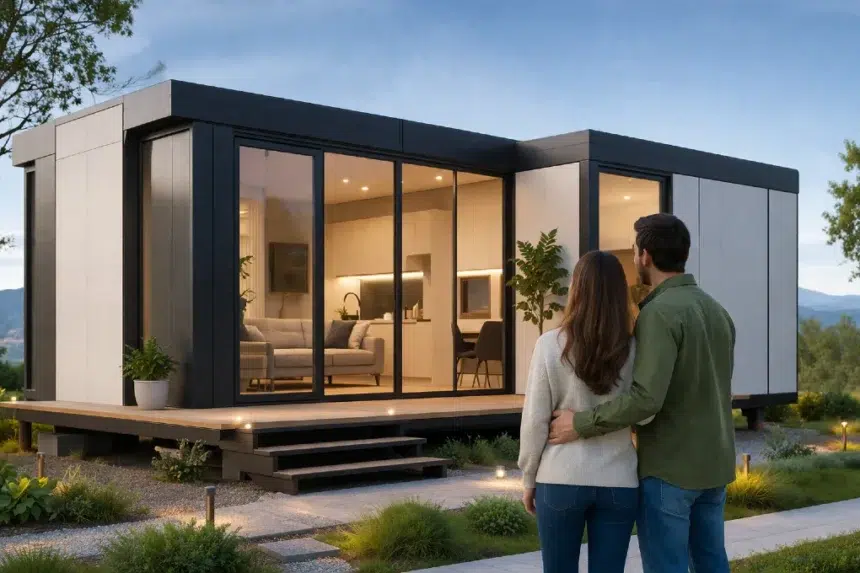
On the HOMERS website, the brand presents several house models with a strong emphasis on clean lines, outdoor connection, energy conscious design, and livability. Models such as Alan, Vista, and Nico are described as low energy modular homes, with features like large glass surfaces, terraces, and modern interior layouts. HOMERS also highlights ecological construction and energy class A0 for some models, which positions Homers Modular as a lifestyle oriented option rather than just a fast build solution.
Why Modern Buyers Are Paying Attention to Homers Modular
A few years ago, prefab homes were often seen as purely practical. Useful, yes, but not always desirable. That perception has changed. Today’s buyer wants convenience, but they also care about aesthetics, energy use, flexibility, and long term maintenance. Homers Modular fits that shift unusually well.
The first reason is speed. A traditional build can involve weather delays, contractor scheduling problems, and repeated site visits. With Homers Modular, much of the production takes place in a controlled environment, which can reduce disruptions and compress the building schedule. HOMERS states that production takes around three months, a timeline that can feel much more manageable than a standard custom build.
The second reason is predictability. Factory production tends to create more consistency because the process is repeatable. That does not eliminate every risk, but it does reduce some of the mess that buyers associate with conventional construction. For people building a first home, a vacation home, or a downsized retirement home, Homers Modular can feel easier to understand from the start.
The third reason is design. This is where many modular brands either win or lose attention. HOMERS leans hard into clean, modern visual appeal. Large glazing, open terraces, minimalist forms, and flexible layouts make Homers Modular look like a design choice, not a compromise.
The Real Benefits of Homers Modular Homes
There is a practical side to the popularity of Homers Modular, and it goes beyond trend appeal.
1. Faster move in timeline
Time matters more than people think. A home that is ready sooner can reduce temporary housing costs, shorten financing pressure, and make planning easier. The HOMERS process is built around speed, with the company stating that on site construction can be completed in as little as 16 to 40 days depending on the home size. That is a major selling point for buyers who want momentum instead of endless waiting.
2. Better quality control potential
One of the strongest arguments for modular housing in general is the controlled manufacturing environment. Instead of every step happening outdoors, much of the work is done in a production setting. This can help with consistency, material handling, and process discipline. For buyers considering Homers Modular, that factory built approach often feels more reassuring than a long open ended build on site.
3. Energy conscious living
Energy efficiency is no longer just a nice bonus. It affects monthly bills, comfort, and long term property performance. The U.S. Department of Energy notes that a tight, insulated building envelope and high performance windows are central to energy efficient homes and buildings. HOMERS specifically markets several homes as low energy and highlights energy class A0 on certain models, which aligns with what many buyers now want from a modern home.
4. Cleaner, more modern design language
Many buyers are drawn to Homers Modular simply because it looks current. The layouts feel intentional. The exterior style feels contemporary. The connection to outdoor space is strong. That matters because modern buyers are not only shopping for square footage. They are shopping for a feeling. They want a home that looks good in everyday life, not just in a brochure.
5. Flexibility for different life stages
A modular home can make sense for several buyer profiles:
- First time buyers who want a faster route into ownership
- Couples seeking a stylish smaller footprint
- Families wanting a second property or holiday home
- Downsizers looking for lower maintenance living
- Remote workers who value comfort and efficiency
That flexibility is part of the reason Homers Modular has a broad appeal.
Homers Modular vs Traditional Homes
This is the comparison many buyers actually care about. Not in theory, but in real decision making.
| Feature | Homers Modular | Traditional Home |
|---|---|---|
| Build timeline | Typically faster due to off site production | Often longer and more vulnerable to delays |
| Construction setting | Factory controlled plus site assembly | Mostly on site |
| Design consistency | High repeatability | Depends heavily on site conditions and crews |
| Energy focus | Strong emphasis in HOMERS marketing | Varies widely by builder |
| Custom feel | Modern model based options | Often broader but slower to execute |
| Site disruption | Usually reduced | Often more prolonged |
The choice is not always about one being universally better. It is about fit. A buyer who wants endless customization and is comfortable with a slower process may still prefer conventional construction. But a buyer who values efficiency, contemporary design, and a streamlined experience may find Homers Modular much more appealing.
What to Check Before Buying a Homers Modular Home
A stylish prefab home can be exciting, but smart buyers still need to do the homework. If you are seriously considering Homers Modular, pay attention to the details that affect the full ownership experience.
Land and local rules
Even the best modular home still needs the right site. Local zoning, foundation requirements, access for transport, utility hookups, and permits all matter. Modular homes are not the same thing as mobile homes, and they are generally built to local building codes, but buyers still need site specific due diligence.
Total project cost
The home price is only part of the picture. You also need to account for:
- Land purchase
- Site preparation
- Foundation work
- Utility connections
- Transport and crane access
- Local permits and approvals
- Landscaping and exterior finishing
When evaluating Homers Modular, the smartest move is to look at turnkey cost, not just the advertised base model.
Layout fit
A beautiful floor plan on paper is not always the right fit in daily life. Think about storage, privacy, guest use, future family needs, and how much terrace or outdoor space you will actually use. Homers Modular performs best for buyers who choose a model that matches real habits, not just visual preferences.
Climate and location suitability
The right home in the wrong location can still underperform. Ask how the selected model handles insulation, glazing, ventilation, and weather exposure for your region. Energy efficiency is not just a label. It is how the home feels in summer, winter, and every month in between.
Is Homers Modular a Good Fit for Modern Living?
For many people, yes. Homers Modular makes sense because it matches how people increasingly want to live. Buyers today want homes that are simpler to manage, more thoughtful in layout, and less wasteful in operation. They want something that feels modern without automatically becoming oversized or overly complicated.
That is especially true for people who value:
- Lower maintenance lifestyles
- Faster housing delivery
- Contemporary architecture
- Better energy performance
- Strong indoor outdoor connection
- More predictable construction workflows
In that sense, Homers Modular feels aligned with real market behavior. It is not just selling a structure. It is selling a more manageable way to become a homeowner.
Common Questions Buyers Ask About Homers Modular
Are Homers Modular homes permanent homes?
Yes, modular homes are generally intended as permanent structures assembled on a prepared site and built to local codes. The broader modular construction industry distinguishes these from temporary or mobile structures. Homers Modular is marketed as a modern housing solution, not as short term accommodation.
Are Homers Modular homes energy efficient?
HOMERS presents several models as low energy homes and highlights energy class A0 for some properties. While buyers should always confirm local specifications and package details, the company clearly positions Homers Modular around energy conscious living. DOE resources also reinforce the importance of tight envelopes and efficient windows in achieving that outcome.
How fast can a Homers Modular home be installed?
According to HOMERS, production takes around three months and on site construction may take about 16 to 40 days depending on size. Actual timing can still vary based on approvals, land readiness, transport logistics, and utilities.
Is Homers Modular only for small homes?
Not really. HOMERS offers multiple home models with different sizes and layouts, which suggests the brand is trying to serve different needs rather than one narrow format. Buyers should compare floor plans carefully to see which option suits their lifestyle best.
Final Thoughts
The reason Homers Modular stands out is simple. It answers a set of modern buyer priorities in one package. People want homes that look current, perform well, and arrive on a realistic timeline. They want fewer surprises and more clarity. They want something stylish, but also practical enough for everyday living.
That is why Homers Modular deserves serious attention from buyers considering prefab housing. It brings together speed, design, and energy minded thinking in a way that feels relevant right now. It will not be the perfect solution for every site or every buyer, but for the right person, it can be a smart and attractive path to homeownership.
If you are comparing housing options and trying to balance cost, design, timing, and performance, Homers Modular is worth a closer look. And if you want to understand the wider building method behind homes like these, reading about modular construction gives useful context before making a final decision.