



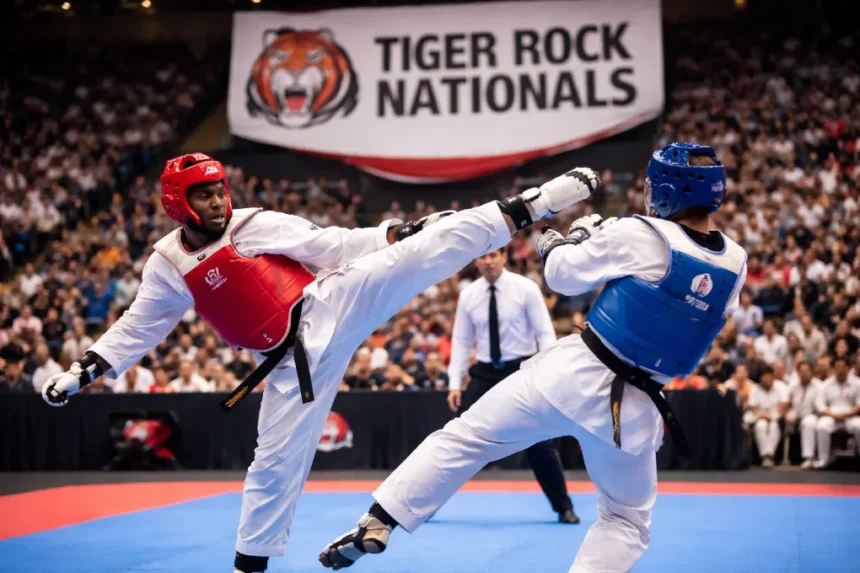
Every year, big martial arts events give students, instructors, and families a chance to measure progress in a setting that feels bigger than everyday class. Taekwondo Tiger Rock Nationals Season 39 stood out for exactly that reason. It was not just another competition weekend. It felt like a showcase of how far athletes had come, how seriously academies prepared, and how much energy this community brings when the stakes rise.
- Why Taekwondo Tiger Rock Nationals Season 39 mattered
- The scale and atmosphere of the event
- Highlights that defined the weekend
- Winners, medalists, and what success really looked like
- Standout performances that likely caught attention
- What made the event exciting for spectators
- Key takeaways for athletes and parents
- How Tiger-Rock’s training model feeds events like this
- The lasting impact of Taekwondo Tiger Rock Nationals Season 39
What made this event especially interesting was the combination of scale, structure, and emotion. Tiger-Rock positions competition as part of a broader student journey, not just a medal chase, and that changes the atmosphere in a noticeable way. You see discipline, nerves, confidence, and school pride all on the same floor. For many competitors, this was where months of training turned into a real test.
Tiger-Rock describes itself as a martial arts community built around confidence, resilience, focus, and national-level competition opportunities, with programs spanning children, teens, and adults. The broader organization also emphasizes structured training, instructor certification, and safe competition environments. Public event listings tied to Season 39 also indicate a field of 323 registrations, which tells you right away this was not a small local meet but a substantial competitive gathering.
Why Taekwondo Tiger Rock Nationals Season 39 mattered
There are tournaments that simply hand out medals, and then there are events that act as milestones. Taekwondo Tiger Rock Nationals Season 39 clearly leaned toward the second kind.
A national event matters because it compresses everything into one moment. Technique has to hold up under pressure. Timing has to be sharp. Composure suddenly matters as much as physical skill. Students who look excellent in practice have to show they can perform in front of judges, teammates, and families.
That is what makes a Tiger-Rock Nationals weekend valuable. It gives competitors a way to test the real-world version of their training. It also gives parents and coaches something just as important, which is a clearer picture of growth. It becomes easier to see who has improved in control, who is developing ring awareness, who performs well under pressure, and who still needs more tournament reps.
Tiger-Rock also highlights competition as part of its identity, noting that students can compete locally and nationally in a supportive community. That matters because it frames nationals as an extension of the academy system rather than a disconnected showcase.
The scale and atmosphere of the event
One of the clearest signs that Taekwondo Tiger Rock Nationals Season 39 carried weight is the registration number attached to public event listings. With 323 registrations, the event had enough participation to create real bracket depth, meaningful matchups, and a broader mix of experience levels. That kind of participation usually leads to longer competition days, more storylines, and stronger separation between athletes who merely qualify and athletes who truly stand out.
A field of that size changes the feel of a tournament in several ways:
- Winning requires consistency, not just one strong round
- Athletes must handle wait times, distractions, and pressure
- Coaches need sharper game plans and better pacing
- Families get to see a wider cross-section of the Tiger-Rock talent pool
That last point is underrated. Nationals are where the community gets a live snapshot of itself. You see young competitors building confidence, advanced students trying to separate themselves technically, and schools trying to prove their preparation stacks up against strong peers.
Highlights that defined the weekend
The best national tournaments always produce a few recurring themes, and Taekwondo Tiger Rock Nationals Season 39 appears to have delivered the kind of competitive environment where those themes naturally rise to the surface.
1. High-pressure performance was everything
In martial arts competition, plenty of athletes have the raw tools. What separates standout performers is usually the ability to stay composed. Clean execution under pressure is what turns a good competitor into a memorable one. Nationals tend to reward athletes who do not rush, do not fade mentally, and do not let one small mistake snowball into a poor overall showing.
2. Preparation showed in the details
Tiger-Rock’s broader training model emphasizes focus, accountability, self-confidence, and structured advancement. When that kind of preparation translates well, it usually shows up in posture, transitions, control, and ring discipline. Those details may not always be flashy to casual viewers, but they are exactly the things judges and experienced coaches notice first.
3. The event had real developmental value
One reason competitions like this matter is that martial arts training is about more than physical movement. The CDC notes that physically active children and adolescents tend to have higher fitness levels, stronger bones and muscles, and measurable brain health benefits, including improved cognition and reduced symptoms of depression. That broader context helps explain why families often view tournaments as meaningful developmental experiences, not just sports outings.
Winners, medalists, and what success really looked like
The phrase “winners” usually makes people think of first-place finishes, but the truth is a little wider than that. At an event like Taekwondo Tiger Rock Nationals Season 39, success showed up in layers.
Of course, the headline performers were the athletes who captured titles, rose above deep brackets, and turned strong training into official results. Those competitors earned the spotlight. In any national tournament, champions stand out because they solve different problems across the day. They do not just look polished once. They repeat that standard round after round.
But standout performances also came from athletes who may not have ended the event on the very top podium spot. Some competitors likely delivered breakthrough moments by beating a higher-seeded opponent, tightening their form compared with prior events, or reaching later rounds than expected. In youth and amateur martial arts, those breakthroughs often matter just as much as medals because they signal future growth.
That is part of why tournament weekends stay memorable. A champion gets recognized for the finish, but a rising athlete gets recognized for trajectory.
Standout performances that likely caught attention
When people talk about memorable showings from Taekwondo Tiger Rock Nationals Season 39, they are usually pointing to a few specific qualities.
Sharp technical execution
In taekwondo competition, technique still does the heavy lifting. Whether the athlete is performing forms or competing in sparring-style settings, clean fundamentals matter. Strong chambering, balance, precision, controlled power, and finishing discipline tend to separate the field.
World Taekwondo’s poomsae rules emphasize standardized competition structure and consistent judging principles, which helps explain why technically disciplined athletes often rise to the top in organized events.
Competitive calm
One athlete can have better raw speed, while another wins because they stay calmer. That second quality becomes priceless at nationals. The ability to reset after a mistake, listen to coaching, and stay emotionally steady is often the difference between a respectable showing and a standout one.
Adaptability across rounds
Athletes who look great in the first round are common. Athletes who keep adjusting as the day unfolds are much rarer. National competition rewards those who can maintain output, sharpen focus, and avoid emotional drop-off as fatigue sets in.
Presence
This one is harder to measure, but anyone who watches enough martial arts competition knows it when they see it. Some athletes step onto the floor and immediately look like they belong there. Presence comes from confidence, timing, posture, and command of the moment.
What made the event exciting for spectators
For families and casual viewers, Taekwondo Tiger Rock Nationals Season 39 likely delivered the exact mix that makes martial arts compelling. You get individual pressure, team pride, visible discipline, and very little room for hiding nerves.
That is part of what separates martial arts tournaments from many other youth sports events. There is no crowd of teammates to blend into once the round starts. The athlete is on display. Their preparation, confidence, and ability to respond to pressure become visible almost instantly.
Tiger-Rock’s public messaging also leans heavily on the idea that students grow not just physically but holistically through focus, awareness, leadership, respect, and accountability. When a tournament is run inside that culture, spectators are not just watching for points or placements. They are watching for maturity, poise, and growth.
Key takeaways for athletes and parents
If there is one lesson to take from Taekwondo Tiger Rock Nationals Season 39, it is that tournament success usually reflects habits more than hype.
Here are the biggest practical takeaways:
- Consistent training still beats last-minute preparation
- Calm performers usually outperform emotional performers
- Technical precision holds up better than flashy inconsistency
- Tournament experience matters, even when the athlete does not win
- Confidence grows when students test themselves in real settings
Parents often focus on medals first, which is understandable. But long-term development comes from something slightly different. It comes from learning how to prepare, compete, adjust, and come back stronger. Nationals compresses all of those lessons into one weekend.
How Tiger-Rock’s training model feeds events like this
A large reason events like this land so well is that Tiger-Rock does not frame martial arts as isolated competition training. The organization describes its programs as serving ages 4 and up, with flexible lesson scheduling, structured advancement, annual instructor recertification, and safety-focused protocols. It also emphasizes that competition is part of a broader student-development path.
That matters because students do better at tournaments when the surrounding system is stable. They need coaches who know how to prepare them. They need clear standards. They need a culture that values discipline before performance. They need repetition that builds trust in their technique.
By the time students reach a national event, all of that background starts to show.
The lasting impact of Taekwondo Tiger Rock Nationals Season 39
In the end, Taekwondo Tiger Rock Nationals Season 39 was about more than podium photos. It was about seeing the Tiger-Rock system under bright lights and watching athletes respond to a meaningful test.
The champions earned their recognition. The standout performers earned attention for the way they handled pressure, executed technique, and represented their academies. Just as importantly, many competitors likely left with a clearer sense of what comes next. Some learned they are closer than they thought. Others learned what still needs work. That kind of clarity is one of the most valuable things a national event can offer.
Events like this also remind people why taekwondo continues to have such staying power. It blends athleticism, discipline, tradition, and personal growth in a way few activities can. In that sense, Taekwondo Tiger Rock Nationals Season 39 was not just a competition recap. It was a snapshot of what committed training can look like when students get the chance to perform on a bigger stage.
For readers who are new to the sport, that is part of the appeal of martial arts. The competition is exciting, but the real story is usually the transformation behind it. And that is exactly why a national event like this resonates long after the weekend ends.