



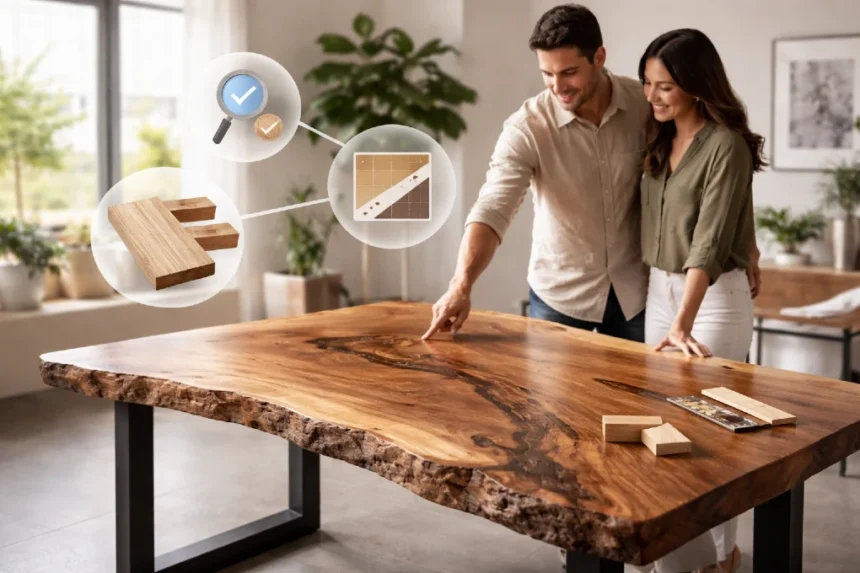
A Live Edge Dining Table can completely change the feeling of a room. It adds warmth, texture, and a sense of craftsmanship that flat, factory-made furniture often lacks. But choosing the right Live Edge Dining Table is not just about finding a beautiful slab of wood. You need the right size, the right shape, the right finish, and a style that works with the rest of your home.
- What Makes a Live Edge Dining Table So Special?
- Start With Your Room Size Before You Fall for the Slab
- Choose the Right Table Length for the Way You Entertain
- Match the Shape to Your Room and Seating Style
- Pick a Wood Species That Fits Your Lifestyle
- Do Not Ignore Wood Movement and Construction Details
- Choose a Base That Balances the Natural Top
- Let Your Style Lead the Final Look
- Pay Attention to Finish, Sheen, and Daily Maintenance
- Know What Kind of Edge Character You Actually Want
- Think Beyond the Table Top
- Budget for Value, Not Just Price
- Common Mistakes to Avoid When Buying a Live Edge Dining Table
- Is a Custom Live Edge Dining Table Worth It?
- Final Thoughts
- FAQs
That is where many buyers get stuck. One Live Edge Dining Table may look stunning in a showroom and feel overwhelming in a small dining room. Another may suit your room perfectly but clash with your flooring, chairs, or overall design style. The best choice sits right at the intersection of function, proportion, and personality.
If you want your investment to feel intentional rather than impulsive, start with how you actually live. Do you host big family dinners, work from the table during the day, or want a centerpiece that makes everyday meals feel special? Once you answer those questions, choosing the right Live Edge Dining Table becomes far easier.
What Makes a Live Edge Dining Table So Special?
A Live Edge Dining Table keeps the natural contour of the tree along one or both sides of the slab. That preserved edge gives the piece its signature look. It feels organic, sculptural, and slightly one of a kind, even when the design itself is simple.
That natural beauty is exactly why buyers fall in love with it. No two slabs have the same grain pattern, movement, knots, or edge line. Your Live Edge Dining Table is not just furniture. It is also a visual focal point that brings the outdoors into your dining space.
There is also a practical side to this choice. The U.S. Forest Service’s Wood Handbook notes that wood is hygroscopic, which means it absorbs and releases moisture as humidity changes. That matters because a solid wood Live Edge Dining Table needs proper construction, seasoning, and joinery to stay stable over time.
Start With Your Room Size Before You Fall for the Slab
The first step in choosing a Live Edge Dining Table is measuring your space, not shopping by photo. A table can be gorgeous and still be wrong for the room if it blocks movement or makes seating uncomfortable.
A simple rule works well here. Leave enough clearance around the table so people can pull chairs out and walk around comfortably. In most homes, that means planning open space around all sides, especially if the dining area connects to a kitchen, hallway, or patio door.
Before you buy, measure these three things:
- The length and width of your dining area
- The location of doors, windows, and traffic paths
- The number of people you want to seat on a normal day and on special occasions
A Live Edge Dining Table often looks visually heavier than a glass or thin-top table, so proportion matters even more. If your room is compact, a narrower slab with a lighter base can make the space feel balanced instead of crowded.
Choose the Right Table Length for the Way You Entertain
Think about your real-life seating needs, not just holiday seating. A Live Edge Dining Table should work beautifully on an ordinary Tuesday, not only when guests come over.
Use this quick sizing framework:
- 4 people: typically around 48 to 60 inches long
- 6 people: typically around 72 inches long
- 8 people: typically around 84 to 96 inches long
- 10 people: often 108 inches or more, depending on width and base placement
Keep in mind that live edge slabs are rarely perfectly uniform. The widest point and the narrowest point can differ, and that affects place settings. If you love a dramatic natural edge, make sure the narrowest section still leaves enough room for plates, serving dishes, and elbow space.
Match the Shape to Your Room and Seating Style
Not every Live Edge Dining Table has the same silhouette. Some are long and linear, some are softly curved, and some are made from bookmatched slabs that create a dramatic mirrored pattern.
Rectangular tables work best in long rooms and are usually the easiest for larger gatherings. A softer-edged Live Edge Dining Table with rounded corners can feel more relaxed and safer in homes with children.
If your dining room is square or you want more intimate conversation, a round or oval slab-inspired design may suit you better. A round table encourages eye contact and flow, while an oval shape gives you a little more seating flexibility without the hard visual lines of a rectangle.
Pick a Wood Species That Fits Your Lifestyle
Wood species changes more than color. It affects durability, grain character, maintenance, and how formal or casual the finished table feels.
Here is a simple way to think about it:
- Walnut feels rich, refined, and timeless. It works beautifully in modern, luxury, and transitional interiors.
- Oak feels durable, versatile, and slightly more casual. It suits Scandinavian, farmhouse, and contemporary spaces.
- Maple offers a cleaner, lighter look and works well in bright, minimalist homes.
- Acacia often has dramatic variation and bold character, which can make a Live Edge Dining Table feel more expressive.
- Suar and monkey pod are popular for large statement slabs with strong organic movement.
The best wood is not always the most expensive. It is the one that suits your household. If you have kids, regular dinner guests, or daily heavy use, choose a species and finish combination that can handle wear without making you nervous every time someone sets down a glass.
If you already have a Live Edge Coffee Table in the living room, pay attention to how the wood tones relate. They do not need to match perfectly, but they should feel intentional together.
Do Not Ignore Wood Movement and Construction Details
A beautiful slab can still become a frustrating purchase if the construction is poor. The wood itself matters, but so do the details underneath it.
The U.S. Forest Service explains that changes in moisture content directly affect wood performance. In practical terms, that means your Live Edge Dining Table should be built to allow natural expansion and contraction instead of fighting against it.
Look for signs of solid craftsmanship:
- Proper kiln-drying or seasoning
- Stable joinery and well-secured base hardware
- Steel supports or structural reinforcement when needed
- A slab thickness that feels proportionate and sturdy
- Clear information about cracks, fills, and whether they are cosmetic or structural
Small checks, knots, and filled voids can add character. Poor flattening, weak base attachment, and bad moisture control are different issues entirely.
Choose a Base That Balances the Natural Top
The base affects both style and comfort. A Live Edge Dining Table with a heavy slab top can feel clunky if the base is too bulky, but it can also feel unstable if the base is too slight.
Popular choices include:
- Metal U or X bases for industrial and modern interiors
- Pedestal bases for easier legroom and flexible seating
- Trestle bases for farmhouse, rustic, or transitional spaces
- Minimal steel legs for a clean, contemporary look
Always think beyond appearance. Where the legs sit will affect whether people can comfortably add an extra chair at the ends or along the sides. A striking base is only a good choice if it does not fight with everyday use.
Let Your Style Lead the Final Look
A Live Edge Dining Table can lean rustic, modern, luxe, industrial, or even minimalist depending on the details around it. The same slab can feel completely different when paired with black steel chairs, upholstered seating, or woven natural textures.
If your home is modern, choose a cleaner slab with a restrained edge, a matte finish, and a simple base. If your style is warmer or more rustic, a more expressive edge, visible grain variation, and a thicker top can feel right at home.
For a balanced room, think in layers:
- Floor tone
- Wall color
- Dining chair material
- Lighting finish
- Nearby furniture pieces
- Decorative accents such as rugs, ceramics, and artwork
A Live Edge Dining Table should stand out, but it should not feel like it belongs to a different house.
Pay Attention to Finish, Sheen, and Daily Maintenance
Finish is where beauty meets real life. Your Live Edge Dining Table may look stunning under showroom lighting, but the wrong finish can become a maintenance headache in a busy home.
If you want lower upkeep, a durable protective finish is usually the smarter option. If you love a more natural, tactile surface, oil finishes can look beautiful but often require more regular care.
The EPA advises choosing low-VOC, least-toxic coatings and materials when possible because some VOCs can be irritating or harmful indoors. That makes low-VOC and water-based finishes worth asking about when you buy a Live Edge Dining Table for daily use.
Think about sheen too:
- Matte looks natural and contemporary
- Satin offers a soft glow and hides wear fairly well
- Gloss feels more formal but shows fingerprints and scratches more easily
If you want the grain to stand out without making the surface overly shiny, satin is often the sweet spot.
Know What Kind of Edge Character You Actually Want
Some buyers want a dramatic, rugged silhouette. Others want a more refined Live Edge Dining Table that keeps the natural shape without feeling too wild.
Neither is wrong. It depends on the room and your taste.
Ask yourself:
- Do I want the edge to look bold and irregular or subtle and smooth?
- Do I prefer lots of knots and visual drama or a cleaner slab?
- Do I want epoxy fills to be visible or nearly invisible?
- Will this table be a statement piece or part of a quieter design story?
The most successful Live Edge Dining Table choices usually happen when the edge character matches the rest of the room. Strong slab movement in an already busy space can feel chaotic. A calmer edge in a simple room can feel elegant and timeless.
Think Beyond the Table Top
A Live Edge Dining Table does not live alone. It has to work with your chairs, lighting, flooring, and nearby furniture. If the room has several heavy wood pieces, another large dark slab can make the space feel visually dense.
That is why contrast matters. A bold table can benefit from lighter upholstered chairs, slimmer dining legs, or a softer rug. The goal is not perfect matching. The goal is visual rhythm.
This is also where coordination with a Live Edge Coffee Table can be helpful. If you use both in an open-plan home, repeat one or two details such as wood tone, base finish, or edge softness so the spaces feel connected without looking overly staged.
Budget for Value, Not Just Price
A cheaper Live Edge Dining Table can cost more in the long run if the slab is poorly dried, the finish fails quickly, or the base is unstable. On the other hand, the most expensive option is not automatically the best one for your needs.
Spend more where it counts:
- Slab quality
- Proper drying and construction
- Finish durability
- Base stability
- Seller transparency
Save where you can:
- Ultra-custom dimensions you do not truly need
- Trend-driven base styles that may date quickly
- Exotic wood choices that do not fit your space any better than local hardwoods
If sustainability matters to you, ask whether the wood is FSC certified or responsibly sourced. FSC says its standards are designed to support forest stewardship that is environmentally appropriate, socially beneficial, and economically viable.
Common Mistakes to Avoid When Buying a Live Edge Dining Table
A few mistakes show up again and again.
Buying only with your eyes is the biggest one. A photo cannot tell you how the slab feels in your room, how the finish reacts to sunlight, or whether chair placement will be awkward.
Other common mistakes include:
- Choosing a table that is too wide for comfortable conversation
- Ignoring how the base affects seating
- Overmatching every wood tone in the room
- Forgetting about maintenance and finish type
- Assuming every crack or fill is a flaw instead of a design choice
- Not asking whether the slab has been properly dried and stabilized
The smartest buyers ask practical questions before falling in love with the look.
Is a Custom Live Edge Dining Table Worth It?
For many homeowners, yes. A custom Live Edge Dining Table makes sense if your room has unusual dimensions, your seating needs are specific, or you want control over the slab, finish, and base.
Custom also helps if you are trying to match a broader interior story. Maybe you want a lighter walnut tone, a softer edge profile, or a base that echoes nearby fixtures. Maybe you want your Live Edge Dining Table to tie into cabinetry, flooring, or even a nearby bench.
Still, custom only pays off when the maker is skilled. Ask for photos of previous work, details about moisture control, and clear expectations for lead time and finish care.
Final Thoughts
The perfect Live Edge Dining Table is not just the prettiest slab you can find. It is the one that fits your room, supports your routine, and feels right with your overall style. When size, shape, wood species, finish, and base all work together, the result feels effortless.
Take your time with the decision. Measure carefully, ask smart questions, and choose a piece you will still love after the trend cycle moves on. A well-chosen Live Edge Dining Table brings warmth, character, and daily function into one of the most used spaces in your home.
And if you want to better appreciate how natural wood grain affects the final look of a slab, pay attention to the flow, contrast, and movement across the surface before you commit. That visual character is often what turns a good table into the right table.
FAQs
How thick should a Live Edge Dining Table be?
A Live Edge Dining Table often looks best when the slab thickness feels substantial without becoming visually heavy. In many homes, a moderate thickness gives you the best balance of strength, elegance, and everyday practicality.
Is a Live Edge Dining Table good for small spaces?
Yes, a Live Edge Dining Table can work beautifully in a smaller room if you choose a narrower slab, a lighter base, and the right length. The key is maintaining clear walking space around it.
What finish is best for a Live Edge Dining Table?
The best finish depends on your lifestyle. If you want easier cleanup and stronger daily protection, a durable low-VOC protective finish is often the most practical choice for a Live Edge Dining Table.
Can I match a Live Edge Dining Table with other wood furniture?
Yes, but matching does not mean everything has to be identical. Your Live Edge Dining Table should relate to other pieces through tone, texture, or finish, even if the species and grain pattern are different.
Does a Live Edge Coffee Table need to match the dining table?
No. A Live Edge Coffee Table should complement the dining area, not duplicate it. Repeating one shared detail, such as wood warmth or base material, usually looks better than buying a full matching set.