



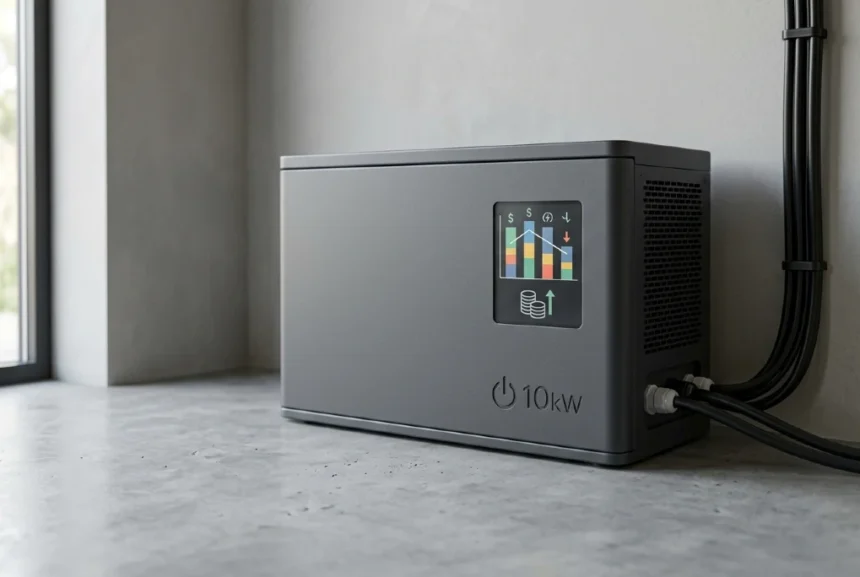
If you are researching 10kw Solar Battery Price, you are probably trying to answer one big question: how much should a serious home battery system really cost, and what exactly are you paying for? That is a smart question, because battery pricing can vary widely depending on chemistry, usable capacity, installation complexity, inverter setup, backup features, and local incentives. A buyer who only compares sticker prices can easily miss the factors that shape real value over time.
- What Buyers Usually Mean by 10kw Solar Battery Price
- The Real Price Range Buyers Should Expect
- The Most Important 10kw Solar Battery Price Factors
- 1. Battery Chemistry Changes the Cost and Long-Term Value
- 2. Usable Capacity Matters More Than Headline Capacity
- 3. Power Output Affects Price and Performance
- 4. New Solar Installation vs Retrofit Installation
- 5. AC-Coupled vs DC-Coupled Design
- 6. Installation Complexity Can Add Thousands
- 7. Backup Features Raise the Value and the Price
- 8. Brand, Warranty, and Support Should Never Be Ignored
- 9. Incentives Can Dramatically Change Net Cost
- A Simple Comparison Table for Smart Buyers
- A Real-World Buying Scenario
- Questions Buyers Commonly Ask Before Choosing
- What a Smart Buyer Should Focus On First
- Final Thoughts on 10kw Solar Battery Price
The good news is that a solar battery purchase does not have to feel confusing. Once you understand what drives the total price, it becomes much easier to compare options fairly. In the current U.S. market, residential battery systems commonly land around four figures per kilowatt-hour installed, and recent EnergySage data puts the average battery cost at about $1,128 per kWh of stored energy, with a typical home battery system costing $15,228 before incentives for around 13.5 kWh of storage.
What Buyers Usually Mean by 10kw Solar Battery Price
Before comparing costs, it helps to clear up a common point of confusion. Many shoppers search for 10kw Solar Battery Price, but battery systems are often described using both power and energy.
- kW refers to power output, or how much electricity the battery can deliver at one moment
- kWh refers to storage capacity, or how much total energy the battery can hold
In everyday buying conversations, people often use “10kw solar battery” when they really mean a home battery in the 10 kWh to 14 kWh range, or a battery system capable of supporting major household loads. That matters because price is usually tied more directly to total stored energy, system design, and installation scope than to a single headline number. NREL’s residential battery modeling also reflects this distinction by sizing systems using both power capacity and an energy-to-power ratio rather than treating them as interchangeable.
The Real Price Range Buyers Should Expect
For a modern residential battery setup, the market is not centered on one universal number. Instead, pricing falls into ranges based on size, brand, installation conditions, and whether the battery is added to new solar or retrofitted to an existing system.
EnergySage reports that average battery pricing in 2026 is roughly $1,128 per kWh, while California storage averages about $1,031 per kWh as of March 2026. A 13 kWh storage installation in California ranges from roughly $11,392 to $15,412 before incentives.
That means a buyer looking at a “10kw solar battery” style system should expect the total installed price to vary based on the actual usable capacity and equipment bundle. In broad terms, a roughly 10 to 14 kWh home battery setup often lands somewhere in the low five figures before incentives, though premium systems and retrofit-heavy projects can go higher. Tesla Powerwall 3 pricing cited by SolarReviews, for example, falls around $15,300 to $16,200 before taxes and incentives, while an installed LG Home 8 setup is cited at around $18,500.
The Most Important 10kw Solar Battery Price Factors
A smart buyer should never compare batteries by brand name alone. The real comparison starts with the factors below.
1. Battery Chemistry Changes the Cost and Long-Term Value
Battery chemistry is one of the biggest cost drivers. Today, most residential storage systems use lithium-ion technology, especially LFP and NMC chemistries. NREL notes that residential battery storage assumptions currently focus on lithium-ion technologies, with LFP becoming the primary chemistry for stationary storage in recent years.
This matters because different chemistries bring different strengths:
- LFP is generally valued for safety, long cycle life, and strong suitability for stationary storage
- NMC often offers strong energy density but can involve different tradeoffs around durability and material mix
Battery University notes that lithium iron phosphate is recognized for long life and superior safety, while other lithium-ion chemistries can emphasize capacity and compactness differently.
For buyers, this means the cheapest upfront option is not always the lowest lifetime-cost option. A battery with better cycle life and thermal stability may justify a higher purchase price if you plan to use it heavily for self-consumption or daily load shifting.
2. Usable Capacity Matters More Than Headline Capacity
Not all advertised battery capacity is fully usable. Some systems reserve part of the battery to protect battery health or maintain warranty performance.
That is why a buyer should compare:
- Total capacity
- Usable capacity
- Warranty-retained capacity at the end of the warranty period
A battery that looks cheaper on paper may actually cost more per usable kilowatt-hour. When you compare two systems, always divide the total installed price by the usable energy you can realistically access.
3. Power Output Affects Price and Performance
A battery is not only a storage tank. It is also a power delivery device. If you want to run large appliances, HVAC systems, well pumps, or multiple circuits during an outage, output matters.
For example, some battery models are optimized for moderate household backup loads, while others are designed to handle heavier continuous output. SolarReviews notes, for instance, that the Enphase IQ 10T provides 10.08 kWh of capacity with 3.84 kW continuous power, while the LG Home 8 offers 14.4 kWh with 7.5 kW maximum continuous output.
That difference can materially change your buying decision. Two systems with similar stored energy may perform very differently during an outage.
4. New Solar Installation vs Retrofit Installation
A battery added at the same time as a new solar installation is often simpler and more cost-efficient than adding storage later.
Retrofits can involve:
- Additional electrical work
- Compatibility checks with the existing inverter
- New subpanels or backup load panels
- Extra labor and permitting
SolarReviews points out that some batteries are especially suited to new solar while others are better for existing systems, and that pairing decisions affect system cost and design.
So when comparing 10kw Solar Battery Price, make sure you are comparing the same kind of project. A new-build solar-plus-storage quote and a retrofit battery-only quote are not apples to apples.
5. AC-Coupled vs DC-Coupled Design
This is one of the most overlooked price factors. Some systems are AC-coupled, some are DC-coupled, and some manufacturers offer both approaches.
Why it matters:
- DC-coupled systems can be efficient and attractive when installing solar and storage together
- AC-coupled systems can be easier for retrofits or existing solar homes
The best setup depends on your home, your existing equipment, and whether you want maximum backup capability, lower installation cost, or future expandability. The equipment path you choose affects inverter requirements, labor, and overall project complexity.
6. Installation Complexity Can Add Thousands
This is where many buyers underestimate the final bill. Installation pricing depends on more than mounting a battery on a wall.
Your quote may include:
- Main panel upgrades
- Critical loads panel
- Smart electrical controls
- Extra conduit and wiring
- Fire code compliance
- Permit and inspection costs
- Labor rates in your area
That is why two homes can receive very different prices for the same battery model. A clean install in a newer home can look far more affordable than a complicated retrofit in an older electrical setup.
7. Backup Features Raise the Value and the Price
Some homeowners want basic bill savings through time-of-use shifting. Others want serious backup protection during outages. Those are not the same product expectations.
If your goal is outage resilience, price will rise when you add:
- Whole-home backup capability
- Automatic transfer functionality
- Smart load management
- Additional battery modules for longer runtime
The value can still be worthwhile. The U.S. Energy Information Administration reported that in April 2024, more than 50% of residential solar photovoltaic installations in California were paired with batteries, up from just over 20% in October 2023. That shows buyers are increasingly paying for storage because resilience and flexibility matter more now.
8. Brand, Warranty, and Support Should Never Be Ignored
Low upfront pricing means less if the product is hard to service, lightly supported, or backed by a weak warranty.
A smart buyer should compare:
| Factor | What to Check |
|---|---|
| Warranty length | 10 years is common, but terms vary |
| Cycle or throughput limits | Some warranties are tied to usage |
| End-of-warranty capacity | Look for the retained performance promise |
| Installer network | Better support often means smoother service |
| Brand stability | Stronger companies may offer better long-term support |
A system with a better support ecosystem may cost more, but it can reduce headaches later.
9. Incentives Can Dramatically Change Net Cost
This is one of the biggest pricing variables. In the U.S., the Residential Clean Energy Credit allows eligible homeowners to claim a tax credit for qualified battery storage technology. The IRS states that battery storage technology is eligible, and its FAQ says the credit was extended through 2034, with the current credit applying to qualifying property placed in service before 2033.
EnergySage also notes that state and local battery incentives can reduce costs by thousands of dollars in some markets.
This is why a buyer should compare both:
- Gross installed price
- Net price after tax credits and local incentives
A battery that looks expensive upfront may actually be competitively priced after incentives.
A Simple Comparison Table for Smart Buyers
Here is a practical way to compare options when researching 10kw Solar Battery Price:
| Comparison Point | Why It Matters |
|---|---|
| Gross installed price | Shows true project scale before incentives |
| Net installed price | Shows your real out-of-pocket cost |
| Usable kWh | Better than comparing nameplate capacity alone |
| Continuous power output | Determines what the battery can actually run |
| Chemistry | Affects lifespan, safety, and value |
| Warranty terms | Protects long-term investment |
| Expandability | Important if future energy needs may grow |
| Backup scope | Essential loads vs whole-home backup |
| Inverter setup | Impacts efficiency and retrofit cost |
| Installer quality | Can affect safety, performance, and service |
A Real-World Buying Scenario
Imagine two homeowners comparing systems.
Buyer A chooses the cheapest quote because the headline price looks attractive. The battery has lower usable capacity, weaker backup power, and a narrower warranty.
Buyer B pays more upfront but gets better usable capacity, stronger output, a more resilient chemistry profile, and a better warranty.
Over time, Buyer B may end up with the better value, especially if the system is used often or relied on during outages. This is why 10kw Solar Battery Price should always be treated as a full-system buying decision, not just a shopping keyword.
Questions Buyers Commonly Ask Before Choosing
Is a higher-priced battery always better?
No. Higher pricing can reflect stronger performance, better warranty terms, or more complex installation, but it can also reflect branding or premium packaging. What matters is the price relative to usable storage, power output, and support.
Is price per kWh the best metric?
It is helpful, but not enough on its own. A lower price per kWh can still hide weaker power delivery, limited backup functionality, or less favorable warranty coverage.
Are home battery prices falling?
Battery costs have generally improved over time, and NREL’s cost work reflects a long-term trend of changing battery economics, but retail installed pricing still depends heavily on labor, electrical work, local codes, and product mix.
Are batteries mainly for backup power?
Not only for backup. Buyers also use them for self-consumption, time-of-use savings, and greater energy independence. DOE describes energy storage as a key enabler for managing power more flexibly, while consumers increasingly use storage for resilience and home energy optimization.
What a Smart Buyer Should Focus On First
When evaluating 10kw Solar Battery Price, start with these priorities:
- Match the battery to your real backup goals
- Compare usable capacity, not just marketing numbers
- Check power output for the appliances you care about
- Factor in chemistry and warranty quality
- Ask whether the quote is for new solar or retrofit work
- Review incentives before comparing net cost
- Choose installer quality over bargain pricing alone
That approach will usually tell you more than any single sales brochure ever could.
Final Thoughts on 10kw Solar Battery Price
The smartest way to compare 10kw Solar Battery Price is to look beyond the sticker and study the full value equation. Home battery pricing is shaped by chemistry, capacity, power, install complexity, backup scope, warranty strength, and incentive eligibility. A lower quote can be a great deal, but only if the system actually fits your home, energy habits, and outage expectations.
For most buyers, the best decision is not the cheapest battery. It is the one that delivers the right mix of resilience, storage, output, and long-term support at a fair installed price. As home energy storage becomes more mainstream and more households pair batteries with solar, understanding these factors can help you make a more confident purchase in a fast-changing energy storage market.