

Sticky labels have a way of turning a quick cleanup into an annoying project. If you have ever peeled a price tag off a jar, removed a shipping label from plastic, or tried to clean old tape marks from glass, you already know how stubborn that leftover glue can be. The good news is that Rubbing Alcohol for Sticker Residue is one of the simplest and most effective cleaning methods for many common surfaces. It works because isopropyl alcohol can help loosen adhesive, evaporates fairly quickly, and is easy to apply with items you probably already have at home. Lowe’s specifically recommends rubbing alcohol as one option for removing sticker residue, while 3M also recommends isopropyl alcohol mixtures as part of general surface preparation and cleaning for many substrates.
- Why Rubbing Alcohol Works on Sticker Residue
- How to Remove Sticker Residue with Rubbing Alcohol
- Easy Cleaning Tips That Save Time
- Rubbing Alcohol for Sticker Residue on Common Household Items
- When Rubbing Alcohol Is Better Than Other Methods
- Common Mistakes to Avoid
- Safety Tips You Should Not Skip
- What to Do If the Residue Will Not Budge
- Frequently Asked Practical Questions
- Final Thoughts
That said, fast does not always mean careless. Rubbing alcohol is flammable, can irritate the eyes and skin, and is not ideal for every material. The CDC’s NIOSH Pocket Guide identifies isopropyl alcohol as a chemical that can irritate the eyes, skin, and respiratory system, while MedlinePlus notes it should never be swallowed and should be handled with care around accidental exposure.
Once you know how to use it properly, though, it can save real time. Instead of scraping endlessly at sticky residue and risking scratches, you can soften the mess, wipe it away, and get back to using the item. That is why so many people keep this method in mind for everyday cleaning jobs.
Why Rubbing Alcohol Works on Sticker Residue
Sticker residue is basically leftover adhesive that clings to a surface after the top layer of the label is removed. Many adhesives are designed to stay tacky, which is great when you want a label to stick, but frustrating when you want a clean finish.
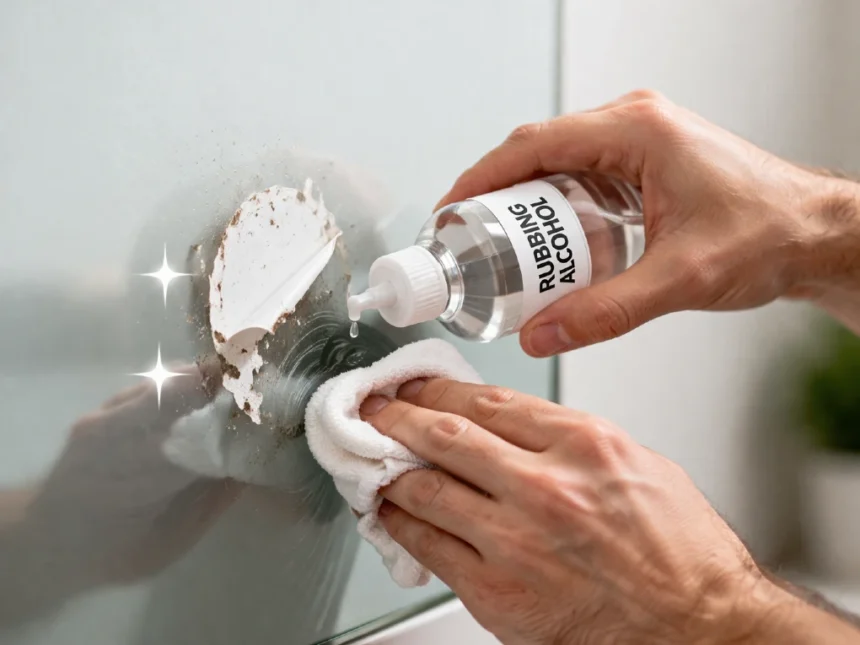
Rubbing Alcohol for Sticker Residue works because isopropyl alcohol acts as a solvent for many sticky compounds. It can help break down the bond of adhesive residue so it lifts more easily with a cloth, paper towel, or gentle scraper. Lowe’s recommends applying rubbing alcohol to a paper towel or cleaning cloth, rubbing gently, and letting it sit for a few minutes if the sticker is stubborn.
This approach is especially handy because alcohol usually evaporates faster than oily adhesive removers. That means less greasy cleanup afterward, which is one reason people like it for glass, metal, some plastics, and many hard household surfaces.
How to Remove Sticker Residue with Rubbing Alcohol
If you want the fastest method, keep it simple and patient. Most people go wrong by scrubbing too hard too soon.
Step 1: Remove as much of the sticker as possible
Peel off the top paper or plastic layer first. If some of the label remains, do not worry. You only need to expose the sticky part.
Step 2: Apply the rubbing alcohol
Dampen a cloth, paper towel, or cotton pad with rubbing alcohol. Do not soak the entire item unless the surface clearly tolerates it. Press the damp cloth onto the residue for a minute or two.
Lowe’s specifically suggests letting the alcohol sit for a few minutes if the sticker is not coming off easily. That waiting time often makes the biggest difference.
Step 3: Rub gently
Start wiping in small circles or short back-and-forth motions. You should notice the adhesive beginning to loosen and roll away.
Step 4: Lift thicker residue with a plastic edge
If glue remains, use a plastic card or plastic scraper to lift it gently. Avoid metal blades on glass, plastic, or painted finishes unless you are very sure the surface can handle it.
Step 5: Wipe clean
Once the sticky layer is gone, wipe the area with a clean damp cloth. Then wash with mild dish soap if needed to remove any remaining film.
Step 6: Dry the surface
Finish with a dry microfiber cloth or paper towel. This helps prevent streaks, especially on glass and stainless steel.
Easy Cleaning Tips That Save Time
The biggest time saver is not working harder. It is working smarter. A few small adjustments make Rubbing Alcohol for Sticker Residue much easier.
Let it sit before wiping
This is probably the most helpful tip of all. If you rub immediately, you may just smear the adhesive around. Giving the alcohol a minute or two to soften the residue makes cleanup faster.
Use layers for stubborn spots
If one application does not work, repeat it instead of switching to aggressive scraping. Two short treatments are usually safer than one forceful attempt.
Warm the sticker first if needed
For older stickers or thick labels, a little heat from a hair dryer can loosen the adhesive before you apply alcohol. Then the alcohol can work on the remaining sticky layer more effectively.
Use a plastic card, not your fingernails
Fingernails feel convenient, but they can scratch softer surfaces and make cleanup uneven. An old gift card or loyalty card usually works better.
Clean the surface afterward
Alcohol often evaporates cleanly, but a quick soap-and-water wipe can improve the final finish, especially on food containers, kitchen jars, or visible glass surfaces.
Rubbing Alcohol for Sticker Residue on Common Household Items
Different objects need slightly different handling. That is where a little surface awareness pays off.
Glass jars and mirrors
Glass is one of the easiest surfaces to clean. Apply the rubbing alcohol, let it sit briefly, then wipe and polish dry. This is especially helpful for jars you want to reuse in the kitchen, craft room, or bathroom.
Plastic storage bins
Plastic often responds well, but not always. Test first, because some plastics can dull or discolor. Use a soft cloth and avoid letting the alcohol pool on the surface for too long.
Stainless steel appliances
Sticker residue on a toaster, refrigerator, or water bottle can usually be removed without much trouble. Just wipe in the direction of the grain if the surface has one, then buff dry.
Car windows or windshield stickers
For glass sections, rubbing alcohol can help with leftover sticker marks. Just keep it off delicate tinted films or nearby interior materials unless you know they are safe.
Books, paper, and cardboard
This is where things get risky. Rubbing alcohol can stain, warp, or damage paper materials. In most cases, it is better to avoid alcohol on absorbent surfaces.
When Rubbing Alcohol Is Better Than Other Methods
People often compare rubbing alcohol with oils, vinegar, adhesive removers, or dish soap. Each has its place.
Rubbing alcohol is often the better choice when you want:
- Quick evaporation
- Less greasy residue
- A simpler cleanup
- A method that works on many hard surfaces
- Easy application with household supplies
Lowe’s also lists other methods like hand sanitizer and commercial products, but rubbing alcohol remains one of the most straightforward options because of how quickly it works and how widely available it is.
It may not be the best option for every surface, though. Oily removers sometimes work better on especially stubborn glue, while warm soapy water may be safer on delicate materials.
Common Mistakes to Avoid
Even a simple cleaning trick can go wrong if you rush it.
Here are the mistakes people make most often:
- Using too much alcohol on sensitive materials
- Skipping the patch test
- Scrubbing with rough pads or metal tools
- Working near open flame or heat
- Forgetting ventilation
- Using alcohol on painted or finished wood without testing
- Letting residue smear instead of soften first
The safety part matters. The CDC’s NIOSH guide notes that isopropyl alcohol is flammable and can cause irritation, and MedlinePlus warns against ingestion and accidental exposure. That makes it a product worth using carefully, even in small home cleaning jobs.
Safety Tips You Should Not Skip
Because Rubbing Alcohol for Sticker Residue sounds like such a simple household fix, people often forget basic precautions.
Keep these in mind:
- Work in a well-ventilated area
- Keep rubbing alcohol away from heat, sparks, and open flames
- Avoid contact with eyes
- Wear gloves if your skin is sensitive
- Never mix it casually with other chemicals
- Keep it away from children and pets
- Do not use it on food-contact surfaces without washing afterward
These steps are not overkill. They are just the smart way to clean without turning a small task into a preventable safety issue.
What to Do If the Residue Will Not Budge
Sometimes the problem is not the alcohol. It is the type of adhesive, how old it is, or how long it has baked onto the surface.
If the residue is still there after two or three rounds:
- Reapply alcohol and wait longer
- Add mild heat before the next attempt
- Use a plastic scraper more methodically
- Try washing off loosened layers between applications
- Switch to a commercial adhesive remover if the surface allows it
For especially tough industrial adhesives, manufacturers such as 3M offer purpose-made adhesive removers, which can be more effective than household options in some cases.
Frequently Asked Practical Questions
Does 70% or 91% rubbing alcohol work better?
For most household sticker residue, 70% is often perfectly adequate. Higher concentrations may evaporate faster, which can be helpful in some cases, but they also give the solvent less contact time unless you reapply.
Can rubbing alcohol damage plastic?
Yes, some plastics can haze, crack, or lose shine. Many hard plastics handle it fine, but patch testing is still the safest move.
Is rubbing alcohol safe for electronics?
It depends on the device and the finish. Small amounts on a cloth can work for some hard exterior surfaces, but you should never pour alcohol directly onto electronics or use it on sensitive displays without checking the manufacturer’s care instructions.
Will it remove sticker residue from clothing?
Usually this is not the best first choice for fabric. Fabrics vary too much, and alcohol can affect dyes or finishes. A fabric-safe adhesive removal method is often smarter.
Final Thoughts
Using Rubbing Alcohol for Sticker Residue is one of those small cleaning tricks that can save a surprising amount of time. It is simple, affordable, and effective on many common household surfaces, especially when you let it sit briefly before wiping. For glass, metal, ceramic, and many hard plastics, it can be the difference between ten minutes of frustrating scraping and a quick, clean finish. Lowe’s and 3M both support isopropyl alcohol as a practical cleaning option in the right situations, which is why this method remains so popular.
The key is to treat it like a useful tool, not a universal fix. Test first, use gentle pressure, and pay attention to safety. When you do that, even stubborn adhesive messes become much easier to handle. For many everyday labels, jars, containers, and surfaces around the house, this method earns its reputation as a reliable part of smart surface cleaning and quick home upkeep.