

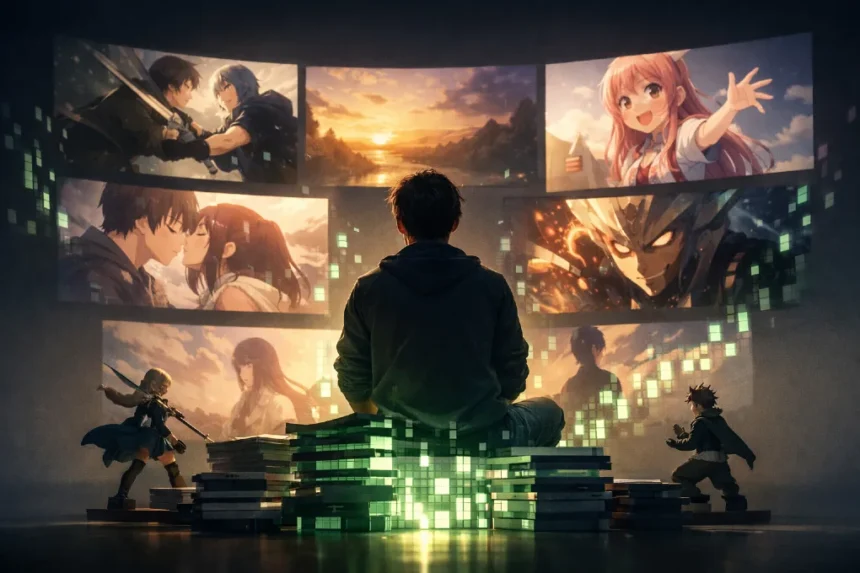
The story of Kissanime says a lot about how anime fans behave online. For years, the name kept appearing in searches, conversations, fan forums, and late night recommendation threads because it represented something bigger than one website. It reflected the way modern viewers wanted anime to feel available, searchable, community driven, and easy to watch on demand. When people discuss Kissanime today, they are often really talking about convenience, fandom culture, and the fast changing digital habits of anime audiences. The related LSI term Kisscartoon fits into that same conversation because it points to a similar habit: fans chasing accessible, always-on entertainment across niche communities and global audiences.
- Why Kissanime Still Matters in Anime Conversations
- The Digital Habits That Define Modern Anime Fans
- Kissanime and the Demand for Instant Access
- The Search Habit: Fans Rarely Start With a Platform
- Social Media Has Changed How Anime Fans Watch
- Kissanime, Archive Culture, and the Long Tail of Anime
- Why Security and Trust Now Matter More
- The Shift Toward Official Ecosystems
- What Kissanime Reveals About Fan Expectations
- The Role of Kisscartoon in Adjacent Viewing Habits
- The Future of Anime Fandom Is More Interactive
- Conclusion
That matters because anime is no longer a fringe interest in many parts of the world. The Association of Japanese Animations reported that the anime industry market reached a record 3.8407 trillion yen in 2024, with overseas demand playing a major role in that growth. Sony has also highlighted the size of anime fandom through Crunchyroll’s global footprint, while Crunchyroll’s own about page says the brand connects a community of more than 60 million registered users and 2.6 million subscribers. Those numbers make one thing clear: digital anime culture is now mainstream, global, and highly connected.
Why Kissanime Still Matters in Anime Conversations
Even though Kissanime shut down in August 2020, it still comes up because it became a symbol of a specific era of anime consumption. TorrentFreak described Kissanime and KissManga as two of the largest piracy sites when they went offline, noting that the shutdown affected millions of users. That detail matters less as trivia and more as a clue to fan behavior. People were not just looking for free episodes. They were looking for speed, breadth, and a massive back catalog in one place.
Modern anime fans still carry those expectations today. They want to discover a title fast, find out whether it is worth watching, jump between phone and laptop, compare subtitles, share clips, react in communities, and move to the next show without friction. Kissanime became memorable because it met some of those expectations, even while operating outside legal boundaries. That tension shaped the habits that now define anime viewing in the streaming era.
The Digital Habits That Define Modern Anime Fans
Anime viewers today are highly digital, highly social, and often very intentional about how they consume content. They are not simply passive watchers. They are active participants in online culture.
Some of the biggest habits include:
- Watching on mobile, desktop, and smart TV depending on context
- Following seasonal anime calendars closely
- Using social media to discover new titles
- Joining forums, Discord communities, and fan groups
- Comparing dubs, subs, and regional availability
- Binge watching older series after seeing clips or memes
- Tracking watchlists across multiple platforms
These habits help explain why the memory of Kissanime has lasted. It lined up with how fans behaved online long before mainstream streaming platforms fully adapted to anime fandom’s speed and intensity.
Kissanime and the Demand for Instant Access
One of the clearest lessons from Kissanime is that anime fans value instant access. If a show is hard to find, split across platforms, delayed by region, or buried under confusing menus, viewers get frustrated quickly. Digital audiences have been trained by modern streaming to expect immediacy.
That expectation is not unique to anime, but it has been especially powerful in anime culture because of how fandom works. Anime fans often follow seasonal release schedules, react in real time, and want to join the conversation while it is still fresh. If a new episode becomes a topic on social media, people want to watch it now, not three weeks later. When services fail to meet that demand, the audience starts searching elsewhere. Historically, Kissanime benefited from that behavior.
This is one reason legal anime platforms have pushed hard to improve. Convenience is not a side issue. It is one of the core drivers of user loyalty.
The Search Habit: Fans Rarely Start With a Platform
Another important habit is that many anime viewers begin with search, not with a streaming app. They search for a show name, a character, a meme clip, a season order, or a recommendation list. That search-first behavior helped names like Kissanime stay visible for years.
Modern anime fans often use a layered discovery pattern:
- They hear about a title from social media or friends.
- They search to understand what the show is about.
- They look up watch order, genre, reviews, and episode count.
- They decide whether the title matches their mood.
- Then they look for the easiest way to watch it.
That habit still defines fandom today. Anime is not just consumed through official homepages. It is found through clips, rankings, fan edits, reactions, and word of mouth. Kissanime became part of that ecosystem because it was deeply embedded in search behavior, just as Kisscartoon was in adjacent animation communities.
Social Media Has Changed How Anime Fans Watch
A major shift in recent years is that anime watching no longer begins and ends with the episode itself. It now extends across short-form video, memes, reaction posts, and fan commentary. Sony noted that the 2025 Crunchyroll Anime Awards drew a record 51 million votes worldwide, a striking sign of how engaged global anime audiences have become. Fans are not only watching anime. They are promoting it, debating it, remixing it, and turning it into online identity.
That changes digital habits in a big way. A viewer may discover a series from a trending opening theme clip, a funny scene on social media, or a thread ranking the best emotional episodes of the year. Then the viewer jumps into a longer relationship with the content through discussion boards, cosplay communities, recommendation chains, and fan art spaces. In that environment, Kissanime is remembered less as a destination and more as part of a broader digital era when anime fandom spread through community-first internet behavior.
Kissanime, Archive Culture, and the Long Tail of Anime
Anime fans are also different from many casual streaming audiences because they often care about depth. They do not just want the latest hit. They want obscure older titles, forgotten OVAs, rare classics, alternate cuts, and series that shaped the medium decades ago.
That archive mindset explains part of Kissanime’s lasting cultural memory. Fans often felt that one place could connect mainstream series and hard-to-find titles in a single searchable library. Even after the site’s shutdown, the desire behind that habit never disappeared.
Today, that same habit shows up in different ways:
- Fans build personal watchlists stretching years into the future
- They save recommendation threads for old titles
- They track missing regional releases
- They compare availability across services
- They discuss titles that are hard to stream legally in certain markets
This is one of the most important things to understand about modern anime audiences. Convenience matters, but so does completeness. Fans want libraries that feel deep, not just current. That expectation helped shape the long shadow of Kissanime and even the nostalgia around terms like Kisscartoon.
Why Security and Trust Now Matter More
Another modern habit is greater awareness of risk. People still care about convenience, but they also care more about privacy, malware, fake mirrors, and sketchy ads than they did years ago. The Motion Picture Association says piracy remains a threat as content moves online, and notes that one out of four content theft sites exposed consumers to malicious content. That statistic matters because it changes user behavior. Fans are not just asking, “Can I watch this?” They are also asking, “Can I trust what I click?”
This is one reason the digital habits of anime fans keep evolving. As audiences become more tech aware, trust becomes part of the viewing experience. A platform that feels reliable, well organized, and transparent has a major advantage over one that feels risky or unstable. In the post Kissanime era, that trust factor has grown more important.
The Shift Toward Official Ecosystems
The rise of larger official anime ecosystems is not just about licensing. It is about meeting the habits fans already have. Legal streaming services have increasingly tried to offer broader catalogs, faster simulcasts, dubbed options, curated discovery, and community-facing features because that is what modern viewers respond to.
Crunchyroll’s own numbers show the scale of demand, and Sony’s investor material emphasizes anime’s emotional and cultural pull across markets. At the same time, the overall anime market keeps expanding, especially overseas, according to the Association of Japanese Animations. In simple terms, the audience is too large and too engaged to treat anime as a niche afterthought. The platforms that win will be the ones that understand the habits that Kissanime exposed years ago: fans want access, speed, depth, and participation.
What Kissanime Reveals About Fan Expectations
The digital habits of modern anime fans can be summed up in a few clear expectations. Kissanime did not create them, but it made them visible.
| Fan Expectation | What It Looks Like Today |
|---|---|
| Fast access | Quick discovery and smooth playback across devices |
| Broad selection | New hits plus older and niche titles |
| Searchability | Easy finding of seasons, genres, and watch order |
| Community connection | Discussion, reactions, fan culture, voting, memes |
| Flexibility | Subs, dubs, mobile viewing, binge options |
| Reliability | Fewer broken links, less risk, more trust |
When a service meets these expectations, fans stick around. When it does not, they start searching again. That search habit is still one of the most powerful behaviors in anime culture.
The Role of Kisscartoon in Adjacent Viewing Habits
The LSI term Kisscartoon matters here because it shows that this pattern was not limited to anime alone. Animation audiences in general have long behaved like digital power users. They compare catalogs, chase nostalgia, search for hard-to-find content, and move fluidly between mainstream and niche recommendations.
That overlap matters because it reveals something broader about entertainment today. Fans of animation tend to be highly engaged, digitally fluent, and community oriented. They do not just consume content. They build routines around it. That behavior helps explain why names like Kissanime and Kisscartoon continue to show up in search intent long after the original sites themselves stopped being central.
The Future of Anime Fandom Is More Interactive
Modern anime fandom is moving toward something more interactive than basic streaming. Fans want live reactions, creator interviews, voting events, soundtrack clips, merchandise tie-ins, community commentary, and algorithmic recommendations that actually understand their tastes.
That is why the future of anime viewing will likely belong to platforms that do more than host episodes. They will need to support discovery, conversation, and fandom identity. The anime audience has matured into one of the most participatory entertainment communities online. The record industry numbers, the global voting activity around anime awards, and the scale of registered users on major anime platforms all point in the same direction. This audience is not fading. It is becoming more organized, more global, and more digitally expressive.
Conclusion
In the end, Kissanime remains relevant because it captures a truth about modern anime fans: they are fast-moving, highly connected, and deeply invested in how content is discovered and experienced online. The name still carries weight because it reflects a period when fans prioritized speed, depth, and easy access, and those priorities have not disappeared. They have simply evolved.
Today’s anime audience expects more from every digital touchpoint. They want strong catalogs, better search, smoother viewing across devices, a sense of community, and platforms they can actually trust. That is why the legacy of Kissanime still matters in conversations about anime culture, digital behavior, and even adjacent communities linked to Kisscartoon. The future of fandom will be shaped by services that understand those habits rather than ignore them. In many ways, anime viewing has become inseparable from broader digital culture, and that is exactly why this topic still resonates with fans now.