


If you’ve been around online business conversations lately, you’ve probably seen the word Eschopper pop up in a few different places. Sometimes it shows up in discussions about smarter e-commerce, sometimes it’s framed as a modern “commerce operating model,” and in a few corners of the internet you’ll even see it used in totally different contexts (like mobility). That can feel messy at first.
- What is Eschopper in technology?
- Why Eschopper matters right now
- The core technology pillars behind Eschopper
- Eschopper and the checkout problem everyone hates
- Real-world scenario: what Eschopper looks like for a growing brand
- How Eschopper connects to .NET and modern Microsoft stacks
- The “Eschopper” confusion: commerce framework vs mobility term
- Key benefits businesses chase with Eschopper
- Eschopper implementation checklist
- FAQ: Common questions about Eschopper
- Conclusion: Why Eschopper is changing the game
In the technology world, though, Eschopper is increasingly used to describe a modern, modular way of building digital commerce experiences that are faster to launch, easier to scale, and a lot more data-aware than the old “one big platform does everything” approach. It’s less about a single tool and more about a smarter framework: composable systems, automation, real-time analytics, AI-driven personalization, and security built into the workflow.
And here’s why people care: digital commerce has grown up. Customers expect speed, trust, and convenience on every device. Businesses need to move quickly without breaking their stack every time the market shifts.
So let’s unpack what Eschopper means in technology, why it’s being treated like a game-changer, and how it connects to the real systems teams are building today.
What is Eschopper in technology?
In the tech context, Eschopper is best understood as a modern digital commerce approach that blends:
- Modular architecture (so you can swap parts without rebuilding everything)
- Automation (so operations don’t collapse as orders grow)
- Data intelligence (so decisions are based on behavior, not guesses)
- AI-driven personalization (so customers see what they actually care about)
- Security-first design (because trust is part of the product)
If that sounds close to “composable commerce,” that’s not an accident. Gartner popularized the composable commerce concept as a way to break monolithic commerce suites into smaller packaged business capabilities (PBCs), like search, promotions, content, and checkout, that can be assembled and improved over time. You’ll see Eschopper discussed in a very similar spirit. A useful overview of that Gartner-origin idea is summarized in Capgemini’s composable commerce point of view document and in commercetools’ discussion of the trend.
Eschopper vs “traditional e-commerce”
Traditional e-commerce stacks often look like this: a single platform handles storefront, CMS, product catalog, cart, checkout, payments, promotions, analytics, and integrations. That can be convenient, until you need to change something quickly.
With Eschopper thinking, you design commerce like a system of building blocks. You can upgrade search without touching checkout. You can change your product recommendation engine without rewriting your storefront. You can integrate new payment methods without waiting months.
Here’s a simple comparison.
| Area | Traditional commerce stack | Eschopper-style approach |
|---|---|---|
| Speed of change | Slow, tied to platform releases | Faster, swap components independently |
| Personalization | Limited, often plugin-based | Data-driven, AI-friendly by design |
| Scaling | Expensive, sometimes all-or-nothing | Scale specific services as needed |
| Integrations | Heavy, brittle connectors | API-first, event-driven patterns |
| Security posture | Often bolted on | Designed into workflows and policies |
Why Eschopper matters right now
E-commerce isn’t “new” anymore. What’s new is the pressure.
- Mobile is dominant in browsing and increasingly in sales. Shopify reported mobile commerce sales projected at $2.07 trillion in 2024 and noted that in 2025 mobile phones accounted for 77% of e-commerce site visits.
- Cart abandonment is still painfully high. Baymard’s long-running analysis places average cart abandonment around 70% (based on many studies).
- Security and trust issues are not optional. IBM reported the global average cost of a data breach reached $4.88 million in 2024.
Put those together and you get a clear story: customers are browsing on mobile, dropping off during checkout, and making decisions based on whether they trust you with their data and payment.
Eschopper matters because it pushes teams to build commerce experiences that are fast, flexible, and measurable, while making reliability and security part of the baseline.
The core technology pillars behind Eschopper
To keep this grounded, let’s look at the key building blocks that typically show up when people talk about Eschopper in technology.
1) Composable architecture and modular services
Instead of one platform doing everything, commerce is broken into services like:
- Product catalog
- Pricing and promotions
- Search and merchandising
- Cart and checkout
- Payments
- Identity and customer profiles
- Order management
- Shipping and fulfillment
- Analytics and experimentation
These pieces communicate via APIs and events. That’s how you avoid the classic scenario where a “small change” turns into a three-month rewrite.
2) AI-driven personalization (without the creepiness)
Personalization used to mean “people who bought X also bought Y.” Today it’s more like:
- Search results that adapt to intent
- Recommendations that consider context and availability
- Dynamic bundles and offers
- Personalized landing pages by segment
- Predictive replenishment and subscription nudges
In Eschopper-style systems, personalization is not a last-minute plugin. It’s treated as a first-class capability that sits close to data, analytics, and experimentation.
3) Automation that actually reduces operational load
A big reason commerce platforms fail at scale isn’t traffic, it’s operations. Teams drown in manual tasks:
- Inventory sync issues
- Refund workflows
- Fraud reviews
- Pricing updates
- Order exceptions
- Customer support load spikes
Eschopper thinking prioritizes automation across the pipeline, for example:
- Auto-tagging orders that match fraud signals
- Smart routing to fulfillment locations
- Alerting on inventory anomalies
- Automated recovery when a payment provider is down
- Real-time rollback for broken promotions
4) Security-first commerce design
Security is not just firewalls. In modern commerce, it touches:
- Payment handling and tokenization
- Account takeover prevention
- Bot mitigation for scraping and fake carts
- Fraud detection and chargeback reduction
- Privacy compliance and data minimization
- Access control for internal admin systems
IBM’s breach cost numbers are a reminder that security failures are business failures.
Eschopper and the checkout problem everyone hates
Let’s talk about the moment where most revenue leaks: checkout.
Baymard’s research consistently shows the average cart abandonment rate hovering around 70%. That doesn’t mean 70% is “your fault,” but it does mean checkout is where technical choices really show up in business results.
From an Eschopper perspective, checkout is treated as a high-performance product, not just a form.
That usually leads to choices like:
- Fast, mobile-first checkout UI
- Multiple payment methods, especially local options and wallets
- Strong error handling and retry logic
- Clear shipping and delivery estimates
- Identity flows that don’t punish guest users
- Fraud checks that don’t block legitimate buyers
In other words, Eschopper is where “customer experience” becomes an engineering discipline.
Real-world scenario: what Eschopper looks like for a growing brand
Imagine a mid-sized retailer doing $5M to $20M yearly online. They’ve outgrown their starter platform, but they’re nervous about rebuilding.
An Eschopper-style plan usually looks like phased modernization:
- Keep the storefront running
- Replace one capability at a time (search, then checkout, then catalog, etc.)
- Centralize analytics and event tracking early
- Layer in personalization and experimentation once data is clean
- Strengthen security controls as complexity grows
What’s important here is the “one capability at a time” approach. That’s the difference between a controlled evolution and a risky rewrite.
How Eschopper connects to .NET and modern Microsoft stacks
Since your site focuses on trending .NET, let’s make this practical.
A lot of teams building modern commerce stacks use .NET for the services layer because it’s fast, mature, and plays nicely with cloud-native patterns.
Common Eschopper-aligned building blocks in a .NET ecosystem include:
ASP.NET Core APIs for packaged business capabilities
Think: a Promotions service, a Pricing service, a Cart service, an Order service, each independently deployed.
Typical patterns:
- REST APIs for direct interactions
- gRPC for internal service calls where latency matters
- Background workers for fulfillment, notifications, and data sync
Event-driven commerce with queues and streams
Eschopper-style systems often run on events like:
- OrderPlaced
- PaymentAuthorized
- InventoryReserved
- ShipmentDispatched
- RefundIssued
On Azure, that might be Service Bus or Event Hubs. In hybrid setups, Kafka is common too.
Identity, security, and policy control
In commerce, identity is not just “login.” It’s also:
- roles for admin users
- access policies for customer service teams
- audit logs
- session security
.NET integrates well with modern identity providers and policy-based authorization, which matters when internal tooling grows fast.
Observability as a first-class requirement
When checkout breaks, you don’t want mystery. Eschopper-aligned teams instrument everything:
- traces across services
- structured logs
- real-time dashboards
- alerts tied to business metrics (conversion rate dips, payment failures, etc.)
This is one of the most underrated advantages of the Eschopper approach: you can see what’s happening and fix it faster.
The “Eschopper” confusion: commerce framework vs mobility term
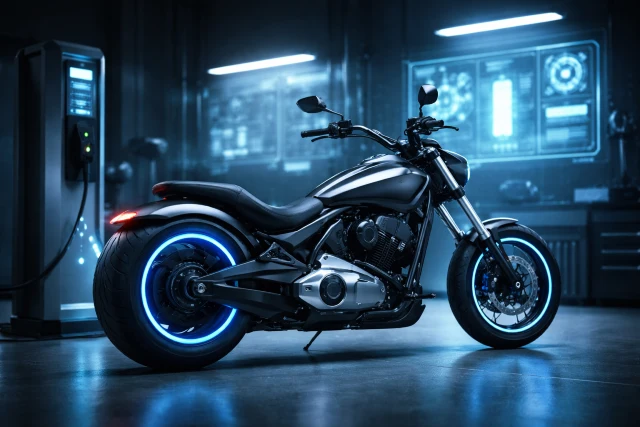
You might also encounter “eschopper” used to describe electric chopper-style scooters in some articles. That’s a different usage and not what this article focuses on. In technology discussions, Eschopper is most often framed as a digital commerce concept or platform-style approach tied to scalability, personalization, automation, and security.
If you’re writing for a tech audience, anchoring the term clearly to commerce architecture early (like we did here) prevents confusion and keeps the page aligned with the search intent.
Key benefits businesses chase with Eschopper
When companies adopt Eschopper-style thinking, they’re usually chasing a mix of business and engineering wins:
- Faster launches of new features and campaigns
- Better mobile experiences and conversions
- Fewer outages during peak traffic moments
- Lower operational overhead through automation
- Stronger security posture and reduced fraud exposure
- More accurate decision-making with real-time analytics
And the bigger picture: commerce becomes an adaptive system, not a fragile website.
Eschopper implementation checklist
Here’s a practical checklist teams often follow when moving toward an Eschopper-style architecture:
- Define your packaged business capabilities (catalog, cart, checkout, etc.)
- Pick an API strategy (REST, GraphQL, or both)
- Implement event tracking and analytics early
- Build a unified customer profile approach (privacy-aware)
- Add an experimentation layer (A/B tests, feature flags)
- Establish security baselines (MFA, rate limiting, bot mitigation)
- Instrument observability (traces, logs, metrics)
- Plan graceful degradation for third-party outages (payments, shipping, tax)
This is the part that “changes the game”: Eschopper isn’t just tech, it’s how you run change safely.
FAQ: Common questions about Eschopper
Is Eschopper a single product or a framework?
In most technology discussions, Eschopper is used more like a framework or operating model for modern digital commerce. It can be implemented with many different tools and platforms, as long as the core ideas are followed: modularity, automation, data intelligence, and security-first design.
How is Eschopper different from headless commerce?
Headless commerce focuses on separating the front end from the back end. Eschopper thinking usually goes further by emphasizing composable services, event-driven automation, analytics, and security practices across the whole commerce lifecycle.
Does Eschopper help with cart abandonment?
Indirectly, yes, because it pushes teams to treat checkout as a high-performance capability: faster mobile flows, cleaner integrations, better error handling, smarter payment options, and stronger trust signals. Given industry-wide abandonment rates around 70%, improvements here can be meaningful.
Is Eschopper only for big companies?
No. Smaller teams often benefit the most, because modular systems let them improve one capability at a time without a huge rebuild. The key is implementing it in phases and keeping the architecture simple at the start.
Conclusion: Why Eschopper is changing the game
Technology has shifted the rules of online business. Customers arrive from mobile, expect speed, and abandon the moment friction shows up. At the same time, security risks have become expensive enough to threaten entire brands, with breach costs averaging millions.
That’s exactly why Eschopper is gaining traction. It represents a more modern way to build and run commerce systems: modular where it needs to be, automated where it can be, data-driven by default, and secure enough to earn trust. Instead of betting everything on a single platform, Eschopper thinking encourages businesses to evolve capability by capability, staying resilient as markets and customer behavior change.
And if you’re building in .NET, this approach maps naturally to modern ASP.NET Core services, event-driven messaging, strong identity controls, and the observability stack you need to keep experiences reliable at scale.
In the last few years, electronic commerce has expanded far beyond “a website with a cart,” and that bigger reality is exactly what Eschopper is responding to.