


If your home gets messy faster than you can tidy it, you’re not lazy. You’re living in a space that probably doesn’t have “drop zones” for the stuff you touch every day. Shoes near the door, chargers on the sofa, mail on the counter, hair tools on the vanity, kids’ toys migrating across the living room, and that random collection of keys you can’t stop losing.
- What is a Burr Basket?
- Why a Burr Basket works when other organizing tips fail
- Benefits of using a Burr Basket in daily life
- Where to place a Burr Basket for maximum impact
- How to choose the right Burr Basket
- The simple “Burr Basket rules” that keep it from becoming a mess
- A realistic daily routine using a Burr Basket
- Burr Basket ideas for different lifestyles
- Common mistakes that make a Burr Basket stop working
- Burr Basket vs other popular organizing solutions
- Quick wins: 7 ways to make your Burr Basket look neat, not messy
- Frequently asked questions
- The bottom line
That’s exactly where a Burr Basket earns its keep.
A Burr Basket is a simple, everyday container you place where clutter naturally happens so you can toss items in quickly, keep surfaces clear, and still find everything later. It’s not about perfection or turning your home into a showroom. It’s about making “neat” the default, even on busy days.
And there’s a reason this kind of small organization tool works. Research shows visual clutter competes for your attention and can make focusing harder, because multiple stimuli in your environment fight for your brain’s processing resources. That effect is documented in neuroscience research by McMains and Kastner (2011). Even the feeling of a cluttered home has been associated with stress patterns in everyday family life research linked to cortisol, the stress hormone.
So yes, a basket sounds basic. But used correctly, a Burr Basket is one of the easiest ways to reduce the day-to-day mess that drains your time and energy.
What is a Burr Basket?
A Burr Basket is a designated “catch-all” basket placed strategically in your home to collect common loose items before they become piles.
Think of it as a controlled landing spot for:
- Keys, wallets, sunglasses
- Mail, receipts, small packages
- Remotes, controllers, headphones
- Chargers and cables
- Kids’ small toys and art supplies
- Pet leashes, treats, grooming tools
- Beauty items you use daily
- Small laundry items like socks or scarves
The magic isn’t the basket itself. It’s the system around it: the placement, the rules, and the routine for emptying it.
Why a Burr Basket works when other organizing tips fail
Let’s be real: most organizing methods collapse because they require you to do too much in the moment. You’re told to file, sort, label, or put everything back “properly” every time. That’s not how people live.
A Burr Basket works because it respects two truths:
- You need a fast way to reset a room in under 60 seconds.
- You need a consistent place to find small things later.
It also reduces “visual noise.” When lots of items sit out, your brain keeps noticing them, even if you think you’re ignoring them. In research on attention and visual competition, multiple stimuli can interfere with selective attention processes, which helps explain why clutter can feel mentally tiring.
Benefits of using a Burr Basket in daily life
Here’s what most people notice after adding a Burr Basket (and using it the right way):
- Cleaner surfaces, faster: Counters and tables stop becoming storage shelves.
- Less time hunting: You know where the “small stuff” lives.
- Easier routines: Morning and evening resets take minutes, not an hour.
- Less stress friction: Fewer arguments that start with “Where did you put my…”
- Better focus at home: Less visual clutter competing for attention.
And there’s a practical money side too. Clutter often leads to duplicate purchases because you can’t find what you already own. Some industry research and consumer behavior reporting focus on these “hidden costs of clutter,” including replacement buying and storage spillover.
Where to place a Burr Basket for maximum impact
Placement matters more than style. A Burr Basket should live where clutter naturally appears, not where it looks cute.
Entryway Burr Basket
This is the highest-return spot in most homes.
Use it for:
- Keys and cards
- Sunglasses
- Mail and small deliveries
- Dog leash or car fob
Tip: Put a small tray inside the basket for tiny items like rings, earbuds, or coins, so they don’t disappear to the bottom.
Living room Burr Basket
The living room becomes messy because it’s a “multi-use” zone.
Use it for:
- Remotes and controllers
- Chargers and cables
- Throw blanket overflow
- Kids’ small toys after playtime
This is the basket that saves your coffee table from becoming a museum of random objects.
Kitchen counter Burr Basket
If paper clutter stresses you out, this one helps immediately.
Use it for:
- Mail to sort later
- Coupons, receipts, small notes
- School papers, permission slips
- Spare batteries, tiny tools
Rule: Nothing stays here forever. This basket needs a short emptying routine (we’ll get to that).
Bedroom or vanity Burr Basket
This is perfect if your “getting ready” routine spreads out.
Use it for:
- Hair tools (after cooling)
- Skincare you’re actively using
- Makeup bag, brushes
- Jewelry you remove at night
If you share a room, consider two smaller baskets instead of one big one to prevent a daily “whose stuff is this?” debate.
Laundry area Burr Basket
This one fixes the “limbo items” problem.
Use it for:
- Socks missing a mate
- Items that need mending
- Things you found in pockets
- Accessories that don’t belong in the hamper
How to choose the right Burr Basket
A Burr Basket should fit your space and your habits. Use these criteria instead of guessing.
Size
Pick the smallest basket that can handle 2 to 3 days of your typical clutter.
- Too small: you’ll overflow and quit.
- Too big: it becomes a black hole where things vanish.
Shape
- Rectangular baskets sit neatly on shelves and consoles.
- Round baskets work well on floors beside sofas or desks.
- Low, wide baskets are best for remotes and tech.
Material
- Woven baskets look warm and blend into decor.
- Plastic or metal baskets are easy to wipe (great for kitchens).
- Fabric bins are lightweight and safe for kids’ rooms.
Visibility
If you constantly forget what you own, choose a basket that’s more open or use a basket with compartments. If you prefer a calm look, choose a deeper basket that hides the contents slightly.
The simple “Burr Basket rules” that keep it from becoming a mess
A basket can solve clutter, but it can also become clutter if you don’t give it boundaries. Here are the rules that make a Burr Basket actually work.
Rule 1: One basket, one purpose
Entryway basket is not for toy storage. The kitchen basket is not for cables. When a basket holds everything, it holds nothing.
Rule 2: No perishable paperwork
Mail is fine. Important documents are not. If something needs action (payment, signing, filing), it should move out during your emptying routine.
Rule 3: Empty on a schedule
Most homes do well with:
- Entryway: daily quick check
- Living room: every evening or every other day
- Kitchen paper basket: 2 to 3 times per week
Rule 4: If you can put it away in under 10 seconds, do it
The basket is for moments when you’re busy. If the right home is right there, just place the item properly and keep the basket from overfilling.
A realistic daily routine using a Burr Basket
Here’s a routine that feels human, not obsessive.
The 2-minute evening reset
- Walk through your main room with the Burr Basket (or empty the one already there).
- Toss in loose items from surfaces and floors.
- Put only the obvious items away (shoes to rack, dishes to sink).
- Leave the rest in the basket for the next “deep reset.”
This is how you keep a space neat even when you’re tired.
The 10-minute weekly reset
Once a week, do this:
- Sort the basket into three quick piles:
- Put away
- Trash/recycle
- Action items (paperwork, returns, repairs)
Then finish the action pile immediately if it’s quick. If it’s not, place those items in a separate folder or tray, not back into the Burr Basket.
Burr Basket ideas for different lifestyles
For families with kids
Use a Burr Basket as a daily “toy sweep” tool.
Try this:
- One medium basket in the living room for small toys
- A second basket near the entryway for school items
Make it a game: set a 3-minute timer, everyone tosses their items into the basket, then adults do the final sorting later.
For small apartments
Space is tight, so go vertical:
- Put a Burr Basket on a shelf near the door
- Choose stackable baskets for a closet top shelf
- Use a slim basket beside the couch for remotes and chargers
For work-from-home setups
A desk-based Burr Basket keeps your workspace from turning into chaos.
Use it for:
- Cables, adapters, flash drives
- Notebooks and sticky notes
- Headphones and charging bricks
If your desk is a focus zone, hiding micro-clutter helps reduce distractions tied to competing visual stimuli.
For pet owners
Create a pet station basket near the door:
- Leash and harness
- Wipes and poop bags
- Brush or lint roller
- Treat pouch
That one basket can save you from the frantic “We’re late, where’s the leash?” moment.
Common mistakes that make a Burr Basket stop working
Mistake 1: Treating it like permanent storage
A Burr Basket is a temporary holding zone. If it never gets emptied, it becomes a messy drawer without a drawer.
Mistake 2: Putting it where clutter doesn’t happen
If the mess forms on the coffee table, the basket needs to be near the coffee table. Organization fails when it fights your natural behavior.
Mistake 3: Choosing style over function
A tiny decorative basket looks nice, but if it can’t hold your daily items, you’ll end up with piles again.
Mistake 4: One basket for the whole house
One Burr Basket can work in a studio. In a larger home, you usually need 2 to 4 baskets placed in the main clutter zones.
Burr Basket vs other popular organizing solutions
Here’s a quick comparison so you can choose what fits your space.
| Solution | Best for | Downside | Where Burr Basket wins |
|---|---|---|---|
| Drawer organizers | Small items in one place | Requires putting things away every time | Faster “drop and go” habit |
| Storage boxes with lids | Long-term storage | Out of sight, out of mind | Better for daily-use items |
| Shelving + bins | Larger categories | Can still look busy | Cleaner surfaces instantly |
| Hooks and wall racks | Keys, bags, coats | Visual clutter remains | Hides items while keeping them accessible |
| Catch-all tray | Small daily items | Too small for real clutter | Holds more without looking messy |
A Burr Basket isn’t “better” than everything else. It’s simply the easiest entry point because it reduces friction.
Quick wins: 7 ways to make your Burr Basket look neat, not messy
- Use a smaller pouch inside for earbuds, keys, and tiny accessories.
- Add a divider (even a folded cloth) to separate paper from objects.
- Limit it to one color family (black tech items can go in a small black pouch).
- Keep it near a wall or console so it feels intentional.
- Match it to one material in the room (wood tones, metal accents, or fabric).
- Empty before it reaches the top. A half-full basket looks calm. A full basket looks like a problem.
- Label the basket internally (a small tag inside) if you share a home and people “re-home” items randomly.
Frequently asked questions
Is a Burr Basket just a fancy name for a junk basket?
A Burr Basket only becomes “junk” when it has no rules. When it has a purpose, a location, and a simple emptying routine, it’s a practical tool that keeps your home looking tidy without demanding constant effort.
How many Burr Basket setups do I need?
Most households do best with 2 to 4: entryway, living room, kitchen counter, and optionally bedroom or office. Start with one Burr Basket in the messiest zone, build the habit, then add more if needed.
How often should I empty a Burr Basket?
Light use: every 2 to 3 days. Heavy use (families, busy entryway): daily quick emptying plus a weekly deeper sort.
What if I keep losing things inside the basket?
Use a small inner tray or pouch for tiny essentials. Also keep the basket shallow enough that items aren’t buried. A good Burr Basket makes finding things easier, not harder.
Can a Burr Basket help with paper clutter?
Yes, as long as it’s a temporary stop. Pair it with one follow-up step: a folder, tray, or envelope where “action papers” go immediately during your emptying routine.
The bottom line
Neat spaces aren’t created by motivation. They’re created by systems that work when you’re busy, distracted, or tired. A Burr Basket is one of those systems because it meets you where you already are. It catches the clutter at the moment it appears, reduces visual noise, and makes it easier to reset your space quickly.
If you want a home that feels calmer without spending every weekend organizing, start small: place a Burr Basket where clutter happens most, set one simple emptying schedule, and let the habit do the heavy lifting. Over time, your counters stay clearer, your routines get smoother, and your home feels more like a place to breathe.
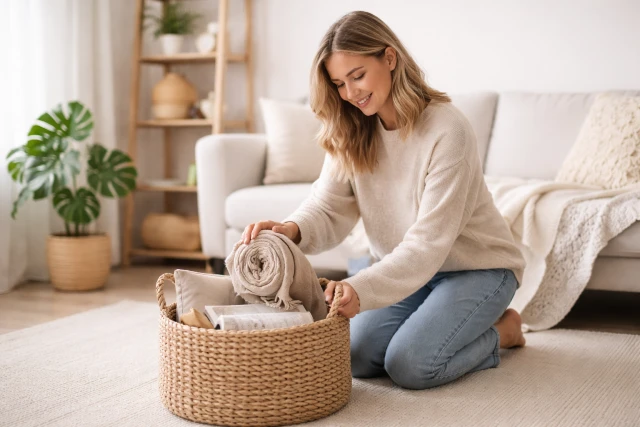
In the end, you’re not chasing perfection. You’re building a livable rhythm, and a simple woven basket can be the surprisingly effective tool that keeps it all together.