

Ask ten people what they miss about the 1980s and you’ll hear ten different answers. Someone will say the music was bigger. Someone else will swear movies were more fun. Another person will talk about arcades, mixtapes, and staying up late to watch music videos like it was an event.
- Why “Group 80s” nostalgia hits differently
- The MTV launch that changed how music worked
- Michael Jackson’s Thriller era and the new definition of a superstar
- Prince, Purple Rain, and the moment genre walls started cracking
- Live Aid 1985 and the day music felt like a global force
- Blockbuster cinema gets its 80s glow-up
- The NES and the start of modern gaming culture
- Mixtapes, cassettes, and the romance of making your own soundtrack
- “Walk This Way” and the moment cross-genre collaboration became mainstream
- The Simpsons arrives and the new era of animated mainstream begins
- The style moments that still keep returning
- A quick “Group 80s” list of moments people still talk about
- Frequently asked questions
- Conclusion
That shared feeling is exactly what Group 80s nostalgia is about. It’s not just “old stuff” it’s a whole vibe that still shows up in today’s playlists, fashion drops, movie reboots, and even the way we talk about pop stardom.
Now let’s take a proper trip back and relive the moments that made the decade feel larger than life and somehow still feel iconic today.
Why “Group 80s” nostalgia hits differently
The 80s were loud on purpose. Colors were bright. Hair was bigger. Pop stars felt like superheroes. Even “ordinary” entertainment moments became shared cultural memories because people watched and listened together.
A big reason the decade still feels so vivid is that media was changing fast. Cable TV expanded, home video exploded, music formats evolved, and technology started moving from “only for experts” to “for everyone.”
One simple example is how music moved with you. Portable listening became a lifestyle, and the Walkman era helped make music feel personal in a new way. The Smithsonian has described how the Walkman helped change listening habits and culture around portability and private listening.
So when people say “the 80s were iconic,” they’re not only praising the art. They’re remembering how the decade made entertainment feel like part of everyday identity.
The MTV launch that changed how music worked
If you want one moment that reshaped entertainment, it’s MTV going live.
On August 1, 1981, MTV launched and immediately pushed music into a visual-first era, starting with “Video Killed the Radio Star.” History.com documents the launch date and the first video, and explains how MTV began as a cable experiment that quickly became a culture machine.
Why it still matters:
- Music videos became a form of storytelling, not just promotion
- Fashion, dance, and attitude became part of the “song”
- Artists who understood visuals gained a huge edge
Even now, the DNA of MTV lives on in TikTok performance culture, YouTube visuals, and the way fans expect an “era” not just an album.
Michael Jackson’s Thriller era and the new definition of a superstar
The Group 80s didn’t invent celebrity, but they absolutely upgraded it. And nothing captures that better than the Thriller era.
Guinness World Records lists Michael Jackson’s “Thriller” as the world’s best-selling album, noting estimated sales exceeding 67 million copies worldwide.
Why it still feels iconic:
- The music sounded huge and cinematic
- The visuals set a new standard for pop performance
- The era created a blueprint that modern pop stars still follow
When people say “they don’t make stars like that anymore,” they’re usually thinking of this level of cultural dominance.
Prince, Purple Rain, and the moment genre walls started cracking
Prince was one of those artists who made the decade feel fearless. The Purple Rain era blended rock, R&B, pop, and performance into something that didn’t fit neatly into one label.
Purple Rain’s legacy is tied to how it proved you could be experimental and massively popular at the same time. It’s still referenced whenever artists try to mix genres without asking permission.
Live Aid 1985 and the day music felt like a global force
Some concerts are great. A few become history.
Live Aid, held July 13, 1985, was staged simultaneously in London and Philadelphia and became one of the biggest televised music events ever. Britannica notes the date and estimates the audience at about 1.5 billion television viewers worldwide.
Why it still lands today:
- It proved music could mobilize global attention
- It made “live performance” feel world-scale
- It created a shared moment people still debate, replay, and remember
Whether you watch clips for the vocals, the crowd energy, or the cultural context, Live Aid still feels like a peak “everyone’s watching” event.
Blockbuster cinema gets its 80s glow-up
The 80s were a golden age for movies that were fun, rewatchable, and instantly quotable. It’s the decade that made “blockbuster” feel like a lifestyle.
One symbol of that era is E.T. The Extra-Terrestrial. Axios’ history of the highest-grossing films notes that E.T. became the highest-grossing film of all time in 1982, taking the title in the post Star Wars era.
And then you get the run of films that still dominate pop references:
- Sci-fi adventures with heart
- Teen comedies that shaped coming-of-age tropes
- Action films that defined “hero energy”
- Family movies that became holiday traditions
A quick shoutout to Back to the Future as well, because it’s one of those films that never seems to age. Britannica lists it as part of the blockbuster trilogy beginning in 1985.
The NES and the start of modern gaming culture
If you grew up with gaming, you can trace a lot of today’s game culture back to the 80s.
Nintendo’s NES launch in U.S. test markets happened in 1985, and Wired highlights that limited launch and explains how it helped revive the console market after the early 80s crash.
Why it still feels iconic:
- It helped normalize gaming as a home activity
- It created franchises and play habits that still exist
- It turned “game night” into a real thing for families and friends
Arcades were still huge too, but the living-room takeover is what made gaming permanent.
Mixtapes, cassettes, and the romance of making your own soundtrack
There’s a reason “mixtape energy” still gets referenced in 2026. Making a mixtape was effort. It was taste. It was a message.
Cassettes weren’t just a format, they were culture. Visual Capitalist’s format history shows how cassettes grew through the decade and peaked in revenue by the late 80s, while CDs began rising after their early 80s introduction.
What made the moment iconic:
- People curated music manually
- Sharing music felt personal and intentional
- Your playlist wasn’t an algorithm, it was you
That’s why the nostalgia stays. It wasn’t just listening. It was crafting.
“Walk This Way” and the moment cross-genre collaboration became mainstream
The 80s also gave us major cultural bridge moments, where genres that felt separate suddenly collided.
WBUR’s interview feature on the Run-D.M.C. and Aerosmith collaboration discusses how “Walk This Way” became a major moment for rap’s mainstream visibility, including the role of producers and how the record landed culturally.
Why it still matters:
- It showed hip-hop and rock could share the stage
- It opened doors for cross-genre collaborations later
- It changed what mainstream radio and TV were willing to play
Today, genre-mixing is normal. Back then, moments like this helped make it possible.
The Simpsons arrives and the new era of animated mainstream begins
If you want a late-80s moment that shaped TV for decades, it’s The Simpsons becoming a full series.
Britannica’s “Today in History” entry notes that The Simpsons premiered as an independent series on December 17, 1989, debuting with a Christmas special that helped launch one of TV’s most enduring shows.
Even people who don’t watch it regularly still recognize the impact:
- Animated TV became a serious prime-time contender
- Satire became mainstream comfort viewing
- Catchphrases became part of everyday speech
It was a door-opening moment that influenced decades of comedy.
The style moments that still keep returning
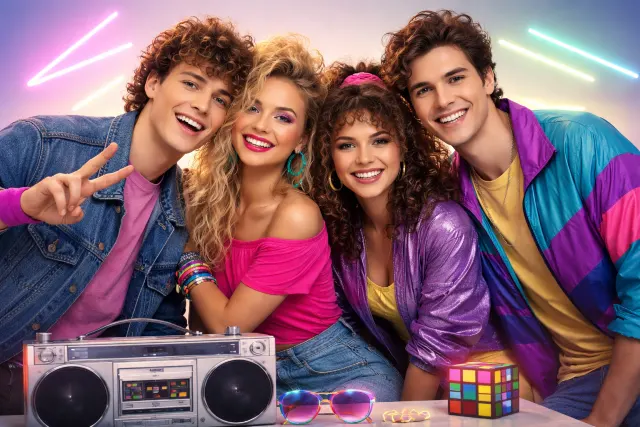
The funniest part about 80s fashion is that it never really left. It just rotates back with new names.
Iconic entertainment style markers:
- Power suits and shoulder pads
- Neon, leather jackets, and bold prints
- Big hair and big accessories
- Streetwear beginnings tied to music scenes
Every time a modern film or artist leans into neon lighting and synth sounds, you can feel the 80s fingerprint.
A quick “Group 80s” list of moments people still talk about
Here’s a fast roundup of the kind of moments that instantly trigger nostalgia:
- MTV changing music into a visual era
- Thriller redefining “global pop superstar”
- Live Aid proving concerts could be worldwide events
- Blockbusters like E.T. dominating the global box office conversation
- NES helping build the modern home gaming world
- The Walkman making music portable and personal
- The Simpsons launching an animated TV legacy
Frequently asked questions
What made 80s entertainment so memorable?
It was a decade where music, movies, and technology were expanding quickly, and mass audiences still experienced entertainment together through TV, radio, theaters, and physical media.
Why do people say the 80s “invented” modern pop culture?
Because major systems that still shape entertainment today took off in the 80s: music video culture, global mega concerts, blockbuster franchises, home console gaming, and portable music listening.
Are 80s trends really coming back?
Yes, and they never fully left. You see them in synth sounds, neon visuals, remakes, and fashion cycles that keep reusing 80s silhouettes and styling.
Conclusion
The reason Group 80s moments still feel iconic is simple: the decade didn’t just create entertainment, it created shared experiences. People watched the same premieres, replayed the same tapes, argued about the same stars, and felt like culture moved in big public waves. MTV’s launch turned songs into visuals, Live Aid turned concerts into global events, and formats like the Walkman and cassette tapes made music personal in new ways.
Even decades later, the 80s still supplies today’s entertainment with ideas, aesthetics, and energy. That’s why it keeps getting rebooted, remixed, and referenced. It’s not only nostalgia, it’s a foundation.
If you want a simple way to describe it, the 80s built a lot of what we now call popular culture.