



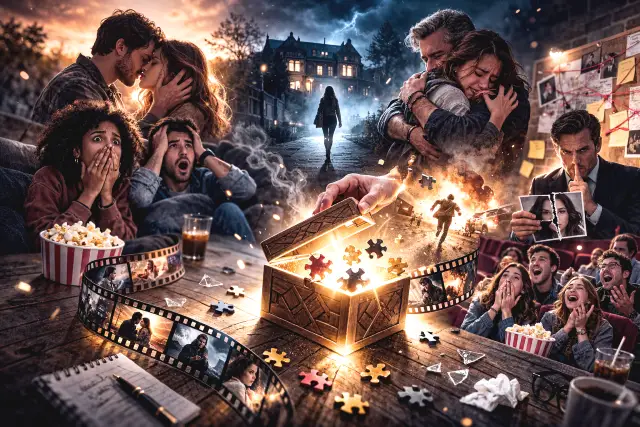
If you have been seeing Master in the Box pop up in comments, reels, recap threads, and “wait, did you catch that?” group chats, you are not alone. People are using Master in the Box as both a title and a shorthand for a very specific kind of entertainment experience: the story that feels like it is daring you to solve it.
- What “Master in the Box” means in entertainment culture
- The best scenes fans replay in Master in the Box stories
- Biggest twists that define Master in the Box energy
- Why fans react so strongly to Master in the Box moments
- A quick table: scene types and typical fan reactions
- Common questions viewers ask about Master in the Box style stories
- How to watch Master in the Box stories without ruining the fun
- The fan reaction patterns you will see everywhere
- Why the “box” theme never gets old
- Conclusion: why Master in the Box stays in your head
You know the vibe. A character enters a situation that seems simple, then the rules shift. The camera lingers on a detail that feels too deliberate to be random. Someone who appears harmless suddenly knows too much. The audience starts keeping mental notes, rewinding scenes, and trading theories like currency. And when the twist finally lands, half the room shouts “I knew it,” while the other half sits there stunned, trying to replay the whole story in their head.
That is exactly why Master in the Box works as a fan phrase. It captures the idea of a “mastermind” manipulating the story from inside a box of secrets, constraints, and carefully planted clues. It is also closely connected to the broader “mystery box” style of storytelling, where the questions are part of the hook, not just a path to the ending. J.J. Abrams famously described this fascination with unanswered questions in his TED talk about the “mystery box.”
This article breaks down the moments that make Master in the Box feel addictive: the best scenes fans replay, the biggest twists that flip the story, and the kinds of reactions that explode online when everyone watches at the same time.
What “Master in the Box” means in entertainment culture
In entertainment discussions, Master in the Box usually points to one of these story setups:
- A hidden controller (the “master”) who appears absent but is actually shaping events.
- A literal box (a device, a package, a room, a locked container) that becomes a symbol of choice, fear, or control.
- A narrative “box,” meaning strict rules that trap characters and force them to reveal who they are.
- A mystery box structure: the story keeps asking new questions while only answering some of the old ones.
The reason the label sticks is simple: audiences love the feeling of being challenged. In the streaming era, that challenge turns into an event. Nielsen’s monthly Gauge reports have repeatedly highlighted how much of modern viewing time has shifted to streaming, and big buzz shows often become communal experiences built around reactions, theories, and cliffhangers.
So when people say “this is pure Master in the Box,” they are usually praising the craft: suspense, misdirection, reveal timing, and scenes that hit harder the second time.
The best scenes fans replay in Master in the Box stories
Because Master in the Box is a style as much as a title, the “best scenes” tend to share patterns. Below are the scene types that trigger the strongest fan response, plus what makes each one work.
1) The “rule reveal” scene
This is the moment the story tells you the real rules, not the fake ones from the opening.
It often looks like:
- A friendly guide explains the process, but one sentence feels off.
- A contract is read aloud, and a small detail changes everything.
- A timer starts, a door locks, or a choice becomes irreversible.
Why fans replay it: on first watch, you are absorbing information. On rewatch, you are hunting for the line that was secretly the whole plot.
2) The quiet clue scene that feels boring until it is not
This is the scene where nothing “big” happens, but one object or phrase gets highlighted.
Common examples:
- The camera lingers on a box label, a key, a chess piece, or a phone screen for half a second too long.
- A character repeats a phrase that sounds like a throwaway joke.
- Background audio includes a name, a date, or a location that matters later.
Why fans replay it: it is the proof that the story was fair. People want to believe the twist was earned, not random.
3) The “character mirror” scene
This is where two characters say similar lines, make similar choices, or reveal parallel motives.
In Master in the Box storytelling, this usually signals one of two things:
- Someone is being trained, tested, or groomed.
- Someone is being imitated, replaced, or manipulated.
Why fans replay it: it is the scene that makes the mastermind concept feel real. The audience starts asking, “Who is copying who?”
4) The box-open moment
Sometimes it is literal. Sometimes it is metaphorical. Either way, this is the scene fans talk about for weeks.
The box-open moment works because it is a promise payoff:
- You waited.
- You guessed.
- You were wrong or right.
- Now you must deal with the consequences.
Pop culture has trained audiences to fear this scene. The most iconic “box” moment in modern film culture is still referenced constantly, including in conversations about shock reveals and moral traps.
5) The “nothing makes sense” montage
This is the part where the story starts moving fast, and the audience feels like they are losing control.
What it usually includes:
- Quick cuts between locations.
- Conflicting testimony.
- Evidence that appears, disappears, then appears again.
- A character realizing they have been watched the entire time.
Why fans replay it: it is chaos with intention. People rewatch to find the pattern inside the noise.
Biggest twists that define Master in the Box energy
A good twist is not just “surprising.” A good twist makes earlier scenes feel different. The best Master in the Box twists do that by changing your understanding of motive, identity, or control.
Here are the twist types that consistently create the biggest online reactions.
Twist 1: The “helper” was the handler
The friendly character who seems like support turns out to be:
- an employee of the mastermind
- an unwilling participant
- the mastermind’s test for the protagonist
This twist hits hard because it attacks trust, and trust is the currency of suspense.
Twist 2: The protagonist chose the trap
This is a fan favorite because it flips victimhood into agency.
Instead of “I got trapped,” it becomes:
- “I volunteered.”
- “I signed up.”
- “I wanted to be tested.”
- “I needed the box to prove something to myself.”
This twist often leads to intense debate, because it changes how viewers judge the main character.
Twist 3: The box was never about the object
The audience expects a physical reveal: what is inside, who sent it, what it does.
Then the story reveals the box was a metaphor:
- a moral dilemma
- a social experiment
- a trauma loop
- a power system
In stories built around moral tests, the “box” is often the mechanism that forces a choice, and that choice is the real reveal.
Twist 4: The audience’s assumptions were the trick
This is the twist that feels like the story looked straight at you and smiled.
It works by exploiting common expectations:
- “The loud suspect is guilty.”
- “The quiet one is harmless.”
- “The rules are fixed.”
- “The narrator is reliable.”
When this lands well, fans usually react with a mix of anger and admiration. That is a good sign. It means the story used your brain against you.
Twist 5: The mastermind is not one person
This is the twist that launches a thousand theory threads.
Instead of a single villain, the “master” becomes:
- a group
- a system
- a legacy
- a chain of people passing control
It is also the twist that feels most “real,” which is why it hits. Viewers recognize how systems can be more powerful than individuals.
Why fans react so strongly to Master in the Box moments
Fan reactions are not random. There are reasons certain scenes trigger screaming, rewatches, or comment wars.
The spoiler paradox
People say they hate spoilers, but research has found that spoilers do not always reduce enjoyment, and in some cases can increase it by helping viewers process narrative meaning and details.
That helps explain a common Master in the Box phenomenon:
- Some fans rewatch immediately after a twist.
- Others go hunting for explanations before finishing the story.
- People still enjoy it, because understanding becomes part of the pleasure.
The “second screen” effect
Modern fandom is built on shared watching. People pause to message friends, check theories, and compare reactions. And because streaming now takes a dominant share of TV time in many markets, there are more opportunities for group discovery and online discussion to shape what people feel about a twist.
The fairness test
Fans are surprisingly strict. They will forgive a wild twist if it feels earned.
A twist passes the fairness test when:
- clues existed earlier
- character choices remain consistent
- rules were not broken just to shock you
This is why Master in the Box stories often include small, almost invisible “receipt” moments that reward rewatching.
A quick table: scene types and typical fan reactions
| Scene type in Master in the Box | What viewers usually say | Why it spreads |
|---|---|---|
| Rule reveal | “Wait, that line mattered!” | People clip it and quote it |
| Quiet clue | “How did we miss this?” | Rewatch culture, Easter egg hunting |
| Box-open moment | “No way. No way.” | Shock drives comments and memes |
| Identity flip | “I feel betrayed” | Social sharing thrives on emotion |
| System reveal | “This is deeper than I thought” | Theory threads and long recaps |
Common questions viewers ask about Master in the Box style stories
Is Master in the Box more thriller, horror, or mystery?
Most Master in the Box stories sit in the overlap:
- thriller pacing
- mystery structure
- occasional horror elements (especially psychological dread)
The key ingredient is not gore or jump scares. It is controlled uncertainty.
Why do these stories often feel confusing on purpose?
Because confusion creates engagement. Mystery box storytelling uses unanswered questions to keep viewers leaning forward, and the best versions balance that with periodic payoffs so the audience does not feel cheated.
What makes a twist “good” instead of lazy?
A good twist changes meaning, not just facts. After the reveal, earlier scenes should feel different, and character behavior should still make sense.
Why do fan reactions get so intense?
Because these stories turn watching into participation. The audience is not just consuming. They are solving, predicting, and judging choices.
How to watch Master in the Box stories without ruining the fun
If you want the full experience, treat it like a game, but a relaxed one.
Do this on your first watch
- Watch without pausing every five minutes.
- Notice patterns, but do not chase every clue.
- Pay attention to what characters avoid saying.
Do this on your rewatch
- Focus on one thread: motives, timelines, or props.
- Revisit the rule reveal scene and see what was actually promised.
- Track the “quiet clue” moments and compare them to the ending.
If you are spoiler-sensitive
Use a simple rule: decide your boundary before you open social media. Research on spoilers suggests the experience is more complicated than “spoilers always ruin it,” but your preference still matters.
The fan reaction patterns you will see everywhere
When Master in the Box is trending, reactions tend to fall into a few familiar camps.
1) The “I called it” crowd
They quote their earlier comment, post timestamps, and celebrate like they won a championship.
2) The “I missed everything” crowd
They immediately ask for:
- a timeline
- an explanation thread
- the one clue everyone else caught
3) The moral debate crowd
These are the viewers who argue about whether the protagonist “deserved” the outcome. Moral trap stories especially invite this, because the box often exists to force a choice.
4) The conspiracy board builders
They create diagrams, lists, and theory videos. In mystery box storytelling, this is basically free marketing.
5) The “this is trauma, actually” crowd
They interpret the box as a metaphor for anxiety, grief, or control. Often, they are not wrong. The best stories leave room for more than one valid read.
Why the “box” theme never gets old
The box is one of the most powerful symbols in storytelling because it can represent:
- temptation
- secrecy
- consequence
- containment
- curiosity
It is also a shortcut to tension. The moment a box appears, viewers start asking questions. That is narrative gravity.
And because modern audiences watch in a culture shaped by iconic “what is in the box?” moments and twist-driven thrillers, the symbol carries instant emotional weight.
Conclusion: why Master in the Box stays in your head
The reason Master in the Box stories linger is not just the final reveal. It is the design of the journey. The best scenes feel watchable in isolation, the twists feel like they were hiding in plain sight, and the fan reactions become part of the entertainment. You watch the story, then you watch everyone else watching the story, and somehow that makes it bigger.
If you want to get the most out of Master in the Box, do it in two passes. First watch for emotion. Second watch for structure. That is when you notice the craft: the planted clues, the mirrored lines, the way the “master” stays invisible until the exact moment you are ready to see them. Learn how the mystery box storytelling style fuels theories and rewatch culture.
In the end, Master in the Box is not just a plot. It is a promise: you will be surprised, but you will also be invited to understand why.