



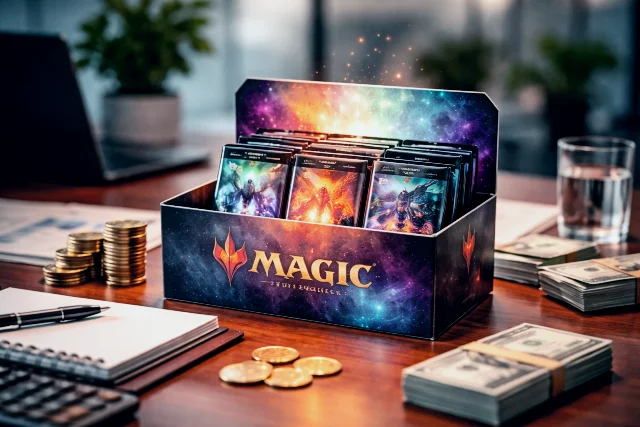
If you have ever held a Magic Booster Box in your hands, you know it feels different from most collectibles. It is a neat little time capsule: sealed promise, crisp corners, shrink wrap tension, and that quiet thrill of “what could be inside.” For collectors, the big question is not only whether opening it will be fun, but whether keeping it sealed can actually make sense as an investment.
- What is a Magic Booster Box, really?
- Why collectors see a Magic Booster Box as an investment asset
- The bigger picture: why demand exists in the first place
- What makes a Magic Booster Box appreciate
- Draft, Set, and Collector boxes: which type is best for investing?
- Costs that quietly eat your returns
- The biggest risks when investing in a Magic Booster Box
- A practical way to decide: collector first, investor second
- How to evaluate a Magic Booster Box before you buy
- Real-world scenarios: when it is worth it
- When it is probably not worth it
- Storage and handling: how serious collectors protect sealed value
- A simple “investment scorecard” you can use
- Common questions collectors ask
- Conclusion: so, is it worth the investment?
The short version is this: a Magic Booster Box can be worth the investment for some collectors, in some situations, with the right strategy. But it is not a guaranteed win, and it is definitely not the same as buying a stock index fund. The market is real, demand is real, and so are the risks: reprints, storage damage, counterfeits, hype cycles, and the simple fact that liquidity is not always there when you want it.
Let’s break it down in a way that helps you decide with your own goals, budget, and patience in mind.
What is a Magic Booster Box, really?
A Magic Booster Box is a sealed retail display box that contains multiple booster packs from a specific Magic: The Gathering set. It is meant to be opened for drafting, collecting, or chasing valuable cards, but collectors treat sealed boxes as their own asset class.
Why does sealed product matter? Because sealed supply usually shrinks over time. Packs get opened, boxes get drafted, and cases get cracked. When demand stays steady or grows, fewer sealed boxes can mean higher prices.
That “shrinking supply” idea is a big reason sealed product attracts collectors, and it is also the logic behind academic work that has looked at sealed MTG boxes as an investment category.
Why collectors see a Magic Booster Box as an investment asset
Collectors invest in sealed for a few overlapping reasons:
- Scarcity over time: most sealed inventory gets opened within the first year or two of release.
- Nostalgia and “time machine” appeal: older sets become emotionally valuable, not just financially valuable.
- Chase value: if a set contains iconic cards, sealed becomes a lottery ticket people will pay a premium to open later.
- Display and collectibility: sealed boxes are visually collectible in a way single cards sometimes are not.
- Diversification: sealed collectibles can behave differently than typical financial assets.
On that last point, a finance-focused study of sealed MTG booster boxes (using daily data for many sets over several years) found average annual returns around 21% during its sample period and reported low correlation with the stock market in their modeling, which is why sealed product often gets discussed as a diversification play.
That does not mean you will get 21% a year. It means the asset class has shown investment-like characteristics in historical data, with volatility and real-world constraints.
The bigger picture: why demand exists in the first place
This market is not happening in a vacuum. Trading card games are a massive entertainment industry, and growth helps keep new collectors coming in.
Hasbro has stated that Magic: The Gathering generated about $1.08 billion in revenue across tabletop and digital expressions in FY 2024, and that Magic has had long-term growth trends they highlight to investors.
On the broader category level, market reports vary on exact numbers and methodology, but multiple recent industry summaries still point to ongoing growth in the trading card game market.
More players, more collectors, and more crossover IP sets can all feed sealed demand.
What makes a Magic Booster Box appreciate
Sealed boxes do not all behave the same. Some crawl upward slowly. Some spike hard. Some stall for years. Some go down.
Here are the key drivers that tend to matter most.
1) Set desirability and “openability”
Collectors pay for the chance of hitting something meaningful. Sets with a strong lineup of valuable cards, fan-favorite themes, or iconic mechanics tend to have better sealed performance.
2) Print run and availability
A box that is hard to find a year after release has a very different trajectory than a box that sits in distribution for ages.
3) Reprint risk and product design
Reprints can flatten the upside if the core value proposition was “this box might contain expensive singles.” Wizards can reprint cards in many ways, so sealed investors watch reprint signals closely.
4) Crossover hype and cultural relevance
Licensed and crossover sets can create unusual demand spikes. One example of how explosive demand can get: Polygon reported that a Magic set tied to Final Fantasy generated over $200 million in revenue in one day, reflecting how major IP can create intense buying pressure and shortages.
Even if you are not buying that specific product, it shows how much “event sets” can move the sealed market.
5) Time
Most sealed appreciation stories are measured in years, not weeks. Quick flips exist, but they are not the core identity of sealed collecting.
Draft, Set, and Collector boxes: which type is best for investing?
Modern Magic comes in multiple box types. If you are investing, you should understand what you are actually buying.
| Box Type | What it’s for | Typical sealed appeal | Main risk |
|---|---|---|---|
| Draft Booster Box | Limited play (draft/sealed) | Classic “booster box” identity and nostalgia | Value may depend heavily on long-term draft nostalgia |
| Set Booster Box | Opening experience, curated feel | Often more popular for casual opening | Product lines can change, affecting long-term collector preference |
| Collector Booster Box | Premium foils, special treatments | High-end collectors and chase variants | Highest price, highest hype sensitivity, higher risk of short-term overpay |
A Magic Booster Box for investing is usually easiest to evaluate in the “classic” sense when you are looking at draft-style boxes, because that format has decades of historical collector behavior behind it. Collector boxes can perform well, but they can also be the most “hype-priced” at launch.
Costs that quietly eat your returns
A common mistake is looking only at “buy price vs sell price” and ignoring the friction in between.
Here is what to factor in:
- Platform fees: marketplaces and payment processors take a cut.
- Shipping + insurance: sealed should be protected like fragile inventory.
- Storage: heat, humidity, sunlight, pests, and accidental crushing all matter.
- Opportunity cost: money locked in sealed is money not working elsewhere.
- Taxes and reporting: rules vary by country and can change what “profit” really means.
If your box rises 30% over two years but you lose 12% to fees and shipping, the story looks different.
The biggest risks when investing in a Magic Booster Box
Counterfeits and reseals
The more expensive sealed becomes, the more scammers show up. Resealed boxes, swapped packs, fake wrap, and even convincing counterfeit packaging are part of the modern landscape.
Collector communities have documented practical checks like examining shrink wrap markings, seams, box integrity, and signs of tampering.
The uncomfortable truth is that “sealed” is not always sealed.
Reprints and product saturation
Magic prints a lot of products. Collector fatigue is real, and supply can be heavy in some eras. If a set is remembered as “massively opened,” sealed can still rise over time, but it may take longer.
Liquidity and timing
Selling a box is not like selling a publicly traded share. You may need the right buyer, at the right time, on the right platform. In a downturn, sealed can become slow to move.
Condition risk
Corners, shrink wrap tears, dents, and water damage can hurt value sharply. Sealed collectors are picky.
A practical way to decide: collector first, investor second
A healthy mindset is to treat sealed as a collectible you would be okay holding long-term, even if the “investment” part underperforms.
Ask yourself:
- Would I still be happy owning this Magic Booster Box if prices stayed flat for 3 to 5 years?
- Is this set personally meaningful, or am I chasing hype?
- Can I store it safely without stress?
- Do I have an exit plan, or am I just hoping?
If you cannot answer those confidently, singles or more liquid collectibles might fit better.
How to evaluate a Magic Booster Box before you buy
Here is a collector-style checklist that keeps you grounded.
Check the set’s long-term story
Look for signs the set will be remembered:
- iconic cards or mechanics
- popular limited environment (people want to draft it again later)
- strong art direction and theme
- unique treatments that remain desirable
Compare sealed price to “expected opening value”
Some collectors compare the sealed price to the value of the singles people might open. This can matter because the desire to crack boxes often drives demand.
Academic research discussing sealed booster box value talks about expected value concepts and how the pricing of sealed can be explained by variables like set value, top card value, age, and other factors.
You do not need to run a spreadsheet every time, but you should at least understand whether the sealed price is wildly detached from what is inside.
Avoid risky sourcing
If you are paying premium sealed prices, buy from sources with strong reputations, clear photos, and return policies.
If a deal looks too good, assume there is a reason.
Real-world scenarios: when it is worth it
Scenario A: You buy for nostalgia with a long horizon
You buy a Magic Booster Box from a set you love, plan to hold 5 to 10 years, store it properly, and you are not depending on short-term resale. This is the “collector-investor” sweet spot.
Scenario B: You focus on historically strong categories
Some categories tend to have stronger sealed behavior over time: sets with cultural crossover, sets with famous chase cards, and sets with a reputation for fun limited play. Big demand stories can keep sealed relevant even after the release window.
Scenario C: You build a small diversified sealed stack
Instead of going all-in on one product, you spread risk across a few different sets, purchase at reasonable entry points, and accept that some will lag.
This approach matches what many sealed collectors learn the hard way: you rarely pick the single perfect box every time.
When it is probably not worth it
- You are buying a Magic Booster Box purely because social media says it will “moon.”
- You need the money back soon.
- You cannot store sealed safely.
- You are paying an inflated launch price with no clear reason other than hype.
- You are not comfortable authenticating sealed product or buying only from trusted channels.
Storage and handling: how serious collectors protect sealed value
If you want sealed returns, you need sealed condition.
Practical habits that matter:
- Keep boxes in a cool, stable environment with low humidity.
- Store them off the floor to avoid water accidents.
- Use protective cases if you are stacking long-term.
- Avoid sunlight and heat sources.
- Do not stack heavy items on top of boxes.
- Photograph your boxes when you receive them (condition proof helps later).
This is not glamorous, but it is the difference between “mint sealed” and “discounted sealed.”
A simple “investment scorecard” you can use
Before buying a Magic Booster Box, rate it from 1 to 5 on each:
- Set nostalgia or cultural impact
- Chase card strength
- Print run and availability
- Reprint risk (lower is better)
- Entry price fairness
- Storage feasibility for you
- Confidence in authenticity
A box with strong scores across the board does not guarantee profit, but it reduces avoidable mistakes.
Common questions collectors ask
Is it better to keep a Magic Booster Box sealed or open it?
If you are buying as an investment, sealed is the asset. Opening converts it into singles, which can be profitable, but it changes the strategy completely. Most investment logic assumes the Magic Booster Box stays sealed.
How long should you hold a Magic Booster Box?
Many collectors think in multi-year horizons because time is a core part of sealed scarcity. Historical analysis of sealed MTG boxes as an investment category is based on years of price behavior, not short-term flips.
Are modern boxes still investable, or only old ones?
Modern can be investable, but it is trickier. There are more product types, more releases, and more reprints. On the other hand, Magic is still generating massive revenue and attracting new audiences, which supports long-term collector demand.
What is the biggest mistake sealed investors make?
Overpaying at peak hype and ignoring fees, condition, and authenticity risk.
Conclusion: so, is it worth the investment?
A Magic Booster Box can absolutely be worth the investment if you approach it like a collector with a plan: buy sets you believe will matter, avoid hype traps, respect reprint and authenticity risks, and store sealed product properly. Historical research has even modeled sealed MTG boxes as an investable collectible category with strong average returns in its sample and low correlation with stocks, which helps explain why sealed continues to attract serious collectors.
But the real deciding factor is personal fit. If you enjoy the collecting side, can hold long-term, and can buy safely, a Magic Booster Box can be both a fun collectible and a rational investment-style holding. If you need fast liquidity, cannot authenticate confidently, or hate the idea of keeping cardboard in a closet for years, it is probably not your lane.
In the end, sealed works best when it sits at the intersection of fandom and patience. That is why so many collectors treat it as a long-term piece of the broader world of trading cards.