



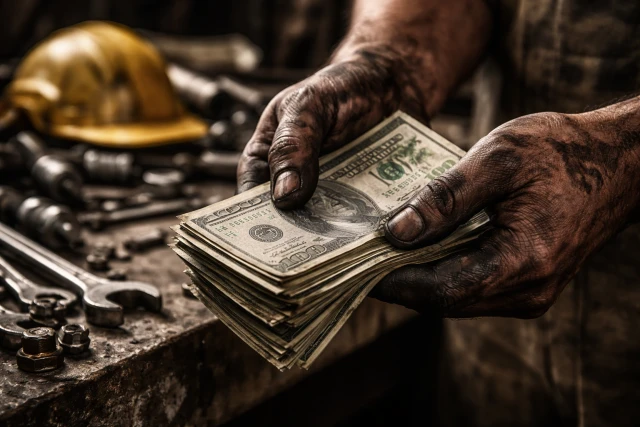
There’s a reason the phrase Dirty Hands Clean Money hits people differently. It’s not just a catchy line for a hoodie or a TikTok caption. It’s a mindset that quietly runs the world: the people who build, fix, lift, weld, dig, clean, cook, wire, deliver, repair, and maintain the things everyone else depends on.
- What “Dirty Hands Clean Money” Really Means
- The Myth: Hard Work Always Guarantees Big Money
- The Reality: Value-Based Work Gets Paid
- Dirty Hands Clean Money in the Skilled Trades
- The Hidden Advantage Nobody Talks About: Hard Work Builds Trust
- “Dirty Hands” Does Not Mean “Low Status”
- What Big Results Actually Require (Beyond Effort)
- Practical Ways to Turn Hard Work Into Higher Income
- A Quick Table: Effort vs Results (What Actually Changes the Outcome)
- Common Questions People Ask About Dirty Hands Clean Money
- Real-World Scenario: Two People, Same Work, Different Results
- The Deeper Point: Pride Changes Everything
- Conclusion: Dirty Hands Clean Money Is a Long Game That Pays
And yet, we live in a time where a lot of folks expect big results without real effort. “Passive income” is trendy. “Overnight success” is romantic. Hustle culture is loud, but often shallow.
Real success tends to look far less glamorous. It looks like early mornings, sore backs, scraped knuckles, and a job that doesn’t always come with applause. It looks like Dirty Hands Clean Money done the honest way.
In this article, we’ll talk about what that really means, what hard work actually produces (and what it doesn’t), how to turn effort into income without burning out, and why the people who do the hard stuff often end up with the strongest results.
What “Dirty Hands Clean Money” Really Means
At its core, Dirty Hands Clean Money is about earning with integrity. Not just “working hard,” but working in a way that creates real value.
It usually shows up in jobs that are:
- physically demanding
- skill-based and practical
- service-oriented
- tied to real-world outcomes
Think of a plumber stopping a leak that could destroy a home. Think of an electrician keeping a building safe. Think of a construction crew putting up the structure everyone else will work inside. These aren’t “side characters” in the economy. They’re the foundation.
And yes, it also applies outside the trades. It can mean a founder building a business from scratch, a nurse working brutal shifts, a teacher carrying a classroom, or a freelancer doing the unsexy work of learning a craft.
The point is this: Dirty Hands Clean Money is earned when you do work that’s real, needed, and honest.
The Myth: Hard Work Always Guarantees Big Money
Let’s get something straight. Hard work by itself doesn’t guarantee big results.
Plenty of people work incredibly hard and still struggle. That’s not because they’re lazy or doing it wrong. It’s because the world rewards a combination of things, not just effort.
Hard work matters, but so do:
- skill level
- demand in the market
- consistency over time
- reputation and trust
- negotiation and pricing
- the ability to finish what you start
If you’ve ever seen someone hustle nonstop but never get ahead, it’s usually because the effort is not being converted into leverage. Dirty Hands Clean Money is not “suffering for points.” It’s hard work that turns into measurable value.
The Reality: Value-Based Work Gets Paid
Markets pay for outcomes.
When your work directly solves expensive problems, the pay tends to climb. That’s why so many skilled trades earn solid incomes. For example, the U.S. Bureau of Labor Statistics reports a median annual wage of $62,970 for plumbers, pipefitters, and steamfitters (May 2024).
That number is not “internet motivation.” That’s real labor market data. And the same BLS overview shows construction and extraction occupations had a median annual wage of $58,360 in May 2024, higher than the median for all occupations.
This is Dirty Hands Clean Money in real life: a strong skill, steady demand, and work that clearly affects safety, comfort, and infrastructure.
Dirty Hands Clean Money in the Skilled Trades
Some people still talk about trades like they’re a fallback plan. That mindset is outdated.
The truth is, skilled trade careers often have a rare combination of benefits:
- you can start earning sooner (less time in school)
- skills stack fast with hands-on experience
- demand stays steady because physical work can’t be outsourced easily
- you can move into self-employment or business ownership
And the demand isn’t small. BLS projects about 44,000 openings per year (on average) for plumbers, pipefitters, and steamfitters over the decade due to growth and replacement needs.
That’s not hype. That’s the economy saying, “We need people who can do this work.”
So when someone says Dirty Hands Clean Money, the trades are a perfect example of the idea in motion: hard work plus skill plus demand equals real earning power.
The Hidden Advantage Nobody Talks About: Hard Work Builds Trust
When you do difficult work well, you earn something more valuable than a paycheck: people’s confidence.
Trust turns into:
- referrals
- repeat business
- better opportunities
- higher rates
- stronger partnerships
It’s why one reliable technician can stay booked while ten average ones fight for leads. It’s why a builder with a clean reputation can charge more. It’s why a business owner who delivers consistently wins over the one with louder marketing.
Dirty Hands Clean Money is often built on a simple pattern:
- show up
- do it right
- do it again
- become the person people call first
“Dirty Hands” Does Not Mean “Low Status”
A lot of people confuse physical labor with low value. That’s a social bias, not an economic truth.
Some of the most valuable work is “hands-on” because it touches the real world. Physical outcomes matter. Safety matters. Working plumbing matters. Reliable electricity matters. Buildings that don’t fall apart matter.
The status thing is mostly noise. Outcomes are the signal.
And when you focus on outcomes, Dirty Hands Clean Money stops sounding like a slogan and starts sounding like a strategy.
What Big Results Actually Require (Beyond Effort)
If you want big results, you need to treat hard work like a tool, not a personality.
Here’s the formula that usually works:
1) Learn a skill people will pay for
Hard work without skill is just exhaustion. Hard work applied to a high-demand skill is fuel.
2) Build consistency, not intensity
Doing something once is easy. Doing it every day is where people separate.
Research on achievement often points to perseverance over time, not raw talent. Angela Duckworth’s work on “grit” describes it as sustained passion and perseverance for long-term goals, and her 2007 research links grit to outcomes across multiple groups and settings.
That’s basically the psychological side of Dirty Hands Clean Money: long-term effort that doesn’t quit early.
3) Get paid for the result, not the hours
If you only sell time, your income has a ceiling. When you sell outcomes, quality, speed, reliability, or risk reduction, your income can rise.
This is why many skilled workers move into:
- quoting jobs instead of hourly rates
- specialized services instead of general labor
- running crews instead of working solo
- building systems and processes
4) Protect your body and your mind
This part matters more than motivation posters admit.
Big results are useless if your health collapses. Dirty Hands Clean Money should be clean in more than one way: clean habits, clean recovery, clean boundaries.
Practical Ways to Turn Hard Work Into Higher Income
Let’s keep it real and useful. If you’re doing demanding work and want better results, these moves tend to create the fastest impact.
Improve your earning power without switching careers
- Specialize: pick one niche you can become known for
- Document your work: photos, before/after, testimonials
- Raise rates slowly but consistently: don’t wait for “permission”
- Reduce rework: quality control is profit control
- Track your numbers: time, materials, margin, repeat clients
Build a reputation that follows you
Reputation is how Dirty Hands Clean Money becomes “easy money” later, because the work comes to you.
Simple reputation habits:
- show up on time
- communicate clearly
- keep promises small and big
- fix mistakes fast
- leave the job site cleaner than you found it
Move from worker to operator (when you’re ready)
Not everyone needs a business. But if you want bigger results, the path often looks like:
- worker (you do the work)
- lead (you coordinate the work)
- operator (you design the work)
- owner (you scale the work)
It’s still Dirty Hands Clean Money, but your hands get “dirty” in different ways: planning, hiring, customer service, pricing, systems.
A Quick Table: Effort vs Results (What Actually Changes the Outcome)
| You do this | You get more of this |
|---|---|
| Work harder at the same skill | fatigue (sometimes small gains) |
| Work smarter at the same skill | efficiency (medium gains) |
| Increase skill level | higher pay ceiling |
| Specialize in a high-demand niche | stronger pricing power |
| Build trust and reputation | steady opportunities |
| Create systems (checklists, processes) | consistency and scale |
| Price outcomes, not hours | bigger profit potential |
This is how Dirty Hands Clean Money turns into long-term wealth instead of short-term survival.
Common Questions People Ask About Dirty Hands Clean Money
Is physical work the best way to earn good money?
Not always, but it can be a very direct path. Many hands-on jobs pay well because they solve costly problems and require real skill. For example, BLS reports median pay figures and ongoing openings for key trade roles.
Why do some hardworking people still stay broke?
Usually because effort isn’t being converted into leverage. Common reasons:
- low-demand skill
- no specialization
- weak pricing or negotiation
- inconsistent work pipeline
- no tracking of profit and costs
Dirty Hands Clean Money is about honest work plus smart positioning.
Can you build wealth doing “dirty hands” work?
Yes, especially when you combine skill with ownership. Many people build wealth by:
- becoming highly specialized
- running a small crew
- owning tools and equipment
- building a service business with recurring clients
- reinvesting into assets
Does grit matter more than talent?
Talent helps, but perseverance is often what carries people through the boring middle. Duckworth’s research links grit with achievement across settings, supporting the idea that long-term follow-through matters.
How do I avoid burnout while working hard?
Treat recovery like part of the job:
- sleep like it’s training
- lift safely and protect joints
- take hydration and nutrition seriously
- keep one day a week lighter when possible
- say no to low-quality clients that drain you
Burnout kills results. Sustainable effort builds Dirty Hands Clean Money that lasts.
Real-World Scenario: Two People, Same Work, Different Results
Picture two technicians with the same trade skill.
Person A works nonstop, takes every job, underprices, doesn’t track costs, and rarely follows up with clients.
Person B works hard too, but specializes, documents every job, tracks profit, raises rates gradually, and builds relationships with property managers and contractors.
After a year, Person A is tired and still stuck. Person B is booked out, charging more, and choosing better jobs.
Same “dirty hands.” Very different money.
That’s the honest truth: big results are not just about sweat. They’re about direction.
The Deeper Point: Pride Changes Everything
Here’s what people miss when they talk about work.
Hard work feels different when it’s tied to pride.
Pride makes you:
- care about the finish
- protect your reputation
- learn the details others ignore
- improve even when nobody is watching
That’s why Dirty Hands Clean Money has a moral backbone. It’s not only income. It’s identity.
And that identity is powerful because it’s earned, not performed.
Conclusion: Dirty Hands Clean Money Is a Long Game That Pays
If you’re chasing big results, don’t let the internet convince you that the only “smart” path is sitting behind a screen.
There is dignity in building things. There is power in having a skill that solves real problems. And there is real opportunity in work that other people avoid but desperately need.
Dirty Hands Clean Money is not about glorifying struggle. It’s about choosing honest value, stacking skill, building trust, and turning consistent effort into outcomes that compound.
Do the work. Learn the craft. Price it correctly. Protect your health. Build your name.
That’s how hard work turns into big results, and stays that way.
In the end, it comes down to work ethic and strategy working together. When you combine both, Dirty Hands Clean Money stops being a phrase and becomes a lifestyle you can actually build on.