


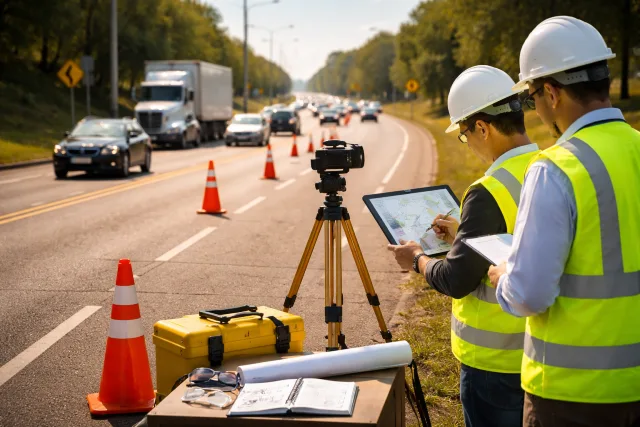
If you have ever driven through an intersection that feels “off” without knowing why, you already understand the value of a Road Safety Audit. Sometimes the danger is obvious, like a missing stop sign. More often, it is subtle: a curve that hides pedestrians, confusing lane markings, poor lighting, or a bus stop placed where people must cross fast traffic. A good Road Safety Audit is designed to catch those risks before they turn into crashes, injuries, and lives changed forever.
- What is a Road Safety Audit?
- Why a Road Safety Audit matters more than ever
- Road Safety Audit vs Road Safety Inspection: what is the difference?
- When should you do a Road Safety Audit?
- Who should be on a Road Safety Audit team?
- The Road Safety Audit process step by step
- What does a Road Safety Audit team look for?
- Road Safety Audit checklist table (quick reference)
- Real world examples of Road Safety Audit fixes that work
- How to prioritize Road Safety Audit recommendations
- Common questions people ask about Road Safety Audit
- A simple Road Safety Audit action plan you can actually use
- How Road Safety Audits connect to laws, liability, and public trust
- Conclusion: turning Road Safety Audit findings into fewer crashes
Globally, road crashes remain a massive public safety issue. The World Health Organization reports about 1.19 million road traffic deaths each year, and the burden falls heavily on low and middle income countries. That number is not just a statistic; it is families, livelihoods, and communities disrupted. A Road Safety Audit does not solve everything on its own, but it is one of the most practical, proven ways to identify what is unsafe and fix it systematically.
In this guide, you will learn what a Road Safety Audit is, how it works, when to use it, what the audit team looks for, and how to turn findings into real improvements that reduce crashes for all road users.
What is a Road Safety Audit?
A Road Safety Audit is a structured, independent review of the safety performance of a road or intersection, either existing or planned, carried out by a multidisciplinary team. The goal is to identify potential safety issues and recommend improvements for everyone who uses the road: drivers, pedestrians, cyclists, motorcyclists, public transport users, children, older adults, and people with disabilities.
A widely cited definition from the U.S. Federal Highway Administration describes a Road Safety Audit as a “formal safety performance examination” by an “independent, multidisciplinary team” that identifies safety issues and opportunities for improvement.
A Road Safety Audit is not the same as a design check
This is where many projects get confused. A Road Safety Audit is different from:
- A compliance check against standards
- A routine maintenance inspection
- A traffic study focused mainly on congestion
- A “blame” exercise for designers or agencies
An audit is about real world safety. It asks: what could go wrong here, for whom, and under what conditions?
Why a Road Safety Audit matters more than ever
Most serious crashes are not caused by a single factor. They come from a chain of small problems:
- Road geometry that encourages speeding
- Poor visibility at night or in rain
- Confusing signs, markings, or signals
- Unsafe crossing points near schools, markets, or bus stops
- Lack of forgiving roadsides for run off road errors
- Heavy vehicles mixing with pedestrians without separation
Public health agencies highlight how widespread the risk is. For example, global road crashes are a leading cause of death for ages 5 to 29, and millions more are injured every year.
A Road Safety Audit helps break that chain by finding risks early, prioritizing fixes, and building a safer system instead of relying on perfect human behavior.
Road Safety Audit vs Road Safety Inspection: what is the difference?
People often use these terms interchangeably, but they should not.
Road Safety Audit
- Proactive and structured
- Independent audit team (not the project designer)
- Can be used on new designs, works in progress, or existing roads
- Produces a formal report with findings and recommendations
- Focuses on all road users and crash scenarios
Road Safety Inspection
- Usually reactive or routine
- Often done by maintenance or operations staff
- Focuses on defects or compliance (sign damage, potholes, fading lines)
- May not include multidisciplinary crash scenario thinking
Both are useful. But if your goal is to reduce crashes and serious injuries, the Road Safety Audit is the tool built for that job.
When should you do a Road Safety Audit?
One of the biggest advantages of a Road Safety Audit is flexibility. You can audit at multiple stages, and each stage catches different types of problems. Many agencies recommend audits across a project life cycle, including planning, design, construction, and post opening phases.
Common Road Safety Audit stages include:
1) Feasibility and concept stage
Best for identifying:
- Safer alignments and cross sections
- Where to place crossings, medians, and access points
- How to separate vulnerable road users early in the design
2) Preliminary design stage
Best for catching:
- Intersection layouts that create conflicts
- Speed management issues
- Sight distance problems
- Inconsistent lane drops or merges
3) Detailed design stage
Best for checking:
- Signs and markings
- Lighting plans
- Barriers and roadside safety
- Pedestrian and bicycle facilities in detail
4) Construction stage and work zones
Best for preventing:
- Temporary traffic control confusion
- Unsafe pedestrian detours
- Poor night visibility and abrupt shifts
5) Pre opening and post opening
Best for:
- Real world user behavior checks
- Adjusting signs, markings, signal timings
- Fixing unexpected conflicts after opening
If you can only do one Road Safety Audit, do it early. Fixing a safety issue on paper is almost always cheaper than rebuilding it later.
Who should be on a Road Safety Audit team?
A strong Road Safety Audit team is multidisciplinary on purpose. Different professionals “see” different risks.
A typical team may include:
- Road safety engineer or highway engineer
- Traffic operations specialist
- Human factors specialist (where available)
- Pedestrian and bicycle facility specialist
- Enforcement representative (optional but useful)
- Public transport or freight representative (when relevant)
- Local maintenance or operations staff (for practical insights)
Independence matters. Many guidance documents emphasize that the Road Safety Audit team should not be the same people who designed the project, because fresh eyes catch what familiarity misses.
The Road Safety Audit process step by step
Different countries publish slightly different frameworks, but the workflow is usually similar. FHWA describes an eight step process for Road Safety Audits, moving from identifying a project to responding to findings and documenting outcomes.
Here is a practical version you can understand without drowning in jargon.
Step 1: Select the site or project
Triggers include:
- High crash locations (hotspots)
- Community complaints about near misses
- New project designs
- Major changes like a new interchange, market, school, or industrial zone
- Corridor upgrades or resurfacing that may change speeds
Step 2: Define the scope and objectives
A Road Safety Audit scope should clearly state:
- Audit stage (concept, design, construction, existing road)
- Road users to prioritize (pedestrians, motorcycles, school children, freight)
- Time constraints
- Deliverables (report format, maps, photos, risk ranking)
Step 3: Gather background information
Useful inputs:
- Crash data (where available)
- Speed surveys
- Traffic volumes and turning counts
- Land use context (schools, hospitals, bus stops)
- Prior safety studies
- Design drawings and typical sections
Step 4: Conduct field review
A field review is where audits come alive. It should happen:
- In daylight and at night if possible
- In dry and wet conditions when feasible
- On weekdays and weekends for busy mixed use areas
The team watches real behavior:
- Where people actually cross
- Where vehicles speed up
- How motorcyclists weave around queues
- Whether signage is visible in time
- How drivers react to unusual geometry
Step 5: Identify issues and crash scenarios
A Road Safety Audit team does not just list defects. It thinks in scenarios:
- “A pedestrian crosses here at dusk, visibility is low, and vehicles approach fast.”
- “A truck turns wide here and conflicts with the bicycle lane.”
- “A driver unfamiliar with the area chooses the wrong lane and swerves late.”
Step 6: Develop recommendations
Good recommendations are:
- Practical and feasible
- Focused on reducing severity and likelihood
- Clear enough that a designer can implement
- Sensitive to local context and maintenance capacity
Step 7: Report findings
The Road Safety Audit report typically includes:
- Site description and context
- Audit team and methodology
- Safety issues with photos or sketches
- Risk rating (if used)
- Recommended countermeasures
- Notes on constraints
Step 8: Response and action plan
An audit only matters if it leads to action. The project owner should produce a response:
- Accept, partially accept, or reject each recommendation
- Explain decisions transparently
- Assign responsibilities, budgets, and timelines
What does a Road Safety Audit team look for?
A good Road Safety Audit is systematic. The team usually reviews safety through several lenses.
Speed and speed management
Speed affects both crash likelihood and severity. Audit teams look for:
- Road geometry that “invites” high speeds
- Inconsistent speed environment (fast to slow transitions)
- Lack of traffic calming in pedestrian dense areas
- Long straight sections leading into sharp curves
Visibility and sight distance
This includes:
- Obstructed views at intersections (trees, parked vehicles, signage clutter)
- Poor lighting or glare
- Crest curves and hidden driveways
- Complex layouts that overload attention
Intersection and access safety
Common audit concerns:
- Too many conflict points
- Skewed intersections with awkward angles
- Uncontrolled access points close to intersections
- Right turn or left turn conflicts with pedestrians and motorcycles
Pedestrian safety
Audit teams focus on:
- Desire lines (where people want to cross)
- Crossing distance (wide roads without refuge islands)
- Missing footpaths or blocked sidewalks
- Unsafe bus stop locations
- School zone needs
Cyclist and motorcycle safety
This often includes:
- Surface quality, potholes, and slippery markings
- Shoulder width and continuity
- Safe overtaking space
- Conflict areas at intersections and driveways
Roadside safety and forgiving design
Run off road crashes can be deadly. The Road Safety Audit checks:
- Hazardous fixed objects near travel lanes
- Need for barriers or clear zones
- Safe end treatments
- Drainage grates, drop offs, and steep slopes
Work zone safety
Work zones deserve their own attention:
- Temporary signs and lane shifts that confuse drivers
- Night visibility and retroreflectivity
- Safe pedestrian routes through construction
- Speed control through the site
Road Safety Audit checklist table (quick reference)
Below is a simplified checklist you can use to understand what auditors typically review. A real Road Safety Audit uses more detailed prompt lists, but this covers the big picture.
| Audit Area | What to Check | Common Risk if Ignored |
|---|---|---|
| Approach speeds | Speed environment, transitions, calming | High severity crashes |
| Signs and markings | Clarity, placement, visibility, consistency | Late maneuvers, wrong lane choices |
| Lighting | Night visibility, glare, dark spots | Pedestrian crashes, run off road |
| Pedestrians | Footpaths, crossings, refuges, bus stops | Unsafe crossing behavior |
| Intersections | Conflict points, angles, turn lanes | Side impact crashes |
| Motorcycles and cyclists | Surface, shoulders, continuity | Loss of control, sideswipes |
| Roadside hazards | Poles, trees, barriers, end treatments | Fatal run off road injuries |
| Work zones | Temporary control, detours, protection | Rear end and worker crashes |
Real world examples of Road Safety Audit fixes that work
A Road Safety Audit does not always lead to expensive reconstruction. Many effective fixes are low cost and fast to deploy.
Example 1: The “invisible” pedestrian crossing
Scenario: Near a market, people cross midblock all day. Drivers do not expect it, and at dusk the risk spikes.
Audit findings: Crossing demand is obvious, but there is no safe crossing facility, lighting is weak, and parked vehicles block views.
Fixes:
- Add a marked crossing at the desire line
- Install a median refuge island to split the crossing
- Improve lighting focused on the crossing
- Add advance warning signs and remove parking near the approach
Example 2: A dangerous curve with repeated run off road crashes
Scenario: A rural curve looks gentle but tightens unexpectedly.
Audit findings: Inconsistent curve geometry, poor chevrons, limited delineation at night, and hazards close to the road edge.
Fixes:
- Upgrade curve warning signs and chevrons
- Add high friction surface treatment where warranted
- Improve edge lines and reflective markers
- Add barriers or clear roadside hazards
Example 3: Work zone chaos during a road upgrade
Scenario: A resurfacing project creates confusing lane shifts and people walk through active lanes.
Audit findings: Temporary signs are inconsistent, detours are unclear, and night visibility is poor.
Fixes:
- Simplify temporary traffic control and remove redundant signs
- Add protected pedestrian routing
- Improve reflectorization and lighting
- Add speed management measures through the work zone
How to prioritize Road Safety Audit recommendations
This is where projects can get stuck. An audit may identify 30 issues, but budgets and timelines are real.
A practical prioritization method is to rank each issue by:
- Likelihood of a crash occurring
- Severity if a crash occurs
- Exposure (how many users are affected, and how often)
Then group actions into:
- Quick wins (signage, markings, sightline clearing)
- Medium upgrades (islands, lighting, guardrails, signal changes)
- Major works (geometry changes, grade separation, corridor redesign)
If you are using a Safe System approach, prioritize changes that reduce death and serious injury even when people make mistakes. Public health agencies increasingly emphasize this kind of holistic safety thinking.
Common questions people ask about Road Safety Audit
What is the main objective of a Road Safety Audit?
The main objective of a Road Safety Audit is to identify safety risks and recommend countermeasures that reduce the likelihood and severity of crashes for all road users, whether the road is existing or still in design.
How long does a Road Safety Audit take?
It depends on scope and complexity. A single intersection audit might take a few days including field review and reporting. A long corridor can take weeks. The key is not speed, it is thoroughness and a clear path to implementing actions.
Do you need crash data to do a Road Safety Audit?
Crash data helps, but it is not required. A Road Safety Audit can be done proactively on new designs or locations without reliable crash databases, using risk based assessment and field observation.
Who owns the responsibility to implement audit findings?
The road authority, project owner, or client typically owns implementation. The audit team recommends, but the owner must respond, assign responsibilities, and fund changes.
Is a Road Safety Audit worth the cost?
When you compare the cost of improvements to the human and economic burden of road trauma, audits are typically a smart investment. Research has repeatedly shown road injuries create large economic losses at national and global levels.
A simple Road Safety Audit action plan you can actually use
If you manage roads, consult on projects, or publish public safety content, this quick plan will keep the process grounded.
- Pick the right target
- Start with high risk sites: schools, markets, high speed rural curves, complex intersections.
- Build an independent team
- Include operations and vulnerable road user expertise.
- Do field reviews at the right times
- Day and night, peak and off peak.
- Write recommendations that match reality
- Consider maintenance, enforcement capacity, and local behavior.
- Document responses
- Track what was accepted, rejected, and why.
- Follow up
- Revisit the site after changes, and measure whether risk actually dropped.
How Road Safety Audits connect to laws, liability, and public trust
Because a Road Safety Audit creates a documented safety review, it often intersects with governance and legal accountability. Agencies may use Road Safety Audit records to show they proactively identified risks and managed them. Guidance from major transport bodies also discusses legal considerations in audit practice and reporting.
This does not mean audits are about avoiding blame. It means that when safety decisions are transparent, evidence based, and documented, public trust improves. Communities are more likely to support projects when they see safety treated as a serious engineering and management responsibility.
Conclusion: turning Road Safety Audit findings into fewer crashes
A Road Safety Audit is one of the most practical ways to move from “we should improve safety” to “here is exactly what we will fix.” It brings independent eyes, multidisciplinary thinking, and real world observation into the heart of road planning and operations. Done well, a Road Safety Audit helps you spot hazards before the public pays for them in crashes.
If you remember one thing, make it this: the best time to do a Road Safety Audit is before a dangerous design becomes concrete and asphalt. The second best time is today, on the roads people are using right now. When audits lead to action, they create safer crossings, clearer intersections, better night visibility, calmer speeds, and fewer fatal mistakes.
In the last mile of any safety conversation, it helps to keep the bigger picture in mind: traffic safety is not only an engineering goal, it is a public health and community goal that protects everyone.