


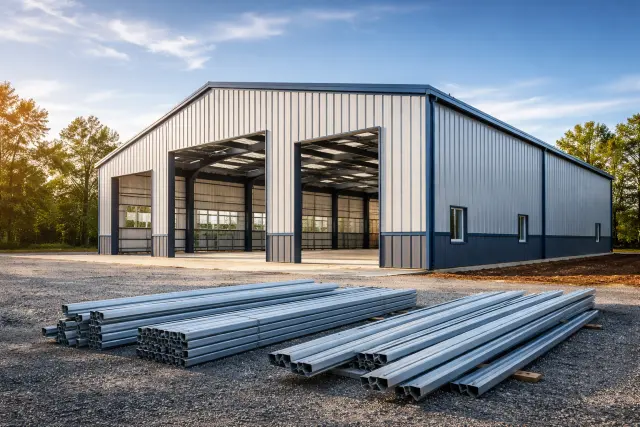
If you have ever priced a new warehouse, workshop, retail space, or even a modern barndominium-style home, you have probably noticed one thing: timelines are tight and budgets get squeezed fast. That is exactly why Steel Buildings have become the go-to option for owners who want a structure that goes up quickly, holds up for decades, and stays predictable in cost.
- What Are Steel Buildings?
- Why Steel Buildings Are So Popular Right Now
- Common Types of Steel Buildings
- Where Steel Buildings Make the Most Sense
- Steel Buildings vs Wood vs Concrete
- Cost: What Steel Buildings Really Cost and What Changes the Price
- Designing Steel Buildings for Performance
- Safety, Codes, and Standards
- Sustainability and Life-Cycle Value
- Real-World Scenarios: Where Steel Buildings Save the Day
- Actionable Tips Before You Buy or Build
- Frequently Asked Questions
- Conclusion
In simple terms, Steel Buildings use a steel structural system (frames, columns, rafters, purlins) to carry loads, and they often pair that skeleton with metal panels or other exterior cladding. The result is a building style that is practical, flexible, and surprisingly customizable. Whether you are planning a small backyard workshop or a full-scale industrial facility, the same big advantages show up again and again: strength, speed, and value.
In this guide, you will learn what makes steel structures different, where they fit best, what they cost, and how to make smart decisions that keep your project smooth from permits to punch list.
What Are Steel Buildings?
Steel Buildings are structures where steel is the primary load-bearing material. The steel components are typically engineered, fabricated, and then assembled on site. Depending on the project, the building may be:
- A rigid-frame system (common for warehouses and commercial spaces)
- A light-gauge framing system (common for interior partitions and some residential applications)
- A pre-engineered metal building (PEMB), where much of the design is standardized and manufactured off site
The key idea is consistency. Steel components are produced to tight tolerances, which helps reduce surprises during installation and makes it easier to plan schedules and labor.
Why Steel Buildings Are So Popular Right Now
The construction world is shifting toward methods that reduce risk. Owners want fewer delays, fewer change orders, and fewer repairs five years down the road. Steel is not a magic wand, but it does solve a lot of common headaches.
Here is why Steel Buildings keep winning bids and owner approvals.
1) Strength-to-weight ratio that works in the real world
Steel is incredibly strong for its weight. That matters because a lighter structural system can mean:
- Less foundation demand in many designs
- Easier handling and lifting on site
- Cleaner long-span layouts with fewer interior columns
Long clear spans are a big reason steel is common in gyms, aircraft hangars, warehouses, and large retail spaces.
2) Speed through off-site fabrication
Steel members are fabricated in a controlled environment, then shipped to site ready to assemble. This approach often reduces on-site cutting and rework. Industry guidance emphasizes how off-site fabrication streamlines construction and can save time and money.
3) Better predictability (especially for business owners)
When you are building for a business, time is money in the most literal sense. Faster enclosures and simpler sequencing can mean earlier occupancy, earlier revenue, and fewer “extended general conditions” costs. Many owners choose Steel Buildings because the process is more repeatable.
4) Durability with the right coatings and details
Steel does not rot, and it is not a food source for pests. If your design includes the right corrosion protection (galvanized components where needed, properly detailed flashing, controlled moisture), steel structures can stay stable for a very long time.
5) Strong sustainability story (when you plan it correctly)
Steel is one of the most recycled materials in the world. In construction contexts, steel scrap recovery and recycling can be very high. One industry source reports a 74% recycling rate for steel used in general construction.
Recycling is not the only sustainability factor, but it is a meaningful one when you are comparing material choices.
Common Types of Steel Buildings
Not all steel structures are the same. Knowing the common categories helps you ask better questions when you start talking to suppliers or contractors.
Pre-engineered metal buildings (PEMB)
PEMB systems are widely used for industrial and commercial projects. They typically include:
- Primary frames (rigid frames)
- Secondary framing (purlins, girts)
- Roof and wall panels
- Trim and accessories (gutters, downspouts, flashing)
They are popular because they are efficient, fast to erect, and often cost-competitive.
Conventional steel buildings
These are more custom, often designed by a structural engineer with steel fabricated specifically for that project. This approach is common for:
- Multi-story commercial buildings
- Complex architectural designs
- Projects with unusual loads, spans, or façade systems
Hybrid steel buildings
A hybrid approach might use steel for the main structure, then combine it with wood, concrete, or masonry for floors, walls, or exterior finishes. This can be a great solution when you want steel’s performance but also want a specific look or feel.
Where Steel Buildings Make the Most Sense
Steel Buildings can work almost anywhere, but they shine in specific use cases.
Warehouses and logistics centers
Clear spans, fast erection, and efficient layouts make steel ideal for storage and distribution.
Workshops and garages
For owners who want an organized, durable space for tools, vehicles, and projects, steel makes planning easy. You can add roll-up doors, mezzanines, insulation packages, and ventilation upgrades without fighting the structure.
Retail and commercial spaces
Steel framing supports flexible interior layouts and future tenant improvements. A space can evolve without major structural redesign.
Agricultural buildings
Steel performs well in many farm applications, especially when you need wide doors, open interiors, and durable exterior panels.
Residential projects (in the right context)
While residential steel construction varies by region and building code practice, steel can be a strong option for modern homes, barndominiums, and storm-resilient designs.
Steel Buildings vs Wood vs Concrete
People often ask, “Which one is best?” The honest answer is: best for what? Cost, speed, weather exposure, local labor skills, and your design goals all matter.
Here is a practical comparison to help you think clearly:
| Factor | Steel Buildings | Wood Framing | Concrete / CMU |
|---|---|---|---|
| Speed of erection | Fast, especially with fabricated components | Fast for small projects | Slower due to curing and sequencing |
| Clear spans | Excellent | Limited without engineered systems | Good but heavier |
| Fire performance | Strong with proper design; often needs rated assemblies | Can burn; relies on protective layers | Very strong inherent resistance |
| Pests and rot | Not a food source; no rot | Vulnerable in many environments | Not a food source; no rot |
| Cost predictability | Often more predictable | Can be volatile by market | Can fluctuate with labor and material |
| Sustainability | High recycling potential | Renewable resource but waste varies | High embodied carbon concerns in many cases |
Cost: What Steel Buildings Really Cost and What Changes the Price
This is the part everyone cares about, and it is also the part where vague answers cause confusion. The price of Steel Buildings is not one number. It is a stack of decisions.
The biggest cost drivers
- Building size and span
Longer spans often require heavier frames. More steel, more cost. - Loads and engineering requirements
Wind, seismic, snow loads, and crane loads change the frame design. - Site conditions
A perfectly flat site with easy access is cheaper than a tight site with poor soil and drainage issues. - Foundation and slab
Steel structures still need strong foundations. Slab thickness, reinforcement, and vapor barriers add cost. - Enclosure package
Roof and wall panels, insulation type, skylights, and coatings all affect the total. - Openings and accessories
Doors, windows, ventilation, gutters, canopies, and interior buildouts can add up quickly.
A simple way to budget without fooling yourself
When owners budget, they often focus only on the “building kit.” But the kit is only part of the total installed cost.
A more realistic early budget includes:
- Building system (frames, panels, trim)
- Freight and offloading
- Foundations and slab
- Erection labor and equipment
- Utilities, site work, drainage
- Permitting, engineering, inspections
- Interior finishes (if applicable)
If you do this upfront, you reduce the risk of redesign later.
Designing Steel Buildings for Performance
Steel works best when the details match your environment and your use case. Here are the practical design choices that pay off.
Pick the right roof and wall insulation strategy
Insulation is not just about comfort. It affects condensation control, energy bills, and long-term durability.
Common approaches include:
- Fiberglass insulation systems for basic needs
- Rigid board insulation for better thermal performance
- Spray foam for air sealing and condensation control (often higher cost)
Plan moisture control like you mean it
Condensation is one of the most common headaches in metal structures. It usually comes from warm, moist air hitting a cold surface. Fixing it after the fact is annoying and expensive.
Smart moves include:
- Use a vapor barrier where required
- Ventilate properly
- Detail roof and wall transitions carefully
- Choose coatings appropriate for coastal or corrosive environments
Use clear spans intentionally
Clear spans are great, but bigger is not always better. A slightly smaller span can reduce frame weight and cost while still meeting your operational needs.
Future-proof your layout
Many owners outgrow a building faster than expected. If expansion is possible, design with it in mind:
- End-wall framing that supports a future extension
- Space for additional doors or bays
- Electrical capacity planning
Safety, Codes, and Standards
Steel construction is heavily guided by building codes and design standards. In the U.S., for example, structural steel building design and fabrication practices are commonly aligned with established industry standards and guidance.
Even if you are outside the U.S., most regions have comparable code frameworks.
The takeaway is simple: do not treat steel as a “one-size-fits-all kit.” Your local wind speeds, seismic zone, snow loads, and occupancy type matter.
Sustainability and Life-Cycle Value
Sustainability is not just a marketing phrase anymore. Owners are asking for real numbers and real tradeoffs.
Recycling and material recovery
Steel recycling is well documented across multiple sources, including EPA material-specific data for ferrous metals.
And industry reporting highlights high recovery rates in construction contexts.
Durability reduces replacement and repair
A building that lasts longer and needs fewer major repairs can lower life-cycle impact. The best sustainability move is often the boring one: build something that stays in service.
Efficient design can reduce material use
Steel’s strength can mean fewer columns and less total structure for the same usable space, depending on the design.
Real-World Scenarios: Where Steel Buildings Save the Day
Scenario 1: A growing e-commerce business
A small e-commerce brand needs more storage. Leasing is expensive, and they want a space that can evolve. They choose a steel structure with a clear-span interior, add a mezzanine later for packing stations, and expand the end wall after two years as sales grow. The original planning makes the expansion far less disruptive.
Scenario 2: A workshop in a humid climate
A hobbyist builds a steel workshop near a coastal area. The first contractor suggests minimal insulation, but the owner invests in better condensation control and ventilation. The shop stays comfortable, tools avoid rust, and the interior stays dry during seasonal humidity spikes.
Scenario 3: A small retail strip with future tenant changes
A developer builds a small commercial space using a steel structural system for flexible interiors. Over time, tenants change, walls move, and mechanical layouts adapt, but the structure does not become a bottleneck.
Actionable Tips Before You Buy or Build
If you only remember one section, make it this one. These steps prevent most costly mistakes.
- Confirm your local design loads early
Wind, seismic, and snow loads can change the frame design. If the supplier is guessing, your price is not real yet. - Ask what is included in the package
Does the quote include trim, fasteners, sealants, and closures? Missing items create delays. - Plan your doors around your workflow
Roll-up doors, drive-through bays, and loading zones should match how you actually use the space. - Do not underbuild ventilation
Especially if you will store equipment, vehicles, animals, or anything that introduces moisture. - Think about insulation and condensation as a system
Not a single product. Roof, walls, air sealing, and ventilation have to work together. - Hire an erection crew with relevant experience
Steel goes up fast when the crew knows what they are doing. Inexperienced erection can turn “fast” into “frustrating.”
Frequently Asked Questions
Are Steel Buildings good for homes?
They can be, especially for modern designs, barndominium-style builds, and regions that benefit from strong structural systems. The best results come from a team that understands both residential comfort requirements (insulation, thermal bridging, condensation) and steel detailing.
Do Steel Buildings rust?
Steel can corrode if exposed to moisture and oxygen over time, but modern coatings, galvanization options, and good detailing greatly reduce the risk. Most “rust problems” are actually design or maintenance problems, not a steel problem.
How long do Steel Buildings last?
With proper design, coatings, and maintenance, steel structures can serve for decades. The enclosure details, drainage, and corrosion protection often matter as much as the frame.
Are Steel Buildings cheaper than wood?
Sometimes yes, sometimes no. The best way to compare is to evaluate total installed cost and life-cycle cost, not just material price. Project size, span, local labor, and site conditions drive the outcome.
Can Steel Buildings be expanded later?
Yes. Many are designed with future expansion in mind, especially PEMB systems. If you think you might expand, plan for it upfront so you do not have to redesign major structural elements later.
Conclusion
For owners who want strength, speed, and predictable performance, Steel Buildings are hard to beat. They fit modern construction priorities because they reduce on-site uncertainty, support flexible layouts, and offer real durability when the details are done right. If you take the time to plan loads, moisture control, insulation, and future expansion, you get a structure that does not just look good on day one, but keeps working year after year.
In the last step, it helps to understand the basic definition of a steel building and how it differs from other framing approaches, so you can communicate clearly with suppliers, engineers, and contractors.