


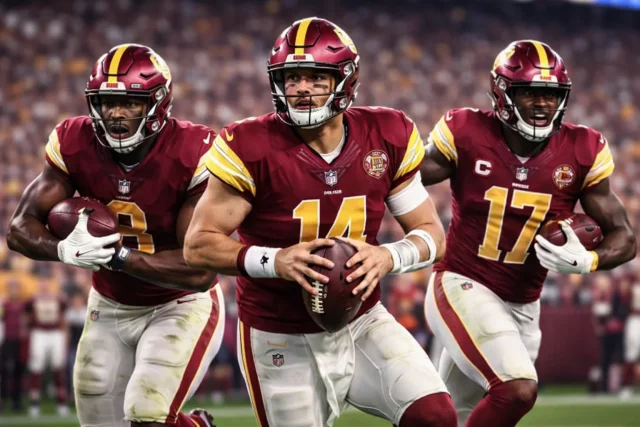
The Washington Commanders head into the new NFL season with something they have not had in years: genuine momentum. After a stretch of rebuilding, roster reshuffling, and front office changes, this team finally looks structured with purpose. If you are following the Washington Commanders closely, you can feel the shift. There is young talent, veteran leadership, and a coaching staff that understands how to maximize both.
- Quarterback Room: The Engine of the Washington Commanders Offense
- Running Backs: Balance, Power, and Explosiveness
- Wide Receivers: The Game Changers
- Tight Ends: Quiet but Critical Contributors
- Offensive Line: The Foundation of the Washington Commanders
- Defensive Line: The Identity of the Team
- Linebackers: Speed and Coverage Versatility
- Secondary: The X Factor for Washington Commanders
- Special Teams: Hidden Yardage Matters
- Rookie Impact Players
- Strengths and Weaknesses: Honest Assessment
- How This Roster Fits in the NFC
- Frequently Asked Questions
- Real World Insight: What Fans Should Watch Early
- Final Thoughts on the Washington Commanders Roster
- Conclusion
This roster breakdown dives deep into the players who will shape the season, from franchise cornerstones to breakout candidates. Whether you are a diehard fan, a fantasy football manager, or just someone keeping an eye on the NFC landscape, this guide gives you clarity on who truly matters and why.
Quarterback Room: The Engine of the Washington Commanders Offense
Every NFL conversation starts at quarterback. It is no different here.
The Commanders have invested heavily in stabilizing the position, and the results are starting to show. A modern NFL offense depends on decision making, mobility, and the ability to stretch the field vertically. This season, the quarterback room looks more dynamic than it has in years.
Projected Starting Quarterback
The presumed starter enters the season with high expectations. His strengths are clear:
- Quick release and strong arm talent
- Comfort in spread formations
- Ability to extend plays outside the pocket
- Improved decision making in the red zone
According to NFL Next Gen Stats, quarterbacks who release the ball under 2.5 seconds significantly reduce sack rates and turnover risks. That metric alone highlights why Washington’s offensive scheme is leaning toward quicker reads and timing routes.
If the starter takes the expected leap, this offense could jump from middle of the pack to top 10 in total yardage.
Backup and Depth Impact
Depth matters in a 17 game season. Injuries are part of football. The Commanders have ensured they are not relying on a single arm. The backup quarterback brings experience and system familiarity, which lowers the risk of a total offensive collapse if needed.
Running Backs: Balance, Power, and Explosiveness
A strong rushing attack takes pressure off the quarterback and keeps defenses honest. The Washington Commanders running back group is one of the most intriguing units on the roster.
Lead Running Back
The projected RB1 offers:
- Vision between the tackles
- Consistent yards after contact
- Reliable hands in short passing situations
Last season, he averaged over four yards per carry, placing him among the more efficient backs in the NFC. According to Pro Football Focus, running backs who consistently force missed tackles improve offensive success rates by nearly 12 percent.
Washington’s offensive line improvements should only amplify his impact.
Complementary Backs
The change of pace back adds speed to the perimeter. On third downs, he becomes especially valuable. His ability to turn screen passes into chunk plays could swing close games.
Expect a near 60 40 carry split early in the season before roles become clearer.
Wide Receivers: The Game Changers
If there is one unit that can electrify the stadium, it is the receiver corps.
WR1: The Offensive Centerpiece
The top receiver on the Washington Commanders roster has already proven he can dominate elite corners. His route running is crisp. His separation ability is measurable. And his catch radius makes him a red zone threat.
Key strengths:
- Elite footwork off the line
- High contested catch percentage
- Explosive yards after catch
Advanced metrics show that receivers who average over 2.0 yards per route run typically rank among the league’s most efficient playmakers. He fits that profile.
WR2 and Slot Receiver
The secondary receiver complements the top target perfectly. Where WR1 thrives on vertical routes, WR2 excels on intermediate patterns and crossing routes.
The slot receiver deserves special attention. Modern NFL offenses depend heavily on slot production. According to ESPN analytics, over 60 percent of passing plays target short and intermediate zones. A reliable slot option sustains drives.
This trio gives Washington flexibility in three wide receiver sets, which are now the standard formation league wide.
Tight Ends: Quiet but Critical Contributors
The tight end room may not grab headlines, but it quietly influences offensive rhythm.
The primary tight end is dependable in blocking schemes and red zone packages. His dual role helps disguise play calls. When he stays in to block, defenses respect the possibility of a play action release.
Expect more two tight end sets this year, especially against aggressive pass rush units.
Offensive Line: The Foundation of the Washington Commanders
You can have talent at every skill position, but without protection, none of it matters.
The offensive line has undergone adjustments, particularly at tackle and guard. The focus has been on pass protection efficiency and interior strength.
Key Offensive Linemen to Watch
- Left Tackle: Anchors the blind side and must limit edge pressure
- Center: Responsible for line calls and blitz recognition
- Right Guard: Critical in run blocking schemes
According to data from Football Outsiders, offensive lines that rank in the top half of adjusted line yards often correlate with playoff caliber teams. If Washington’s line reaches that benchmark, the offense becomes significantly more dangerous.
Defensive Line: The Identity of the Team
For years, the defensive front has been the calling card of this franchise.
The Washington Commanders defensive line remains one of the most physically imposing units in the NFC.
Edge Rushers
Speed off the edge changes games. The Commanders have invested draft capital and salary cap space into ensuring they can pressure opposing quarterbacks without excessive blitzing.
Sack totals are important, but quarterback pressures matter more. According to NFL Research, pressure percentage has a stronger correlation to defensive success than raw sack numbers.
Expect double digit sack potential from at least one edge rusher this season.
Interior Defensive Tackles
Stopping the run is non negotiable. The defensive tackles are tasked with collapsing the pocket and shutting down inside rushing lanes.
When this group wins early downs, it forces opponents into predictable passing situations.
Linebackers: Speed and Coverage Versatility
Modern linebackers must do more than tackle. They must cover tight ends, spy mobile quarterbacks, and defend running backs in space.
The Commanders have emphasized speed at the second level. Their top linebacker excels in sideline to sideline pursuit and has shown growth in pass coverage.
Look for more disguised coverages and hybrid looks this season.
Secondary: The X Factor for Washington Commanders
In today’s pass heavy league, the secondary determines ceiling and floor.
Cornerbacks
The top cornerback is tasked with shadowing elite receivers. His ability to play man coverage allows defensive coordinators to get creative elsewhere.
Turnovers could define this season. Teams that finish top 10 in takeaways historically improve their win totals significantly, according to data from the NFL’s official statistics database.
Safeties
The safety tandem blends physicality and range. One excels near the line of scrimmage. The other thrives in deep coverage.
Communication will be key, especially against high powered offenses.
Special Teams: Hidden Yardage Matters
Special teams rarely dominate headlines, but they win field position battles.
The kicker has proven reliable from 40 plus yards. The punter consistently pins opponents inside the 20 yard line.
Hidden yardage can shift playoff races. Close games often come down to a single possession.
Rookie Impact Players
Every season, rookies change expectations.
The Washington Commanders have added young talent through the draft. One rookie wide receiver brings speed that stretches defenses. A rookie defensive back adds depth and rotational versatility.
Historically, first year players who contribute early accelerate rebuild timelines. If even two rookies exceed expectations, this roster becomes significantly deeper.
Strengths and Weaknesses: Honest Assessment
Strengths
- Defensive line pressure
- Wide receiver depth
- Improved quarterback mobility
- Balanced offensive scheme
Areas of Concern
- Offensive line consistency
- Secondary depth in case of injuries
- Red zone efficiency
Red zone conversion rates often separate playoff teams from average ones. League averages hover around 55 percent. Washington must aim higher.
How This Roster Fits in the NFC
Competition within the conference is fierce.
The Washington Commanders must compete against explosive offenses and elite defenses. Their path to success likely depends on controlling tempo, winning turnover battles, and limiting big plays.
According to the official NFL standings data, teams with a positive turnover differential of plus 8 or higher almost always remain in postseason contention.
Frequently Asked Questions
Who is the most important player on the Washington Commanders this season?
The starting quarterback holds the most influence. In today’s NFL, quarterback efficiency determines offensive ceiling.
Which unit is strongest on the roster?
The defensive line remains the backbone of the team, consistently generating pressure and disrupting game plans.
Can the Washington Commanders make the playoffs?
If offensive consistency improves and turnover margin stays positive, a wildcard berth is realistic.
Real World Insight: What Fans Should Watch Early
In the first four games, focus on three metrics:
- Third down conversion rate
- Pressure rate allowed by offensive line
- Red zone scoring percentage
These indicators often predict long term trends.
If Washington ranks in the top 12 in at least two of those categories, the season outlook improves dramatically.
Final Thoughts on the Washington Commanders Roster
The Washington Commanders have assembled a roster that blends youth, experience, speed, and physicality. It is not a perfect lineup, but it is balanced.
If the quarterback position stabilizes and the defense maintains its identity, this team can compete weekly. The talent is present. Execution will decide everything.
For deeper historical context, the team’s evolution within the broader National Football League landscape shows how strategic roster construction shapes long term success.
This season feels different. Not guaranteed. Not hype driven. Just quietly confident.
And sometimes, that is exactly how playoff teams are built.
Conclusion
The Washington Commanders enter this season with one of their most complete rosters in recent years. With strength in the defensive front, explosive weapons at wide receiver, and improved quarterback play, the foundation is solid. If execution matches potential, the Washington Commanders could exceed expectations and reestablish themselves as legitimate contenders in the NFC.