


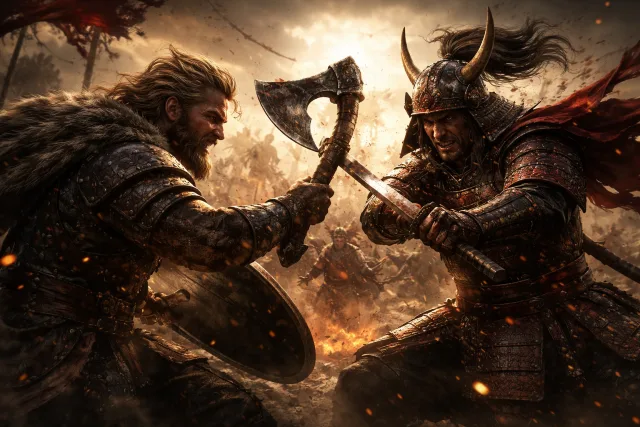
When people hear Warrior and Warrior, they often picture a loud clash: blades, fists, or a final whistle. But the real meaning runs deeper. Warrior and Warrior is what happens when two trained minds meet, each carrying preparation, pride, and a personal code. It’s competition, yes, but also a mirror. One competitor forces the other to reveal what they truly have: conditioning, decision-making under stress, and the discipline to stay honorable when emotions spike.
- What “Warrior and Warrior” really means
- Strength: the obvious weapon that still needs engineering
- Strategy: the invisible blade in every real battle
- Honor: what makes the battle worth watching
- Where we see “Warrior and Warrior” today
- The anatomy of a “great battle”: why some matchups feel legendary
- Strength, Strategy, Honor: a quick comparison table
- The mental game: why the brain decides so many outcomes
- Practical performance habits seen in top competitors
- Common questions people ask about Warrior and Warrior
- The modern audience: why these battles are growing everywhere
- Conclusion: what Warrior and Warrior teaches us about performance and character
In this article, we’ll unpack Warrior and Warrior as a complete performance concept. Not just who hits harder, but who reads the moment better. Not just who wins, but who earns respect. You’ll see how strength, strategy, and honor weave together across combat sports, team sports, esports, and even leadership environments where conflict is real, stakes are high, and composure decides outcomes.
What “Warrior and Warrior” really means
At its core, Warrior and Warrior is a contest between equals in intent, not necessarily equals in size or style. Each side brings a toolset:
- Physical capacity: power, endurance, resilience
- Technical skill: clean execution, timing, efficiency
- Tactical intelligence: decision-making, adaptation, pattern recognition
- Emotional control: staying sharp under pressure
- Honor code: fairness, respect, and responsibility for your actions
When those pieces show up together, Warrior and Warrior becomes more than spectacle. It becomes a standard for performance and character.
Strength: the obvious weapon that still needs engineering
Most people reduce Warrior and Warrior to brute force. Strength matters, but it’s not a single number. In real competition, strength is a system.
1) Max strength vs functional strength
Max strength is what you can lift once. Functional strength is what you can apply repeatedly, with balance, and without falling apart technically.
In Warrior and Warrior, functional strength wins more often because it supports:
- posture and stability
- injury resistance
- endurance in awkward positions
- clean technique late in the match
2) Conditioning as a form of courage
A lot of “heart” is actually physiology. If your gas tank is empty, your brain starts making worse decisions. Conditioning keeps the mind online.
That’s why Warrior and Warrior is often decided in the later rounds, later minutes, or late-game sequences when fatigue exposes habits.
3) Resilience: the strength people forget to train
Resilience isn’t just “taking a hit.” It’s recovering from mistakes, reset speed, and continuing to execute a plan when momentum flips. That mental edge is measurable in sport psychology research, where mental toughness is repeatedly linked to performance outcomes.
In Warrior and Warrior, resilience looks like this:
- you lose a point, then immediately win the next exchange
- you get countered, then adjust instead of panicking
- you feel the pressure, but your decisions stay clean
Strategy: the invisible blade in every real battle
Here’s the twist: Warrior and Warrior is rarely “strong versus strong.” It’s usually “system versus system.”
Strategy is the plan you brought
Strategy is what you decided before the contest:
- what you want to force
- what you must avoid
- which phase you dominate
- what pace favors you
In Warrior and Warrior, good strategy is simple enough to remember under stress.
Tactics are the moves you make inside the chaos
Tactics are moment-to-moment adjustments:
- switching targets
- changing tempo
- baiting reactions
- exploiting patterns
This is why Warrior and Warrior feels like chess at speed. The best competitors aren’t guessing. They’re collecting information.
The “three-question loop” that elite competitors use
In high-level Warrior and Warrior, decisions often follow a repeating loop:
- What is my opponent trying to do right now?
- What are they giving up to do it?
- What is my safest, highest-reward response?
That loop is strategy in motion. It’s also why “smart fighters” and “game managers” stay dangerous even when they’re tired.
Honor: what makes the battle worth watching
Honor can sound old-fashioned, but it’s the reason competition scales beyond violence or ego. Warrior and Warrior without honor becomes chaos. With honor, it becomes culture.
The Olympic Movement frames sport values around excellence, respect, and friendship, placing respect at the center of competition. That same idea shows up across sportsmanship rules, fair play standards, and codes of conduct.
Honor in Warrior and Warrior usually shows up in three ways:
1) Respect for rules and safety
You can be fierce without being reckless. In many sports, respecting rules protects careers and lives.
2) Respect for the opponent
In Warrior and Warrior, your opponent is not just an obstacle. They’re the person who makes your best version possible.
3) Responsibility for behavior under pressure
Pressure reveals character. Honor is what keeps Warrior and Warrior from turning into personal damage that lasts outside the match.
Where we see “Warrior and Warrior” today
Warrior and Warrior isn’t limited to one arena. It has different outfits.
Combat sports
Boxing, MMA, wrestling, judo, karate, Muay Thai: these are the most literal versions of Warrior and Warrior. Here, strength is obvious, strategy is technical, and honor is enforced by rules and culture.
UFC’s media and distribution is also changing quickly, with reporting on a major new broadcasting arrangement starting in 2026 that shifts away from the traditional pay-per-view model in the U.S. (Regardless of the format, the core appeal remains Warrior and Warrior: skill, stakes, and composure.)
Team sports
Football, basketball, cricket, hockey: team sports are still Warrior and Warrior, just distributed across roles. A striker vs a defender, a bowler vs a batter, a point guard vs a perimeter stopper. Every micro-battle affects the macro outcome.
Esports
Esports is a modern proof that Warrior and Warrior is not only physical. It’s cognitive, strategic, and brutally punishing under time pressure.
We’ve seen record-setting peaks in major esports events, including the 2024 League of Legends World Championship Grand Final reaching a reported 6.94 million peak viewers (excluding China). Massive audiences follow esports because it still delivers Warrior and Warrior: preparation, reads, adaptation, and clutch execution.
Business and leadership conflict
Even in business, Warrior and Warrior appears as negotiation, competitive strategy, crisis response, and decision-making under constraints. The arena changes, but the core skills remain:
- clarity under pressure
- pattern recognition
- disciplined execution
- ethical boundaries
The anatomy of a “great battle”: why some matchups feel legendary
Not every contest becomes a classic. The best Warrior and Warrior battles share a few ingredients.
Styles make fights (and games, and matchups)
A classic Warrior and Warrior matchup often features contrast:
- pressure fighter vs counter striker
- fast tempo vs slow control
- aggressive entry vs defensive traps
- risk-taking vs efficiency
That contrast creates uncertainty, and uncertainty creates drama.
Momentum swings
A great Warrior and Warrior contest has reversals:
- someone adapts mid-match
- someone finds the timing late
- someone survives a bad moment and comes back
Momentum swings are strategic, not magical. They usually come from one side solving a pattern.
Stakes plus identity
When both sides bring identity, the match has meaning:
- a champion protecting a legacy
- a newcomer proving they belong
- a rematch where pride is on the line
That’s Warrior and Warrior at its most human.
Strength, Strategy, Honor: a quick comparison table
| Element | What it is | What it looks like in the moment | What usually breaks first |
|---|---|---|---|
| Strength | Physical and physiological capacity | stable posture, power late, strong clinch/position | endurance and form under fatigue |
| Strategy | Plan + information management | controlling pace, forcing preferred exchanges | rigidity when the plan fails |
| Honor | Values under pressure | clean conduct, respect, rule discipline | emotional impulses and ego |
In elite Warrior and Warrior, the winner is often the one who keeps all three intact longer.
The mental game: why the brain decides so many outcomes
People love highlights. But Warrior and Warrior is frequently won between the ears.
Mental toughness is trainable
Research reviews and meta-analyses discuss mental toughness as a meaningful factor in performance and note that it can be developed through training and psychological skills practice.
In Warrior and Warrior, mental toughness usually looks like:
- staying calm when the opponent surges
- sticking to process instead of chasing revenge
- taking feedback mid-match and applying it instantly
Grit helps, but it’s not the whole story
Studies on grit in sport suggest it can relate to performance and well-being, but mental toughness often shows more consistent predictive value across outcomes.
So if someone asks what decides Warrior and Warrior, a practical answer is:
- grit keeps you in the work
- mental toughness keeps your decisions sharp inside the work
Practical performance habits seen in top competitors
This isn’t “magic mindset.” It’s repeatable habits that show up again and again in Warrior and Warrior environments.
1) They simplify under stress
In high pressure, complexity collapses. Elite performers reduce decisions to a few reliable actions:
- one or two entries
- one or two counters
- one or two resets
That’s why Warrior and Warrior champions often look “boring” until you realize they’re removing risk.
2) They treat information like oxygen
They don’t just attack. They test:
- feints to measure reactions
- tempo changes to reveal habits
- safe probes to find timing
In Warrior and Warrior, the one who gathers cleaner information usually controls the match.
3) They build a pace they can hold
A pace you can’t sustain becomes a trap you set for yourself. Great competitors choose a rhythm that survives fatigue.
4) They recover faster than others
Recovery is not only physical. It’s mental reset speed after:
- losing a round
- getting scored on
- missing a shot
- making a mistake
In Warrior and Warrior, fast reset beats “never making mistakes,” because everyone makes mistakes.
Common questions people ask about Warrior and Warrior
Is Warrior and Warrior only about fighting?
No. Warrior and Warrior is a competition framework: two prepared sides testing strength, strategy, and honor. It applies to combat sports, team sports, esports, and other high-pressure contests.
What matters most: strength or strategy?
In most Warrior and Warrior matchups, strategy creates the opportunities and strength cashes them in. When skill levels are close, decision-making and adaptation often decide outcomes.
Where does honor fit in if winning is the goal?
Honor keeps Warrior and Warrior meaningful. It protects safety, preserves legitimacy, and earns long-term respect. Many global sport frameworks place respect at the center of competition values.
Can mental toughness really be trained?
Evidence from research reviews suggests mental toughness can be developed through structured approaches and psychological skills training.
The modern audience: why these battles are growing everywhere
The world is watching more competition in more forms than ever: stadium sports, fight sports, and esports streams. The platforms differ, but the hook is the same. People want Warrior and Warrior moments where preparation meets pressure and character gets tested in public.
Esports events setting peak viewership records underline how strongly audiences connect with high-level competition even when the contest is mostly cognitive and strategic. And traditional sports organizations continue to evolve distribution models to reach wider audiences, reflecting how demand for elite competition keeps expanding.
Conclusion: what Warrior and Warrior teaches us about performance and character
At the end of the day, Warrior and Warrior isn’t just a fight or a match. It’s a test of who can bring their full self into a stressful moment without losing control of the basics. Strength matters, but it needs conditioning and resilience. Strategy matters, but it needs clarity and adaptation. Honor matters because it keeps the contest clean, meaningful, and worthy of respect.
The best Warrior and Warrior battles leave both sides changed. One wins on the scoreboard, but both reveal something valuable: how they handle pressure, how they treat the opponent, and whether their discipline holds when it gets uncomfortable. That’s why these contests inspire people across sports, esports, and real life competitive arenas, from the gym to the boardroom.
In many ways, Warrior and Warrior is the purest form of competition: two prepared forces meeting inside rules, chasing victory, and still respecting the code that makes the victory count. And if you’ve ever admired true martial arts culture, you’ve already seen the blueprint.