
If you’ve been around printing, packaging, furniture finishing, or product manufacturing lately, you’ve probably heard people mention uvlack and you may have noticed it popping up in supplier catalogs, shop floor conversations, and even client specs. That’s not hype. It’s a real shift in how modern businesses finish products, speed up production, and meet tighter environmental expectations.
- What Is Uvlack, Exactly?
- Why Uvlack Is Suddenly “Trending” in Business
- Key Features of Uvlack That Businesses Care About
- Benefits of Uvlack for Business
- 1) Faster throughput and higher output per shift
- 2) Lower rework and fewer defects
- 3) Potential energy and cost savings
- 4) Sustainability and compliance advantages
- 5) Better product appearance and perceived value
- Common Business Use Cases for Uvlack
- Use Case 1: Printing and packaging
- Use Case 2: Wood and furniture finishing
- Use Case 3: Labels, flexible packaging, and films
- Use Case 4: Electronics and industrial components
- Use Case 5: High value branding finishes
- Uvlack vs Traditional Coatings
- What to Watch Out For
- 1) Upfront equipment and integration costs
- 2) Formulation selection matters
- 3) Food packaging and migration compliance is a serious topic
- 4) Process control and safety
- Actionable Tips for Businesses Considering Uvlack
- Frequently Asked Questions About Uvlack
- The Bottom Line
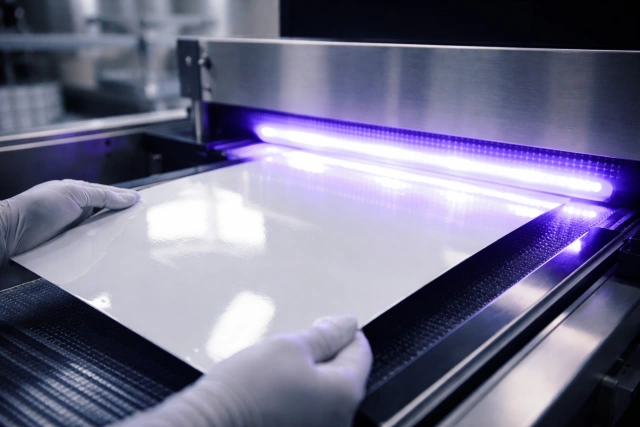
In simple terms, uvlack (often written as UV-lack or UV lacquer) is a UV curable coating. Instead of “drying” slowly through air, heat, or solvent evaporation, it cures almost instantly when exposed to ultraviolet light. That one change rewires a lot of business math: throughput goes up, defects go down, energy use can drop, and many formulations help reduce VOC related headaches.
And because manufacturers are under constant pressure to deliver faster, cleaner, and more consistent quality, uvlack is quickly becoming one of those technologies that feels less like an “upgrade” and more like a competitive baseline.
What Is Uvlack, Exactly?
Uvlack is a UV curable lacquer or coating applied to a surface (paperboard, plastic films, wood panels, metal, composites, and more) and then cured using UV light. The coating contains reactive components (like oligomers and monomers) and a photoinitiator system that starts polymerization when exposed to UV, forming a hard protective layer.
The reason businesses love it is straightforward: cure time moves from minutes or hours to seconds, and that changes everything from line speed to labor planning.
Why Uvlack Is Suddenly “Trending” in Business
Uvlack has existed for years, but the business world is adopting it faster now for three big reasons:
1) The economics finally line up for more industries
When a technology improves speed and reduces rework, it usually wins. UV curable coatings are also part of a large, growing global market, which means more competition, more suppliers, and better options for buyers. Grand View Research estimates the UV curable coatings market at about USD 9.81 billion in 2024, with continued growth projected.
2) Sustainability pressure is no longer optional
Many companies are actively reducing solvent use, emissions, and energy consumption. Industry groups like RadTech highlight UV and electron beam curing as technologies with recognized environmental benefits, including high solids and low VOC potential compared with many traditional solvent systems.
3) UV LED is making curing more practical
UV curing isn’t just “UV curing” anymore. UV LED systems are pushing adoption because they run cooler and can be easier to integrate, especially for heat sensitive substrates, and because they avoid mercury lamp concerns in many setups.
Key Features of Uvlack That Businesses Care About
Not every “feature” matters to every buyer. Here are the ones that consistently show up in real purchasing decisions.
Instant curing that supports high speed production
This is the headline feature. Uvlack can cure in seconds, which can remove major bottlenecks in finishing lines and reduce work in progress inventory.
High performance surface protection
Uvlack coatings are widely chosen because they can deliver:
- Scratch and abrasion resistance
- Chemical resistance
- Gloss control from matte to high gloss
- Better print protection for packaging and labels
Low emission potential in many formulations
Many UV systems are high solids or solvent free, which can help reduce VOC emissions compared to many conventional coatings. VOCs are a major regulatory and health topic, and the EPA provides detailed definitions and health context around them.
Compatibility across multiple industries
Uvlack isn’t locked into one niche. It’s used across:
- Printing and packaging
- Wood and furniture finishing
- Electronics and devices
- Automotive components and industrial parts
Process consistency and repeatability
When curing is controlled and predictable, you usually get more consistent results across batches. That matters when you’re trying to hit color targets, gloss targets, and durability targets while scaling volume.
Benefits of Uvlack for Business
Let’s translate “features” into business outcomes. This is where uvlack earns its trending status.
1) Faster throughput and higher output per shift
When you remove long drying times, you can often:
- Increase line speed
- Reduce floor space tied up in drying racks
- Shorten order cycles
- Improve on time delivery performance
For businesses with seasonal demand or tight retail deadlines, that speed is a real advantage.
2) Lower rework and fewer defects
Traditional drying can introduce problems like dust nibs, uneven cure, blocking, or scuffing during handling. With uvlack, the surface is often cured immediately, which can reduce:
- Smudging in print
- Handling damage
- Packaging scuffing during transport
Less rework means better margins, especially in high volume operations.
3) Potential energy and cost savings
Many sources note that UV curing can be more energy efficient than thermal drying because you are curing the coating quickly rather than heating an entire part or oven environment.
The exact savings depend on your setup and production mix, but the strategic idea is consistent: faster cure plus targeted energy use can reduce total energy per unit in many applications.
4) Sustainability and compliance advantages
Businesses that use coatings and inks face growing expectations around emissions and worker exposure. UV and EB systems are often highlighted for low emission potential and pollution prevention benefits, especially in high solids and solvent free configurations.
If you operate in regions with strict air quality rules, “low VOC” is not just a marketing line. It can change permitting, reporting, and operational complexity.
5) Better product appearance and perceived value
In packaging and consumer goods, finishing is brand language. A clean gloss, a soft touch matte, spot effects, and strong scuff resistance can elevate perceived quality.
That’s why you’ll see uvlack used not just for protection, but for premium presentation, especially in cosmetics packaging, luxury retail boxes, and high end labels.
Common Business Use Cases for Uvlack
Here’s where the trend becomes practical. These are real world use cases where uvlack tends to make business sense.
Use Case 1: Printing and packaging
Uvlack is widely used as a protective and aesthetic topcoat for printed materials including cartons, labels, and marketing collateral. A strong use case is retail packaging where scuff resistance and shelf appearance matter.
Typical goals:
- Protect ink from rubbing
- Improve gloss or matte finish
- Increase moisture and abrasion resistance
- Support high speed finishing
A scenario that happens all the time
A packaging converter has a high volume job for a consumer brand. The brand wants a premium gloss, but the cartons must ship quickly and survive warehousing. With traditional aqueous or solvent coatings, drying time and scuff issues can create delays. With uvlack, cartons can be coated and cured quickly, stacked sooner, and shipped faster with fewer rejects.
Use Case 2: Wood and furniture finishing
Furniture makers and wood product manufacturers often care about:
- Scratch resistance
- Chemical resistance (cleaners, spills)
- Fast finishing cycles
UV cured coatings are used on panels, cabinets, flooring, and decorative laminates. The faster cure supports higher volume production without long curing rooms.
Use Case 3: Labels, flexible packaging, and films
This area is growing, especially as UV LED makes it easier to cure on heat sensitive films. UV LED curing is often described as cooler, which helps reduce warping or damage to delicate substrates in the right conditions.
Use Case 4: Electronics and industrial components
UV cured coatings and adhesives are used in electronics manufacturing because cure speed and process control are valuable. In industrial contexts, a UV cured protective layer can improve durability and chemical resistance for parts exposed to wear.
Use Case 5: High value branding finishes
Spot UV effects on packaging, brochures, and promotional materials are a classic example. The finish is not just protection, it’s a deliberate visual and tactile feature used to increase attention and perceived quality.
Uvlack vs Traditional Coatings
Here’s a quick comparison that many buyers find helpful.
| Factor | Uvlack (UV Curable) | Traditional Air or Thermal Drying |
|---|---|---|
| Cure time | Seconds | Minutes to hours |
| Line speed potential | High | Often limited by drying |
| Energy profile | Often lower due to targeted curing | Often higher due to ovens or long drying |
| VOC profile | Often lower in high solids systems | Can be higher, especially solvent based |
| Heat impact on substrates | Lower with UV LED in many setups | Higher heat exposure common |
| Equipment needs | UV lamps or UV LED curing units | Dryers, ovens, longer process time |
Notes on energy and emissions vary by formulation and plant setup, but the general differences are widely discussed in UV curing industry literature.
What to Watch Out For
A real business minded article should also cover the tradeoffs. Uvlack is powerful, but it isn’t magic.
1) Upfront equipment and integration costs
UV curing needs curing units, safety measures, and process tuning. If you’re moving from a simple drying setup, there’s an initial learning curve.
2) Formulation selection matters
Not all uvlack products behave the same. Choosing the wrong viscosity, cure profile, or gloss level can lead to:
- Under cure and tackiness
- Brittle surfaces
- Adhesion problems on certain substrates
3) Food packaging and migration compliance is a serious topic
If uvlack is being used in printing inks, coatings, or varnishes connected to food packaging, migration risk and regulatory compliance become central.
The FDA has specifically discussed UV printing inks used on the exterior of food contact materials and notes that some photoinitiators may migrate in certain intended uses.
In Europe, industry guidance from EuPIA covers printing inks applied to food contact materials and how converters and printers should manage compliance and good manufacturing practice.
Practical takeaway: for food related applications, businesses often rely on migration optimized systems, validated suppliers, and proper testing regimes.
4) Process control and safety
UV curing involves high intensity light and requires appropriate shielding, PPE, and training. Many businesses adopt UV LED partly because it can simplify some operational concerns compared to older lamp systems, but safety and process control remain essential.
Actionable Tips for Businesses Considering Uvlack
If you’re evaluating uvlack for your operation, here are grounded steps that reduce risk.
Start with one product line or one customer spec
Pilot on a repeatable SKU where you can measure:
- Reject rate
- Throughput improvements
- Energy use per unit
- Customer complaints or returns
Map your “bottleneck” first
Uvlack is most valuable when it removes a real constraint. Ask:
- Is drying time limiting output?
- Is scuffing or blocking causing rework?
- Are premium finish requirements increasing scrap?
Choose curing technology that fits your substrates
If you run heat sensitive films, UV LED may be the better path. If you need deeper cure in certain applications, your supplier and equipment vendor should help tune wavelength and exposure.
Build a simple quality checklist
Many uvlack issues show up in predictable ways. Add checks such as:
- Adhesion test (tape test) on each new substrate
- Rub resistance test for packaging
- Cure verification procedure (simple process validation)
- Visual gloss consistency checks under controlled lighting
Don’t treat compliance as paperwork
If you are in food packaging or regulated markets, follow recognized guidance, keep supplier declarations, and document your process. EuPIA guidelines and suitability lists are often part of how packaging businesses manage risk and build defensible compliance systems.
Frequently Asked Questions About Uvlack
What does uvlack mean in business?
In many manufacturing and printing contexts, uvlack refers to a UV curable lacquer or coating used to protect and enhance surfaces. Businesses adopt it to improve speed, durability, and finish quality.
Is uvlack only for printing?
No. Printing and packaging are common, but uvlack is also used in wood finishing, industrial coatings, labels, electronics, and decorative applications.
Why is uvlack considered more sustainable?
Many UV curing systems are high solids or solvent free, which can reduce VOC emissions compared with many solvent based systems, and UV curing can reduce energy use compared with long thermal drying processes in many setups.
Does uvlack work on plastic and films?
Yes, but it depends on the formulation and curing setup. UV LED curing is often used for heat sensitive substrates because it can run cooler than some traditional UV lamp setups.
Is uvlack safe for food packaging?
Food packaging is a specialized area. UV inks and coatings may involve migration concerns related to components such as photoinitiators, and compliance depends on intended use, supplier documentation, good manufacturing practice, and testing.
The Bottom Line
Uvlack is trending in business because it solves problems that directly hit profit and performance. It can speed up production, reduce defects, improve finish quality, and support sustainability goals that customers and regulators increasingly expect. The growth of the UV curable coatings market reflects that businesses across industries are investing in these benefits, not just talking about them.
If you’re in packaging, printing, furniture, labels, or industrial manufacturing, uvlack is no longer a niche option. It’s quickly becoming a practical tool for staying competitive in a world that demands faster turnaround, consistent quality, and smarter operations.
In many applications, the real “why now” is simple: the technology has matured, UV LED is making implementation easier for more materials, and the business case is clearer than ever. And yes, all of it still comes down to how quickly you can turn liquid coating into a durable finish using ultraviolet light while keeping quality high and waste low.