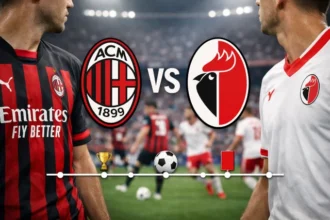




If you follow football, boxing, UFC, Formula 1, or almost any major live event, you have probably seen the name Total Sportek pop up in search results, fan forums, and social conversations. Even in 2026, Total Sportek remains a familiar search term because sports fans still want one thing above all else: fast access to live match information, schedules, viewing options, and updates in real time.
- What Is Total Sportek?
- Why Total Sportek Still Gets Attention in 2026
- The Bigger Shift Behind Total Sportek Searches
- Why Football Fans Keep Searching Total Sportek
- Total Sportek and the Problem of Sports Rights Fragmentation
- Is Total Sportek Popular Because of Illegal Streaming?
- Why Search Intent Around Total Sportek Is Still Strong
- What Sports Viewers Actually Want in 2026
- The SEO Angle: Why Total Sportek Is a Strong Content Topic
- Safer Ways Fans Can Follow Sports Today
- Final Thoughts on Total Sportek in 2026
- FAQ
- Conclusion
That interest has not faded. It has grown alongside the wider shift toward digital sports viewing. According to PwC, the number of US viewers who stream a sports event at least once a month was projected to rise past 90 million by 2025. At the same time, the global sports streaming platform market was estimated by Grand View Research at $33.93 billion in 2024 and $37.71 billion in 2025, with continued growth expected through 2030. Those numbers help explain why search behavior around terms like Total Sportek is still strong.
The real story, though, is not just about one website name. It is about how fans watch sports now, what they expect on matchday, and why certain search terms become part of the everyday sports internet.
What Is Total Sportek?
Total Sportek is widely recognized online as a sports-related search term associated with live sports access, matchday traffic, and fan attempts to find viewing information quickly. People often search Total Sportek when they want direct, immediate pathways to football matches, combat sports cards, motorsport coverage, or other live events without wasting time clicking through multiple pages.
That alone tells you a lot about modern fan behavior. People no longer wait for one broadcast channel or a single cable subscription to handle everything. They jump between apps, streaming platforms, social feeds, official broadcasters, and search engines. In that environment, Total Sportek has stayed visible because it sits right at the intersection of urgency, habit, and live-event demand.
Why Total Sportek Still Gets Attention in 2026
The simplest answer is that live sports create urgency unlike any other form of content.
A TV show can be watched later. A movie can wait until the weekend. A live match cannot. Fans want the game now, not tomorrow.
That time pressure keeps Total Sportek relevant. On big matchdays, people search quickly, often using short brand-like phrases instead of full questions. They are not typing long sentences. They are typing names they already recognize. Total Sportek benefits from that pattern because repeat search behavior matters a lot in sports.
There is also the fragmentation problem. Sports rights are split across broadcasters, leagues, and subscription apps. One competition might be on one platform, another on a different service, and a third hidden behind a regional restriction. Ofcom noted in 2026 that, citing its Media Nations 2025 reporting, 85% of adults use a VoD service each month compared with 67% who watch live TV (UK government statement). That does not mean live sports are declining. It means viewers have become fully digital, and their expectations have changed.
So when people search Total Sportek, they are often responding to a bigger frustration: too many platforms, too many paywalls, too many regional limits, and not enough clarity on where the match is actually available.
The Bigger Shift Behind Total Sportek Searches
To understand why Total Sportek still matters, you have to look beyond the keyword itself.
Sports consumption has changed in five major ways:
1. Fans expect instant access
Modern viewers do not want to plan their evening around a broadcaster schedule. They want instant match access, live scores, and flexible viewing on mobile, desktop, or smart TV.
2. Search habits are faster and shorter
Instead of searching “where can I watch tonight’s Champions League match,” many users now search a known phrase, branded shortcut, or familiar sports term like Total Sportek because it feels faster.
3. Viewers follow multiple sports
Today’s sports fan is rarely loyal to only one league. One person may watch Premier League football, UFC, tennis, boxing, and Formula 1 in the same month. Total Sportek stays visible partly because it is often associated with multi-sport search behavior.
4. Matchday traffic is emotional
People search when excitement is high. A title fight, derby match, final, or major race triggers spikes in online activity. Search behavior around Total Sportek tends to benefit from that emotional urgency.
5. The internet rewards familiarity
Once a search term becomes familiar inside fan communities, it often sticks. That familiarity helps explain why Total Sportek still gets looked up even as the digital sports landscape keeps changing.
Why Football Fans Keep Searching Total Sportek
Football remains the biggest driver of online sports viewing behavior. That matters because football fans are some of the most active search users on the internet, especially before kickoff.
FIFA’s audience data shows just how huge football’s reach still is. The governing body reported that 2.87 billion viewers watched at least one minute of FIFA World Cup Qatar 2022 coverage on linear TV, while the average global live audience for matches reached 175 million viewers (FIFA audience report, FIFA report summary). FIFA also said the 2025 Club World Cup achieved a preliminary global audience of 2.7 billion across the tournament (FIFA media release).
Those numbers matter because football creates enormous surges in digital demand. On major matchdays, fans search for schedules, channels, live coverage, and commentary links. In that rush, Total Sportek keeps resurfacing because it has become a remembered term in football-related browsing patterns.
Total Sportek and the Problem of Sports Rights Fragmentation
One major reason Total Sportek remains relevant is that official sports viewing is not always simple.
Broadcast rights are increasingly split. In one country, one network owns a domestic league. In another, a streaming service controls European competition. Elsewhere, regional blackout rules or pricing tiers complicate access even more.
The UK offers a clear example of how concentrated and expensive rights can become. A 2025 sports broadcasting analysis published by Ofcom found that the £3.4 billion UK sports rights market is heavily driven by a small number of premium competitions and buyers, especially the Premier League and UEFA Champions League, along with Sky and TNT Sports (Ofcom/Ampere Analysis).
When access becomes fragmented and expensive, search terms like Total Sportek keep drawing attention. Fans are not always looking for one thing. Sometimes they want legal broadcast info. Sometimes they want alternatives. Sometimes they just want a quicker route to matchday details without checking five separate apps.
Is Total Sportek Popular Because of Illegal Streaming?
This is where the conversation gets more serious.
Search demand around Total Sportek often sits close to wider discussions about live sports piracy, unofficial streams, and online access workarounds. That does not mean every search is the same, but the overlap is real and it reflects a broader market problem.
The European Union Intellectual Property Office has repeatedly highlighted live sports piracy as a growing issue. In one EUIPO update, live sports piracy showed a 30% increase from 2021 to 2022 in the study it referenced (EUIPO). In another EUIPO communication, 12% of EU citizens were reported to access or stream sports content from illegal online sources, rising to 27% among younger people (EUIPO).
That tells us something important. Total Sportek stays relevant partly because there is still a gap between what viewers want and what official distribution models conveniently offer.
At the same time, users should be careful. Unofficial stream sites can expose visitors to malware, deceptive ads, fake play buttons, privacy risks, and unstable links. They also raise legal and ethical concerns depending on the jurisdiction. For anyone who simply wants a smoother and safer experience, official broadcasters, league apps, and authorized streaming services remain the better option.
Why Search Intent Around Total Sportek Is Still Strong
A lot of people assume a keyword stays popular only if the site behind it is growing. That is not always true.
Sometimes a search term survives because it becomes shorthand for a type of need. That is exactly what seems to be happening with Total Sportek.
People use the term for several different reasons:
- To find live match access quickly
- To check schedules before kickoff
- To look for football, UFC, boxing, or F1 coverage
- To compare viewing options
- To follow fan habits learned from past searches
- To save time during high-pressure live events
In SEO terms, Total Sportek carries mixed intent. It is partly navigational, partly informational, and partly transactional in the sense that users are trying to complete an action fast. That is why it remains valuable as a topic. It reflects a real behavior pattern, not just a passing search trend.
What Sports Viewers Actually Want in 2026
If you strip away the keyword and focus on the user, the picture becomes clearer.
Sports viewers in 2026 want:
| What Fans Want | Why It Matters |
|---|---|
| Fast access | Live sports lose value if the viewer arrives late |
| Mobile-friendly viewing | Many users check streams and scores on phones first |
| Clear broadcast info | Fans do not want to hunt across several apps |
| Reliable quality | Buffering ruins live matches |
| Multi-sport coverage | Users follow more than one league or sport |
| Affordable pricing | Rising subscription costs push viewers to search harder |
This is where Total Sportek continues to make sense as a keyword. It represents convenience, familiarity, and urgency in a sports media world that often feels scattered.
The SEO Angle: Why Total Sportek Is a Strong Content Topic
From a publishing perspective, Total Sportek works because it captures real audience curiosity.
Writers and site owners like this keyword for three reasons:
- It has built-in recognition among sports viewers.
- It connects to larger discussions about streaming, broadcasting, and matchday behavior.
- It supports multiple article angles without sounding forced.
For example, a site can write about Total Sportek from the perspective of:
- Sports streaming trends
- Football search behavior
- Official vs unofficial viewing options
- Live sports media habits
- Fan psychology on matchdays
- The future of online sports discovery
That flexibility makes Total Sportek useful both for SEO and for editorial relevance.
Safer Ways Fans Can Follow Sports Today
For readers who are mainly interested in practical viewing options, the smarter path is to stick with legitimate sources.
Here are better ways to follow live sports in 2026:
- Check official league websites for broadcaster listings
- Use club or competition apps for match schedules
- Subscribe only to the services that carry your main sports
- Follow official social accounts for confirmed viewing details
- Use legal aggregators or broadcaster directories in your region
- Watch highlights legally if live access is not worth the cost
That approach saves time and reduces the risks tied to unreliable third-party sites.
Final Thoughts on Total Sportek in 2026
So, why do sports viewers still look up Total Sportek in 2026?
Because the habits behind the keyword have not disappeared. Fans still want speed. They still want convenience. They still want one familiar path when a match is about to start and time is running out. Total Sportek remains visible because it reflects how live sports are consumed online today: fast, fragmented, mobile, and driven by urgency.
It also reflects a wider truth about modern sports media. The audience is bigger, more digital, and more impatient than ever. Deloitte’s 2026 sports industry outlook describes a market entering a new phase of expansion and transformation, while streaming continues to reshape the fan experience (Deloitte). In that environment, familiar search terms keep their value.
In other words, Total Sportek is still being searched not just because of what it is, but because of what it represents. It represents the modern fan’s race to find the game, join the moment, and stay connected to the action. In the wider world of sports media, that kind of behavior is not going away any time soon.
FAQ
Why is Total Sportek still popular in 2026?
Total Sportek is still popular because sports fans continue to search for fast access to live match information, viewing options, and multi-sport coverage during major events.
Is Total Sportek mostly searched by football fans?
Football fans are a major part of the audience, but Total Sportek also gets attention from viewers of UFC, boxing, Formula 1, and other live sports.
Why do users search Total Sportek instead of full questions?
People often use shorter, familiar search terms when they are in a hurry before a live event. Total Sportek works as a quick shorthand for that behavior.
Does the rise of streaming help keep Total Sportek relevant?
Yes. As sports viewing shifts further toward digital platforms, users rely more on search to locate schedules, broadcasters, and live access details. That helps keep Total Sportek visible.
Are there safer alternatives to searching unofficial stream sources?
Yes. Official league sites, authorized broadcasters, verified streaming apps, and club channels are the safer and more reliable options for following live sports.
Conclusion
Total Sportek remains a relevant keyword in 2026 because it matches real search intent. Sports fans still want immediate access, quick answers, and easier ways to keep up with live events. As long as sports rights stay fragmented and matchday urgency stays high, Total Sportek will continue to appear in search behavior across football and other major sports.