


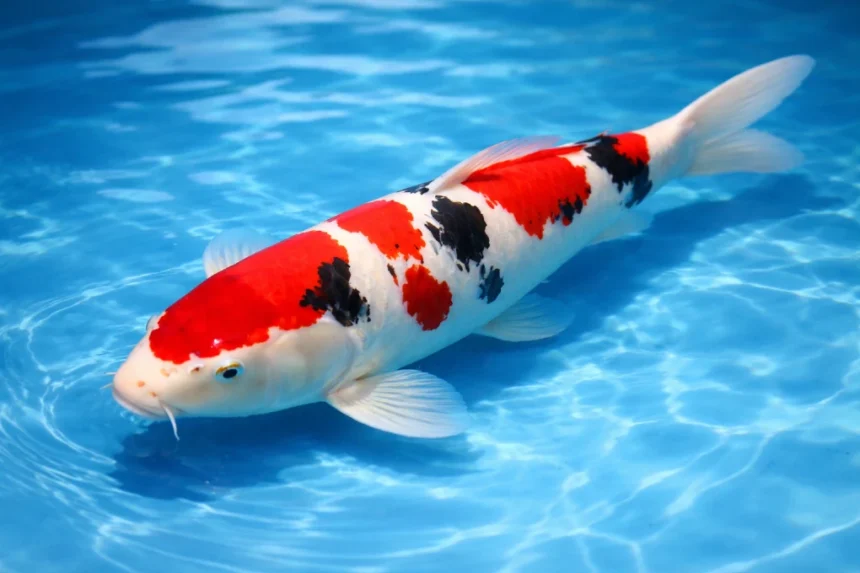
If you have ever looked at a pond full of premium koi and found your eyes landing on the white fish with crisp red islands and delicate black accents, you were probably looking at a Sanke. Among serious koi keepers, Sanke has long been admired for its balance, elegance, and quiet sophistication. It is not the loudest variety in the pond, but it is often one of the most memorable.
- What Is a Sanke Koi?
- The Colors That Define Sanke
- Understanding Sanke Patterns
- What Makes a Sanke Koi Valuable?
- Sanke vs Showa vs Kohaku
- Why Collectors Love Sanke
- Care Tips That Protect Sanke Beauty
- Real World Pricing: Why One Sanke Costs Far More Than Another
- Common Buyer Mistakes
- FAQs About Sanke
- Final Thoughts
A Sanke is a white based koi with red and black markings, formally known as Taisho Sanshoku. It is one of the classic ornamental koi varieties developed in Japan and remains one of the most respected choices for hobbyists, collectors, and breeders. Koi overall are recognized as ornamental carp with more than 100 varieties, and their enduring popularity has helped create a global appreciation for high quality pond fish. Britannica also notes the long cultural significance of koi in Japan and beyond.
What makes Sanke so valuable is not just color. Value comes from the way color is arranged, how clean the white skin looks, how balanced the red pattern appears, how refined the black markings sit on the body, and whether the fish shows long term potential as it matures. That is why two Sanke koi of the same size can have very different prices.
Some newer searchers also stumble onto the phrase Sanke Game while browsing online, but in koi keeping, Sanke refers to a classic koi variety prized for beauty, pattern quality, and bloodline potential. In other words, the real appeal of Sanke is not a trend term. It is the fish itself.
What Is a Sanke Koi?
A Sanke is a tri color koi built on a white base. The ideal fish shows three main elements:
- Bright white skin called shiroji
- Deep red pattern called hi
- Sharp black markings called sumi
The first thing to understand about Sanke is that the white base matters just as much as the colored markings. Without clean white skin, even a bold pattern can look muddy or overcrowded. That bright base is what gives Sanke its refined appearance.
Sanke belongs to the elite group of classic koi varieties and is often compared with Kohaku and Showa. Kohaku has only white and red. Showa has white, red, and black too, but the black usually wraps more heavily across the body and often appears on the head. Sanke, by contrast, should present as a white fish with red patterning first, then black accents layered on top. That difference is subtle to beginners but very important in judging and pricing.
The Colors That Define Sanke
Color quality is one of the biggest reasons a Sanke stands out or falls short. When hobbyists talk about a valuable Sanke, they are usually discussing the strength and harmony of these three colors.
1. White Skin
The white base should look bright, clean, and almost luminous. On a quality Sanke, the skin appears fresh rather than yellowish or dull. This is one reason water quality, genetics, and diet matter so much. Fish health experts and pond management resources consistently emphasize that water quality is central to fish growth, stress reduction, and overall appearance. FAO pond management materials and the USDA NRCS fishpond standard both stress the importance of maintaining suitable pond conditions for aquatic health.
2. Red Pattern
The red on a Sanke should appear rich, even, and well placed. The edges should be clean rather than blurry. On younger fish, the red may still be developing, so experienced buyers often look for depth and future potential, not just what appears strongest today.
3. Black Markings
The black on a Sanke is usually more restrained than on a Showa. It should enhance the fish, not dominate it. Well placed black markings add contrast and sophistication. Poorly placed black can make a Sanke look messy, unbalanced, or overly heavy.
Understanding Sanke Patterns
Pattern is where the conversation gets interesting. Many beginners assume that any white fish with red and black qualifies as a top Sanke. It does not. The arrangement matters.
A strong Sanke pattern usually has flow. Your eye should move naturally from the head toward the tail without feeling interrupted. There should be visual rhythm, with enough white space to let each colored area breathe.
When evaluating a Sanke-pattern, keep an eye on these factors:
- Balance from front to back
- Clear separation between color blocks
- Attractive shoulder patterning
- Black accents that support the red rather than compete with it
- White space that keeps the body looking open and elegant
One respected overview from the Midwest Pond and Koi Society describes Sanke as a variety associated with elegance and traces its development to Japan’s Taisho era, with the variety first exhibited in the early twentieth century.
Common Pattern Qualities Buyers Notice
| Pattern Feature | Why It Matters |
|---|---|
| Clean head pattern | Creates first impression and visual balance |
| Even red distribution | Prevents one side of the fish from feeling too heavy |
| Refined black placement | Adds contrast without overpowering the body |
| Good white breaks | Makes the pattern look premium and organized |
| Tail stop | Gives the fish a finished, balanced appearance |
Not every beautiful Sanke follows the exact same visual formula. Some fish win attention through dramatic contrast. Others are valued for softness and balance. What matters most is harmony.
What Makes a Sanke Koi Valuable?
The value of a Sanke comes from a combination of genetics, appearance, development potential, and market demand. It is never just one thing.
Bloodline and Breeder Reputation
A Sanke from a respected breeder usually commands more attention because buyers trust the bloodline. Good breeders consistently produce fish with stronger skin quality, better color retention, and more predictable development. In koi collecting, breeder reputation can affect price almost as much as current appearance.
Body Conformation
Top quality Sanke should have a strong, proportionate body. The shape should feel powerful but graceful. A weak frame, narrow body, or poor symmetry lowers the fish’s value even if the pattern looks attractive.
Skin Quality
Skin is a major differentiator in premium koi. High quality Sanke often have a glow that is difficult to capture in ordinary photos. That is one reason people who buy expensive koi prefer seeing the fish in person or through trusted dealers.
Pattern Balance
A Sanke with excellent color but weak pattern placement may still sell, but it usually will not command elite pricing. Great Sanke koi look composed. Nothing appears random.
Age and Future Potential
Young Sanke are often purchased based on promise. Buyers try to predict how the red and black will mature. A fish with slightly understated sumi today may become far more impressive later. This is where expertise really matters.
Show Quality
If a Sanke has the structure, skin, and pattern to compete at koi shows, its value rises sharply. Show quality fish are priced not just for beauty but for rarity.
Sanke vs Showa vs Kohaku
This is one of the most common questions from pond owners. Here is the easiest way to remember it.
- Kohaku is white and red only
- Sanke is white, red, and black, with black acting as an accent
- Showa is black, red, and white, with black acting as a base influence
If the fish feels primarily white with layered red and black, it is likely a Sanke. If the black feels foundational and runs more dramatically across the body, you are probably looking at a Showa.
That distinction matters because collectors judge Sanke differently. A Sanke should feel polished and balanced. Too much black can make it lose the elegance expected from the variety.
Why Collectors Love Sanke
Collectors often describe Sanke as a fish that rewards a trained eye. At first glance, a flashy koi may seem more exciting. But over time, many hobbyists develop a deep appreciation for the restraint of a high-quality-Sanke.
Why?
Because a great Sanke offers:
- Visual balance
- Clean contrast
- Timeless appeal
- Strong competition potential
- A look that ages beautifully in a mature pond
It also photographs extremely well when the skin quality is high, which adds to its desirability in dealer listings and online auctions.
Care Tips That Protect Sanke Beauty
Even a promising Sanke can lose appeal if care standards slip. Color and skin quality are strongly influenced by environment and nutrition.
Focus on Water Quality First
Poor water quality dulls white skin and stresses koi. The FAO’s fish culture materials and public pond management guidance emphasize the role of stable pond conditions in healthy fish development.
Feed for Condition, Not Just Growth
Overfeeding low quality food can hurt water clarity and body condition. Choose a reputable koi diet and adjust feeding according to season and water temperature.
Give the Fish Space
Crowded ponds increase stress and reduce the visual impact of individual fish. It looks best when it has room to move and develop proper body shape.
Watch the Skin
If the white starts looking yellow or dull, check filtration, water changes, stocking level, and diet before assuming it is a genetics issue.
Real World Pricing: Why One Sanke Costs Far More Than Another
A budget it may be bought as a pond fish for enjoyment. A premium Sanke may be bought as a future show prospect. The price gap can be huge because the market is not just buying a fish. It is buying appearance, rarity, lineage, and future potential.
Japan continues to influence the premium koi market heavily, and export interest remains strong in regions such as the United States, Europe, and Asia. A recent JETRO report highlighted sustained overseas demand for nishikigoi as a cultural and luxury export category from Japan.
Here is what commonly pushes value upward:
- Strong breeder name
- Excellent body shape
- Bright, clean shiroji
- Even hi quality
- Refined sumi placement
- Good growth potential
- Show ring suitability
- Verified health and handling standards
Common Buyer Mistakes
People often overpay for Sanke because they focus on only one feature. The most common mistakes include:
- Choosing the brightest red without checking skin quality
- Ignoring body shape
- Buying based on size alone
- Confusing immature sumi with bad sumi
- Overlooking breeder reputation
- Purchasing from poor water systems
The smartest buyers view Sanke as a total package, not a color contest.
FAQs About Sanke
Is Sanke a good choice for beginners?
Yes, It can be a great choice for beginners because it is easy to recognize and visually rewarding. The key is buying from a reliable source and learning the basics of water quality and koi health.
How long do koi live?
Koi can live for decades with proper care, and their long lifespan is one reason buyers are willing to invest in quality fish. Koi are widely recognized as long lived ornamental carp, though lifespan depends heavily on genetics and pond conditions.
Does black on a Sanke change over time?
Yes. Sumi can strengthen, shift, or become more defined as the fish matures. This is why experienced buyers often look at potential rather than judging only the current pattern.
Why is white skin so important on Sanke?
Because the white base creates the canvas for the entire pattern. Without strong white skin, the red and black lose contrast and the fish appears less refined.
Final Thoughts
Sanke has earned its reputation because it combines elegance with complexity. At a glance, it looks simple. Up close, it becomes clear that every detail matters. The white must stay bright, the red must feel balanced, and the black must appear deliberate rather than accidental.
That is exactly why collectors, breeders, and pond owners continue to prize it. It offers beauty that grows on you. A truly good one does not shout for attention. It keeps it.
If you are building a pond collection and want a variety with timeless appeal, a well selected Sanke is hard to beat. Its history, visual discipline, and collector value give it a special place in the koi world. In the last stage of your research, it also helps to understand the heritage behind the term Taisho Sanshoku, since that background gives more meaning to what makes a Sanke so admired.