


If you’ve ever loved a rabbit, you already know the truth: they’re adorable, clever, and just a little dramatic about where they’ll pee. The good news is that a Rabbit Litter Box setup can be surprisingly easy once you stop treating it like a tiny cat problem and start working with how rabbits actually behave.
- Why rabbits use a litter box differently than cats
- Rabbit Litter Box types that actually work
- Rabbit Litter Box size: the rule that prevents most accidents
- The best litter materials (and what to avoid)
- The setup that works in real homes (step-by-step)
- Best Rabbit Litter Box setups by lifestyle
- Cleaning and odor control without harsh chemicals
- Common problems and quick fixes
- A quick comparison table: choose your best fit
- FAQ: Rabbit Litter Box questions people ask all the time
- Conclusion
- Conclusion
Rabbits naturally like to pick a few “bathroom spots,” and you can use that instinct to your advantage with the right box type, the right size, and a setup that makes your bunny think, “Yep, this is the place.” The goal is not perfection on day one. The goal is a system that’s comfortable for your rabbit and realistic for you to maintain, because consistency is what makes litter habits stick.
In this guide, you’ll learn what types of litter boxes work best, how big they should be, and the setups that keep odor down, cleaning simple, and accidents rare.
Why rabbits use a litter box differently than cats
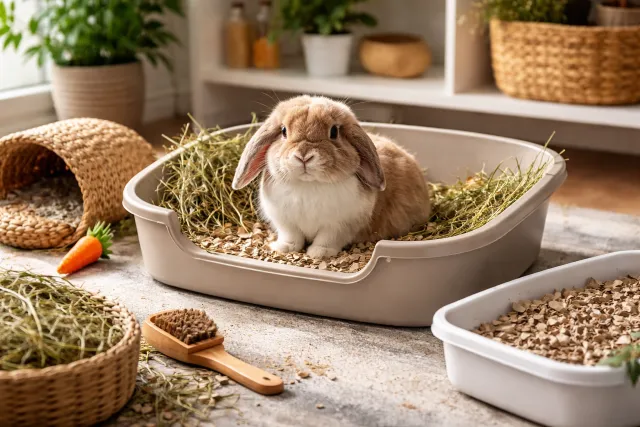
A Rabbit Litter Box is less like a “bathroom” and more like a “bathroom plus snack bar.” Many rabbits like to graze while they go, which is why hay placement matters so much. When you pair the litter box with hay in the right way, you’re tapping into a natural routine, not forcing a new habit.
Also, rabbits poop a lot. A healthy rabbit can produce roughly 200 to 300 fecal pellets a day, and that’s normal for a grazing herbivore. So the system has to handle volume without turning into a daily headache.
Rabbit Litter Box types that actually work
You’ll see plenty of “bunny litter boxes” marketed online, but in real homes, the winners are usually simple, sturdy, and easy to clean. Here are the types that consistently do well.
1) Large open litter pans (the most reliable choice)
For most rabbits, an open pan is the easiest to use and the easiest to maintain.
Best for:
- Medium to large rabbits
- Rabbits still learning
- Owners who want quick, simple cleaning
Why it works:
- Easy entry and exit
- Plenty of turning space
- Less moisture trapped inside compared to covered options
A lot of rabbit owners end up using large cat litter pans because rabbit-sized “corner boxes” often get outgrown fast.
2) High-sided litter boxes (great for “kickers”)
Some rabbits love to dig. Others kick litter like they’re trying to renovate your floor.
Best for:
- Rabbits that fling litter
- Rabbits that back up to spray or pee high
- Homes with carpet near the pen
What to look for:
- One low entry side (for easy access)
- Taller back and sides (to catch scatter)
3) Corner litter boxes (only for small spaces or tiny rabbits)
Corner boxes can work, but they’re often too small for adult rabbits to sit comfortably.
Best for:
- Very small rabbits
- Temporary travel setups
- Tight enclosures where a larger pan truly won’t fit
If your rabbit looks cramped, steps half-out to pee, or misses the box often, the corner shape is usually the problem.
4) Covered litter boxes (rarely best, sometimes useful)
Covered boxes can look neat, but they come with tradeoffs. Rabbits need good ventilation, and trapped humidity can make odors build faster. Some rabbits also dislike the enclosed feeling.
Best for:
- Rabbits that fling litter nonstop
- Owners willing to clean more often
- Rabbits that already litter reliably
If you try covered, make sure the opening is wide and the interior is roomy.
5) Sifting litter boxes (nice idea, mixed results)
Sifting designs can save time with some animals, but rabbit setups usually include hay, which clogs sifters quickly. They can still work if your rabbit doesn’t mix hay into the litter much, but many do.
Best for:
- Rabbits that eat hay from a rack outside the box
- Owners testing a low-mess pellet litter
Rabbit Litter Box size: the rule that prevents most accidents
If you only change one thing, change the size.
A Rabbit Litter Box should be big enough for your bunny to hop in, turn around, and sit with all four feet inside without balancing on the edge. Boxes that are too small create a predictable chain reaction: awkward posture, half-in/half-out peeing, and “mystery puddles” beside the pan.
A practical rule many rabbit guides use is choosing a box at least about 1.5 times your rabbit’s stretched-out body length.
Quick sizing guide (easy, not fussy)
- Measure your rabbit from nose to base of tail.
- Multiply by about 1.5 for minimum box length.
- Prioritize length and width over depth.
Examples:
- Small rabbits: often do well with medium cat pans.
- Medium rabbits: large cat pans are usually ideal.
- Large breeds: extra-large pans or shallow storage totes work beautifully.
The best litter materials (and what to avoid)
This part matters because rabbits are close to the ground, they groom constantly, and they may nibble whatever is nearby. “Absorbent” alone isn’t enough. You want absorbent and rabbit-safe.
Safe, popular litter options
Paper-based litter (pellets or crumbles)
- Very absorbent
- Usually low dust
- Easy to scoop
- Great for odor control
Aspen shavings (hardwood)
- Often used as a safer wood option
- Can be absorbent
- Pick a low-dust brand and avoid anything strongly scented
Compressed paper pellets
- Similar benefits to paper litter
- Less tracking than loose paper
Litter materials to avoid
Pine and cedar shavings
These are commonly discouraged for rabbits due to aromatic compounds (phenols) associated with respiratory irritation and liver enzyme changes in studies and rescue experience. If you’ve ever noticed a strong “wood closet” smell, that’s exactly what you don’t want sitting under your rabbit’s nose.
Clumping clay cat litter
- Dusty
- Not intended for rabbits
- Clumping can be risky if ingested during grooming
Scented litters
- Rabbits have sensitive respiratory systems
- Scent often masks problems rather than solving them
The setup that works in real homes (step-by-step)
A Rabbit Litter Box setup that “actually works” is usually simple, not fancy. Here’s a dependable layout you can copy.
Step 1: Start with the right base layer
Add 1 to 2 inches of your chosen rabbit-safe litter.
Tip: For extra odor control, many owners place a thin layer of paper pellets, then a small handful of softer paper bedding on top, so feet stay dry.
Step 2: Add hay in a way that encourages good habits
Rabbits often like to eat while they go. You can use this to anchor the habit.
Two reliable options:
- Put a generous pile of hay in one end of the litter box.
- Hang a hay rack directly above the back half of the litter box so hay falls into it.
This method is commonly recommended by rabbit rescues and helps reinforce litter use.
Step 3: Place the box where your rabbit already goes
Don’t guess at first. Watch where your rabbit chooses to pee and place the litter box there. Rabbits are routine-driven, and placement is often the difference between “trained” and “not trained.”
Step 4: Add traction if your rabbit slips
Some rabbits dislike slick plastic. If your rabbit hesitates, try:
- A small piece of textured mat under the box
- A shallow entry box with a lower front lip
Step 5: Use a second box if your space is large
In bigger pens or free-roam spaces, multiple boxes reduce accidents. A practical approach is one main box plus one backup in the rabbit’s “second favorite” corner.
Best Rabbit Litter Box setups by lifestyle
Setup A: The low-mess apartment setup
Best for: small spaces, odor-sensitive homes
What you need:
- Large open pan
- Paper pellet litter
- Hay rack positioned over the pan
- Small handheld vacuum nearby
Routine:
- Scoop wet spots daily
- Full dump and rinse weekly
Setup B: The “my rabbit kicks everything” setup
Best for: diggers and scatter champions
What you need:
- High-sided box with low-entry front
- Heavier paper pellets (less flyaway)
- Hay rack above, not inside
- Litter mat outside the entry
Bonus tip:
Trim nails regularly. Long nails can make digging and litter flinging worse.
Setup C: The multi-rabbit setup
Best for: bonded pairs or groups
What you need:
- One large pan per rabbit (minimum) in shared spaces
- Extra-large pan as the “main bathroom”
- Consistent hay location for all boxes
If one rabbit guards the box, add a second box immediately. Competition causes accidents.
Setup D: The senior rabbit or mobility-friendly setup
Best for: older rabbits, arthritis, or weaker back legs
What you need:
- Shallow pan with very low entry
- Soft, absorbent paper litter
- Hay placed so your rabbit doesn’t have to stretch
Watch for urine scald or damp fur. If urine gets thick or chalky and sticks to fur, it can signal urinary issues that need veterinary guidance.
Cleaning and odor control without harsh chemicals
A Rabbit Litter Box shouldn’t stink up your home, but rabbit urine can develop a strong ammonia odor if it sits too long or ventilation is poor. Regular cleaning and airflow make a big difference.
A simple cleaning schedule that works
Daily:
- Remove soiled hay
- Scoop wet litter spots
- Add fresh hay
Every 3 to 7 days (depending on box size and rabbit):
- Empty the entire box
- Wash with warm water and mild soap
- Rinse well and dry
For mineral residue:
Rabbit urine can leave a chalky white residue from calcium carbonate as it dries. A vinegar rinse can help dissolve buildup, followed by a thorough rinse with water so the smell doesn’t linger.
Small habits that reduce smell fast
- Keep hay fresh and dry (old damp hay smells quickly)
- Improve ventilation near the pen
- Encourage hydration with fresh water and leafy greens
- Clean more often in warm weather
Common problems and quick fixes
“My rabbit pees right next to the box”
Most often:
- Box is too small
- Box wall is too high to step over comfortably
- Box is not in the preferred corner
Fix:
Upgrade to a larger pan, lower the entry, and move the box to the exact spot they chose.
“My rabbit poops everywhere but pees in the box”
This is extremely common. Pooping can be a casual “trail marker” while a rabbit explores.
Fix:
- Keep a small hand broom nearby
- Return pellets to the box for a week (yes, really)
- Focus on consistent pee habits first
“Litter training was going great, then it got worse”
Often caused by:
- Hormones (adolescence)
- Stress, changes in routine, new pets
- Territorial behavior
Spaying/neutering often improves litter habits and reduces spraying and marking behaviors.
“My rabbit digs in the box nonstop”
Try:
- Switching to heavier paper pellets
- Placing hay above the box (reduces mixing)
- Offering a separate dig box (safe shredded paper in a tote)
Sometimes digging is boredom. More enrichment and exercise time can calm the urge.
A quick comparison table: choose your best fit
| Type | Best For | Pros | Cons |
|---|---|---|---|
| Large open pan | Most rabbits | Easy access, roomy, easy clean | Can scatter litter if rabbit kicks |
| High-sided pan | Diggers, kickers | Reduces mess, contains spray | Needs low-entry side for comfort |
| Corner box | Tiny rabbits, tight spaces | Fits small corners | Often too small for adults |
| Covered box | Heavy scatterers | Helps contain litter | Can trap odor, some rabbits refuse |
| Sifting box | Some low-hay setups | Can speed cleanup | Hay clogs, more parts to wash |
FAQ: Rabbit Litter Box questions people ask all the time
What is the best Rabbit Litter Box for a beginner?
A large open litter pan with paper-based litter and hay positioned over or inside one end of the pan is the easiest beginner setup. It’s roomy, simple to clean, and encourages consistent use.
Should I put hay inside the litter box?
Many rabbits prefer to eat while they eliminate, so placing hay in or right above the box often improves litter habits. If your rabbit mixes hay into litter too much, use a rack above the box instead.
How often should I clean it?
Most homes do best with daily spot-cleaning and a full dump every 3 to 7 days, depending on box size, litter type, and how many rabbits you have.
Why does rabbit urine smell like ammonia?
As urine sits, bacteria break down urea and ammonia odor becomes stronger. Better ventilation and more frequent cleaning reduce the smell and keep the space healthier.
Does spaying or neutering really help litter habits?
Yes. Many rabbit organizations note that altered rabbits are generally easier to litter train and more reliable, while unneutered males may spray.
Conclusion
A Rabbit Litter Box setup that actually works is not about buying the cutest product on the shelf. It’s about choosing a box your rabbit can comfortably use, pairing it with a safe absorbent litter, and setting it up in a way that matches rabbit behavior: eat hay, do business, repeat.
If your rabbit is missing the box, go back to the basics. Make the box bigger. Put it in the corner your rabbit already prefers. Add hay in a way that makes the litter box the most convenient place to hang out. Once you do that, litter habits usually stop feeling like a daily battle and start feeling like a normal part of home life.
And if odor is your main worry, remember that it’s rarely about “stronger scent.” It’s about routine cleaning, airflow, and reducing the conditions where ammonia gas builds up in the first place.
Further reading (authoritative sources):
Should I put hay inside the litter box?
Many rabbits prefer to eat while they eliminate, so placing hay in or right above the box often improves litter habits. If your rabbit mixes hay into litter too much, use a rack above the box instead.
How often should I clean it?
Most homes do best with daily spot-cleaning and a full dump every 3 to 7 days, depending on box size, litter type, and how many rabbits you have.
Why does rabbit urine smell like ammonia?
As urine sits, bacteria break down urea and ammonia odor becomes stronger. Better ventilation and more frequent cleaning reduce the smell and keep the space healthier.
Does spaying or neutering really help litter habits?
Yes. Many rabbit organizations note that altered rabbits are generally easier to litter train and more reliable, while unneutered males may spray.
Conclusion
A Rabbit Litter Box setup that actually works is not about buying the cutest product on the shelf. It’s about choosing a box your rabbit can comfortably use, pairing it with a safe absorbent litter, and setting it up in a way that matches rabbit behavior: eat hay, do business, repeat.
If your rabbit is missing the box, go back to the basics. Make the box bigger. Put it in the corner your rabbit already prefers. Add hay in a way that makes the litter box the most convenient place to hang out. Once you do that, litter habits usually stop feeling like a daily battle and start feeling like a normal part of home life.
And if odor is your main worry, remember that it’s rarely about “stronger scent.” It’s about routine cleaning, airflow, and reducing the conditions where ammonia gas builds up in the first place