



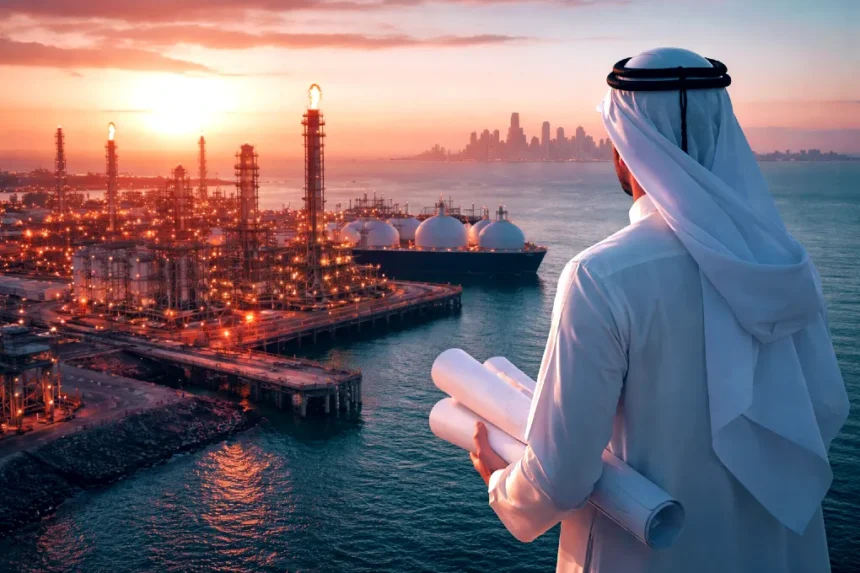
When people talk about energy giants in the Gulf, Qatar Petroleum QP always comes up for a reason. The company, now known as QatarEnergy, did not become a global heavyweight overnight. Its rise came from a mix of timing, smart state planning, control of enormous gas reserves, long term infrastructure investment, and an unusual ability to think decades ahead instead of quarter to quarter.
- The origins of Qatar Petroleum QP
- The North Field changed everything
- Why LNG made Qatar Petroleum QP stand out
- A business model built on long term thinking
- From oil company to broader energy brand
- The expansion strategy that kept Qatar in the headlines
- Global partnerships made the company harder to ignore
- Why the world kept paying attention
- The sustainability question and how Qatar answered it
- Common questions readers ask
- What businesses can learn from Qatar Petroleum QP
- Final thoughts
What makes the story of Qatar Petroleum QP especially interesting is that it is not just about oil. In fact, the company’s biggest strategic advantage came from seeing the future of natural gas and liquefied natural gas before many competitors fully did. While other producers stayed heavily tied to crude, Qatar steadily built an energy model centered on LNG, petrochemicals, shipping, and global partnerships. That shift is a big part of why the company became such a major name in energy.
The origins of Qatar Petroleum QP
To understand how Qatar Petroleum QP became so influential, it helps to start with Qatar’s energy history itself. Oil exports from Qatar began in 1949, and offshore discoveries followed in the decades that came next. Then, in 1974, the state established what would become the national energy champion. That move gave Qatar a centralized structure to manage exploration, production, refining, and exports more strategically.
This mattered because national oil companies often shape more than production. They shape long term economic policy, foreign investment, industrial growth, and infrastructure buildout. In Qatar’s case, that centralized model allowed Qatar Petroleum QP to align its commercial decisions with national development goals. Instead of acting like a standalone producer, it became the engine behind a broader energy and industrial strategy.
At first, the company was strongly associated with oil, as the name suggested. But the real turning point came with natural gas.
The North Field changed everything
The single biggest reason Qatar Petroleum QP became a global energy power was the North Field. Discovered in 1971, it is considered the world’s largest single non associated natural gas reservoir, with recoverable reserves of more than 900 trillion standard cubic feet. It covers roughly 6,000 square kilometers and holds about 10% of the world’s known gas reserves.
That kind of resource base changes what is possible. It gives a company room to think big, sign long term supply contracts, finance mega projects, and promise customers security of supply over decades. Many energy companies have scale. Fewer have scale backed by a reservoir of that magnitude.
Commercial development of North Field gas began in 1991. From there, Qatar built an LNG industry that would eventually turn the country into one of the most important gas exporters in the world. That was the moment Qatar Petroleum QP stopped being seen mainly as a domestic national oil company and started being viewed as a strategic player in global energy markets.
Why LNG made Qatar Petroleum QP stand out
Plenty of countries produce oil and gas. What separated Qatar Petroleum QP from many competitors was execution in LNG.
Liquefied natural gas allows producers to cool gas into liquid form so it can be shipped around the world without relying only on pipelines. That gave Qatar access to customers across Asia, Europe, and beyond. Instead of being tied to one regional market, Qatar could serve multiple importers and diversify its customer base.
Qatar moved early and built scale fast. Over time, it developed a reputation for reliability, technical efficiency, and consistent supply. That reputation mattered as much as reserve size. In energy, buyers do not just want molecules. They want confidence that cargoes will arrive, contracts will hold, and facilities will perform. Qatar Petroleum QP built that trust through years of disciplined delivery.
Here is what LNG did for the company’s global position:
- It opened premium Asian markets.
- It reduced dependence on regional pipeline politics.
- It created long term contract relationships with major buyers.
- It helped Qatar build influence beyond the Gulf.
- It made the company central to conversations about energy security.
That combination is why Qatar Petroleum QP became more than a producer. It became a strategic supplier.
A business model built on long term thinking
One of the smartest things Qatar Petroleum QP did was avoid chasing only short term market wins. Instead, it built an ecosystem.
That ecosystem includes upstream exploration and production, LNG processing, petrochemicals, condensate, refining, shipping arrangements, and international partnerships. This kind of integration lowers risk. If one part of the value chain gets squeezed, other parts can still generate returns or strengthen market position.
The company also benefited from scale and state backing. Massive capital projects in energy can take years to plan and billions of dollars to complete. A producer with sovereign support and a clear long term mandate can often move with more patience and confidence than privately run firms under constant short term investor pressure. That gave Qatar Petroleum QP a structural edge.
From oil company to broader energy brand
A major symbolic milestone came on October 11, 2021, when Qatar Petroleum officially changed its name to QatarEnergy. The rebrand was not cosmetic. It reflected a broader strategic message. The company wanted the market to see it not just as a petroleum producer, but as a wider energy player positioned for a changing global landscape.
That shift said a lot about how Qatar Petroleum QP viewed its own evolution. The old name carried historic weight, but the new one better matched a portfolio that includes natural gas, LNG, chemicals, carbon management efforts, and lower carbon positioning. It also aligned with a world increasingly focused on transition, emissions intensity, and energy diversification.
In simple terms, the company understood that energy leadership in the 2020s would not be defined by oil alone.
The expansion strategy that kept Qatar in the headlines
Another reason Qatar Petroleum QP became such a major name is that it never stood still. Even after becoming a leading LNG exporter, it kept expanding.
The North Field expansion projects are central here. QatarEnergy has said these projects will raise Qatar’s LNG production capacity from 77 million tons per annum to 126 MTPA by 2026. In 2024, the company also said the broader expansion path was moving toward 142 MTPA, with additional volumes connected to its international LNG position. In February 2026, it announced an EPC contract for the North Field West 16 MTPA LNG project, calling it part of the world’s largest LNG expansion.
That matters for two reasons. First, it shows confidence in long term gas demand even as markets change. Second, it tells buyers and competitors that Qatar intends to stay at the center of global LNG trade, not fade into legacy status.
Snapshot of the growth story
| Factor | Why it mattered |
|---|---|
| North Field reserves | Gave Qatar a world class gas base |
| Early LNG buildout | Helped secure global market share |
| Long term contracts | Created durable customer relationships |
| State backed investment | Enabled mega projects and patient capital |
| Rebrand to QatarEnergy | Matched a broader energy strategy |
| Ongoing expansion | Kept the company globally relevant |
Global partnerships made the company harder to ignore
Scale alone does not create influence. Relationships do.
Over the years, Qatar Petroleum QP built partnerships across the LNG value chain, including global energy majors, shipping arrangements, and major importers. Its annual review highlights numerous international partnerships tied to North Field East and North Field South. These deals helped spread risk, attract expertise, and strengthen commercial reach.
The shipping side is a good example. In 2024, QatarEnergy and Nakilat announced long term agreements tied to a major tanker expansion effort, part of a fleet program designed to support the growing LNG business. That kind of investment is easy to overlook, but it is crucial. LNG leadership is not just about producing gas. It is about having the vessels, logistics, and operational system to move it at scale.
This is one reason Qatar Petroleum QP became a name people knew far outside industry circles. It was not just exporting energy. It was building the machinery of global supply.
Why the world kept paying attention
The timing of Qatar’s rise also helped. As gas became more important for power generation, industrial use, and energy security, countries looked for stable LNG suppliers. Qatar fit that need.
The U.S. Energy Information Administration describes Qatar as a key exporter of oil, natural gas, petrochemicals, and fertilizer, and notes that the country shifted investment focus toward gas and LNG infrastructure after leaving OPEC in January 2019. That move signaled strategic clarity. Qatar was choosing to lean into the area where it had the biggest competitive advantage.
The International Energy Agency has also noted that the coming wave of LNG supply will reshape markets, with Qatar among the major producers expanding capacity. In other words, Qatar Petroleum QP did not become a major name by accident. It became one because it positioned itself at the intersection of resource abundance, infrastructure readiness, and rising global demand for flexible gas supply.
The sustainability question and how Qatar answered it
No modern energy company can grow without facing hard questions about emissions, transition, and long term climate risk. Qatar Petroleum QP has had to answer those questions too.
QatarEnergy’s updated sustainability strategy says it aims to capture more than 11 million tons per annum of CO2 in Qatar by 2035 and reduce the carbon intensity of its LNG facilities by 35%. Those targets are important because they show the company is trying to defend the future role of gas by making its production system less carbon intensive.
Will that settle every debate around fossil fuels? No. But it does show why the company remains part of the global energy conversation. It is not only expanding output. It is also trying to frame itself as a lower carbon energy supplier in a transition era. That matters for buyers, investors, and policymakers.
Common questions readers ask
What is Qatar Petroleum QP called now?
Qatar Petroleum QP was officially renamed QatarEnergy on October 11, 2021. The company said the new name better reflected its broader role in the evolving energy sector.
Why did Qatar Petroleum QP become so important?
Because it combined massive gas reserves, early LNG investment, reliable infrastructure, long term contracts, and state backed planning. The North Field gave it the resource base, and LNG gave it global reach.
Is Qatar more about oil or gas today?
Qatar still produces oil, but its strategic edge is natural gas and LNG. The EIA says Qatar shifted investment emphasis toward natural gas and LNG infrastructure, especially after leaving OPEC in 2019.
How big is Qatar’s LNG expansion?
QatarEnergy has said its North Field expansion will raise LNG capacity from 77 MTPA to 126 MTPA by 2026, and it later pointed to a broader path toward 142 MTPA.
What businesses can learn from Qatar Petroleum QP
There is a broader lesson in this story. Qatar Petroleum QP became a major name because it matched a huge natural advantage with disciplined execution. A giant resource alone is not enough. Plenty of countries have resources. What changes outcomes is strategy.
Here are the real lessons:
- Build around your strongest asset.
- Invest before demand fully peaks.
- Control logistics, not just production.
- Think in decades, not headlines.
- Reposition your brand when the market shifts.
That is exactly what Qatar Petroleum QP did. It saw that gas would matter more, built the infrastructure to serve that future, and kept investing until the market could not ignore it.
Final thoughts
The rise of Qatar Petroleum QP is really the story of how a national company used resource depth, patient capital, LNG leadership, and global partnerships to become indispensable in modern energy. It started as a state petroleum company in 1974, then grew into a global supplier whose decisions affect power markets, industrial buyers, and energy security across continents.
Today, even under its new name, the legacy of Qatar Petroleum QP is still visible in every major part of Qatar’s energy model. The brand changed, but the fundamentals did not: giant reserves, ambitious expansion, and a clear belief that natural gas will remain central to the world’s energy mix for years to come. For readers trying to understand why the company became such a major name, the answer is simple. It thought bigger, moved earlier, and built longer than most of its rivals.
In that sense, the company’s story also reflects the wider evolution of the energy industry. It is no longer just about pumping fuel from the ground. It is about infrastructure, geopolitics, supply security, emissions strategy, shipping, and long term market design. Qatar Petroleum QP became a major name because it learned how to operate across all of those layers at once.